Hammerhead Shark
Sphyrna · also called great hammerhead, scalloped hammerhead, smooth hammerhead and bonnethead · Last checked November 3, 2026.
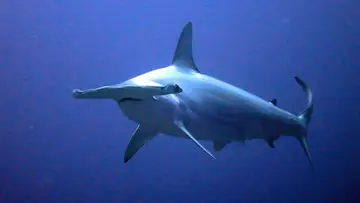

Hammerheads are sharks with a flattened, wide "hammer"- or shovel-shaped head. The large species (great, scalloped and smooth) are described by official sources as potentially dangerous; the International Shark Attack File lists 18 unprovoked attacks by hammerheads and no deaths. The small bonnethead is described by Florida's wildlife agency as harmless to humans. In the US, official sources confirm hammerheads along the Atlantic coast from Florida to New York, in the Gulf, and in Hawaii. One population of scalloped hammerhead is federally listed as threatened and two as endangered. SCDNR Marine Resources Division
This page covers a genus (Sphyrna), not a single species.
On this page
Is the hammerhead shark dangerous?
Several hammerhead species grow quite large and are considered dangerous to swimmers and divers. SCDNR Marine Resources Division
“Several species grow quite large and are considered dangerous to swimmers and divers.”
Bites and stings: Yes, rarely. The International Shark Attack File lists 18 non-fatal and 0 fatal confirmed unprovoked attacks by hammerheads (Sphyrna spp.) worldwide.
No official source we use states whether this animal is venomous. That does not mean it is harmless: do not handle it.
If someone is bitten or stung, call 911 or Poison Help at 1-800-222-1222.
How to identify a hammerhead shark
A photo or description can narrow it down, but cannot confirm what an animal is or that it is safe. Look from a distance and do not handle wild animals.
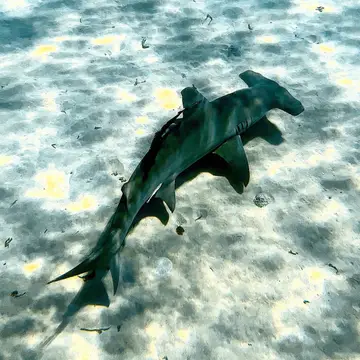
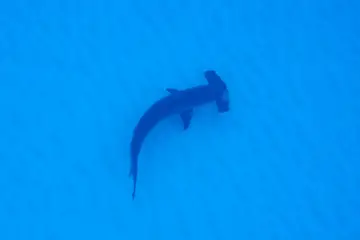
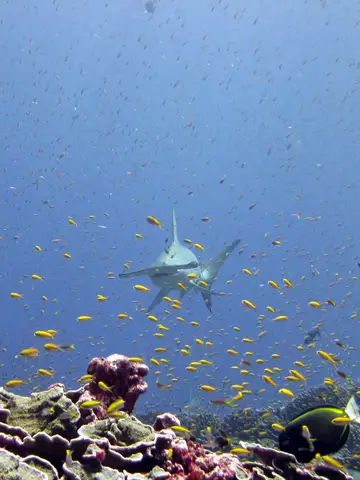

Size: Varies by species. Great hammerhead, the largest: maximum about 18 ft (Florida). FWC
Colors: Great hammerhead: grayish-brown to dark olive above, white below; scalloped hammerhead: olive to brownish-gray above, white below; bonnethead: gray to greenish-brown above, white below. Pattern: Scalloped hammerhead: undersides of pectoral fin tips often dark gray to black.
Key features
- Flattened, sideways-expanded "hammer"- or "shovel"-shaped head that sets hammerheads apart from all other sharks SCDNR Marine Resources Division
- Great hammerhead: front edge of head nearly straight with a deep notch in the middle; teeth coarsely serrated SCDNR Marine Resources Division
- Scalloped hammerhead: front edge of head rounded and scalloped with a notch in the middle SCDNR Marine Resources Division
- Smooth hammerhead: front edge rounded and scalloped but no notch in the middle SCDNR Marine Resources Division
- Bonnethead: bonnet- or shovel-shaped head, not hammer-shaped SCDNR Marine Resources Division
Young
Great hammerhead: about 2 ft at birth; shallow bays and coastal waters are nurseries.
Animals mistaken for the hammerhead shark
Hammerhead Shark or Great hammerhead?
Hammerhead Shark
Great hammerhead Sphyrna mokarran
Strongly hammer-shaped head with a nearly straight front edge and a deep central notch. SCDNR Marine Resources Division
FWC: considered dangerous, seventh in unprovoked attacks.
Hammerhead Shark or Scalloped hammerhead?
Hammerhead Shark
Scalloped hammerhead Sphyrna lewini
Rounded, scalloped front edge with a central notch; smooth-edged teeth. SCDNR Marine Resources Division
Alabama: potentially dangerous.
Hammerhead Shark or Smooth hammerhead?
Hammerhead Shark
Smooth hammerhead Sphyrna zygaena
Rounded, scalloped front edge without a central notch. SCDNR Marine Resources Division
SCDNR: large adults are potentially dangerous to swimmers.
Hammerhead Shark or Bonnethead?
Hammerhead Shark
Bonnethead Sphyrna tiburo
Bonnet- or shovel-shaped head (rounded, with no indentation at the middle of the snout) rather than a hammer; maximum about 3.5 feet. Size alone does not identify it: newborn great hammerheads are already about 2 feet long.
FWC: "Harmless to humans." Make sure of the head shape first; the larger hammerheads are considered potentially dangerous.
Hammerhead Shark or Carolina hammerhead?
Hammerhead Shark
Carolina hammerhead Sphyrna gilberti
Looks the same as the scalloped hammerhead from outside; told apart only by vertebra counts and genetics. Florida Museum of Natural History
Where the hammerhead shark lives
- Native or listed
- Nonnative or not established
- No official record in our data
- 1–9
- 10–99
- 100–999
- 1,000+
State boundaries: U.S. Census Bureau, cartographic boundary file cb_2024_us_state_20m.
When it is active
Great hammerhead: nomadic and migratory; some Florida populations move north along the Atlantic coast in summer. FWC
US open-licence records for all hammerhead sharks (genus Sphyrna) peak in May and August.
Habitat and habits
Habitat: Great hammerhead: open ocean and shallow coastal waters of both Florida coasts; favors coral reefs and is often near inlets and bay mouths. FWC
Behavior: Known to form large schools during migration.
Diet: Crustaceans, small fish and squid, plus stingrays and other sharks.
Young: Great hammerhead: live birth, 13 to 40 pups per litter.
Legal status and reporting
Federal: Great, scalloped and smooth hammerheads are large coastal sharks, and the bonnethead a small coastal shark, in the federal Atlantic highly migratory species rules (50 CFR 635 Appendix A). eCFR / NOAA Fisheries
Protection: Florida: great, scalloped and smooth hammerheads are prohibited from harvest in state waters. FWC
Questions about the hammerhead shark
Hammerhead shark
Hammerheads are sharks with a flattened, wide head. The great hammerhead is the largest, reaching about 18 feet; the bonnethead is the smallest, about 3.5 feet. The large species are considered potentially dangerous; ISAF lists 18 unprovoked attacks and no deaths.
Are hammerhead sharks dangerous?
SCDNR says several species grow large and are considered dangerous to swimmers and divers. FWC ranks the great hammerhead seventh in unprovoked attacks, and the International Shark Attack File lists 18 unprovoked attacks by hammerheads worldwide, none fatal. FWC calls the small bonnethead harmless to humans; it is told apart by its rounded, shovel-shaped head, not by size alone.
Are there hammerhead sharks in new jersey?
Yes, they have been caught there. New Jersey's state record hammerhead weighed 365 pounds (1985, Mud Hole). NOAA Fisheries says the scalloped hammerhead ranges from New Jersey to Florida.
Are there hammerhead sharks in louisiana?
Louisiana's saltwater rules list great, scalloped and smooth hammerheads among large coastal sharks, and NOAA Fisheries includes the Gulf of America in the scalloped hammerhead's range. No Louisiana agency statement on where they occur was found.
Are there hammerhead sharks in hawaii?
Yes. Hawaii DLNR lists the scalloped and smooth hammerhead and names the scalloped hammerhead among the sharks most often seen in nearshore waters.
Sources
- Sharks of South Carolina. SCDNR Marine Resources Division (C. H. Farmer III). 2004; checked November 3, 2026.
Quoted passages (10)
“Several species grow quite large and are considered dangerous to swimmers and divers.”
“They have a strangely flattened and laterally expanded ‘shovel-shaped’ or ‘hammer-shaped’ head, which separates them from all other sharks.”
“Anterior margin of head straight-edged and deeply notched at mid-line • Teeth coarsely serrated”
“Anterior margin of head slightly rounded and scalloped with notch at mid-line”
“Anterior margin of head slightly rounded, scalloped, but not notched at mid-line”
“Separated from the hammerheads by its bonnet or shovel-shaped head (not hammer-shaped)”
“They feed on a wide variety of crustaceans, small fish, and squid, as well as stingrays and other sharks.”
“During migration, they are known to form large schools.”
“Head strongly hammer-shaped • Anterior margin of head straight-edged and deeply notched at mid-line”
“Anterior margin of head slightly rounded and scalloped with notch at mid-line • Teeth smooth-edged”
- Species Implicated in Attacks - International Shark Attack File. Florida Museum of Natural History. updated January 25, 2022; checked November 3, 2026.
- Bonnethead Shark (FWRI shark species). Florida Fish and Wildlife Conservation Commission (FWC). archived copy, captured April 16, 2026; checked November 3, 2026.
- Scalloped Hammerhead Shark (Species Directory). NOAA Fisheries. updated by NOAA Fisheries on 02/26/2025; checked November 3, 2026.
- List of Native and Naturalized Fauna of Virginia. Virginia Department of Wildlife Resources (DWR). May, 2026; checked November 3, 2026.
- Sharks. New York State Department of Environmental Conservation. archived copy, captured August 18, 2026; checked November 3, 2026.
- Hawaii Sharks: Species List. Hawaii DLNR Division of Aquatic Resources. undated page; checked November 3, 2026.
- Great Hammerhead Shark (FWRI shark species). Florida Fish and Wildlife Conservation Commission (FWC). archived copy, captured January 17, 2026; checked November 3, 2026.
Quoted passages (5)
“Maximum size about 18 feet.”
“Size at birth about 2 feet. Utilizes shallow bays and coastal waters as nursery areas.”
“A common tropical and subtropical shark that inhabits the open ocean and the shallow coastal waters of both the Gulf and Atlantic coasts of Florida. Favors continental and insular coral reefs but is often associated with inlets and the mouths of bays.”
“Nomadic and migratory, with some Florida populations moving north along the Atlantic coast in summer.”
“Gives birth to live young. Litters contain 13-40 pups.”
- 50 CFR Part 635 Appendix A — Species Tables (Oceanic Sharks). eCFR / NOAA Fisheries. current eCFR text retrieved 2026-11-03; checked November 3, 2026.
Quoted passages (1)
“Scalloped hammerhead, Sphyrna lewini”
- Sharks (saltwater recreational regulations). Florida Fish and Wildlife Conservation Commission (FWC). archived copy, captured October 14, 2026; checked November 3, 2026.
Quoted passages (1)
“Great hammerhead (Sphyrna mokarran)”
- Great Hammerhead - Discover Fishes. Florida Museum of Natural History. updated May 29, 2025; checked November 3, 2026.
Quoted passages (1)
“The scalloped hammerhead (S. lewini) and Carolina hammerhead are indistinguishable in external appearance.”
- State Record Marine Sport Fish (2026 Marine Digest). New Jersey Division of Fish & Wildlife (official digest hosted by eRegulations). updated October 5, 2026; checked November 3, 2026.
- Recreational Saltwater Finfish. Louisiana Department of Wildlife and Fisheries. undated page; checked November 3, 2026.
- Shark Fact Sheet. Hawaii DLNR Division of Aquatic Resources. archived copy, captured October 17, 2026; checked November 3, 2026.
- GBIF.org occurrence records, human observations licensed CC0 1.0 or CC BY 4.0 only, accessed November 3, 2026. The datasets behind these counts are listed on our Sources page.
- State boundaries: U.S. Census Bureau, cartographic boundary file cb_2024_us_state_20m.