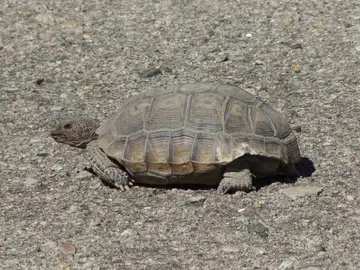
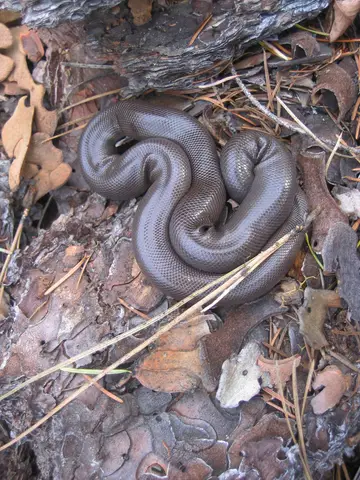
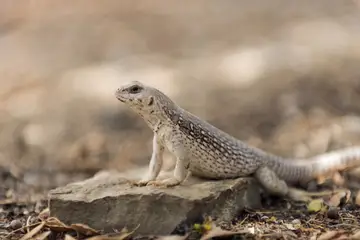
California has 7 venomous land snakes named by official sources: Western Rattlesnake, Sidewinder, Mohave Rattlesnake, Speckled Rattlesnake, Western Diamond-backed Rattlesnake, Red Diamond Rattlesnake and Panamint Rattlesnake, as labelled by US Centers for Disease Control and Prevention and University of California Statewide IPM Program. The yellow-bellied seasnake, a venomous sea snake, is also named. This guide covers 10 animal groups from California Department of Fish and Wildlife (CDFW) lists and other official sources, with photos, venomous status and when each group is active.
Identification help has limits: a photo cannot confirm that an animal is safe. Watch from a distance and never handle a wild animal.
These are the animals official sources describe as venomous or as a risk to people in California, across 8 groups. The reason is given in the source's own terms.
Venomous: “Venom from its bite can cause reactions ranging from mild to painful and serious, but death is very unlikely and many symptoms can be alleviated if medical treatment is obtained.”
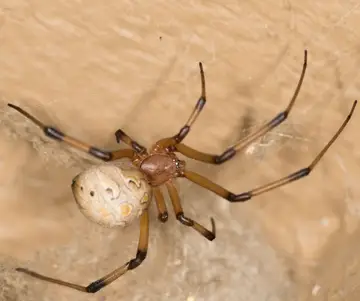
Venomous: “Although its venom is at least as potent as black widow venom (drop for drop, as tested in mice), the brown widow is smaller and likely injects much less venom during a bite.”
Venomous: “All Loxosceles spiders tested so far have the venom component that is capable of causing necrotic skin lesions, so it is best to assume that all recluse spiders may be capable of causing skin damage.”
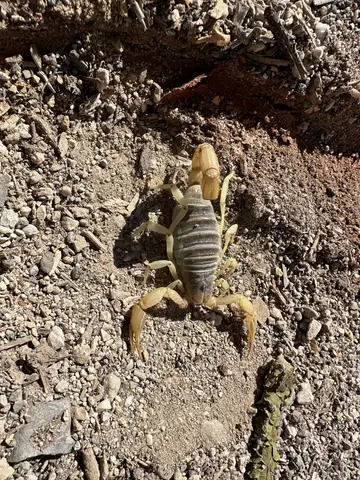
Venomous: “Notable species of scorpions in the southwestern United States include the bark scorpion, which has venom that is dangerous to people; the Arizona hairy scorpion, the largest of the North American …”
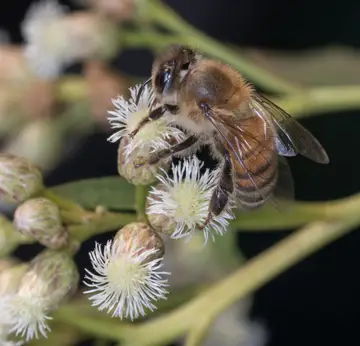
Venomous: “Of specific concern is a condition that results from multiple-sting encounters, sometimes unfamiliar to attending health professionals, that is induced by the volume of foreign protein injected and …”
Disease (West Nile virus and others): “Mosquitoes are small flying insects that bite people and animals and can spread diseases such as West Nile virus.”
Rare attacks on humans, including fatalities: “Mountain lion attacks on humans are rare. Since 1890, there have been less than 50 verified mountain lion attacks on humans in California, including six fatal incidents.”
Health and safety concerns if habituated: “Potential conflict with coyotes may occur due to property damage, loss of pets or small livestock, or human health and safety concerns if a coyote loses its natural fear of humans.”
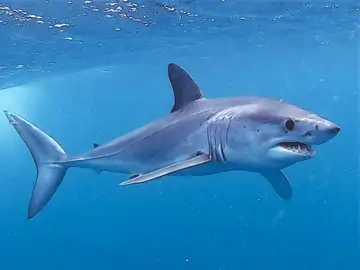
Responsible for the vast majority of shark incidents: “Since 1950, there have been less than 250 shark incidents in California involving many species of sharks, the vast majority of which involved white sharks …”
9 nonnative animals are named on California's official lists (California Department of Fish and Wildlife). The USGS Nonindigenous Aquatic Species database records 4 nonnative animals in our groups with an established population in California.
Darker cells are the months with more open-licence observation records of each group in California (GBIF). They show when people see and record these animals, not how many there are. The current month, this month, is highlighted.
Rattlesnakes: most active at dawn, dusk and night in spring and summer; inactive/brumating in fall and winter; most bites April-October California Department of Fish and Wildlife
Report: Wildlife conflicts: CDFW Wildlife Incident Reporting (WIR) system https://apps.wildlife.ca.gov/wir, emergencies 9-1-1. Invasive animal sightings: CDFW Invasive Species Program (866) 440-9530 or [email protected]; invasive insects/spiders/terrestrial invertebrates: California Department of Food and Agriculture 1-800-491-1899. California Department of Fish and Wildlife
UC IPM states the rattlesnake is California's only native venomous snake (CDFW lists 7 rattlesnake species). The Yellow-bellied Seasnake is on the CDFW Complete List and CDC states all sea snakes are venomous. Rear-fanged snakes are listed by CDFW without a venom statement. University of California Statewide IPM Program
Yes. Gila Monster is on the CDFW Complete List (2016); NPS states Gila Monsters are protected by state law in California and the other states where they occur. CWHR Program · More
“The yellow-bellied sea snake, Pelamis platurus, has also been found along the eastern Pacific Coast of Central and South America. All 52 known species of sea snakes are venomous, and human deaths from bites have been reported.”
Pest Notes: Rattlesnakes. University of California Statewide IPM Program (UC ANR, Cooperative Extension). 2014-12; checked November 3, 2026.Quoted passages (1)
“The rattlesnake is California’s only native venomous snake.”
Pest Notes: Spiders (UC ANR Publication 7442). University of California Statewide IPM Program (UC ANR, Cooperative Extension). 2020-10; checked November 3, 2026.Quoted passages (3)
“Venom from its bite can cause reactions ranging from mild to painful and serious, but death is very unlikely and many symptoms can be alleviated if medical treatment is obtained.”
“Black widow spiders occur in most parts of California.”
“The brown recluse spider and the hobo spider do not live in California.”
Pest Notes: Widow Spiders and Their Relatives. University of California Statewide IPM Program (UC ANR, Cooperative Extension). 2017-03; checked November 3, 2026.Quoted passages (1)
“Although its venom is at least as potent as black widow venom (drop for drop, as tested in mice), the brown widow is smaller and likely injects much less venom during a bite.”
“In general, the desert recluse spider's venom is similar to that of the brown recluse and should be considered of equal potency.”
“All Loxosceles spiders tested so far have the venom component that is capable of causing necrotic skin lesions, so it is best to assume that all recluse spiders may be capable of causing skin damage.”
“Contrary to popular belief, there are no populations of the brown recluse spider in California.”
Pest Notes: Scorpions. University of California Statewide IPM Program (UC ANR, Cooperative Extension). 2011-12; checked November 3, 2026.Quoted passages (2)
“Notable species of scorpions in the southwestern United States include the bark scorpion, which has venom that is dangerous to people; the Arizona hairy scorpion, the largest of the North American scorpions; and the stripedtail scorpion, one of the most common species.”
“In California, the bark scorpion occurs only in the extreme southeastern part of the state, along the Arizona border.”
Pest Notes: Bee and Wasp Stings. University of California Statewide IPM Program (UC ANR, Cooperative Extension). 2011-09; checked November 3, 2026.Quoted passages (1)
“An individual Africanized bee can sting only once and has the same venom as the European honey bee.”
“Of specific concern is a condition that results from multiple-sting encounters, sometimes unfamiliar to attending health professionals, that is induced by the volume of foreign protein injected and the tissue damage caused by destructive enzymes in wasp venom.”
“Defensive behavior increases as the season progresses”
Pest Notes: Red Imported Fire Ant. University of California Statewide IPM Program (UC ANR, Cooperative Extension). 2013-12; checked November 3, 2026.Quoted passages (1)
“Venom injected into the skin causes a burning sensation (hence the name fire ant).”
Lyme Disease Fact Sheet. California Department of Public Health. March 14, 2017; checked November 3, 2026.Quoted passages (1)
“The western black-legged tick has been found in 56 of the 58 counties in California.”
Pest Notes: Mosquitoes. University of California Statewide IPM Program (UC ANR, Cooperative Extension). 2020-04; checked November 3, 2026.Quoted passages (1)
“Mosquitoes are small flying insects that bite people and animals and can spread diseases such as West Nile virus.”
Pest Notes: Conenose Bugs. University of California Statewide IPM Program (UC ANR, Cooperative Extension). 2013-07; checked November 3, 2026.Quoted passages (1)
“In Latin America, these insects are important because they transmit the protozoan Trypanosoma cruzi, which causes Chagas disease in humans.”
“Mountain lion attacks on humans are rare. Since 1890, there have been less than 50 verified mountain lion attacks on humans in California, including six fatal incidents.”
“They inhabit diverse habitat types throughout the state, including forests and foothills, coastal, rural, and wildlife-urban interfaces.”
“Black bear encounters resulting in human injury are rare in California.”
“If a black bear makes contact - fight back! Then - Call 9-1-1”
Human-Wildlife Conflicts: Coyotes. California Department of Fish and Wildlife. undated page; checked November 3, 2026.Quoted passages (2)
“Potential conflict with coyotes may occur due to property damage, loss of pets or small livestock, or human health and safety concerns if a coyote loses its natural fear of humans.”
“If a coyote makes contact, fight back! Then call Animal Control or 9-1-1.”
Bat Ray - Discover Fishes species profile. Florida Museum of Natural History (University of Florida). February 6, 2025; checked November 3, 2026.Quoted passages (1)
“However, care should be taken when handling these fish due to the venomous spine that is located at the base of the tail.”
“It also has a venomous spine halfway down its tail, so caution should be used handling these rays, or when in its habitat.”
White Shark Information. California Department of Fish and Wildlife (Marine Region). undated page; checked November 3, 2026.Quoted passages (3)
“Since 1950, there have been less than 250 shark incidents in California involving many species of sharks, the vast majority of which involved white sharks. Of those, fewer than 20 were fatal and all of the fatalities likely involved white sharks (see details below).”
“Incidents where sharks bite humans are extremely rare in California.”
“While more shark incidents occur in the late summer and fall, this is consistent with the warmest water in California, and times when more people are at the beaches.”
Nutria Infestation. California Department of Fish and Wildlife (Invasive Species Program). undated page; checked November 3, 2026.Quoted passages (1)
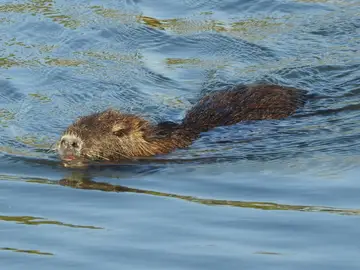
“In 2017, a reproducing population of nutria was discovered in California's San Joaquin Valley.”
“Southern watersnakes are native to the southeastern United States;”
California's Invaders: Red-Eared Slider. California Department of Fish and Wildlife (Invasive Species Program). undated page; checked November 3, 2026.Quoted passages (1)
“Introduced red-eared sliders compete with native species for food and habitat.”
California's Invaders: American Bullfrog. California Department of Fish and Wildlife (Invasive Species Program). undated page; checked November 3, 2026.Quoted passages (1)
“Although American bullfrogs have become widespread throughout California, they are rarely found in elevations above 7000 ft. in the Sierra Nevada Mountains.”
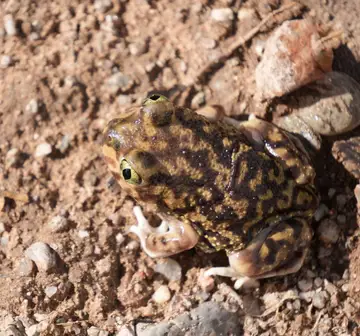
California's Invaders: African Clawed Frog. California Department of Fish and Wildlife (Invasive Species Program). undated page; checked November 3, 2026.Quoted passages (1)
“African clawed frogs have become established in watersheds throughout southern California in Imperial, Kern, Los Angeles, Orange, Riverside, San Bernardino, San Diego, Santa Barbara, and Ventura Counties.”
California's Invaders: Common Coqui. California Department of Fish and Wildlife (Invasive Species Program). undated page; checked November 3, 2026.Quoted passages (1)
“A single coqui was collected from a private residence in Orange County in 2012 and was determined to have originated by ‘hitchhiking’ on a tropical house plant.”
California's Invaders: Mute Swan. California Department of Fish and Wildlife (Invasive Species Program). undated page; checked November 3, 2026.Quoted passages (1)
“They have been observed in the wild in Suisun Marsh (Solano County) and Petaluma Marsh Wildlife Area (Marin and Sonoma Counties).”
Report an Invasive Species Sighting. California Department of Fish and Wildlife (Invasive Species Program). undated page; checked November 3, 2026.Quoted passages (1)
“To report a sighting of a known, or suspected invasive species of an animal (mammal, bird, reptile, amphibian, fish, aquatic invertebrate) or marine plant, complete and submit the Suspect Invasive Species Sighting Report form below or contact us at (866) 440-9530. / For a known invasive plant, terrestrial invertebrate (worm, beetle, spider, bug, bee, fly, ant, snail, etc.) or plant/tree disease, or one that you suspect may be new to your area of California, contact the California Department of Food and Agriculture at 1-800-491-1899. / [ca-cdfw-hwc] Wildlife Incident Reporting (WIR) System For Emergencies, call 9-1-1”
Rattlesnake. California Department of Fish and Wildlife. undated page; checked November 3, 2026.Quoted passages (6)
“There are seven species of rattlesnake in California:”
“For more information, call the California Poison Control System at (800) 222-1222. In the event of an emergency situation, call 9-1-1 and seek medical attention immediately.”
“DO NOT try to touch or handle a snake, dead or alive. Dead rattlers may still inject venom shortly after death.”
“A startled rattlesnake may NOT rattle before striking defensively.”
“In Spring and Summer - Most active at dawn, dusk, and night to avoid overheating. In Fall and Winter - Inactive, and some may go into brumation (a state of dormancy with periods of activity), for several months in rock crevices, rodent burrows, or thick vegetation. … Most bites occur between April and October when snakes and humans are most active outdoors.”
“Rattlesnake courtship and mating occurs once temperatures heat up with the warmer weather (March to May). … Females often nest in old rodent burrows and rock crevices, and give birth to 1 to 25 live young in the Fall.”