This page lists 4 insects and 4 ticks.
3 are venomous by official accounts. 1 is nonnative.
Not every species: no complete official list of California insects exists, so this page covers the ones state and Extension sources name. How lists are built.
Which insects can hurt you
Official sources single out these insects in California, in their own words:
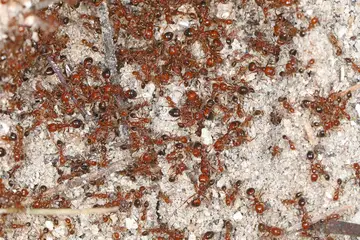
Venomous stings, repeated. “The red imported fire ant's sting is a serious concern to people and their pets since a single red imported fire ant can bite and sting its victim repeatedly.” University of California Statewide IPM Program
Mosquitoes
Disease (West Nile virus and others). “Mosquitoes are small flying insects that bite people and animals and can spread diseases such as West Nile virus.” University of California Statewide IPM Program
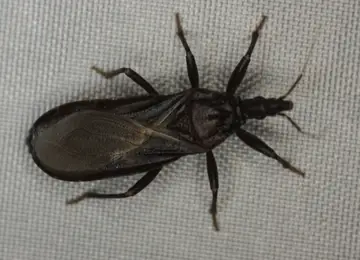
Bites. “In Latin America, these insects are important because they transmit the protozoan Trypanosoma cruzi, which causes Chagas disease in humans.” University of California Statewide IPM Program
Ticks (arachnids, not insects)
Official sources single out these ticks in California, in their own words:
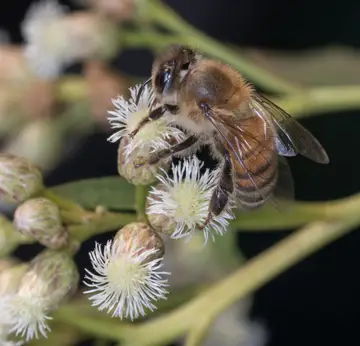
About 10 percent smaller than a European honey bee, a difference too subtle to see without measurement or lab tests.
How to recognize it
Cannot be identified by eye: only DNA testing or microscopic measurements can tell it from a European honey bee.
Clue is behavior and nest site: very defensive, and may nest in small cavities such as water meter boxes, old tires, house eaves or the ground.
JFMAMJJASOND
9,622 records by month.What the sources say
Venom: “An individual Africanized bee can sting only once and has the same venom as the European honey bee.” (University of California Statewide IPM Program)
“The red imported fire ant's sting is a serious concern to people and their pets since a single red imported fire ant can bite and sting its victim repeatedly.” University of California Statewide IPM Program
JFMAMJJASOND
36 records by month.What the sources say
Venom: “Venom injected into the skin causes a burning sensation (hence the name fire ant).” (University of California Statewide IPM Program)
Venom: “Of specific concern is a condition that results from multiple-sting encounters, sometimes unfamiliar to attending health professionals, that is induced by the volume of foreign protein injected and the tissue damage caused by destructive enzymes in wasp venom.” (University of California Statewide IPM Program)
No confirmed photo of American Dog Tick (arachnid)
American Dog Tick (arachnid)
Dermacentor similis
Not statedTick: an arachnid, not an insect
Venom
No official source we use states whether this animal is venomous. That does not mean it is harmless: do not handle it.
No confirmed photo of Brown Dog Tick (arachnid)
Brown Dog Tick (arachnid)
Rhipicephalus sanguineus
Not statedTick: an arachnid, not an insect
Venom
No official source we use states whether this animal is venomous. That does not mean it is harmless: do not handle it.
No confirmed photo of Pacific Coast Tick (arachnid)
Pacific Coast Tick (arachnid)
Dermacentor occidentalis
Not statedTick: an arachnid, not an insect
Venom
No official source we use states whether this animal is venomous. That does not mean it is harmless: do not handle it.
No official source we use states whether this animal is venomous. That does not mean it is harmless: do not handle it.
Danger to people
“In Latin America, these insects are important because they transmit the protozoan Trypanosoma cruzi, which causes Chagas disease in humans.” University of California Statewide IPM Program
Where in California
In California these bugs are most prevalent in the foothill areas surrounding the Central Valley and in the foothills and desert areas of Southern California. University of California Statewide IPM Program
Wildlife conflicts: CDFW Wildlife Incident Reporting (WIR) system https://apps.wildlife.ca.gov/wir, emergencies 9-1-1. Invasive animal sightings: CDFW Invasive Species Program (866) 440-9530 or [email protected]; invasive insects/spiders/terrestrial invertebrates: California Department of Food and Agriculture 1-800-491-1899. California Department of Fish and Wildlife
Pest Notes: Bee and Wasp Stings. University of California Statewide IPM Program (UC ANR, Cooperative Extension). 2011-09; checked November 3, 2026.Quoted passages (3)
“An individual Africanized bee can sting only once and has the same venom as the European honey bee.”
“However, Africanized honey bees are less predictable and more defensive than European honey bees.”
“The two types of bees look the same, and their behavior is similar in many respects.”
“Of specific concern is a condition that results from multiple-sting encounters, sometimes unfamiliar to attending health professionals, that is induced by the volume of foreign protein injected and the tissue damage caused by destructive enzymes in wasp venom.”
“Stings generally cause pain and short-term injury, but some people suffer severe allergic responses.”
Pest Notes: Red Imported Fire Ant. University of California Statewide IPM Program (UC ANR, Cooperative Extension). 2013-12; checked November 3, 2026.Quoted passages (2)
“Venom injected into the skin causes a burning sensation (hence the name fire ant).”
“The red imported fire ant's sting is a serious concern to people and their pets since a single red imported fire ant can bite and sting its victim repeatedly.”
Pest Notes: Conenose Bugs. University of California Statewide IPM Program (UC ANR, Cooperative Extension). 2013-07; checked November 3, 2026.Quoted passages (1)
“In Latin America, these insects are important because they transmit the protozoan Trypanosoma cruzi, which causes Chagas disease in humans.”
Lyme Disease. California Department of Public Health. November 26, 2025; checked November 3, 2026.Quoted passages (1)
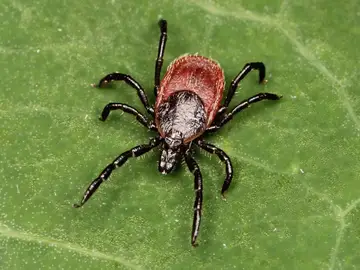
“Nymphs are more active in the spring and early summer, while adult blacklegged ticks are more active from fall through early spring.”
Lyme Disease Fact Sheet. California Department of Public Health. March 14, 2017; checked November 3, 2026.Quoted passages (1)
“The western black-legged tick has been found in 56 of the 58 counties in California.”
Pest Notes: Mosquitoes. University of California Statewide IPM Program (UC ANR, Cooperative Extension). 2020-04; checked November 3, 2026.Quoted passages (1)
“Mosquitoes are small flying insects that bite people and animals and can spread diseases such as West Nile virus.”
Pest Notes: Scorpions. University of California Statewide IPM Program (UC ANR, Cooperative Extension). 2011-12; checked November 3, 2026.Quoted passages (1)
“These symptoms are signs for the need of immediate medical attention.”
Report an Invasive Species Sighting. California Department of Fish and Wildlife (Invasive Species Program). undated page; checked November 3, 2026.Quoted passages (1)
“To report a sighting of a known, or suspected invasive species of an animal (mammal, bird, reptile, amphibian, fish, aquatic invertebrate) or marine plant, complete and submit the Suspect Invasive Species Sighting Report form below or contact us at (866) 440-9530. / For a known invasive plant, terrestrial invertebrate (worm, beetle, spider, bug, bee, fly, ant, snail, etc.) or plant/tree disease, or one that you suspect may be new to your area of California, contact the California Department of Food and Agriculture at 1-800-491-1899. / [ca-cdfw-hwc] Wildlife Incident Reporting (WIR) System For Emergencies, call 9-1-1”