Georgia has 7 venomous snakes named by official sources: Copperhead, Northern Cottonmouth, Florida Cottonmouth, Eastern Diamond-backed Rattlesnake, Timber Rattlesnake, Pigmy Rattlesnake and Eastern Coral Snake, as labelled by Georgia DNR Wildlife Resources Division, Wildlife Conservation Section. This guide covers 10 animal groups from Georgia Department of Natural Resources, Wildlife Resources Division (DNR WRD) lists and other official sources, with photos, venomous status and when each group is active.
Identification help has limits: a photo cannot confirm that an animal is safe. Watch from a distance and never handle a wild animal.
These are the animals official sources describe as venomous or as a risk to people in Georgia, across 6 groups. The reason is given in the source's own terms.
Venomous: “Of the 47 species of snakes known from Georgia, only seven species are venomous: Copperhead (Agkistrodon contortrix), Northern and Florida Cottonmouth (Agkistrodon piscivorus and Agkistrodon …”
Venomous: “Of the 47 species of snakes known from Georgia, only seven species are venomous: Copperhead (Agkistrodon contortrix), Northern and Florida Cottonmouth (Agkistrodon piscivorus and Agkistrodon …”
Venomous: “Of the 47 species of snakes known from Georgia, only seven species are venomous: Copperhead (Agkistrodon contortrix), Northern and Florida Cottonmouth (Agkistrodon piscivorus and Agkistrodon …”
Venomous: “Of the 47 species of snakes known from Georgia, only seven species are venomous: Copperhead (Agkistrodon contortrix), Northern and Florida Cottonmouth (Agkistrodon piscivorus and Agkistrodon …”
Venomous: “Of the 47 species of snakes known from Georgia, only seven species are venomous: Copperhead (Agkistrodon contortrix), Northern and Florida Cottonmouth (Agkistrodon piscivorus and Agkistrodon …”
Venomous: “Of the 47 species of snakes known from Georgia, only seven species are venomous: Copperhead (Agkistrodon contortrix), Northern and Florida Cottonmouth (Agkistrodon piscivorus and Agkistrodon …”
Venomous: “Of the 47 species of snakes known from Georgia, only seven species are venomous: Copperhead (Agkistrodon contortrix), Northern and Florida Cottonmouth (Agkistrodon piscivorus and Agkistrodon …”
Venomous: “Brown recluse spider bites, on the other hand, cause tissue damage by salivary secretions in their venom and antibiotics have no effect on salivary secretions.”
Venomous (UGA Extension): “Georgia has three species of widow spiders: southern black, northern black and brown. … One notion about widow spiders is true: They are venomous.”
Venomous: “Bees, wasps, hornets, fire ants and scorpions that inject venom from the tip of their abdomen are sometimes considered beneficial because of their importance in pollination or because they prey on …”
Venomous: “Bees, wasps, hornets, fire ants and scorpions that inject venom from the tip of their abdomen are sometimes considered beneficial because of their importance in pollination or because they prey on …”
Venomous: “Bees, wasps, hornets, fire ants and scorpions that inject venom from the tip of their abdomen are sometimes considered beneficial because of their importance in pollination or because they prey on …”
Venomous: “Bees, wasps, hornets, fire ants and scorpions that inject venom from the tip of their abdomen are sometimes considered beneficial because of their importance in pollination or because they prey on …”
Venomous: “Bees, wasps, hornets, fire ants and scorpions that inject venom from the tip of their abdomen are sometimes considered beneficial because of their importance in pollination or because they prey on …”
Venomous: “Bees, wasps, hornets, fire ants and scorpions that inject venom from the tip of their abdomen are sometimes considered beneficial because of their importance in pollination or because they prey on …”
Venomous: “Bees, wasps, hornets, fire ants and scorpions that inject venom from the tip of their abdomen are sometimes considered beneficial because of their importance in pollination or because they prey on …”
Venomous: “Bees, wasps, hornets, fire ants and scorpions that inject venom from the tip of their abdomen are sometimes considered beneficial because of their importance in pollination or because they prey on …”
Venomous: “Bees, wasps, hornets, fire ants and scorpions that inject venom from the tip of their abdomen are sometimes considered beneficial because of their importance in pollination or because they prey on …”
Venomous: “Bees, wasps, hornets, fire ants and scorpions that inject venom from the tip of their abdomen are sometimes considered beneficial because of their importance in pollination or because they prey on …”
Can attack in large numbers, exposing victims to dangerous amounts of venom: “Bees and wasps that live in colonies can attack in large numbers, potentially exposing victims to dangerous amounts of venom.”
Stings can cause serious medical problems: “The two species of imported fire ants (red imported fire ant, Solenopsis invicta Buren, and black imported fire ant, Solenopsis richteri Forel) and their hybrid are nuisance insects whose stings can …”
Can carry the parasite that causes Chagas disease (spread through feces, not the bite): “Kissing bugs are not deadly and most of them are not infected with the parasite that causes Chagas disease … The Chagas disease parasite is transmitted only through the feces of specific kissing bugs.”
Rabies vector species (Georgia DPH): “Raccoons, skunks, and foxes are rabies vector species, and the most common terrestrial wildlife infected with rabies in Georgia …”
Rabies vector species (Georgia DPH): “Raccoons, skunks, and foxes are rabies vector species, and the most common terrestrial wildlife infected with rabies in Georgia.”
Rabies vector species (Georgia DPH): “Raccoons, skunks, and foxes are rabies vector species, and the most common terrestrial wildlife infected with rabies in Georgia.”
Rabies vector species (Georgia DPH): “Raccoons, skunks, and foxes are rabies vector species, and the most common terrestrial wildlife infected with rabies in Georgia.”
Rabies: “Do not handle bats. If you pick one up, it is likely to bite. Very few bats are positive for rabies, but without prompt care the disease is fatal.”
Can carry rabies and canine distemper (GA DNR): “Coyotes can carry diseases transmittable to pets and humans. … Can be transmitted to humans and pets through bite or saliva of an infected animal.”
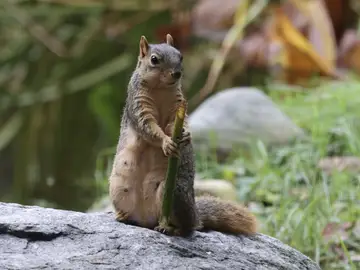
Large wildlife: “There are no recorded bear attacks on humans in Georgia, and no fatalities. There have only been three documented fatal black bear attacks in the Southeastern United States.”
May carry diseases transmissible to humans incl. leprosy, reports rare (UGA Warnell/Extension): “Armadillos may carry diseases transmissible to humans, but reports are rare. Armadillos can acquire leprosy and are used in medical research to study this disease.”
Venomous: “When you brush against a tentacle, tiny triggers on the tentacle's surface release the stingers which shoot out like a microscopic, barbed dart and inject venom.”
Venomous: “When you brush against a tentacle, tiny triggers on the tentacle's surface release the stingers which shoot out like a microscopic, barbed dart and inject venom.”
Venomous: “When you brush against a tentacle, tiny triggers on the tentacle's surface release the stingers which shoot out like a microscopic, barbed dart and inject venom.”
Venomous: “When you brush against a tentacle, tiny triggers on the tentacle's surface release the stingers which shoot out like a microscopic, barbed dart and inject venom.”
Venomous: “When you brush against a tentacle, tiny triggers on the tentacle's surface release the stingers which shoot out like a microscopic, barbed dart and inject venom.”
Sting (venom): “When you brush against a tentacle, tiny triggers on the tentacle's surface release the stingers which shoot out like a microscopic, barbed dart and inject venom.”
Stingers can still release venom: “It's important to note that jellyfish that have washed up dead on the beach may still release venom if their stingers are touched.”
32 nonnative animals are named on Georgia's official lists (Georgia DNR Wildlife Resources Division). The USGS Nonindigenous Aquatic Species database records 3 nonnative animals in our groups with an established population in Georgia.
Darker cells are the months with more open-licence observation records of each group in Georgia (GBIF). They show when people see and record these animals, not how many there are. The current month, this month, is highlighted.
Eastern diamondbacks are dormant underground over late fall and winter, emerging briefly on warm sunny days; regularly above ground again with spring warmth. Georgia DNR Wildlife Resources Division
Eastern coral snakes: high surface activity of males in spring, females often active in fall; can be active day or night, especially dawn and dusk. Georgia DNR Wildlife Resources Division
Yes. Georgia DNR: approximately 200,000-250,000 alligators in the state; in Georgia they typically live along and south of the fall line (roughly Columbus, Macon and Augusta), with no evidence of reproducing populations north of it. Georgia DNR Wildlife Resources Division · More
Are there alligators in north georgia?
Rarely. DNR: no evidence that alligator populations reproduce north of the fall line; any found there have probably been relocated by humans. Georgia DNR Wildlife Resources Division · More
Rarely. DNR fact sheet (revised 09/16): nine reported alligator attacks on humans in Georgia from 1980 to May 2007, including one fatality in 2007. Georgia DNR Wildlife Resources Division
Are there sea turtles in Georgia?
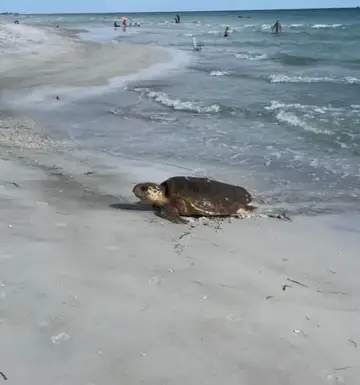
Yes. Five of the world's seven sea turtle species are found along Georgia's coast; the loggerhead is the only one that nests regularly on the barrier islands. Loggerhead nesting season in Georgia is late May to mid-August. Georgia DNR Wildlife Resources Division
Are there tegus in Georgia?
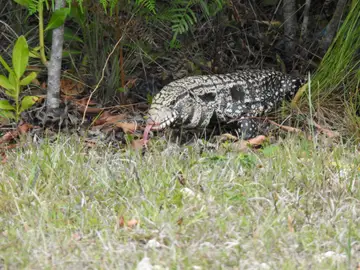
Yes. Georgia's only known wild population of Argentine black and white tegus is in Toombs and Tattnall counties; escaped or released tegus are occasionally reported elsewhere. Georgia DNR Wildlife Resources Division
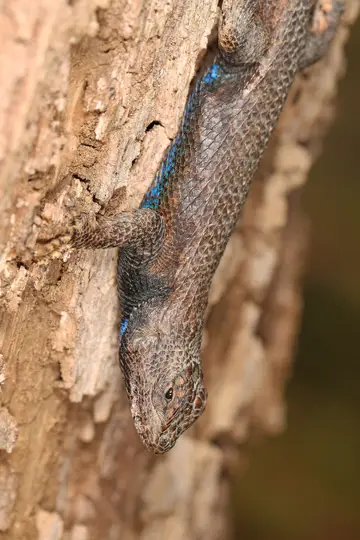
Are blue-tailed skinks (scorpions) venomous in Georgia?
Yes. Listed by Georgia DNR as a native species and state Threatened. Georgia DNR
Are there bears in Georgia?
Yes. Black bears occur in three regions — the north Georgia mountains, the Ocmulgee River drainage in central Georgia, and in/around the Okefenokee Swamp — with about 5,100 statewide; DNR records no bear attacks on humans in Georgia. Georgia DNR Wildlife Resources Division · More
Not established. DNR says no credible physical evidence of a mountain lion population exists in Georgia; only three credible sightings in 25 years, all related to the Florida panther. Georgia DNR Wildlife Resources Division · More
Are there armadillos in Georgia?
Yes. Armadillos are common in central and southern Georgia and spreading north along I-75; they may be absent from mountain counties. University of Georgia Warnell School · More
Georgia DPH names raccoons, skunks and foxes as rabies vector species and the most common terrestrial wildlife with rabies in Georgia; DNR adds that very few bats carry rabies but they should not be handled. Georgia Department of Public Health
Are there sharks in Georgia?
Yes. NOAA says sharks are the top predators at Gray's Reef National Marine Sanctuary off the Georgia coast; common species include blacktip, white, great hammerhead, nurse, sand tiger and tiger sharks. NOAA Gray's Reef National Marine Sanctuary
Are there lionfish in Georgia?
Yes. Georgia DNR lists lionfish among aquatic nuisance species found in or near Georgia, and NOAA lists the invasive lionfish among fishes at Gray's Reef National Marine Sanctuary. NOAA Gray's Reef National Marine Sanctuary
Are there burmese pythons in Georgia?
USGS NAS lists a single Georgia record: Charlton County, 2012, with status 'unknown'. No established population is stated by the sources reviewed. USGS Nonindigenous Aquatic Species database
Are there snakeheads in Georgia?
Georgia DNR: the first confirmed northern snakehead in Georgia was caught by an angler in Gwinnett County in October 2019. Georgia DNR Wildlife Resources Division
Are there whales off the coast of georgia?
Yes. Georgia DNR: the waters off coastal Georgia and north Florida are the North Atlantic right whale's only known calving grounds; it is Georgia's state marine mammal. Georgia DNR Wildlife Resources Division
Are there jellyfish in Georgia?
Yes. UGA Cooperative Extension: moon jellies, cannonball jellies, sea nettles, box jellyfish (not the lethal Australian kind) and lion's manes are the species most likely seen on the Georgia coast. UGA Cooperative Extension, Camden County
Yes. USGS NAS lists Cuban treefrog records from many Georgia counties, some marked established (e.g., Thunderbolt, Chatham County, 2017). USGS Nonindigenous Aquatic Species database
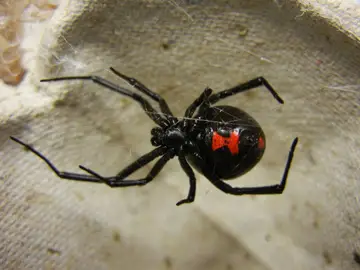
Yes. UGA Extension says the black widow is very common throughout the state and is one of at least two spiders in Georgia dangerous to humans. University of Georgia Cooperative Extension
Yes. UGA Extension says the Joro spider, native to East Asia, was first documented in the U.S. in 2014 in northeast Georgia and had spread about 75 miles in all directions by 2022. University of Georgia Cooperative Extension
Are there yellow-legged hornets in Georgia?
Yes. The Georgia Department of Agriculture says yellow-legged hornets have only been detected in the Savannah area: Chatham, Bryan, Effingham and Liberty counties. Georgia Department of Agriculture
Are there murder hornets in Georgia?
The Georgia Department of Agriculture's hornet pages cover the yellow-legged hornet (Vespa velutina), a different species, detected near Savannah. Georgia Department of Agriculture
Are there spotted lanternflies in Georgia?
Yes. The Georgia Department of Agriculture says the first live population was found in Fulton County in October 2024, the only known presence in the state. Georgia Department of Agriculture
Are there fire ants in Georgia?
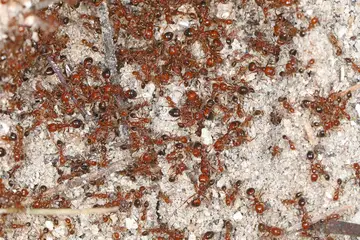
Yes. UGA Extension says a large population of hybrid imported fire ants extends into parts of Georgia, and the Georgia Department of Agriculture administers the imported fire ant quarantine in the state. University of Georgia Cooperative Extension
Are there kissing bugs in Georgia?
Yes. UGA CAES (2015) says the kissing bug is native to Georgia; kissing bugs are not deadly, most are not infected with the Chagas parasite, and the parasite spreads through feces, not the bite. University of Georgia CAES Field Report
Are there brown widow spiders in Georgia?
Yes. UGA Extension says Georgia has three species of widow spiders: southern black, northern black and brown; widow spiders are venomous. University of Georgia CAES Field Report
Are lionfish venomous?
Yes. USGS NAS: the dorsal- and anal-fin spines of the lionfish contain a potent venom that can administer a painful sting. NOAA lists lionfish as invasive at Gray’s Reef off Georgia. US Geological Survey, Nonindigenous Aquatic Species Database
Venomous Snakes of Georgia (brochure). Georgia DNR Wildlife Resources Division, Wildlife Conservation Section. PDF Last-Modified 2024-02-02; checked November 3, 2026.Quoted passages (5)
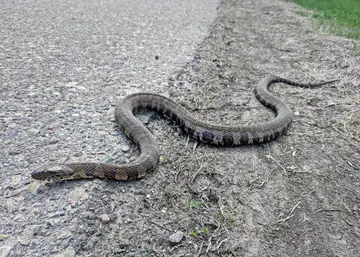
“Of the 47 species of snakes known from Georgia, only seven species are venomous: Copperhead (Agkistrodon contortrix), Northern and Florida Cottonmouth (Agkistrodon piscivorus and Agkistrodon conanti), Eastern Diamond-backed Rattlesnake (Crotalus adamanteus), Timber/Canebrake Rattlesnake (Crotalus horridus), Pigmy Rattlesnake (Sistrurus miliarius) and Eastern Coral Snake (Micrurus fulvius).”
“Call 911 or the Georgia Poison Center (1-800-222-1222) immediately.”
“DO NOT TRY TO KILL THE SNAKE; it could bite again.”
“Caution should be used when approaching any snake, and snakes found in the wild should only be handled by experienced people after proper identification.”
“In Georgia, it is illegal (a misdemeanor, punishable by up to a $1,000 fine and a year in jail) to possess or kill many of the state’s nongame wildlife species, including non-venomous snakes (O.C.G.A. §27-1-28).”
Widow spiders: Why gardeners wear work gloves. University of Georgia CAES Field Report (UGA Cooperative Extension). published 2008-02-21; checked November 3, 2026.Quoted passages (3)
“One notion about widow spiders is true: They are venomous.”
“Georgia has three species of widow spiders: southern black, northern black and brown. … One notion about widow spiders is true: They are venomous.”
“Georgia has three species of widow spiders: southern black, northern black and brown.”
Brown recluse spider isn't typically a Southerner. UGA College of Agricultural and Environmental Sciences (CAES Field Report/newswire). February 19, 2009; checked November 3, 2026.Quoted passages (1)
“Brown recluse spider bites, on the other hand, cause tissue damage by salivary secretions in their venom and antibiotics have no effect on salivary secretions.”
“Bees, wasps, hornets, fire ants and scorpions that inject venom from the tip of their abdomen are sometimes considered beneficial because of their importance in pollination or because they prey on other pest insects.”
“As with wasps and hornets, fire ants inject venom from the tip of the abdomen.”
“Among these hairs are hollow spines with venom.”
“Venom-filled spines are located on fleshy ‘knobs’ on all sides of its body.”
“The caterpillars of some moths have sharp, hollow spines or hairs that contain venom.”
“Bees and wasps that live in colonies can attack in large numbers, potentially exposing victims to dangerous amounts of venom.”
“A third type of reaction is called anaphylactic shock. In a few people, the immune system reacts severely and within minutes after receiving a sting they may develop: … in extreme cases, (e) unconsciousness or death.”
“One is the black widow, which is very common throughout the state.”
“The two species of imported fire ants (red imported fire ant, Solenopsis invicta Buren, and black imported fire ant, Solenopsis richteri Forel) and their hybrid are nuisance insects whose stings can cause serious medical problems.”
“Another species, the black imported fire ant, Solenopsis richteri Forel, was also introduced, but the range of this species is limited to northeastern Mississippi, northwestern Alabama and southern Tennessee, with a large population of hybrids between S. richteri and S. invicta that extends into parts of Georgia (Figure 1).”
“Kissing bugs are not deadly and most of them are not infected with the parasite that causes Chagas disease … The Chagas disease parasite is transmitted only through the feces of specific kissing bugs.”
“While the bug is native to Georgia, it made headlines recently because it is known to carry the parasite that causes Chagas disease”
“Raccoons, skunks, and foxes are rabies vector species, and the most common terrestrial wildlife infected with rabies in Georgia. All bites and scratches by these animals must be considered possible exposures to the rabies virus.”
“Raccoons, skunks, and foxes are rabies vector species, and the most common terrestrial wildlife infected with rabies in Georgia.”
Bats in Your House? Georgia DNR Wildlife Resources Division. undated page; checked November 3, 2026.Quoted passages (2)
“Do not handle bats. If you pick one up, it is likely to bite. Very few bats are positive for rabies, but without prompt care the disease is fatal.”
“Bat exclusions should be avoided between April 1st and July 31st in Georgia.”
Living with Coyotes (fact sheet). Georgia DNR Wildlife Resources Division. updated May 2020; checked November 3, 2026.Quoted passages (2)
“Coyotes can carry diseases transmittable to pets and humans. … Can be transmitted to humans and pets through bite or saliva of an infected animal.”
“Coyotes (Canis latrans) are extremely adaptable to their environment and can be found throughout suburban and urban areas. … Coyotes are a non-native species in Georgia and can be harvested year-round on private property.”
Black Bear Fact Sheet. Georgia DNR Wildlife Resources Division. Revised August 2021; checked November 3, 2026.Quoted passages (3)
“There are no recorded bear attacks on humans in Georgia, and no fatalities. There have only been three documented fatal black bear attacks in the Southeastern United States.”
“Black bears occur in three distinct regions in Georgia, but may range over the entire state at times in search of food or a territory of their own. Bear populations exist in the north Georgia mountains, along the Ocmulgee River drainage in central Georgia, and in/around the Okefenokee Swamp in southeast Georgia.”
“The breeding season is in July and cubs are born in the den in late January or February.”
WSFNR-17-36 Nine-banded Armadillo (M. T. Mengak). University of Georgia Warnell School (Extension publication series; PDF hosted on gadnrle.org). WSFNR-17-36; checked November 3, 2026.Quoted passages (2)
“Armadillos may carry diseases transmissible to humans, but reports are rare. Armadillos can acquire leprosy and are used in medical research to study this disease.”
“Armadillos are common in central and southern Georgia and can easily be found in most of Georgia’s 159 counties. They may be absent from the mountain counties but are found northward along the Interstate 75 corridor.”
“The dorsal- and anal-fin spines of the lionfish contain a potent venom that can administer a painful sting (Steinitz 1959).”
Understanding Jellyfish. UGA Cooperative Extension, Camden County (Jessica Warren, ANR Agent). published 2023-08-22, modified 2025-09-23; checked November 3, 2026.Quoted passages (3)
“When you brush against a tentacle, tiny triggers on the tentacle's surface release the stingers which shoot out like a microscopic, barbed dart and inject venom.”
“It's important to note that jellyfish that have washed up dead on the beach may still release venom if their stingers are touched.”
“The jellyfish species that you are most likely to see on the Georgia Coast are moon jellies, cannonball jellies, sea nettles, box jellyfish (although not the lethal kind found in Australia) and lion's manes.”
Argentine Black and White Tegus. Georgia DNR Wildlife Resources Division. undated page; checked November 3, 2026.Quoted passages (3)
“Growing up to 4 feet long and weighing 10 pounds or more, this lizard native to South America is an invasive species that threatens Georgia wildlife.”
“Georgia’s only known wild population is in Toombs and Tattnall counties. … Escaped or released tegus are occasionally reported elsewhere in Georgia.”
“Tell DNR when you see a tegu in the wild, alive or dead. … Phone: (478) 994-1438”
“In the United States, the Osteopilus septentrionalis is established throughout Florida in the peninsula and panhandle, as well as along the Atlantic coast to Savanah, Georgia”
“Feral hogs are an invasive species that can cause extensive damage to native flora and fauna, agricultural crops, livestock, forest regeneration, and the environment.”
“Native only to the Coosa River in Georgia, flathead catfish (Pylodictis olivaris) have decimated the popular redbreast sunfish and bullhead fisheries in the Altamaha River since their illegal introduction in the mid-1970s.”
“One of the largest freshwater catfish species in North America, blue catfish (Ictalurus furcatus) are native only to the Coosa River in Georgia but have been illegally introduced into several rivers, including the Ocmulgee, Oconee, Altamaha and Satilla (to name a few).”
“Native to the Coosa and Tallapoosa rivers in Georgia, their popularity resulted in illegal introduction throughout many other large state waterbodies, including Lake Lanier in the early 1970's.”
“While the species is not native to most of Georgia, it has been introduced into various waterbodies in Georgia in recent years.”
“This smaller Morone species has been introduced into other locales in Georgia, including the Coosa, Etowah and Oostanaula rivers, Rocky Mountain Public Fishing Area, and Carter's Lake.”
“In October 2019, the first confirmed northern snakehead in GA was captured and reported by an angler in Gwinnett County.”
“Most of these conflicts can be easily resolved or prevented by taking a few simple steps to eliminate attractants and haze unwanted wildlife from your yard or property.”
“There are approximately 200,000-250,000 alligators in the state of Georgia. … In Georgia, they typically live along and south of the fall line (which roughly traverses the cities of Columbus, Macon and Augusta).”
“There is no evidence that alligator populations reproduce north of the fall line and any found in these areas have probably been relocated there by humans.”
“From 1980-May 2007, there only have been nine reported cases of alligator attacks on humans in Georgia, including one fatality in 2007.”
American Alligator. Georgia DNR Coastal Resources Division. undated page; checked November 3, 2026.Quoted passages (1)
“Can American alligators be found in salt water? Yes, they CAN be found in salt water!”
“The world has only seven species of sea turtles and five are found along Georgia's coast: loggerhead, green, leatherback, Kemp's ridley and hawksbill. … Nesting season in Georgia is late May to mid-August.”
“The blue-tailed young of five-lined, southeastern five-lined, and broadhead skinks are widely referred to as ‘scorpions’ and are believed to have a venomous sting. While this belief is completely false, some scientists speculate that these skinks are bad-tasting to many predators.”
“To date, no credible physical evidence (carcasses, trail camera pictures, photographs, film footage, etc.) has been found to substantiate the existence of a population of mountain lions in Georgia.”
Living with Foxes (fact sheet). Georgia DNR Wildlife Resources Division. updated May 2020; checked November 3, 2026.Quoted passages (1)
“There are two species of fox in Georgia, the red fox (Vulpes vulpes) and the gray fox (Urocyon cinereoargenteus).”
Bats of Georgia. Georgia DNR Wildlife Resources Division. undated page; checked November 3, 2026.Quoted passages (1)
“Georgia is home to 16 species of bats!”
Fishes and Sharks. NOAA Gray's Reef National Marine Sanctuary. undated page; checked November 3, 2026.Quoted passages (2)
“Common shark species seen at Gray's Reef National Marine Sanctuary include blacktip, white, great hammerhead, nurse, sand tiger, and tiger sharks.”
“The diverse population also includes endangered species like the Atlantic sturgeon and invasive species like the lionfish.”
“The brown recluse is not a common Georgia spider and has limited distribution in the state.”
Scorpions not as dangerous as they look. UGA College of Agricultural and Environmental Sciences (CAES Field Report/newswire). July 17, 2003; checked November 3, 2026.Quoted passages (1)
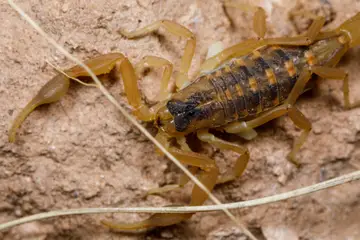
“At least two species, Gray said, are native to Georgia: the Southern devil (Vejovis carolinianus) and striped (Centruroides vittatus) scorpions.”
“The Joro spider, Trichonephila clavata, (Figure 1) is a native of Japan and East Asia that was first documented in the United States in 2014 in northeast Georgia (Figure 2).”
Yellow-legged Hornet FAQ. Georgia Department of Agriculture. undated page; checked November 3, 2026.Quoted passages (1)
“Currently, Yellow-legged Hornets have only been detected in the Savannah area, specifically in Chatham, Bryan, Effingham, and Liberty counties.”
Yellow-Legged Hornet. Georgia Department of Agriculture. HTTP Last-Modified 2026-11-02; checked November 3, 2026.Quoted passages (1)
“In August 2023, the Georgia Department of Agriculture (GDA), in coordination with the United States Department of Agriculture Animal and Plant Health Inspection Service (USDA APHIS) and the University of Georgia, confirmed the presence of a yellow-legged hornet (YLH; Vespa velutina) near Savannah, Ga.”
Spotted Lanternfly. Georgia Department of Agriculture. undated page; checked November 3, 2026.Quoted passages (1)
“Notably, the first live population in Georgia was found in Fulton County in October 2024, marking the only known presence of this pest in the state.”
“Over the late fall and winter, eastern diamondbacks enter a dormancy period in their underground shelters. They may emerge briefly on warm sunny days, but are not seen above ground regularly until the warmth of spring.”
“Dawn and dusk seem to be high activity periods. Spring is often a time of high surface activity for male snakes, and in fall, females are often active.”