Are there alligators in Georgia?
Last checked November 3, 2026 against official sources.
Yes.
Georgia DNR: approximately 200,000-250,000 alligators in the state; in Georgia they typically live along and south of the fall line (roughly Columbus, Macon and Augusta), with no evidence of reproducing populations north of it.
Georgia DNR Wildlife Resources Division: “There are approximately 200,000-250,000 alligators in the state of Georgia. … In Georgia, they typically live along and south of the fall line (which roughly traverses the cities of Columbus, Macon and Augusta).” Source
More official answers for Georgia
Are there alligators in north georgia?
Rarely. DNR: no evidence that alligator populations reproduce north of the fall line; any found there have probably been relocated by humans. Georgia DNR Wildlife Resources Division
Where the American alligator lives in the US
- Native or listed
- Nonnative or not established
- No official record in our data
- 1–9
- 10–99
- 100–999
- 1,000+
What else it could be
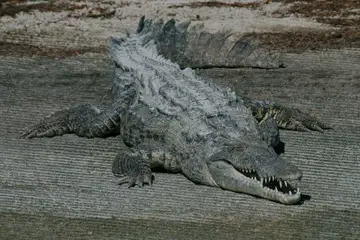
Photo: Dennis Vollmar · CC BY 4.0 · iNaturalist American crocodile
Crocodile: lighter grayish-green skin, narrow tapered triangular snout, fourth lower tooth visible with the mouth closed, and mostly coastal brackish or salt water in south Florida. Alligator: darker, broad rounded snout, mostly fresh water.
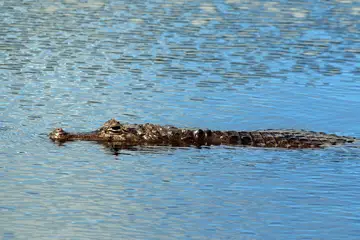
Photo: Charles J. Sharp · CC BY-SA 4.0 · Wikimedia Commons · resized Spectacled caiman
USGS: the common (spectacled) caiman's snout is not as broad and round as the American alligator's, and unlike the alligator it has a unique bony ridge in front of and between the eyes.

Other questions about Georgia
Sources
- Alligator Fact Sheet. Georgia DNR Wildlife Resources Division. Revised 09/16; checked November 3, 2026.
Quoted passages (2)
“There are approximately 200,000-250,000 alligators in the state of Georgia. … In Georgia, they typically live along and south of the fall line (which roughly traverses the cities of Columbus, Macon and Augusta).”
“There is no evidence that alligator populations reproduce north of the fall line and any found in these areas have probably been relocated there by humans.”