Arizona has 14 venomous snakes named by official sources: Western Diamond-backed Rattlesnake, Sidewinder, Arizona Black Rattlesnake, Rock Rattlesnake, Speckled Rattlesnake, Black-tailed Rattlesnake, Western Rattlesnake, Twin-spotted Rattlesnake, Mohave Rattlesnake, Tiger Rattlesnake, Prairie Rattlesnake, Ridge-nosed Rattlesnake, Sonoran Coralsnake and Massasauga, as labelled by Arizona Game and Fish Department. It also lists 11 snakes as mildly venomous or not dangerous to people. This guide covers 9 animal groups from Arizona Game and Fish Department lists and other official sources, with photos, venomous status and when each group is active.
Identification help has limits: a photo cannot confirm that an animal is safe. Watch from a distance and never handle a wild animal.
These are the animals official sources describe as venomous or as a risk to people in Arizona, across 8 groups. The reason is given in the source's own terms.
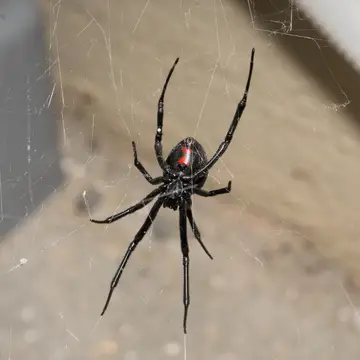
Venomous: “In Arizona, the two most common venomous spiders are the Western Black Widow (Latrodectus hesperus) and Arizona Recluse (Loxosceles arizonica).”
Venomous: “In Arizona, the two most common venomous spiders are the Western Black Widow (Latrodectus hesperus) and Arizona Recluse (Loxosceles arizonica).”
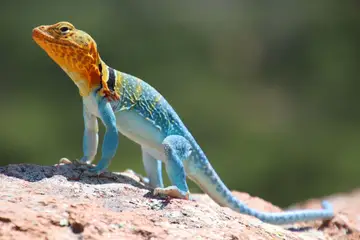
Venomous: “This lizard is a member of Helodermatidae, the only family of venomous lizards in the world. … Venom secreted from glands in the lower jaw is delivered through grooves in the teeth.”
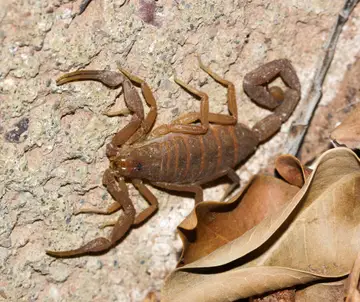
Venomous: “The Arizona bark scorpion is the only scorpion of medical concern in the U.S. (Curry et al. 1983), and while all native scorpions can sting, only Arizona bark scorpion stings are hazardous to human …”
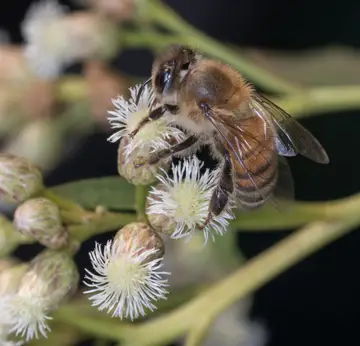
Venomous sting: “Although their sting is treated the same as other bee stings, these bees are very aggressive and much more likely to attack when threatened.”
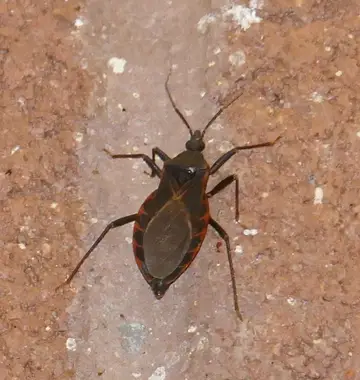
Severe allergic reaction: “The biggest health risk kissing bugs pose is one of severe allergic reaction. Some people develop a severe or life-threatening allergy to them after multiple bites.”
Attacks (uncommon): “Although uncommon, black bear attacks on humans occasionally occur, especially in areas where they come into frequent contact with people and human-related food sources.”
Disease (rabies): “While some people appreciate bats and the ways they benefit us, others fear bats because a small percentage of them can expose humans and pets to rabies.”
3 nonnative animals are named on Arizona's official lists (Arizona Poison and Drug Information Center). The USGS Nonindigenous Aquatic Species database records 1 nonnative animal in our groups with an established population in Arizona.
Darker cells are the months with more open-licence observation records of each group in Arizona (GBIF). They show when people see and record these animals, not how many there are. The current month, this month, is highlighted.
Report: Call the local AZGFD office 8 a.m.-5 p.m. Monday-Friday (excluding holidays); after hours and weekends call the AZGFD dispatcher at 623-236-7201. Arizona Game and Fish Department
Scorpion sting: call Poison Help at 1-800-222-1222; for stung children 9 or under (or under 70 lb), call 911 or Poison Help immediately. University of Arizona Cooperative Extension
Yes. AZGFD says Arizona has 13 rattlesnake species, more than any other U.S. state; the Arizona poison center counts 15 types and says all are venomous. Arizona Game and Fish Department
Yes. The Arizona bark scorpion is the only scorpion in Arizona regarded as life-threatening; small children are most at risk. Arizona Poison and Drug Information Center
Yes. AZGFD says reintroduction efforts are underway for the Mexican wolf; the AZGFD HDMS list includes the Mexican wolf with federal status LE,XN. Arizona Game and Fish Department
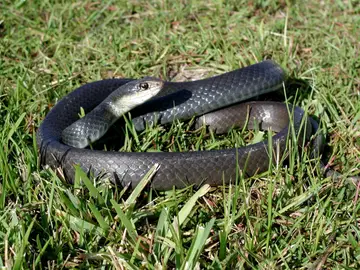
“This rattlesnake is capable of delivering large amounts of potent venom. If encountered it should be left alone. A large percentage of envenomations occur when a snake is handled or abused.”
“It is primarily diurnal and crepuscular in spring and fall and becomes primarily nocturnal and crepuscular during the hot summer months.”
“Captured individuals often drool from the corner of the mouth, possibly the result of the secretion of venom. … Mild venom delivered by enlarged rear teeth in the upper jaw is used to subdue prey which includes a variety of snakes, lizards, and insects.”
“There are two enlarged teeth on the posterior of each upper jaw bone (maxilla) which are used to inject a mild venom into prey. … The venom might be mildly toxic to humans.”
“It is mildly venomous but rarely bites when captured and its venom is not considered to be dangerous to humans. … The Desert Nightsnake uses mild venom injected by enlarged teeth in the rear upper jaw to subdue lizards and small snakes.”
“It is mildly venomous but rarely bites when captured and its venom is not considered to be dangerous to humans. … The Chihuahuan Nightsnake uses mild venom injected by enlarged teeth in the rear upper jaw to subdue lizards and small snakes.”
“It is mildly venomous but rarely bites when captured and its venom is not considered to be dangerous to humans. … The Hooded Nightsnake uses mild venom injected by enlarged teeth in the rear upper jaw to subdue lizards and small snakes.”
“Although this snake usually does not bite when captured it is capable of injecting mild venom with enlarged, grooved teeth in the rear portion of its upper jaw. … The Western Lyresnake uses its venom to subdue lizards, small mammals, bats, and birds.”
Scorpions. Arizona Poison and Drug Information Center (University of Arizona College of Pharmacy). 2026 (footer copyright; checked November 3, 2026.Quoted passages (3)
“Only one of the 30 species of scorpions found in Arizona is regarded as life-threatening: the bark scorpion (Centruroides sculpturatus).”
“Only one of the 30 species of scorpions found in Arizona is regarded as life-threatening: the bark scorpion (Centruroides sculpturatus). … Small children are at the highest risk of severe reactions.”
“The majority of stings reported to the poison center occur at night during the warm summer months.”
Backyard Gardener #177: Spiders. University of Arizona Cooperative Extension, Yavapai County. June 12, 2024; checked November 3, 2026.Quoted passages (1)
“In Arizona, the two most common venomous spiders are the Western Black Widow (Latrodectus hesperus) and Arizona Recluse (Loxosceles arizonica).”
“This lizard is a member of Helodermatidae, the only family of venomous lizards in the world. … Venom secreted from glands in the lower jaw is delivered through grooves in the teeth.”
“This lizard is a member of Helodermatidae, the only family of venomous lizards in the world.”
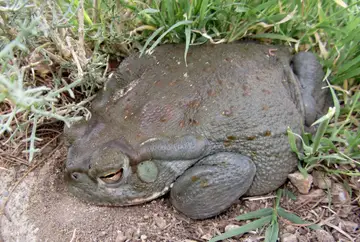
“The species’ skin toxins are strong enough to kill a dog and reportedly have hallucinogenic qualities.”
“Most Sonoran Desert toads are found at night during the monsoon season, but they may emerge a month or more before the summer rains begin, particularly in areas of permanent water.”
“The Arizona bark scorpion is the only scorpion of medical concern in the U.S. (Curry et al. 1983), and while all native scorpions can sting, only Arizona bark scorpion stings are hazardous to human health.”
“Most healthy adults can manage a sting without seeking the help of a doctor, but it is always advisable to call the Poison Help Hotline 1 (800) 222-1222 for advice, as each individual has a unique response. … If children 9 years or under, or weighing less than 70lb (32 Kg) are stung, call 911 or the Poison Help Hotline 1 (800) 222-1222, or take them to the nearest hospital for treatment immediately.”
“Arizona bark scorpions are active for most of the year in low-desert areas, and nighttime temperatures above 70° F are ideal. During the coolest months (November-March) they are less active”
Bees, Spiders & Other Bugs. Arizona Poison and Drug Information Center (University of Arizona College of Pharmacy). 2026 (footer copyright; checked November 3, 2026.Quoted passages (3)
“Bees have a barbed stinger at the base of their abdomen which carries their venom.”
“Although their sting is treated the same as other bee stings, these bees are very aggressive and much more likely to attack when threatened.”
“Africanized bees or "killer bees" have now invaded many parts of the United States, including Arizona.”
“The biggest health risk kissing bugs pose is one of severe allergic reaction. Some people develop a severe or life-threatening allergy to them after multiple bites.”
“There are 11 species of kissing bugs in the U.S., of which seven species in the genera Triatoma and Paratriatoma are found in Arizona (Figure 1) (Klotz et al. 2014).”
“Adult kissing bugs are most commonly encountered during their dispersal season, May through July, when they fly towards homes attracted by lighting”
Living with Mountain Lions. Arizona Game and Fish Department. archived copy, captured December 5, 2025; checked November 3, 2026.Quoted passages (3)
“Mountain lions are predators capable of seriously injuring or killing humans.”
“Mountain lions can be found throughout Arizona and are most common in rocky or mountainous terrain.”
“Do not run from a mountain lion. Running may stimulate a mountain lion’s instinct to chase. Stand and face the mountain lion. Make eye contact.”
Living with Bears. Arizona Game and Fish Department. archived copy, captured February 18, 2026; checked November 3, 2026.Quoted passages (4)
“Although uncommon, black bear attacks on humans occasionally occur, especially in areas where they come into frequent contact with people and human-related food sources.”
“In Arizona, black bears are primarily found in higher-elevation (4,000-10,000 ft) woodland and forested regions containing a variety of habitats, including subalpine and montane conifer forests, riparian forests, evergreen and oak woodlands, chaparral, and desert scrub.”
“Black bears should always be considered unpredictable and potentially dangerous.”
“Produces 2 to 3 cubs between Dec. and early Feb. and exits the den with them in mid-April to early May”
Living with Coyotes. Arizona Game and Fish Department. archived copy, captured March 7, 2026; checked November 3, 2026.Quoted passages (1)
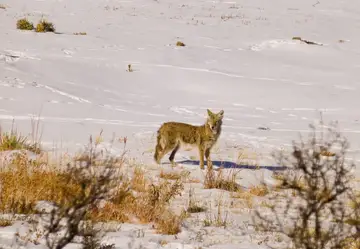
“On rare occasions, human-fed coyotes have bitten people.”
Living with Javelina. Arizona Game and Fish Department. archived copy, captured March 17, 2026; checked November 3, 2026.Quoted passages (1)
“Javelina occasionally bite humans, but incidents of bites are almost always associated with people providing the javelina with food. Javelina can inflict a serious wound. … Rabies – Javelina can catch rabies, although they do not generally carry it without symptoms.”
Living with Bobcats. Arizona Game and Fish Department. archived copy, captured January 16, 2026; checked November 3, 2026.Quoted passages (2)
“Bobcats rarely attack people, and most human attacks have been related to rabies.”
“Call your local Arizona Game and Fish Department office from 8 a.m. to 5 p.m., Monday through Friday, excluding holidays. After hours and on weekends, a dispatcher is available at 623-236-7201.”
Living with Bats. Arizona Game and Fish Department. archived copy, captured February 17, 2026; checked November 3, 2026.Quoted passages (3)
“While some people appreciate bats and the ways they benefit us, others fear bats because a small percentage of them can expose humans and pets to rabies.”
“Arizona is home to 28 species of bats, more than almost any other state.”
“Some hibernate during winter (October through April), and some stay active year-round”
Invasive Species. Arizona Game and Fish Department. archived copy, captured June 9, 2016; checked November 3, 2026.Quoted passages (1)
“Quagga mussels, golden algae and the parasite that causes whirling disease in trout are all examples of invasive species.”
Reptiles (Nongame Management). Arizona Game and Fish Department. archived copy, captured June 9, 2016; checked November 3, 2026.Quoted passages (1)
“Among the snakes are 13 species of rattlesnakes, which is just over one-third of the world’s rattlesnakes, and more than can be found in any other U.S. state.”
Rattlesnakes. Arizona Poison and Drug Information Center (University of Arizona College of Pharmacy). 2026 (footer copyright; checked November 3, 2026.Quoted passages (3)
“There are 15 different types of rattlesnakes in Arizona and all are venomous.”
“Leave wild animals alone. These animals want to avoid a human interaction. They will not attack, chase, or intentially bite. … Watch where you put your hands and feet. … Dead snakes can bite. Never handle a venomous reptile, even after it's dead.”
“Reptiles in Arizona are most active in the warmer months of April through October. During the hottest months, they will be most active at night. They may be encountered during the day in spring and fall or during a warm day in winter.”
Gila Monster. Arizona Poison and Drug Information Center (University of Arizona College of Pharmacy). 2026 (footer copyright; checked November 3, 2026.Quoted passages (2)
“Arizona laws protect these fascinating animals from being captured or held in any manner.”
“Call 1-800-222-1222. All patients with a Gila monster bite who call the poison center are referred to a medical facility.”
“Arizona brown spiders are often mistaken for the brown recluse spider, which is not a normal resident of Arizona. The only brown recluse spiders found here are the ones who have been brought into the state in luggage or other belongings of people who recently come from regions where it does occur.”
Mammals (Nongame Management). Arizona Game and Fish Department. archived copy, captured January 30, 2023; checked November 3, 2026.Quoted passages (1)
“Three of these species are extinct, and five have disappeared from Arizona, although reintroduction efforts are underway for two (black-footed ferret and Mexican wolf).”
Arizona's Amphibians and Reptiles. Arizona Game and Fish Department. archived copy, captured December 7, 2025; checked November 3, 2026.Quoted passages (1)
“State amphibian: Arizona treefrog / State reptile: Ridge-nosed rattlesnake”