This page lists 63 snakes.
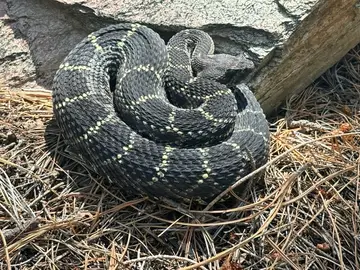
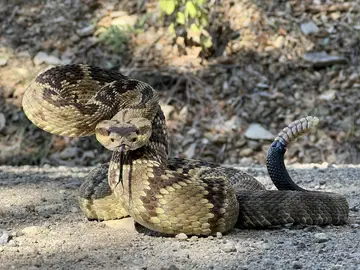
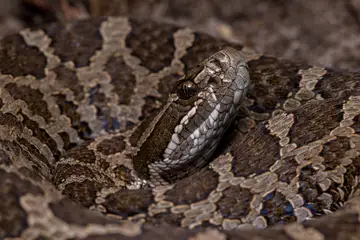
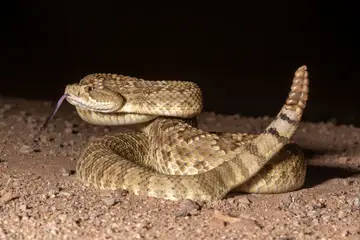
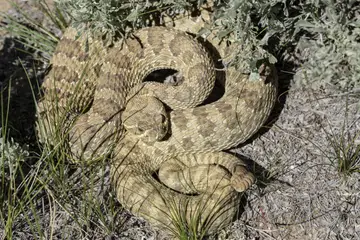
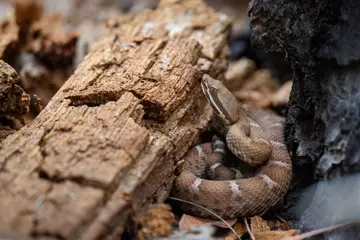
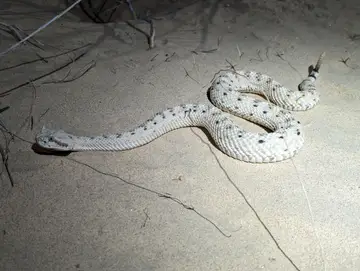
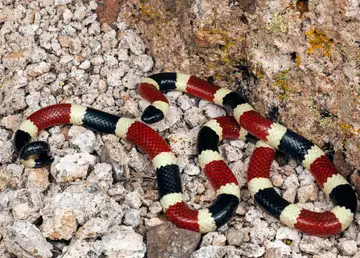
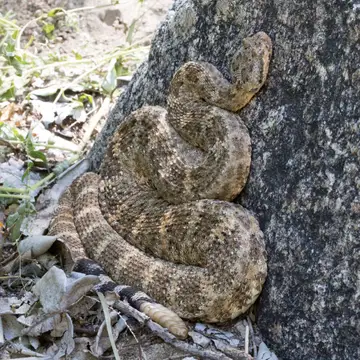
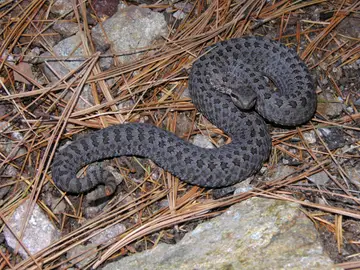
14 are venomous by official accounts: Western Diamond-backed Rattlesnake, Sidewinder, Arizona Black Rattlesnake, Rock Rattlesnake, Speckled Rattlesnake, Black-tailed Rattlesnake, Western Rattlesnake, Twin-spotted Rattlesnake, Mohave Rattlesnake, Tiger Rattlesnake, Prairie Rattlesnake, Ridge-nosed Rattlesnake, Sonoran Coralsnake and Massasauga, and 11 mildly venomous.
Venomous snakes in Arizona
Official sources label these snakes venomous in Arizona. Venomous snakes in Arizona has more on each one.
This snake is found across the central mountains of the state from below the Colorado River in northwestern Arizona, along and below the Mogollon Rim, through the White … Arizona Game and Fish Department
Conservation
HDMS: AZ SGCN Tier 2, state rank S4
What the sources say
Range: This snake is found across the central mountains of the state from below the Colorado River in northwestern Arizona, along and below the Mogollon Rim, through the White Mountains, and down into the Pinaleño, Galiuro, Santa Catalina, and Rincons.
Habitat: It inhabits a variety of biotic communities in Arizona including Semidesert Grassland, Interior Chaparral, Great Basin Conifer Woodland, Madrean Evergreen Woodland, and Petran Montane Conifer Forest. (Arizona Game and Fish Department)
Habitat: It is found in a wide variety of biotic communities ranging from Sonoran Desertscrub to the lower reaches of Petran Subalpine Conifer Forest. (Arizona Game and Fish Department)
Habitat: In Arizona this snake is found in valleys, on low sloping bajadas, and on rolling grass-covered hills within the Semidesert Grassland community. (Arizona Game and Fish Department)
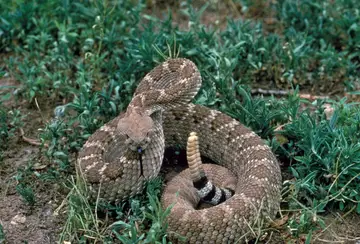
Up to 50 inches excluding the rattle (Arizona). Grand Canyon-Parashant National Monument says it averages 2 to 4 feet. Texas calls it smaller and more slender than the western diamondback.
How to recognize it
Rattle at the end of the tail
Broad triangular head on a slender neck; vertical pupils
Thin light stripe from the back corner of the eye running past the corner of the mouth
Where in Arizona
This snake is found across most of western and southern Arizona at elevations ranging from near sea level along the Colorado River to over 5,200′. Arizona Game and Fish Department
Conservation
HDMS: state rank S4
JFMAMJJASOND
297 records by month.What the sources say
Habitat: It occurs in Sonoran, Mohave, and Chihuahuan desertscrubs and Semidesert Grassland. (Arizona Game and Fish Department)
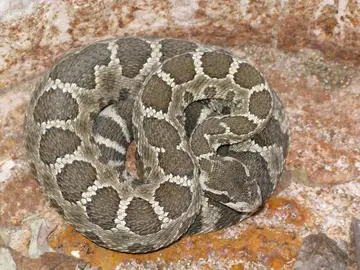
Usually about 3 to 4 feet; Montana gives 15 to 60 inches and NPS says up to 5 feet. Arizona gives a maximum of 28 to 64 inches (excluding rattle) depending on subspecies; in Colorado it is rarely over 39 inches.
How to recognize it
Rattle (or a button in newborns) at the tail tip
Head much broader than the neck, many small scales on top of the head, heat-sensing pit between eye and nostril
Vertical (cat-like) pupils
Where in Arizona
This snake is distributed across the plateaus of northeastern Arizona south and east of the Colorado River. Arizona Game and Fish Department
Conservation
HDMS: state rank S2S3
What the sources say
Habitat: The Prairie Rattlesnake is found in Great Basin Desertscrub, Plains and Great Basin Grassland, and lower reaches of Great Basin Conifer Woodland communities. (Arizona Game and Fish Department)
This snake is found in many of the “sky island” mountain ranges of southeastern Arizona above 4000′ and below 9000′ elevation. Arizona Game and Fish Department
Conservation
HDMS: ESA PS, state rank S2
What the sources say
Habitat: The Ridge-nosed Rattlesnake is usually encountered within Madrean Evergreen Woodland or Petran Montane Conifer Forest communities. (Arizona Game and Fish Department)
This snake inhabits many of the “sky island” ranges of southeastern Arizona including the Chiricahua, Peloncillo, Dragoon, Whetstone, Santa Rita, Huachucas, and Canelos. Arizona Game and Fish Department
Conservation
HDMS: AZ SGCN Tier 1, state rank S3
What the sources say
Habitat: Most of this snake’s range in Arizona is within the Madrean Evergreen Woodland and Petran Montane Conifer Forest communities but, in some areas, it follows drainages down into grassland communities. (Arizona Game and Fish Department)
Small: up to 25 in excluding the rattle (Arizona); typically 1.5 ft or less but can reach 3 ft (Death Valley NPS); 17-33 in (Nevada).
How to recognize it
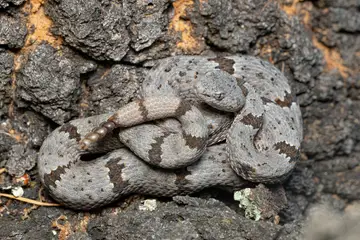
Enlarged, upturned, horn-like scales above the eyes
Rattle on the tail, though rattles can break off (UC IPM)
Broad, triangular head and slender neck
Where in Arizona
This snake is distributed across the low deserts of western and southwestern Arizona at elevations ranging from near sea level along the colorado River to about 2,800′. Arizona Game and Fish Department
Conservation
HDMS: state rank S4
JFMAMJJASOND
64 records by month.What the sources say
Habitat: Chiefly and inhabitant of Mohave Desertscrub and Lower Colorado River Valley Sonoran Desertscrub, but it also enters relatively level terrain in the lower reaches of Arizona Upland Sonoran Desertscrub. (Arizona Game and Fish Department)
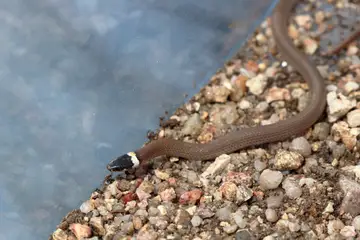
Small: up to 24 in (Arizona Game and Fish); averages less than 2 ft (AZ Poison); body length 13-21 in (Tonto NPS).
How to recognize it
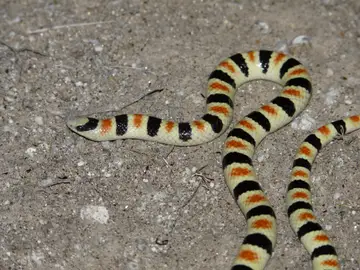
Black head and snout
Blunt head barely wider than the neck; short, blunt tail
Round pupils and smooth, shiny scales
Where in Arizona
This snake is found across most of the southern portion of the state below approximately 6,000′ elevation. Arizona Game and Fish Department
Conservation
HDMS: AZ SGCN Tier 2, state rank S3
JFMAMJJASOND
33 records by month.What the sources say
Habitat: The Sonoran Coral Snake is found in communities ranging form Sonoran, Mohave, and Chihuahuan desertscrubs, through Semidesert Grassland, and into the lower reaches of the woodlands. (Arizona Game and Fish Department)
This snake is distributed across western and southwestern Arizona at elevations ranging from just above sea level along the Colorado River to about 5,000′. Arizona Game and Fish Department
Conservation
HDMS: state rank S4
What the sources say
Habitat: An inhabitant of communities ranging from Sonoran Desertscrub and Mohave Desertscrub to the lower reaches of Interior Chaparral and Great Basin Conifer Woodland. (Arizona Game and Fish Department)
This snake is found in central, south-central, and extreme southeastern Arizona at elevations ranging from about 1,000′ to 5,000′. Arizona Game and Fish Department
Conservation
HDMS: AZ SGCN Tier 2, state rank S3
What the sources say
Habitat: The Tiger Rattlesnake is found in Arizona Upland Sonoran Desertscrub, Chihuahuan Desertscrub, Interior Chaparral, and Madrean Evergreen Woodland communities, usually on rocky slopes or in washes within rocky mountains and foothills. (Arizona Game and Fish Department)
This snake is found in the Chiricahua, Pinaleño, Huachuca, and Santa Rita “sky island” mountain ranges of southeastern Arizona at elevations ranging from ca. Arizona Game and Fish Department
Conservation
HDMS: AZ SGCN Tier 1, state rank S2
What the sources say
Habitat: The Twin-spotted Rattlesnake is found in Petran Subalpine Conifer Forest and Petran Montane Conifer Forest communities. (Arizona Game and Fish Department)
“This rattlesnake is capable of delivering large amounts of potent venom. If encountered it should be left alone.” Arizona Game and Fish Department
Size
Usually about 3.5 to 4.5 feet; Texas says it can reach seven feet. Arizona's maximum is 66 inches excluding the rattle; Saguaro National Park gives a range of 30 to 90 inches.
How to recognize it
Rattle at the end of the tail
Broad triangular head on a slender neck; vertical pupils
Thin light stripe from behind the eye down to the upper lip
Habitat: It inhabits a variety of communities including Sonoran, Chihuahuan, and Mohave desertscrubs, Semidesert Grassland, and the lower reaches of Interior Chaparral and Madrean Evergreen Woodland. (Arizona Game and Fish Department)
Varies by area and subspecies: up to 63 in. excluding rattle (Arizona); largest in the Northwest 59 in., most Washington adults around 2 ft; 18 to 36 in. average (Oregon); C. o. concolor rarely over 26 in. (Colorado).
How to recognize it
Rattle on the tail; broad triangular head; facial pits
Vertical pupils and heat-sensing pits near the nostrils
Habitat: Found in a variety of biotic communities in Arizona including Mohave Desertscrub, Great Basin Desertscrub, Great Basin Grassland, and Great Basin conifer Woodland. (Arizona Game and Fish Department)
From A to Z. "Not stated" means no official source we use gives a venom status, not that the snake is harmless. Some harmless snakes mimic venomous ones: leave every snake alone.
This snake has an enormous range extending from South America through Mexico and into extreme south-central Arizona. Arizona Game and Fish Department
What the sources say
Venom: “It uses its mild venom, injected by grooved rear teeth, to subdue lizards which make up the bulk of its diet.” (Arizona Game and Fish Department)
Habitat: Within Arizona this snake inhabits the Madrean Evergreen Woodland community and the upper reaches of adjoining Semidesert Grassland. (Arizona Game and Fish Department)
This snake is known from the Santa Rita, Patagonia, and Huachuca mountains of southeastern Arizona. Arizona Game and Fish Department
Conservation
HDMS: AZ SGCN Tier 2, state rank S1
What the sources say
Venom: “Venom is delivered to prey via enlarged, grooved teeth in the rear upper jaw (not considered to be dangerous to humans).” (Arizona Game and Fish Department)
Habitat: It inhabits Madrean Evergreen Woodland and Petran Montane Conifer Forest communities. (Arizona Game and Fish Department)
This snake is distributed across the southern portion of the Colorado Plateau in northeastern Arizona and in sub-Mogollon Rim southeastern Arizona. Arizona Game and Fish Department
Conservation
HDMS: state rank S3?
What the sources say
Venom: “It is mildly venomous but rarely bites when captured and its venom is not considered to be dangerous to humans. … The Chihuahuan Nightsnake uses mild venom injected by enlarged teeth in the rear upper jaw to subdue lizards and small snakes.” (Arizona Game and Fish Department)
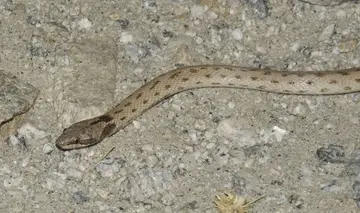
Habitat: The Chihuahuan Nightsnake inhabits a wide variety of biotic communities ranging from Sonoran Desertscrub and Chihuahuan Desertscrub, through grasslands, and woodlands, and into cool Petran Montane Conifer Forest. (Arizona Game and Fish Department)
This snake is distributed across most of western and southern Arizona and across the northern borderlands. Arizona Game and Fish Department
Conservation
HDMS: state rank S4
What the sources say
Venom: “It is mildly venomous but rarely bites when captured and its venom is not considered to be dangerous to humans. … The Desert Nightsnake uses mild venom injected by enlarged teeth in the rear upper jaw to subdue lizards and small snakes.” (Arizona Game and Fish Department)
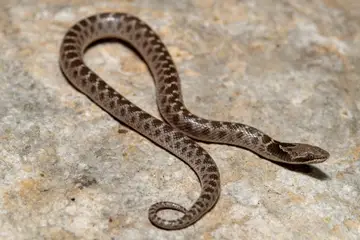
Habitat: The Desert Nightsnake inhabits a wide variety of biotic communities ranging from hot and dry Lower Colorado River Sonoran Desertscrub, through the grasslands, and woodlands, and into cool Petran Montane Conifer Forest. (Arizona Game and Fish Department)
This snake is distributed across most of Cochise County, Santa Cruz County, and southeastern Pima County at elevations ranging from about 3,000′ to about 8,500′. Arizona Game and Fish Department
Conservation
HDMS: AZ SGCN Tier 2, state rank S3
What the sources say
Venom: “It is mildly venomous but rarely bites when captured and its venom is not considered to be dangerous to humans. … The Hooded Nightsnake uses mild venom injected by enlarged teeth in the rear upper jaw to subdue lizards and small snakes.” (Arizona Game and Fish Department)
Habitat: The Hooded Nightsnake is found in biotic communities ranging from Sonoran Desertscrub, through the grasslands, and woodlands, and into cool Petran Montane Conifer Forest. (Arizona Game and Fish Department)
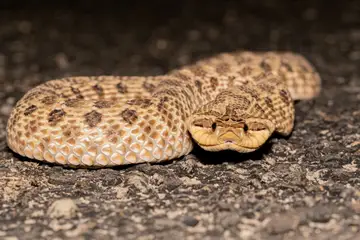
Venom: “There are two enlarged teeth on the posterior of each upper jaw bone (maxilla) which are used to inject a mild venom into prey. … The venom might be mildly toxic to humans.” (Arizona Game and Fish Department)
Habitat: Heterodon kennerlyi is usually found within Semidesert Grassland, Chihuahuan Desertscrub, and grassland communities. (Arizona Game and Fish Department)
This snake is found in the valleys of southeastern Arizona at elevations ranging from 3,200′ to about 6,000′. Arizona Game and Fish Department
Conservation
HDMS: state rank S2
What the sources say
Venom: “Venom is delivered to prey via enlarged, grooved teeth in the rear upper jaw (not considered to be dangerous to humans).” (Arizona Game and Fish Department)
Habitat: It inhabits Chihuahuan Desertscrub, Semidesert Grassland, and the lower extremes of Madrean Evergreen Woodland communities. (Arizona Game and Fish Department)
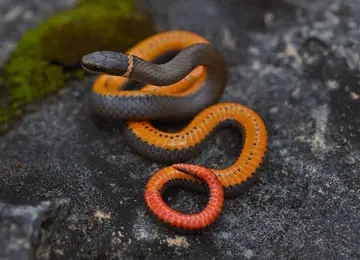
Usually 8 to 15 inches long; Alabama reports up to about 18 inches, rarely 24. AZGFD gives a maximum of 34 inches for Arizona animals.
How to recognize it
A yellow, cream or orange ring around the neck; it may be incomplete, and some Lower Florida Keys and western Arizona snakes lack it.
Bright yellow to orange or red belly, often with a row of black half-moon spots; the underside of the tail is often red.
Smooth, shiny scales and a small head only slightly wider than the neck.
Where in Arizona
This snake is distributed across much of central Arizona and nearly all of southeastern Arizona. Arizona Game and Fish Department
Conservation
HDMS: state rank S3
What the sources say
Venom: “Captured individuals often drool from the corner of the mouth, possibly the result of the secretion of venom. … Mild venom delivered by enlarged rear teeth in the upper jaw is used to subdue prey which includes a variety of snakes, lizards, and insects.” (Arizona Game and Fish Department)
Habitat: It is found in communities ranging from Mohave Desertscrub and Sonoran Desertscrub into Petran Montane Conifer Forest. (Arizona Game and Fish Department)
This snake is found across southeastern Arizona and sub-Mogollon Rim central Arizona at elevations ranging from 1,500′ to about 5,500′. Arizona Game and Fish Department
Conservation
HDMS: state rank S3
What the sources say
Venom: “Venom is delivered to prey via enlarged, grooved teeth in the rear upper jaw (not considered to be dangerous to humans).” (Arizona Game and Fish Department)
Habitat: It inhabits a variety of biotic communities including Sonoran Desertscrub, Semidesert Grassland, Interior Chaparral, Madrean Evergreen Woodland, and Great Basin Conifer Woodland. (Arizona Game and Fish Department)
This snake is found across nearly all of southern Arizona and is likely found in most ranges in the western part of the state. Arizona Game and Fish Department
Conservation
HDMS: state rank S2
What the sources say
Venom: “Although this snake usually does not bite when captured it is capable of injecting mild venom with enlarged, grooved teeth in the rear portion of its upper jaw. … The Western Lyresnake uses its venom to subdue lizards, small mammals, bats, and birds.” (Arizona Game and Fish Department)
Habitat: It is found in a variety of biotic communities in Arizona including Sonoran, Mohave, and Chihuahuan desertscrubs, Semidesert Grassland, Interior Chaparral, Great Basin Conifer Woodland, Madrean Evergreen Woodland, and the lower reaches of Petran Montane Conifer Forest. (Arizona Game and Fish Department)
This snake is known from the Canelo Hills and the Pajarito, Atascosa, Santa Rita, Mule, Chiricahua, Swisshelm, Pedregosa, and Peloncillo mountains of southeastern … Arizona Game and Fish Department
Conservation
HDMS: AZ SGCN Tier 2, state rank S2
What the sources say
Venom: “Venom is delivered to prey via enlarged, grooved teeth in the rear upper jaw (not considered to be dangerous to humans).” (Arizona Game and Fish Department)
Range: This snake is known from the Canelo Hills and the Pajarito, Atascosa, Santa Rita, Mule, Chiricahua, Swisshelm, Pedregosa, and Peloncillo mountains of southeastern Arizona.
Habitat: It is found in Madrean Evergreen Woodland and Semidesert Grassland communities. (Arizona Game and Fish Department)
No confirmed photo of Banded Sandsnake
Banded Sandsnake
Chilomeniscus cinctus
Not stated
Venom
No official source we use states whether this animal is venomous. That does not mean it is harmless: do not handle it.
Habitat: It i nhabits a wide variety of biotic communities including Sonoran Desertscrub, Semidesert Grassland, Interior Chaparral, Madrean Evergreen Woodland, Great Basin Conifer Woodland, Plains Grassland, Great Basin Grassland, and Petran Montane Conifer Forest. (Arizona Game and Fish Department)
No official source we use states whether this animal is venomous. That does not mean it is harmless: do not handle it.
Size
Usually 2.5-3.5 ft, up to about 4 ft (NPS Cabrillo). Arizona Game and Fish gives up to 56 inches for the common kingsnake; NPS Tuzigoot (Arizona) gives 40-80 inches for kingsnakes there. These official figures differ.
How to recognize it
Smooth, glossy scales ('Lampropeltis' means 'shiny shield').
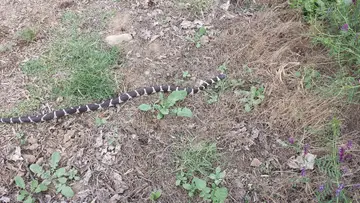
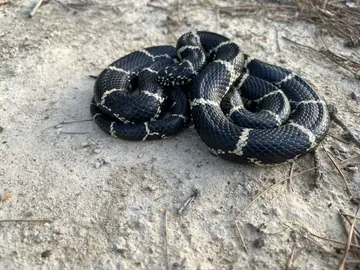
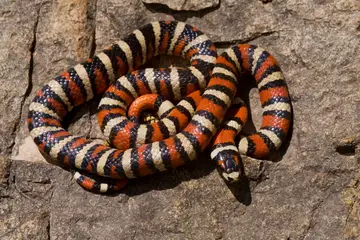
Arizona form: black or dark brown with 21 to 45 white bands that widen low on the sides; snout and face usually have small white blotches.
Round pupils (Arizona Game and Fish, common kingsnake).
Habitat: Semidesert Grassland, Chihuahuan Desertscrub, Sonoran Desertscrub, and the lower reaches of Madrean Evergreen Woodland communities are home to this snake. (Arizona Game and Fish Department)
This snake occurs in the foothills, bajadas, and valleys of southeastern Arizona at elevations below approximately 6,000′. Arizona Game and Fish Department
Conservation
HDMS: state rank S3
What the sources say
Habitat: It is primarily associated with Chihuahuan Desertscrub and Semidesert Grassland communities but it is also encountered in Madrean Evergreen Woodland. (Arizona Game and Fish Department)
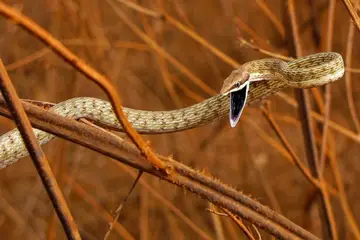
Most adults about 42 to 60 inches (3.5 to 5 ft); record 102 inches (8.5 ft). Ranges given by agencies: 41 to 84 in (Louisiana), 36 to 82 in (Oklahoma), adults average 50 to 72 in (Alabama), up to 94 in (NC State Extension), up to 80 in in Colorado and up to 68 in in Arizona.
How to recognize it
Long, slowly tapering tail whose scales look like a braided whip
Very long and slender, with smooth scales
Large eyes with round pupils
Where in Arizona
This snake is f ound across all of western and southern Arizona at elevations ranging from just above sea level along the Colorado River to about 6,000′. Arizona Game and Fish Department
Conservation
HDMS: state rank S4
JFMAMJJASOND
126 records by month.What the sources say
Habitat: It inhabits Arizona’s desertscrub communities, Semidesert Grassland, and the lower reaches of Interior Chaparral. (Arizona Game and Fish Department)
Habitat: In Arizona the Common Kingsnake is found in biotic communities ranging from the desertscrubs, through the grasslands, and into the lower reaches of Madrean Evergreen Woodland and Great Basin Conifer Woodland. (Arizona Game and Fish Department)
This snake is found in the sky island ranges of southeastern Arizona and in the higher ranges below the eastern half of the Mogollon Rim. Arizona Game and Fish Department
Conservation
HDMS: state rank S3
What the sources say
Habitat: In Arizona the Eastern Patch-nosed Snake inhabits Madrean Evergreen Woodland, Great Basin Conifer Woodland, and the upper reaches of Interior Chaparral communities. (Arizona Game and Fish Department)
In Arizona this snake is found across the northeastern plateaus, the southwestern and western deserts, and the southeastern valleys. Arizona Game and Fish Department
Conservation
HDMS: state rank S4
What the sources say
Habitat: It inhabits biotic communities ranging from Arizona’s desertscrubs, through Semidesert Grassland, and into Plains and Great Basin Grassland. (Arizona Game and Fish Department)
Photo: National Park Service from USA · Public domain · Wikimedia Commons
Habitat: A true generalist, this snake is found in all of Arizona’s biotic communities with the exception of the small tract of treeless Alpine Tundra on the peaks of the San Francisco Mountains in Coconino County. (Arizona Game and Fish Department)
This snake is found in the Baboquivari, Pajarito, Atascosa, Santa Rita, Empire, Patagonia, Chiricahua, Swisshelm, Pedregosa, and Peloncillo mountains of southeastern … Arizona Game and Fish Department
Conservation
HDMS: AZ SGCN Tier 2, state rank S2
What the sources say
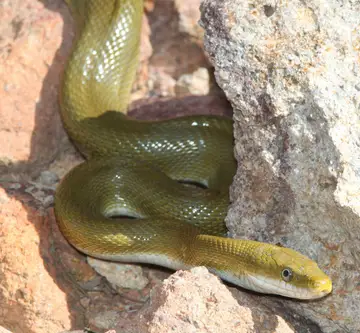
Range: This snake is found in the Baboquivari, Pajarito, Atascosa, Santa Rita, Empire, Patagonia, Chiricahua, Swisshelm, Pedregosa, and Peloncillo mountains of southeastern Arizona.
Habitat: The Green Ratsnake is primarily an inhabitant of Madrean Evergreen Woodland and the upper reaches of adjoining Semidesert Grassland communities. (Arizona Game and Fish Department)
This snake is distributed across western and most of southern Arizona at elevations ranging from near sea level along the Colorado River to about 5,000′. Arizona Game and Fish Department
Conservation
HDMS: state rank S3
What the sources say
Habitat: It is found in a wide variety of communities including Arizona’s desertscrubs, Semidesert Grassland, Interior Chaparral, Plains and Great Basin Grassland, and the lower reaches of the woodlands. (Arizona Game and Fish Department)
This common and widespread snake is found across the flatlands and valleys of southern and western Arizona at elevations ranging from near sea level along the Colorado … Arizona Game and Fish Department
Conservation
HDMS: state rank S4
What the sources say
Range: This common and widespread snake is found across the flatlands and valleys of southern and western Arizona at elevations ranging from near sea level along the Colorado River to about 6,000′.
Habitat: In Arizona it is found primarily in sparsely vegetated desertscrub communities and Semidesert Grassland but it extends up into the lower reaches of the woodlands in some areas. (Arizona Game and Fish Department)
Habitat: It is usually found in or near rivers, streams, and ciénegas in communities ranging from Arizona Upland Sonoran Desertscrub, through Semidesert Grassland and the woodlands, into Petran Montane Conifer Forest. (Arizona Game and Fish Department)
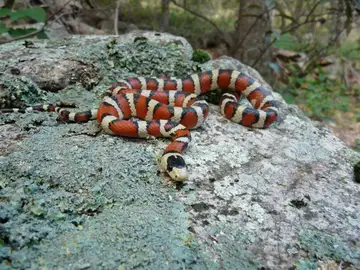
Eastern milksnake 24 to 52 inches (Alabama); TN gives 24 to 36 inches for eastern and 21 to 28 for red milksnake.
How to recognize it
Eastern milksnake: black-and-white checkerboard belly (Ohio). Western milksnake in Louisiana: underside dull white with scattered black marks.
Eastern milksnake: a light Y- or V-shaped mark is usually present on the nape
Smooth, shiny scales and round pupils
Where in Arizona
This snake is distributed across a large portion of the state’s northeastern plateau region and a small portion of southeastern Arizona. Arizona Game and Fish Department
Conservation
HDMS: AZ SGCN Tier 1, state rank S2
What the sources say
Habitat: The Milksnake is found on open plains, low valleys, and rolling hills within Plains and Great Basin Grassland and Semidesert Grassland communities. (Arizona Game and Fish Department)
This snake is found along and below central Arizona’s Mogollon Rim at elevations ranging from ca. Arizona Game and Fish Department
Conservation
HDMS: ESA LT, AZ SGCN Tier 1, state rank S2
What the sources say
Habitat: It is usually encountered in or near clear, rocky streams or rivers in communities ranging from Arizona Upland Sonoran Desertscrub through Petran Montane Conifer Forest. (Arizona Game and Fish Department)
This snake is found in the southeastern corner of the state at elevations ranging from about 2,800′ to over 5,000′. Arizona Game and Fish Department
Conservation
HDMS: state rank S3
What the sources say
Habitat: It occurs in Chihuahuan Desertscrub, Semidesert Grassland, and the lower reaches of Madrean Evergreen Woodland communities. (Arizona Game and Fish Department)
Photo: Everglades NPS from Homestead, Florida, United States · Public domain · Wikimedia Commons
This snake is found in western, southwestern, and south central Arizona at elevations ranging from near sea level to just over 5,600′. Arizona Game and Fish Department
Conservation
HDMS: AZ SGCN Tier 2, state rank S1S2
What the sources say
Habitat: In Arizona the Rosy Boa inhabits Sonoran Desertscrub, Mohave Desertscrub, and Interior Chaparral communities. (Arizona Game and Fish Department)
Habitat: The Saddled Leaf-nosed Snake is primarily an inhabitant of the Arizona Upland subdivision of the Sonoran Desertscrub community but it extends into the Lower Colorado River subdivision near Gila Bend and Florence. (Arizona Game and Fish Department)
Habitat: This snake occupies communities ranging from Interior Chaparral up through the highest elevations of Petran Montane Conifer Forest. (Arizona Game and Fish Department)
No confirmed photo of Sonoran Shovel-nosed Snake
Sonoran Shovel-nosed Snake
Chionactis palarostris
Not stated
Venom
No official source we use states whether this animal is venomous. That does not mean it is harmless: do not handle it.
This snake is found in most of the sub-Mogollon Rim mountain ranges of south-central and southeastern Arizona at elevations ranging from 1,000′ to about 7,000′. Arizona Game and Fish Department
Conservation
HDMS: AZ SGCN Tier 2, state rank S4
What the sources say
Habitat: It inhabits a variety of biotic communities including Arizona Upland Sonoran Desertscrub, Semidesert Grassland, Interior Chaparral, Madrean Evergreen Woodland, and the lower reaches of Great Basin Conifer Woodland. (Arizona Game and Fish Department)
No confirmed photo of Southern Watersnake
Southern Watersnake
Nerodia fasciata
Not stated
Venom
No official source we use states whether this animal is venomous. That does not mean it is harmless: do not handle it.
This snake is distributed across Arizona’s western and southwestern deserts at elevations ranging from just above sea level along the states western border to … Arizona Game and Fish Department
Conservation
HDMS: state rank S3
What the sources say
Range: This snake is distributed across Arizona’s western and southwestern deserts at elevations ranging from just above sea level along the states western border to approximately 4,000′.
Habitat: It inhabits Sonoran Desertscrub and Mohave Desertscrub communities. (Arizona Game and Fish Department)
Habitat: The Striped Whipsnake is primarily an inhabitant of Interior Chaparral, Great Basin Conifer Woodland, Plains Grassland, and Great Basin Grassland communities. (Arizona Game and Fish Department)
Photo: Yellowstone National Park · Public domain · Wikimedia Commons
Habitat: It is found in a wide variety of communities including Great Basin Desertscrub, Plains and Great Basin Grassland, Great Basin Conifer Woodland, Petran Montane Conifer Forest, and Petran Subalpine Conifer Forest. (Arizona Game and Fish Department)
This snake only enters Arizona in a small portion of Santa Cruz County near the border with Mexico. Arizona Game and Fish Department
Conservation
HDMS: AZ SGCN Tier 2, state rank S1
What the sources say
Habitat: In Arizona this snake inhabits rolling mesquite-covered hills and oak-lined drainages within the Madrean Evergreen Woodland and Semidesert Grassland communities. (Arizona Game and Fish Department)
No confirmed photo of Variable Sandsnake
Variable Sandsnake
Chilomeniscus stramineus
Not stated
Venom
No official source we use states whether this animal is venomous. That does not mean it is harmless: do not handle it.
Habitat: The Variable Sandsnake is found primarily in the Arizona Upland subdivision of the Sonoran Desertscrub community. (Arizona Game and Fish Department)
This snake is found across all of southern Arizona below the Mogollon Rim, the western edge of the state, and into the deserts of the northern plateau region. Arizona Game and Fish Department
Conservation
HDMS: state rank S4
What the sources say
Habitat: It is found in flatlands, low valleys, rocky bajadas, foothills, and mountain slopes in biotic communities ranging from Arizona’s low desertscrubs up into the woodlands. (Arizona Game and Fish Department)
This snake is found in the low deserts of western and south-central Arizona at elevations ranging from near sea level to ca. Arizona Game and Fish Department
Conservation
HDMS: AZ SGCN Tier 3, state rank S3
What the sources say
Habitat: Lower Colorado River Sonoran Desertscrub and Mohave Desertscrub communities are home to this snake. (Arizona Game and Fish Department)
This snake is found across western and southern Arizona at elevations ranging from just above sea level near Yuma to over 5,000′. Arizona Game and Fish Department
Conservation
HDMS: state rank S3
What the sources say
Habitat: Arizona’s desertscrub communities, Semidesert Grassland, Interior Chaparral, and the lower reaches of our woodlands are home to this snake. (Arizona Game and Fish Department)
Snakes people confuse
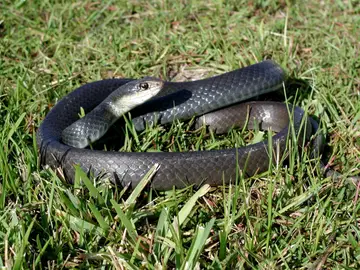
Black Racer or Eastern coachwhip (black variant)?
Photo: Everglades NPS from Homestead, Florida, United States · Public domain · Wikimedia Commons
TWRA: the racer lacks the coachwhip's reddish tint along the sides of the tail; an all-black coachwhip is distinctly lighter or reddish toward the rear. Oklahoma: the coachwhip is much larger.
Western Diamondback Rattlesnake or Mojave (Mohave) rattlesnake?
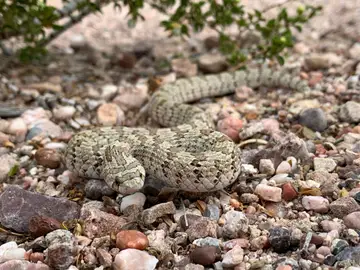
Hard to tell apart. Mojaves are often slightly greenish with thick white and narrower black tail bands; the western diamondback has more even bands. Texas adds that the Mojave is smaller and more slender.
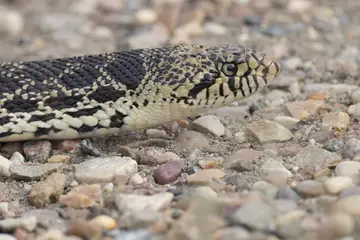
Bullsnakes lack a rattle but copy rattlesnake color and back pattern, and can hiss and shake the tail. In dry brush that can sound like a buzzing rattlesnake.
UC IPM's general rattlesnake comparison, not specific to the sidewinder: rattlesnakes have a rattle and a distinctive triangular head; gopher snakes do not have a rattle. A gopher snake can change its posture to mimic the triangular head, so head shape alone does not separate them. UC IPM also warns that rattles can shorten or break off completely, so the lack of a rattle does not mean a snake is not a rattlesnake.
Photos show typical adults; individuals vary. Never get close to compare.
When snakes are active in Arizona
Records of snakes in Arizona peak in July to September. They show when people record snakes, not how many there are (about month bars).
JanFebMarAprMayJunJulAugSepOctNovDec
3,251 records of snakes in Arizona by month (GBIF, CC0 and CC BY records).
Western diamond-backed rattlesnake: day/dusk in spring and fall, mostly nocturnal in hot summer. Arizona Game and Fish Department
If you are bitten or stung
Call 911 or Poison Help at 1-800-222-1222 right away. Poison Help connects you to your local poison center, any time of day.
Official advice from Arizona Game and Fish Department:
Call the local AZGFD office 8 a.m.-5 p.m. Monday-Friday (excluding holidays); after hours and weekends call the AZGFD dispatcher at 623-236-7201. Arizona Game and Fish Department
Yes. AZGFD says Arizona has 13 rattlesnake species, more than any other U.S. state; the Arizona poison center counts 15 types and says all are venomous. Arizona Game and Fish Department
“Among the snakes are 13 species of rattlesnakes, which is just over one-third of the world’s rattlesnakes, and more than can be found in any other U.S. state.”
“On the end of the tail is a rattle composed of a series of loosely interlocking keratinous sections.”
“The pupils are vertically elliptical and the dorsal scales are keeled. The neck is slender and the head is broad and triangular.”
“A thin, light colored stripe extends back and down from the posterior corner of the eye and touches the upper lip.”
“This rattlesnake is capable of delivering large amounts of potent venom. If encountered it should be left alone.”
“This rattlesnake is capable of delivering large amounts of potent venom. If encountered it should be left alone. A large percentage of envenomations occur when a snake is handled or abused.”
“It is primarily diurnal and crepuscular in spring and fall and becomes primarily nocturnal and crepuscular during the hot summer months.”
“Captured individuals often drool from the corner of the mouth, possibly the result of the secretion of venom. … Mild venom delivered by enlarged rear teeth in the upper jaw is used to subdue prey which includes a variety of snakes, lizards, and insects.”
“There are two enlarged teeth on the posterior of each upper jaw bone (maxilla) which are used to inject a mild venom into prey. … The venom might be mildly toxic to humans.”
“It is mildly venomous but rarely bites when captured and its venom is not considered to be dangerous to humans. … The Desert Nightsnake uses mild venom injected by enlarged teeth in the rear upper jaw to subdue lizards and small snakes.”
“It is mildly venomous but rarely bites when captured and its venom is not considered to be dangerous to humans. … The Chihuahuan Nightsnake uses mild venom injected by enlarged teeth in the rear upper jaw to subdue lizards and small snakes.”
“It is mildly venomous but rarely bites when captured and its venom is not considered to be dangerous to humans. … The Hooded Nightsnake uses mild venom injected by enlarged teeth in the rear upper jaw to subdue lizards and small snakes.”
“This subspecies is black or dark brown and has 21 to 45 white bands. The bands become wider on the lower sides. The snout and face are usually marked with small white blotches.”
“Although this snake usually does not bite when captured it is capable of injecting mild venom with enlarged, grooved teeth in the rear portion of its upper jaw. … The Western Lyresnake uses its venom to subdue lizards, small mammals, bats, and birds.”
Living with Bobcats. Arizona Game and Fish Department. archived copy, captured January 16, 2026; checked November 3, 2026.Quoted passages (1)
“Call your local Arizona Game and Fish Department office from 8 a.m. to 5 p.m., Monday through Friday, excluding holidays. After hours and on weekends, a dispatcher is available at 623-236-7201.”
Reptiles (Nongame Management). Arizona Game and Fish Department. archived copy, captured June 9, 2016; checked November 3, 2026.Quoted passages (1)
“Among the snakes are 13 species of rattlesnakes, which is just over one-third of the world’s rattlesnakes, and more than can be found in any other U.S. state.”