Michigan has 1 venomous snake named by official sources: Eastern Massasauga Rattlesnake, as labelled by Michigan Department of Natural Resources. This guide covers 8 animal groups from Michigan Department of Natural Resources (DNR), Wildlife Division lists and other official sources, with photos, venomous status and when each group is active.
Identification help has limits: a photo cannot confirm that an animal is safe. Watch from a distance and never handle a wild animal.
These are the animals official sources describe as venomous or as a risk to people in Michigan, across 6 groups. The reason is given in the source's own terms.
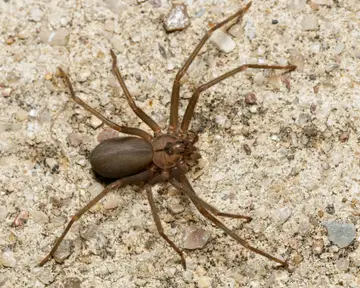
Venomous: “Only two dangerous groups of venomous spiders - the widow spiders, and the Brown Recluse (fiddleback or violin spider) and its kin - are of medical importance in the United States.”
Venomous: “The brown recluse spider, Loxosceles reclusa (Sicariidae), is a medically important arachnid whose bite can cause severe necrosis in a small number of cases …”
Disease vector (tick, an arachnid, not a spider): “American Dog tick, Dermacentor variabilis. This tick is the most common tick in the state and is found throughout Michigan.”
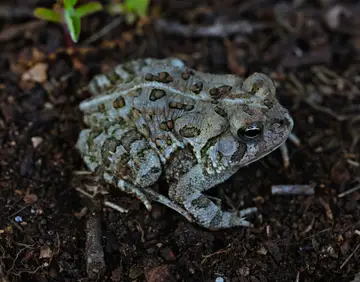
Skin secretion poisonous or distasteful to many predators: “Handling pickerel frogs does not harm humans, but avoid getting the skin secretions into your eyes, mouth, or mucous membranes.”
Large carnivore: “Black bears are wild, powerful animals that should be appreciated from a distance. They may defend themselves when surprised, threatened or protecting their cubs.”
Darker cells are the months with more open-licence observation records of each group in Michigan (GBIF). They show when people see and record these animals, not how many there are. The current month, this month, is highlighted.
Report: Report poaching or harassment of massasaugas to the DNR Report All Poaching hotline, 800-292-7800. Report spotted lanternfly outside confirmed counties, gray fox and other sightings through the DNR/State 'Eyes in the Field' online tool. Report reptile/amphibian sightings to the Michigan Herp Atlas. Michigan Department of Natural Resources
Official safety advice
Venomous snakebite: call 911 or Poison Help at 1-800-222-1222. Michigan DNR: if bitten, seek medical attention; if possible call 911, sit down and wait for emergency responders. Michigan Department of Natural Resources
Leave snakes alone: handling or harassing them is the most common cause of bites; Michigan snakes do not attack, chase or lunge at people. Michigan Department of Natural Resources
Black bears: appreciate from a distance; remove birdfeeders, grease-splattered grills and outdoor pet food, and put garbage out on the day of pickup. A bear in the yard is no reason to panic; scare it off with noise. Michigan Department of Natural Resources
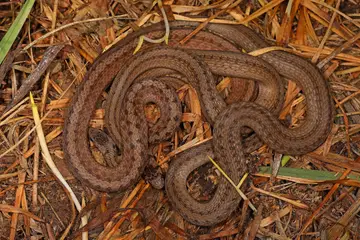
Yes. One: the Eastern Massasauga Rattlesnake is Michigan's only venomous snake. The other 17 snake species are harmless to humans. Michigan Department of Natural Resources
Are there rattlesnakes in Michigan?
Yes. Only the Eastern Massasauga, a state and federally threatened species of Lower Peninsula wetlands and Bois Blanc and Mackinac islands. Michigan Department of Natural Resources · More
Are there venomous snakes in the upper peninsula?
No. DNR: massasaugas are not in the Upper Peninsula, so there are no venomous snakes on the mainland. DNR also places them on Bois Blanc and Mackinac islands in Lake Huron. Michigan Department of Natural Resources
Are there water moccasins (cottonmouths) in Michigan?
No. The DNR says the massasauga is the only venomous species found in Michigan; MSU Extension says northern water snakes are often mistaken for 'water moccasins'. Michigan Department of Natural Resources
Rarely. MSU Extension has confirmed a few isolated populations north of the native range (Genesee, Hillsdale, Ingham, Lenawee and Washtenaw counties, 2011-2017). Michigan State University Extension
Are there alligators in Michigan?
No. USGS has only 5 Michigan alligator records (2005-2019), all marked 'failed' (no established population). US Geological Survey
Rarely. DNR has confirmed about 168 sightings since 2008, all in the Upper Peninsula; kittens verified in Ontonagon County in 2025. State endangered. DNR calls cougars potentially dangerous but says attacks are extremely rare. Michigan Department of Natural Resources
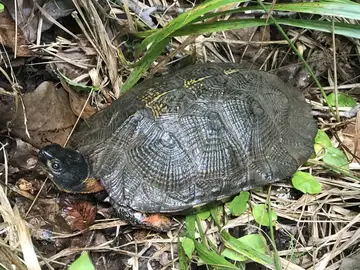
Michigan DNR: 10 native turtle species; wood, spotted and eastern box turtles are state threatened and Blanding's turtle is special concern. Michigan Department of Natural Resources
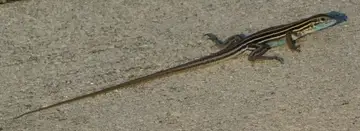
Yes. DNR lists two: Five-lined Skink and Six-lined Racerunner (state threatened; one known population in Tuscola County per MNFI). DNR says lizards are harmless to humans. Michigan Department of Natural Resources
“…the eastern massasauga rattlesnake, the only venomous species found in Michigan”
“Michigan snakes do not attack, chase or lunge at people or seek out human contact. If a snake is observed, stay at least 3 feet away from the head to avoid getting bit. Handling or harassing snakes is the most common cause for humans getting bit.”
“Only two dangerous groups of venomous spiders - the widow spiders, and the Brown Recluse (fiddleback or violin spider) and its kin - are of medical importance in the United States.”
“In Michigan the Northern Widow, (Latrodectus variolus,) can be collected throughout the Lower Peninsula.”
“The brown recluse spider, Loxosceles reclusa (Sicariidae), is a medically important arachnid whose bite can cause severe necrosis in a small number of cases. However, most recluse bites are minor with no necrosis.”
“In 2011, I reported the discovery of three isolated populations of brown recluse spiders in Michigan ’s Genesee, Hillsdale and Ingham counties.”
Tick Borne Illnesses in Michigan (MSU Extension Bulletin E-2765). Michigan Department of Community Health; Michigan Department of Natural Resources; Michigan Department of Agriculture; Michigan State University Extension. Issued 2001; checked November 3, 2026.Quoted passages (3)
“American Dog tick, Dermacentor variabilis. This tick is the most common tick in the state and is found throughout Michigan.”
“…people and animals by the bite of an infected Ixodes scapularis tick.”
“…variabilis ticks (commonly called wood ticks or dog ticks) are most abundant in spring and early summer. Ixodes scapularis, (Black Legged ticks) are most abundant from spring through the summer, and into the warm months of the fall.”
“EEE is one of the most dangerous mosquito-borne diseases in the United States, with a 33% fatality rate in people who become ill”
“We urge Michiganders to take precautions such as using an EPA-registered insect repellent when outdoors, avoiding areas where mosquitoes are present if possible, and wearing clothing to cover arms and legs to prevent bites.”
“Cases of the disease are typically seen in late summer to early fall each year in Michigan.”
“Black bears are wild, powerful animals that should be appreciated from a distance. They may defend themselves when surprised, threatened or protecting their cubs.”
“Black bears – Michigan’s only bear species – are solitary animals”
“Spotting a bear on your trail camera or wandering through your backyard is no reason to panic. You do not need to call local authorities or the DNR. This is natural bear behavior. You can scare the bear off by yelling, blowing an air horn or banging pots and pans.”
“…call the RAP (Report All Poaching) hotline immediately at 800-292-7800”
“Michigan contains a core population of eastern massasaugas, which live in specific wetlands in the Lower Peninsula as well as on Bois Blanc and Mackinac islands in Lake Huron.”
“If you are bitten, stay calm and seek medical attention. If possible, call 911 for help, sit down and wait for emergency responders.”
“If you do spot an eastern massasauga, give the snake space. Stay at least 3 feet away, which is out of its strike zone.”
“Because the eastern massasauga is listed as a state and federally threatened species, it is illegal to pursue, harass, wound, kill or capture the snake.”
“Massasaugas are found throughout the Lower Peninsula, but not in the Upper Peninsula (thus there are no venomous snakes on the Upper Peninsula mainland.)”
“Snakes usually come out of hibernation in April or early May in Michigan.and can sometimes be seen sunning themselves around the entrance to the underground cavity.”