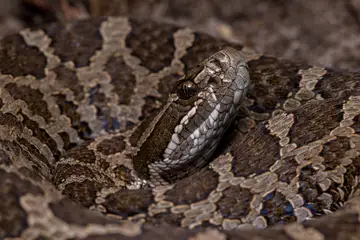
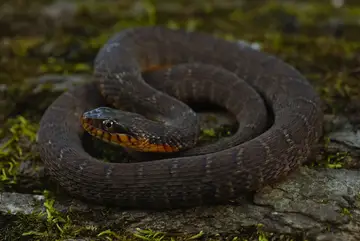
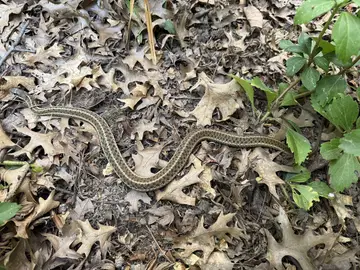
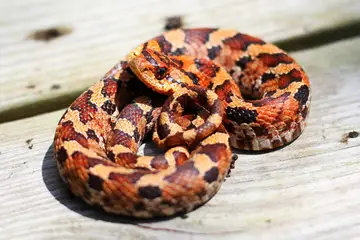
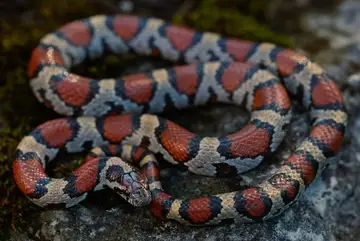
“The eastern massasauga rattlesnake is Michigan’s only venomous native snake. The snake’s bite is painful but extremely unlikely to be fatal.” Michigan Department of Natural Resources
Size
Usually 18 to 30 inches long (New York DEC: 18 to 40 inches, average 27.5). The western massasauga in Arizona reaches only about 22 inches.
How to recognize it
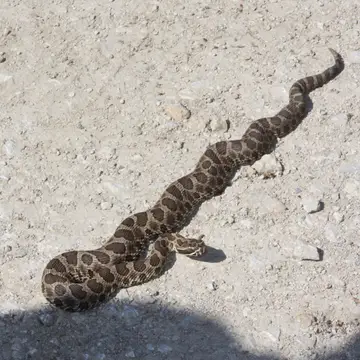
A segmented rattle (a single button in newborns) and vertical, catlike pupils. In Michigan it is the only snake with both.
Nine large plates on top of the head (the timber rattlesnake has many small scales there)
A heat-sensing pit on each side of the head between the eye and nostril; the head is flat and much wider than the neck
Where in Michigan
The Eastern Massasauga occurs throughout the Lower Peninsula and on Bois Blanc Island, Mackinac County … Michigan State University Extension
Conservation
state threatened; federally threatened
What the sources say
Venom: “Eastern massasauga rattlesnake (VENOMOUS).” (Michigan Department of Natural Resources)
Range: The Eastern Massasauga occurs throughout the Lower Peninsula and on Bois Blanc Island, Mackinac County. There are no records for this or any other venomous snake in the Upper Peninsula.
Habitat: The Eastern Massasauga, the only venomous species of snake in Michigan, inhabits marshes and swamps, though they often wander into upland meadows and woods in summer. (Michigan State University Extension)
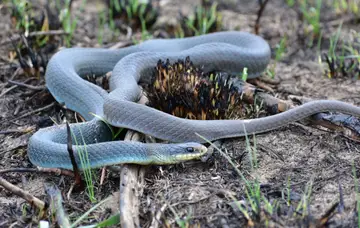
This species occurs in the southern and western counties of Michigan's Lower Peninsula; though their numbers appear to be declining in the south, Blue Racers may be … Michigan State University Extension
What the sources say
Venom: “Seventeen of these species are nonvenomous, with the only venomous snake being the eastern massasauga rattlesnake.” (Michigan Department of Natural Resources)
Range: This species occurs in the southern and western counties of Michigan's Lower Peninsula; though their numbers appear to be declining in the south, Blue Racers may be becoming more widespread in the northwestern Lower Peninsula. Records also exist for Menominee County in the Upper Peninsula.
Habitat: Blue Racers live in a variety of habitats, such as open woods, meadows, abandoned farmlands, raspberry thickets, and the edges of lakes and marshes. (Michigan State University Extension)
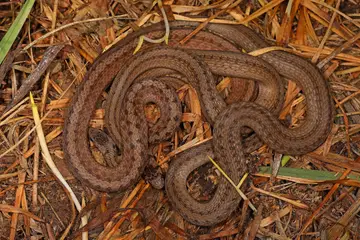
Most adults 9 to 13 inches; occasionally up to about 20 inches.
How to recognize it
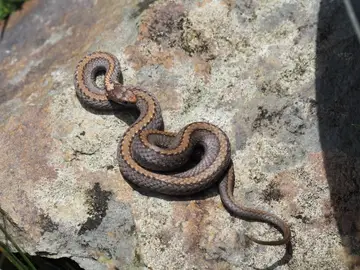
Dark top of head; a dark spot under each eye and on each side of the neck
Keeled (ridged) scales in 17 rows; round pupil
Tennessee: a small dark downward streak on the side of the head
Where in Michigan
Brown Snakes are found throughout the Lower Peninsula of Michigan and in the southern tip of the Upper Peninsula bordering Wisconsin. Michigan State University Extension
JFMAMJJASOND
69 records by month.What the sources say
Venom: “Seventeen of these species are nonvenomous, with the only venomous snake being the eastern massasauga rattlesnake.” (Michigan Department of Natural Resources)
Habitat: The Brown Snake is secretive and is usually found in moist locations hiding under flat objects. (Michigan State University Extension)
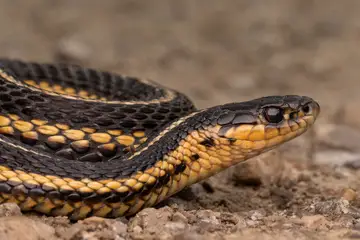
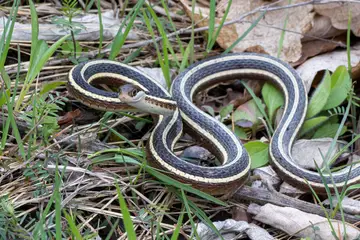
Butler's Garter Snake occurs in scattered populations in the eastern and south central Lower Peninsula of Michigan. Michigan State University Extension
What the sources say
Venom: “Seventeen of these species are nonvenomous, with the only venomous snake being the eastern massasauga rattlesnake.” (Michigan Department of Natural Resources)
Habitat: This snake prefers moist meadows, marshes and the grassy edges of lakes and streams. (Michigan State University Extension)
The Copper-bellied Water Snake is extremely rare in Michigan and is now found in only a few locations in the southern one-third of the Lower Peninsula … Michigan State University Extension
Conservation
state endangered
What the sources say
Venom: “Seventeen of these species are nonvenomous, with the only venomous snake being the eastern massasauga rattlesnake.” (Michigan Department of Natural Resources)
Range: The Copper-bellied Water Snake is extremely rare in Michigan and is now found in only a few locations in the southern one-third of the Lower Peninsula. Most recent records are in Hillsdale and st. Joseph counties.
Habitat: Copper -bellied Water Snakes are usually found near streams, woodland ponds and river-bottom swamps. (Michigan State University Extension)
The Eastern Fox Snake ranges from Saginaw Bay south along the coastal Great Lakes area to western Lake Erie. Michigan State University Extension
Conservation
state threatened
What the sources say
Venom: “Seventeen of these species are nonvenomous, with the only venomous snake being the eastern massasauga rattlesnake.” (Michigan Department of Natural Resources)
Habitat: Flat, marshy or partially drained marsh country is the habitat of the Eastern Fox Snake. (Michigan State University Extension)
Venom: “Seventeen of these species are nonvenomous, with the only venomous snake being the eastern massasauga rattlesnake.” (Michigan Department of Natural Resources)
Habitat: Woodlands, meadows, marshes, lake edges, debris piles and suburban backyards are all homes for this tolerant species. (Michigan State University Extension)
Although it occurs over much of Michigan's Lower Peninsula, in the Upper Peninsula the Eastern Hog-nosed Snake has been found only in Menominee County. Michigan State University Extension
JFMAMJJASOND
40 records by month.What the sources say
Venom: “Seventeen of these species are nonvenomous, with the only venomous snake being the eastern massasauga rattlesnake.” (Michigan Department of Natural Resources)
Habitat: The Hog-nosed Sn*e is usually found in sandy areas, especially in the open, sandy woods of the northern and western Lower Peninsula. (Michigan State University Extension)
Eastern milksnake 24 to 52 inches (Alabama); TN gives 24 to 36 inches for eastern and 21 to 28 for red milksnake.
How to recognize it
Eastern milksnake: black-and-white checkerboard belly (Ohio). Western milksnake in Louisiana: underside dull white with scattered black marks.
Eastern milksnake: a light Y- or V-shaped mark is usually present on the nape
Smooth, shiny scales and round pupils
Where in Michigan
This species occurs throughout Michigan's Lower Peninsula, and there are isolated records of its occurrence in Mackinac and Marquette counties in the Upper Peninsula. Michigan State University Extension
What the sources say
Venom: “Seventeen of these species are nonvenomous, with the only venomous snake being the eastern massasauga rattlesnake.” (Michigan Department of Natural Resources)
Habitat: These secretive snakes are found in woodlands, fields, marshes and farmlands. (Michigan State University Extension)
special concern (DNR; not on the state endangered/threatened rule)
What the sources say
Venom: “Seventeen of these species are nonvenomous, with the only venomous snake being the eastern massasauga rattlesnake.” (Michigan Department of Natural Resources)
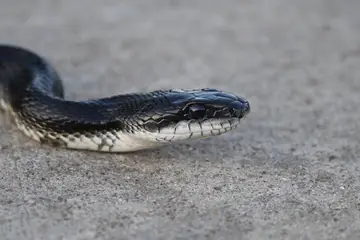
Range: In Michigan, the Black Rat Snake occurs in the southern half of the Lower Peninsula. This species is locally common in the southwestern counties, but it is rare and declining over most of its Michigan range. This is a species of "special concern" and may not be captured or killed.
Habitat: These snakes are most common in and near woodlands. They are quite arboreal and often forage and bask at considerable heights above the ground. (Michigan State University Extension)
Kirtland 's Snake is an extremely rare species in Michigan. It has been found in a very few localities in the southern one-third of the Lower Peninsula … Michigan State University Extension
Conservation
state endangered
What the sources say
Venom: “Seventeen of these species are nonvenomous, with the only venomous snake being the eastern massasauga rattlesnake.” (Michigan Department of Natural Resources)
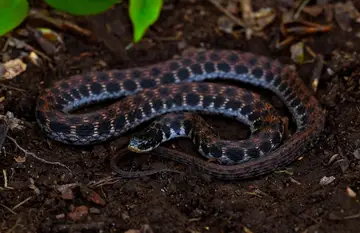
Range: Kirtland 's Snake is an extremely rare species in Michigan. It has been found in a very few localities in the southern one-third of the Lower Peninsula. Most of the specimens found in Michigan have been reported from the two southernmost tiers of counties.
Habitat: This rarely seen snake occurs in a variety of moist habitats, which include wet meadows, tamarack swamps, open swamp-forest and vacant city lots. (Michigan State University Extension)
Venom: “Seventeen of these species are nonvenomous, with the only venomous snake being the eastern massasauga rattlesnake.” (Michigan Department of Natural Resources)
Range: This snake is found statewide except for the extreme southern edge of the Lower Peninsula. Although it may be rare or absent in many areas within its range, this snake can be locally abundant in some places.
Habitat: The Northern Red-bellied Snake can be en- countered in a variety of habitats, including open woodland, meadows and abandoned farmland. (Michigan State University Extension)
Venom: “Seventeen of these species are nonvenomous, with the only venomous snake being the eastern massasauga rattlesnake.” (Michigan Department of Natural Resources)
Habitat: This species inhabits the grassy edges of marshes, ponds, lakes and streams. (Michigan State University Extension)
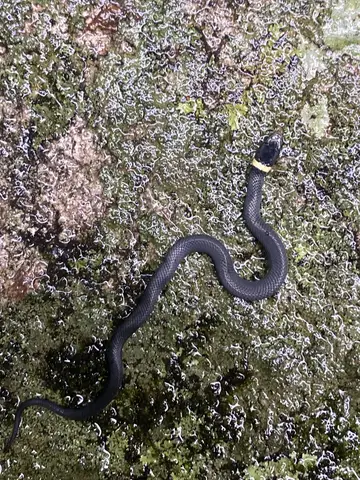
Although the Northern Ring-necked Snake has been found throughout Michigan, it is generally rare and occurs in widely scattered and isolated populations … Michigan State University Extension
What the sources say
Venom: “Seventeen of these species are nonvenomous, with the only venomous snake being the eastern massasauga rattlesnake.” (Michigan Department of Natural Resources)
Range: Although the Northern Ring-necked Snake has been found throughout Michigan, it is generally rare and occurs in widely scattered and isolated populations. It can be common on some of the offshore islands in northern Lake Michigan.
Habitat: This species prefers moist woodlands. It is very secretive and is usually found hiding under flat objects or the bark of dead trees. (Michigan State University Extension)
Northern Water Snakes occur throughout Michigan but are scarce or absent from many parts of the Upper Peninsula, particularly the western section … Michigan State University Extension
What the sources say
Venom: “Seventeen of these species are nonvenomous, with the only venomous snake being the eastern massasauga rattlesnake.” (Michigan Department of Natural Resources)
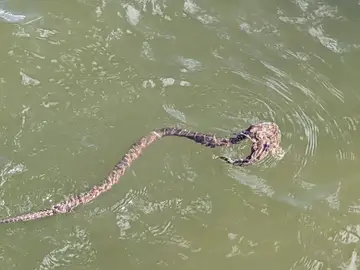
Range: Northern Water Snakes occur throughout Michigan but are scarce or absent from many parts of the Upper Peninsula, particularly the western section. Some islands, such as Beaver Island in norther~ Lake Michigan, support large populations.
Habitat: This species is usually found in or near ponds, lakes, streams or rivers. (Michigan State University Extension)
The Queen Snake is uncommon to rare and occurs in scattered locations throughout the southern half of the Lower Peninsula, excluding portions of the Thumb area … Michigan State University Extension
What the sources say
Venom: “Seventeen of these species are nonvenomous, with the only venomous snake being the eastern massasauga rattlesnake.” (Michigan Department of Natural Resources)
Range: The Queen Snake is uncommon to rare and occurs in scattered locations throughout the southern half of the Lower Peninsula, excluding portions of the Thumb area. An isolated population reportedly occurs on Bois Blanc Island in western Lake Huron.
Habitat: The Queen Snake is most often seen basking in the branches of shrubs that overhang shallow, rocky streams, but it also frequents the edges of ponds or canals. (Michigan State University Extension)
Venom: “Seventeen of these species are nonvenomous, with the only venomous snake being the eastern massasauga rattlesnake.” (Michigan Department of Natural Resources)
Range: Historically, Smooth Green Snakes have been found and recorded throughout Michigan. They remain locally common in the northern Lower Peninsula and the Upper Peninsula but are rare and found only in widely scattered locations in the southern Lower Peninsula.
Habitat: These snakes are usually found in open, grassy places such as meadows, pastures and marsh edges. (Michigan State University Extension)
Venom: “Seventeen of these species are nonvenomous, with the only venomous snake being the eastern massasauga rattlesnake.” (Michigan Department of Natural Resources)
Habitat: The Western Fox Snake prefers open woodlands and woodland edges, fields and dune areas. (Michigan State University Extension)
Snakes people confuse
Massasauga rattlesnake or Eastern vs. western (prairie) massasauga?
Call 911 or Poison Help at 1-800-222-1222 right away. Poison Help connects you to your local poison center, any time of day.
Official advice from Michigan Department of Natural Resources:
Venomous snakebite: call 911 or Poison Help at 1-800-222-1222. Michigan DNR: if bitten, seek medical attention; if possible call 911, sit down and wait for emergency responders. Michigan Department of Natural Resources
Leave snakes alone: handling or harassing them is the most common cause of bites; Michigan snakes do not attack, chase or lunge at people. Michigan Department of Natural Resources
How to report
Report poaching or harassment of massasaugas to the DNR Report All Poaching hotline, 800-292-7800. Report spotted lanternfly outside confirmed counties, gray fox and other sightings through the DNR/State 'Eyes in the Field' online tool. Report reptile/amphibian sightings to the Michigan Herp Atlas. Michigan Department of Natural Resources
Yes. One: the Eastern Massasauga Rattlesnake is Michigan's only venomous snake. The other 17 snake species are harmless to humans. Michigan Department of Natural Resources
“Seventeen of these species are nonvenomous, with the only venomous snake being the eastern massasauga rattlesnake.”
Are there venomous snakes in the upper peninsula?
No. DNR: massasaugas are not in the Upper Peninsula, so there are no venomous snakes on the mainland. DNR also places them on Bois Blanc and Mackinac islands in Lake Huron. Michigan Department of Natural Resources
“Massasaugas are found throughout the Lower Peninsula, but not in the Upper Peninsula (thus there are no venomous snakes on the Upper Peninsula mainland.)”
Are there water moccasins (cottonmouths) in Michigan?
No. The DNR says the massasauga is the only venomous species found in Michigan; MSU Extension says northern water snakes are often mistaken for 'water moccasins'. Michigan Department of Natural Resources
“…the eastern massasauga rattlesnake, the only venomous species found in Michigan”
“Michigan snakes do not attack, chase or lunge at people or seek out human contact. If a snake is observed, stay at least 3 feet away from the head to avoid getting bit. Handling or harassing snakes is the most common cause for humans getting bit.”
“…the eastern massasauga rattlesnake, the only venomous species found in Michigan”
“Snakes usually come out of hibernation in April or early May in Michigan.and can sometimes be seen sunning themselves around the entrance to the underground cavity.”
“It is the only Michigan snake with segmented rattles on the end of its tail and elliptical, ("catlike") vertical pupils in the eyes.”
“Massasaugas are found throughout the Lower Peninsula, but not in the Upper Peninsula (thus there are no venomous snakes on the Upper Peninsula mainland.)”