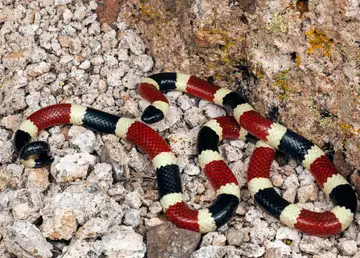

Arizona Coral Snake
Micruroides euryxanthus
Black head and snout
Choose what you saw. The list narrows to the snakes in our species guides that match, venomous ones first. It suggests possibilities only: a description cannot confirm what an animal is or that it is safe.
Micruroides euryxanthus
Black head and snout
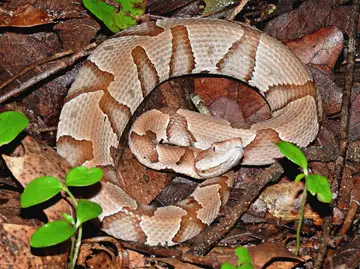
Agkistrodon contortrix
Vertical (cat-like) pupils and a heat-sensing pit between eye and nostril
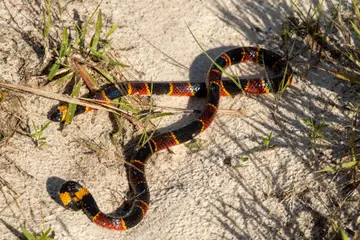
Micrurus and Micruroides (family Elapidae): US coral snakes Micrurus fulvius, Micrurus tener, Micruroides euryxanthus
Black snout followed by a broad yellow band
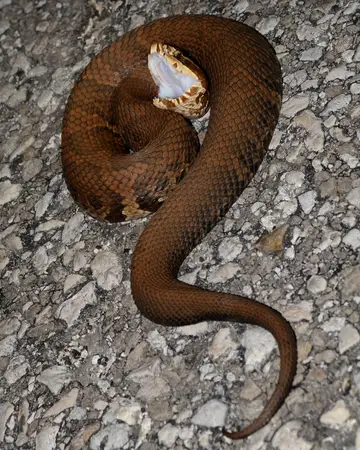
Agkistrodon piscivorus
Heat-sensing pit between nostril and eye; no rattle
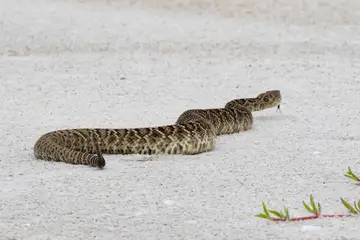
Crotalus adamanteus
Light-bordered dark stripe running diagonally through each eye
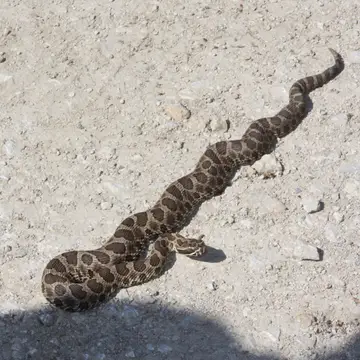
Sistrurus catenatus (eastern massasauga) and Sistrurus tergeminus (western massasauga, including the prairie and desert massasaugas)
A segmented rattle (a single button in newborns) and vertical, catlike pupils. In Michigan it is the only snake with both.
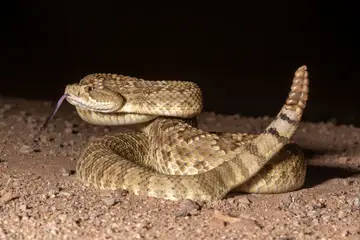
Crotalus scutulatus
Rattle at the end of the tail
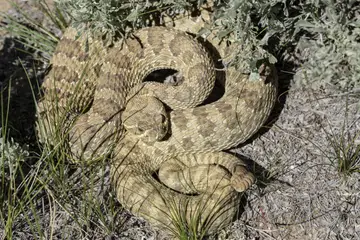
Crotalus viridis
Rattle (or a button in newborns) at the tail tip
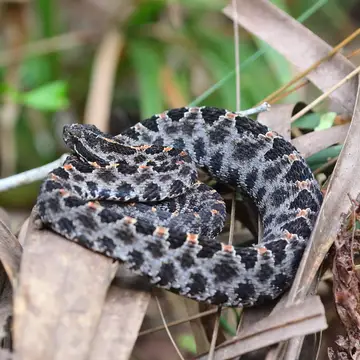
Sistrurus miliarius
Tiny rattle at the end of a slender tail; buzz sounds like an insect
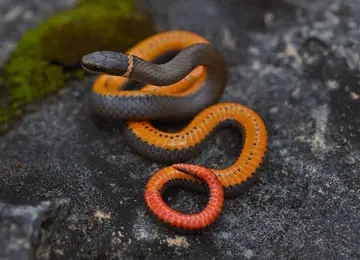
Diadophis punctatus
A yellow, cream or orange ring around the neck; it may be incomplete, and some Lower Florida Keys and western Arizona snakes lack it.
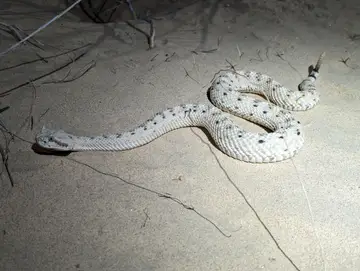
Crotalus cerastes
Enlarged, upturned, horn-like scales above the eyes
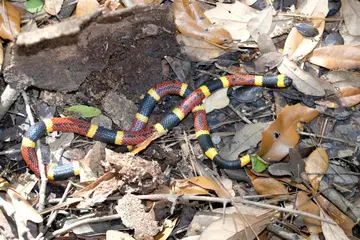
Micrurus tener
The only snake in Texas with touching red and yellow bands
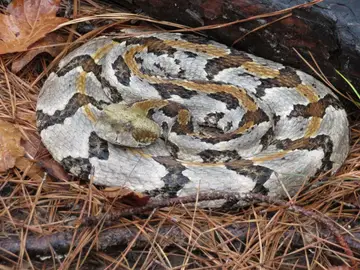
Crotalus horridus
Black tail ending in a rattle
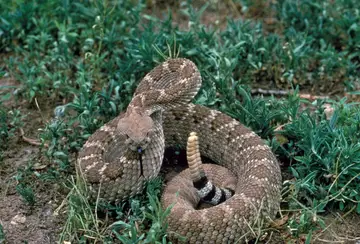
Crotalus atrox
Rattle at the end of the tail
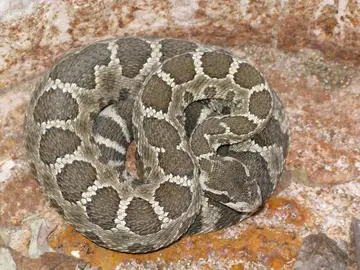
Crotalus oreganus
Rattle on the tail; broad triangular head; facial pits
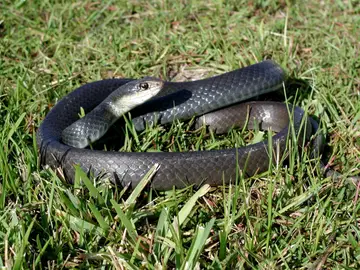
Coluber constrictor
Smooth scales
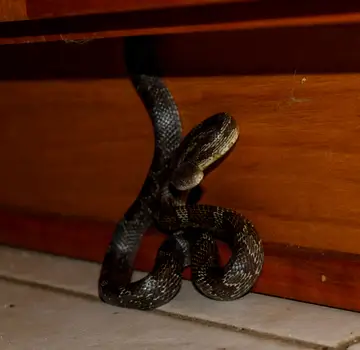
Pantherophis obsoletus (broad sense; formerly Elaphe obsoleta obsoleta)
Body shaped like a loaf of bread in cross section (flat belly meets the sides at an angle)
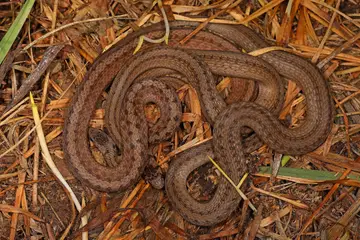
Storeria dekayi
Dark top of head; a dark spot under each eye and on each side of the neck
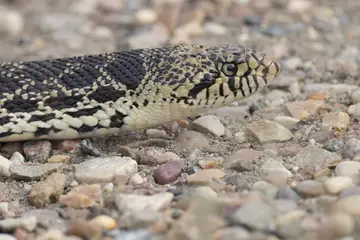
Pituophis catenifer sayi (bullsnake), a subspecies of the gophersnake Pituophis catenifer
Black line from the eye to the jaw and black bars along the upper lip
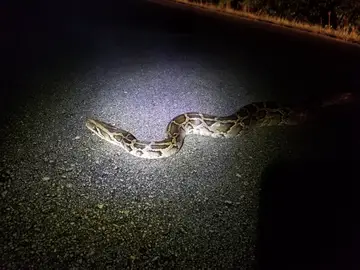
Python bivittatus
Dark spearhead (arrow) shape on top of the head
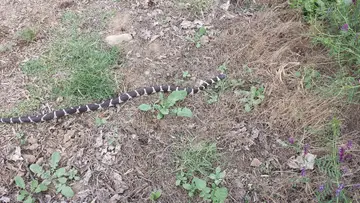
Lampropeltis californiae
Smooth, glossy scales ('Lampropeltis' means 'shiny shield').
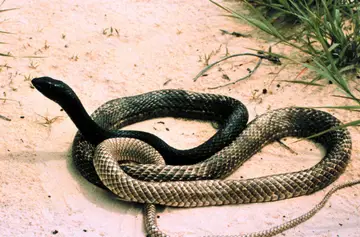
Masticophis flagellum
Long, slowly tapering tail whose scales look like a braided whip
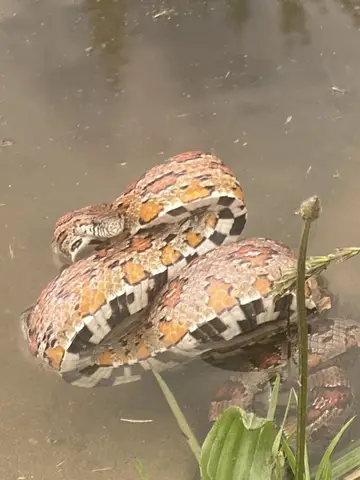
Pantherophis guttatus
Spear-shaped head marking from the neck to a point between the eyes is a reliable identification feature
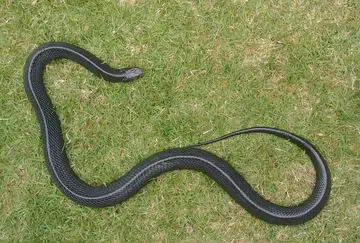
Drymarchon couperi
Large, thick-bodied, glossy black snake with smooth scales and round pupils
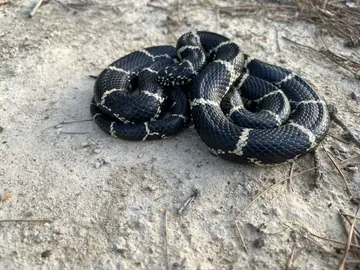
Lampropeltis getula
Smooth, shiny scales and an indistinct neck.
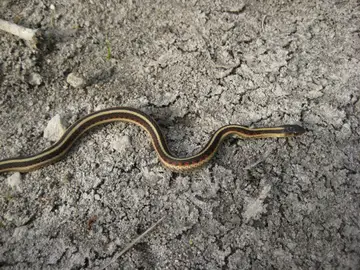
Thamnophis
Three light stripes running the full length of the body: one down the back, one along each side.
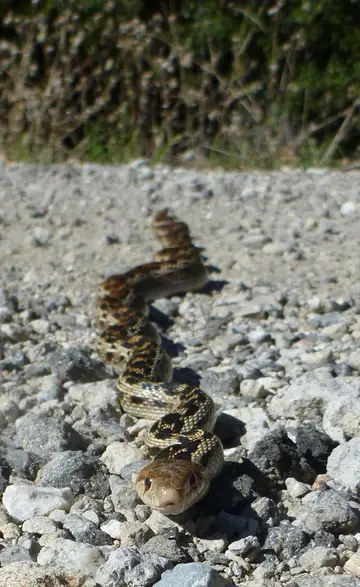
Pituophis catenifer
No rattle: tail tapers to a point
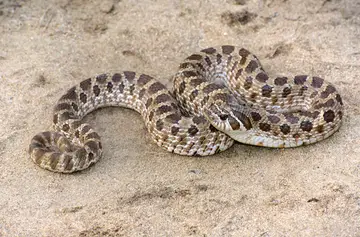
Heterodon (hog-nosed snakes: H. platirhinos, H. simus, H. nasicus, H. kennerlyi)
Upturned snout and broad head
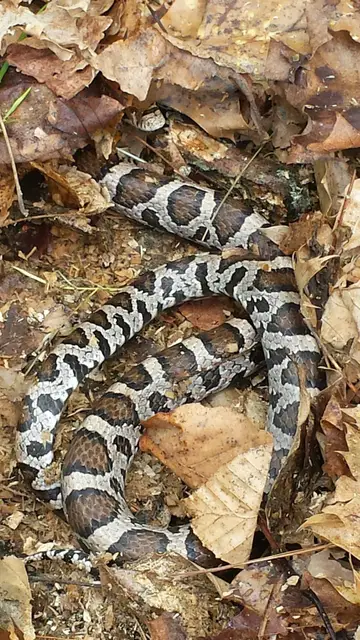
Lampropeltis triangulum (eastern milksnake); some agencies now also list Lampropeltis gentilis (western milksnake), formerly part of L. triangulum
Eastern milksnake: black-and-white checkerboard belly (Ohio). Western milksnake in Louisiana: underside dull white with scattered black marks.
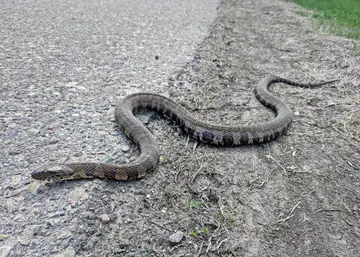
Nerodia sipedon
Dark crossbands on the front part of the body break up into rows of blotches from the middle of the body to the tail.
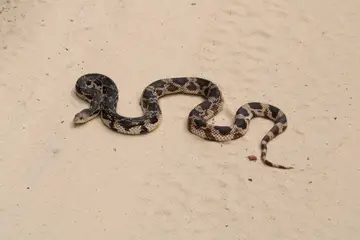
Pituophis melanoleucus
Pointed snout covered by a large, triangular, cone-shaped scale, used for pushing into soft earth.
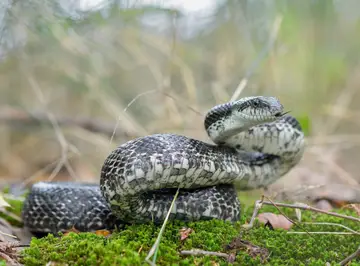
Pantherophis (North American rat snakes)
Body shaped like a loaf of bread in cross section, an aid to climbing
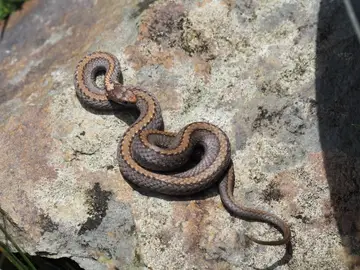
Storeria occipitomaculata
Plain, unmarked red or orange belly.
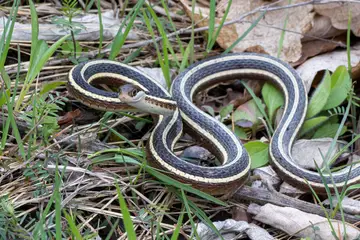
Thamnophis saurita (eastern ribbonsnake) and Thamnophis proximus (western ribbonsnake); some sources spell the first Thamnophis sauritus
Very slender body; long tail, about one-third of total length.
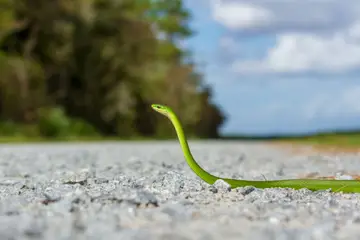
Opheodrys aestivus
Keeled (ridged) scales in 17 rows, which feel rough; the smooth green snake has smooth scales.
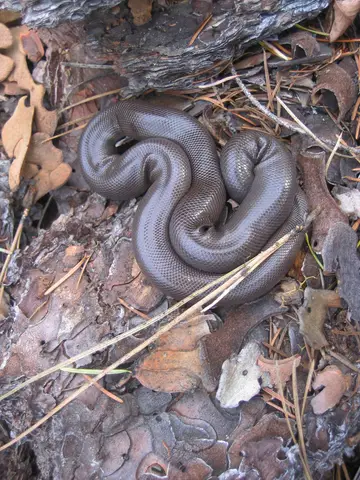
Charina bottae (northern rubber boa). California also recognizes the southern rubber boa, Charina umbratica (listed by CDFW as Charina bottae umbratica), which is treated here as a related species with its own status.
Thick body, small eyes, tiny scales, and a blunt tail that looks like the head
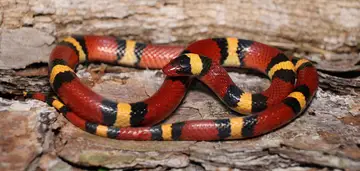
Lampropeltis elapsoides
Red and yellow rings are separated by black rings, so red and yellow do not touch.
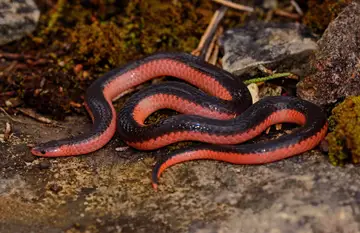
Carphophis
Looks like an earthworm: round, glossy body with smooth scales
No snake in our guides matches all of these choices. Try fewer filters. If you are unsure what you saw, treat it as potentially dangerous and keep away.


