WVDNR: The new regulations prohibit the taking and possessing of 26 salamander species, 13 frog and toad species, six lizard species, 23 snake species and 12 turtle species.
This page lists 23 snakes: all from WVDNR's Amphibians & Reptiles; Snakes of West Virginia.
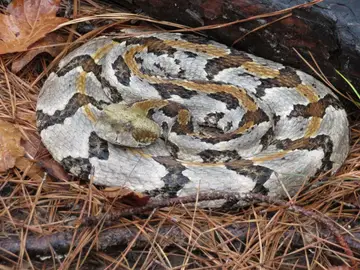
2 are venomous by official accounts: Eastern Copperhead and Timber Rattlesnake.
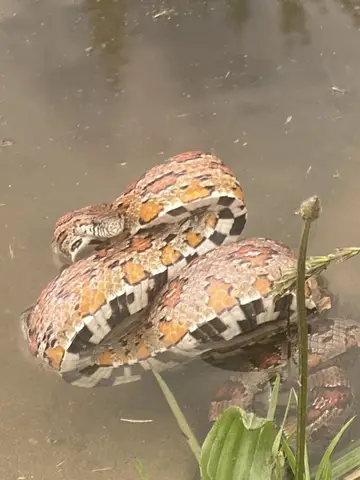
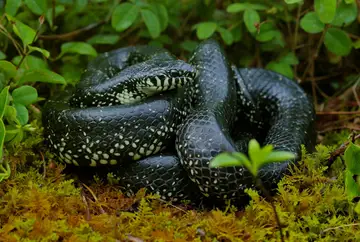
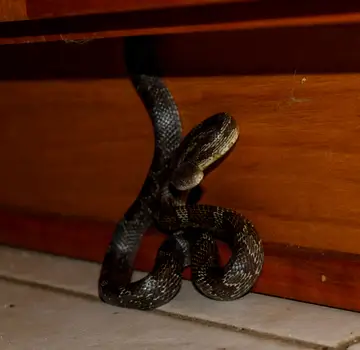
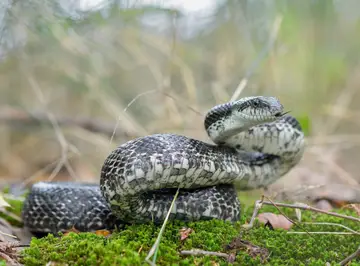
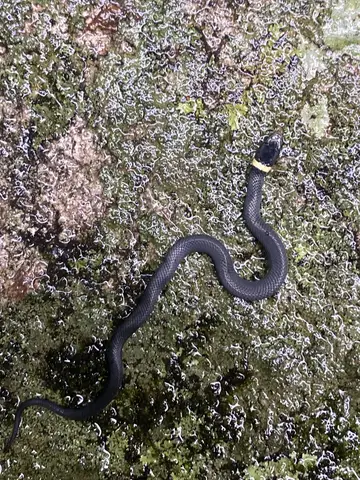
Young rat snakes (black rat snake / eastern ratsnake) Non-venomous
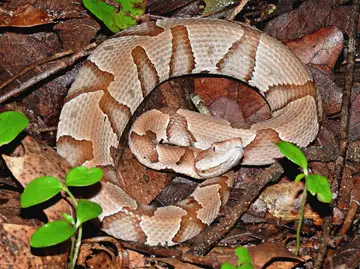
Hatchling and yearling rat snakes have irregular blotches, not hourglass bands, and turn virtually all black as adults (NJ Division of Fish and Wildlife). New Jersey says no other snake there has the copperhead's hourglass pattern; Delaware DNREC says the same for Delaware.
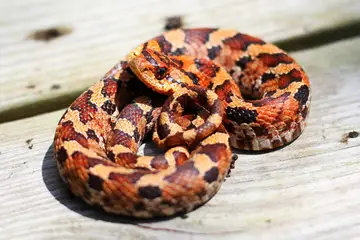
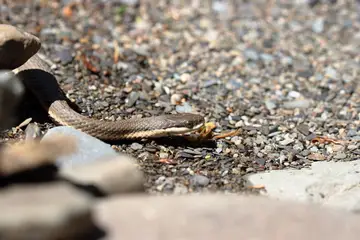
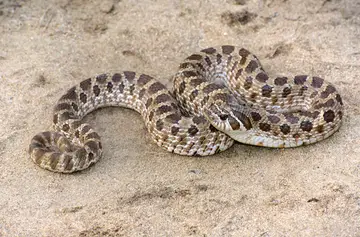
Named by Delaware DNREC and Rutgers as a frequent copperhead misidentification. Use the hourglass test: in Delaware only the copperhead has dark hourglass crossbands narrowest at the center of the back.
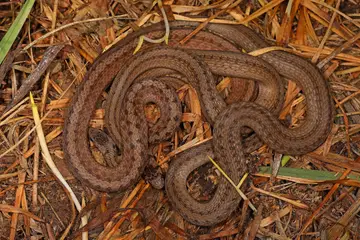
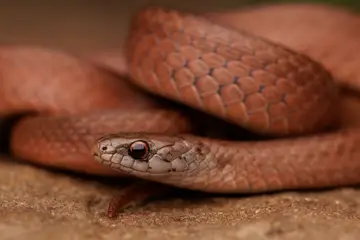
Copperheads have bold hourglass-shaped bands, and young copperheads under about 12 inches have bright yellow tail tips. Brown snakes have small spots, not hourglass bands.
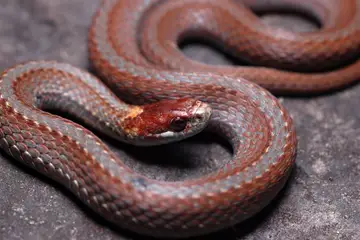
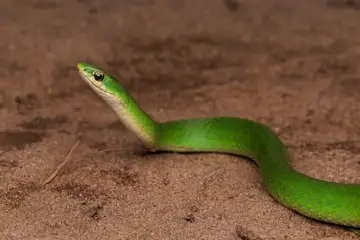
Brown Snake (Dekay's Brownsnake) or Red-bellied Snake?
The red-bellied snake has a red underside; the brown snake's belly is cream, yellow or pink.
Photos show typical adults; individuals vary. Never get close to compare.
When snakes are active in West Virginia
Records of snakes in West Virginia peak in May to July. They show when people record snakes, not how many there are (about month bars).
JanFebMarAprMayJunJulAugSepOctNovDec
334 records of snakes in West Virginia by month (GBIF, CC0 and CC BY records).
Snakes are most active April through October and hibernate in winter. WVDNR
Timber rattlesnakes breed July to early September and give birth late summer to mid-autumn of the following year. WVDNR
If you are bitten or stung
Call 911 or Poison Help at 1-800-222-1222 right away. Poison Help connects you to your local poison center, any time of day.
Official advice from WVDNR:
If bitten by a venomous snake, see a doctor or go to a hospital immediately. WVDNR
If bitten by a rattlesnake, seek medical help immediately. WVDNR
Do not handle rattlesnakes; give them space and leave them alone. WVDNR
It is better to leave a snake alone; bites can happen when someone tries to kill one. WVDNR
How to report
Report wildlife violations to any WVDNR district office or (844) 484-7367. Report sick or dead wildlife to a local district office. For nuisance wildlife, consult a WVDNR biologist or Natural Resources Police Officer, or hire a licensed Wildlife Damage Control Agent. For pest questions, WVDA Plant Industries Division: (304) 558-2212. No dedicated WVDNR invasive-species sighting line was found. WVDNR
What official sources say
Are there venomous snakes in West Virginia?
Yes. Two: the timber rattlesnake and eastern (northern) copperhead. WVDNR
“Two of the snake species in West Virginia are venomous, the timber rattlesnake and eastern copperhead.”
Are there rattlesnakes in West Virginia?
Yes. One species, the timber rattlesnake, the state reptile. WVDNR
“West Virginia is home to one species of rattlesnake: the timber rattlesnake.”
Are there copperheads in West Virginia?
Yes. WVDNR says copperheads exist throughout the state in rocky, wooded areas and are the most common venomous snake. WVDNR
“Copperheads exist throughout the state in rocky, wooded areas”
Are there water moccasins or cottonmouths in West Virginia?
No. WVDNR reports no confirmed records. The common watersnake is popularly called a "water moccasin" but is a different snake. WVDNR
“There are no confirmed records of the cottonmouth or any venomous water snakes occurring within West Virginia.”
Wildlife Diseases in West Virginia. West Virginia Division of Natural Resources (WVDNR). WordPress modified 2026-06-25; checked November 3, 2026.
Amphibians & Reptiles. West Virginia Division of Natural Resources (WVDNR). WordPress modified 2026-04-20; checked November 3, 2026.Quoted passages (1)
“Two of the snake species in West Virginia are venomous, the timber rattlesnake and eastern copperhead.”
“The new regulations prohibit the taking and possessing of 26 salamander species, 13 frog and toad species, six lizard species, 23 snake species and 12 turtle species.”
Snakes Alive! West Virginia Division of Natural Resources (WVDNR). posted 2021-05-11; checked November 3, 2026.Quoted passages (4)
“West Virginia’s northern copperhead is the most common venomous snake in the state.”
“West Virginia has 23 species of snakes. Only the Northern copperhead and Timber rattlesnake are venomous.”
“This can happen when someone tries to kill a snake, so it’s better to leave a snake alone.”
“West Virginia’s snakes are most active between April and October when temperatures are suited for these cold-blooded reptiles.”
Living with Rattlesnakes. West Virginia Division of Natural Resources (WVDNR). 10/21 print code; checked November 3, 2026.Quoted passages (5)
“This venomous pit viper became West Virginia’s state reptile in 2008. While the timber rattlesnake can be dangerous when provoked”
“If bitten by a rattlesnake, seek medical help immediately.”
“If you encounter a rattlesnake, it is best to give it space and leave it alone.”
“Breeding takes place between July and early September, before rattlesnakes enter their winter dens.”
“West Virginia is home to one species of rattlesnake: the timber rattlesnake.”
Snakes of West Virginia. West Virginia Division of Natural Resources (WVDNR). 02/06; checked November 3, 2026.Quoted passages (3)
“If, however, you are bitten by a venomous snake, see a doctor or go to a hospital immediately.”
“Copperheads exist throughout the state in rocky, wooded areas”
“There are no confirmed records of the cottonmouth or any venomous water snakes occurring within West Virginia.”