No official source we use states whether this animal is venomous. That does not mean it is harmless: do not handle it.
Size
About 6.5 to 12.75 inches in total length. Oklahoma gives about 12 inches for large adults and SREL up to 13 inches. Males are larger than females.
How to recognize it
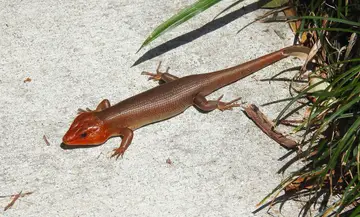
Large, wide head; breeding males have swollen orange-red jowls.
Smooth, glass-like scales, short legs and a stocky body.
Upper-lip scales separate it from five-lined skinks: Maryland, Tennessee and North Carolina count five labial scales between the nostril and the eye rather than four. Oklahoma and Missouri count differently, around 8 or 9 in the full lip row.
Conservation
WV State Wildlife Action Plan species of greatest conservation need; state rank S2; Priority 1 (2015 list)
NCWRC: broadhead skinks reach a much larger size. ODWC: juveniles can be told apart by counting the upper lip scales (five-lined: seven, with two post-labials; broad-headed: nine, with no post-labials).
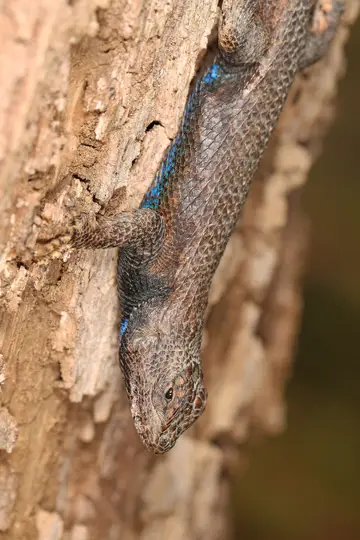
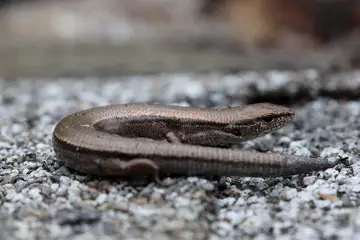
Photos show typical adults; individuals vary. Never get close to compare.
When lizards are active in West Virginia
Records of lizards in West Virginia peak in May to July and September. They show when people record lizards, not how many there are (about month bars).
JanFebMarAprMayJunJulAugSepOctNovDec
51 records of lizards in West Virginia by month (GBIF, CC0 and CC BY records).
How to report
Report wildlife violations to any WVDNR district office or (844) 484-7367. Report sick or dead wildlife to a local district office. For nuisance wildlife, consult a WVDNR biologist or Natural Resources Police Officer, or hire a licensed Wildlife Damage Control Agent. For pest questions, WVDA Plant Industries Division: (304) 558-2212. No dedicated WVDNR invasive-species sighting line was found. WVDNR
Venom labels come only from official sources and link to them; "Not stated" never means harmless. How labels work.
Sources
Wildlife Diseases in West Virginia. West Virginia Division of Natural Resources (WVDNR). WordPress modified 2026-06-25; checked November 3, 2026.
Amphibians & Reptiles. West Virginia Division of Natural Resources (WVDNR). WordPress modified 2026-04-20; checked November 3, 2026.Quoted passages (1)