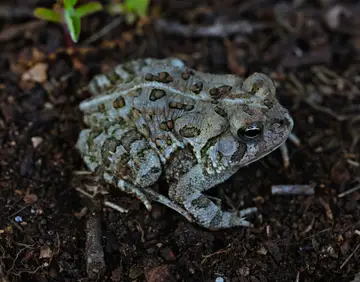
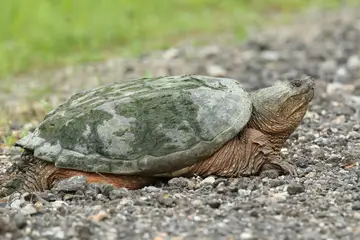
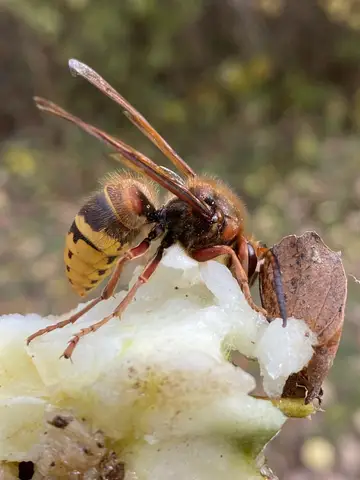
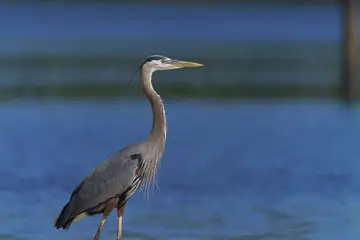
West Virginia has 2 venomous snakes named by official sources: Eastern Copperhead and Timber Rattlesnake, as labelled by WVDNR. This guide covers 8 animal groups from West Virginia Division of Natural Resources (WVDNR) lists and other official sources, with photos, venomous status and when each group is active.
Identification help has limits: a photo cannot confirm that an animal is safe. Watch from a distance and never handle a wild animal.
These are the animals official sources describe as venomous or as a risk to people in West Virginia, across 5 groups. The reason is given in the source's own terms.
Venomous: “Stinging or biting insects include bees, wasps, hornets, and fire ants. … People who are allergic to venom may experience anaphylaxis, a severe and potentially life-threatening allergic reaction that …”
Venomous: “Stinging or biting insects include bees, wasps, hornets, and fire ants. … People who are allergic to venom may experience anaphylaxis, a severe and potentially life-threatening allergic reaction that …”
Stings can cause anaphylaxis, a potentially life-threatening emergency: “A severe reaction, also known as anaphylaxis, is a potentially life-threatening emergency and requires immediate attention.”
Vector of ehrlichiosis in West Virginia: “The geographic distribution of ehrlichiosis cases in humans (E. chaffeensis, E. ewingii) reflected the geographic distribution of its tick vector, the lone star tick.”
Will defend itself if approached: “Bears are naturally curious and likely are just looking for food, but they will defend themselves if you get too close to them.”
Official sources say the brown recluse is not native to West Virginia or not found there. It is not counted among the dangerous animals above; each entry quotes the source.
60 nonnative animals are named on West Virginia's official lists (WVDNR). The USGS Nonindigenous Aquatic Species database records 1 nonnative animal in our groups with an established population in West Virginia.
Darker cells are the months with more open-licence observation records of each group in West Virginia (GBIF). They show when people see and record these animals, not how many there are. The current month, this month, is highlighted.
Report: Report wildlife violations to any WVDNR district office or (844) 484-7367. Report sick or dead wildlife to a local district office. For nuisance wildlife, consult a WVDNR biologist or Natural Resources Police Officer, or hire a licensed Wildlife Damage Control Agent. For pest questions, WVDA Plant Industries Division: (304) 558-2212. No dedicated WVDNR invasive-species sighting line was found. WVDNR
For anaphylaxis symptoms after a bee sting, call 911 or go to the nearest emergency room immediately. West Virginia Department of Health
Do not handle rattlesnakes; give them space and leave them alone. WVDNR
Questions people ask about West Virginia wildlife
Are there venomous snakes in West Virginia?
Yes. Two: the timber rattlesnake and eastern (northern) copperhead. WVDNR
Are there rattlesnakes in West Virginia?
Yes. One species, the timber rattlesnake, the state reptile. WVDNR
Are there copperheads in West Virginia?
Yes. WVDNR says copperheads exist throughout the state in rocky, wooded areas and are the most common venomous snake. WVDNR
Are there water moccasins or cottonmouths in West Virginia?
No. WVDNR reports no confirmed records. The common watersnake is popularly called a "water moccasin" but is a different snake. WVDNR
How many snakes are in West Virginia?
WVDNR pages give 20, 22, 23 and 24 depending on the page and how subspecies are counted; its current list has 23 rows and its regulation names 23. WVDNR
Not established. The WV Poison Center says they have never been native; WVDA (undated) says none has been found, though the species occurs in Ohio and Kentucky. West Virginia Poison Center, West Virginia University
Not established. USGS records five American alligators in West Virginia (1928 to 2016), each with status "failed". US Geological Survey
Are there black bears in West Virginia?
Yes. The black bear is the state animal; WVDNR says encounters are becoming more common. WVDNR
Are there mountain lions in West Virginia?
No. WVDNR lists the mountain lion as no longer existing in the state and says USFWS considers it extinct there. WVDNR · More
Are there wolves in West Virginia?
No. WVDNR says the gray wolf no longer exists in the state; the last recorded wolf was killed in 1900. WVDNR
Are there coyotes in West Virginia?
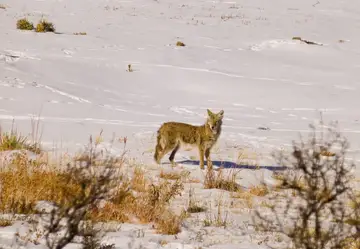
Yes. The 2001 WVDNR checklist says the coyote occurs throughout the state. WVDNR
Are there elk in West Virginia?
Yes. A small reintroduced population in southwestern West Virginia, begun in 2016. WVDNR
Are there wild hogs in West Virginia?
Yes. Wild boar were introduced in 1971 and live in Boone, Logan, Raleigh and Wyoming counties. WVDNR
Are there nutria in West Virginia?
Yes. USGS has one 2012 record in Wyoming County, with status "established". US Geological Survey
Is it legal to kill a snake in West Virginia?
WVDNR allows destroying or relocating a snake found in a home or outbuilding, or in gardens and agricultural fields, and otherwise prohibits it. The rattlesnake brochure is stricter in wording, saying killing one in your yard is illegal. WVDNR
Sources
Wildlife Diseases in West Virginia. West Virginia Division of Natural Resources (WVDNR). WordPress modified 2026-06-25; checked November 3, 2026.
Amphibians & Reptiles. West Virginia Division of Natural Resources (WVDNR). WordPress modified 2026-04-20; checked November 3, 2026.Quoted passages (4)
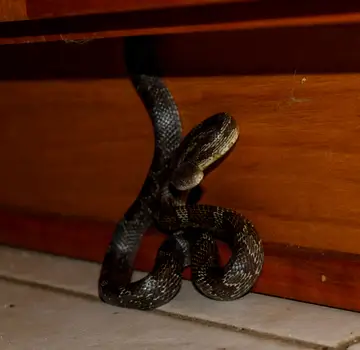
“Two of the snake species in West Virginia are venomous, the timber rattlesnake and eastern copperhead.”
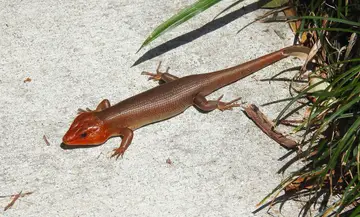
“West Virginia is home to 6 species of lizards.”
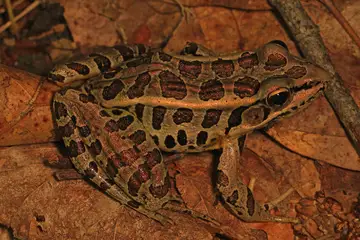
“West Virginia is home to 15 species of frogs and toads.”
“It is home to 36 salamander species, 24 snake species, 15 frog and toad species, 14 turtle species, and 6 lizard species.”
“The new regulations prohibit the taking and possessing of 26 salamander species, 13 frog and toad species, six lizard species, 23 snake species and 12 turtle species.”
“23 snake species”
West Virginia State Bird List. West Virginia Bird Records Committee, hosted by the Brooks Bird Club. February 20, 2024; checked November 3, 2026.Quoted passages (1)
“BLACK = Main List - 354 Total”
Mammals. West Virginia Division of Natural Resources (WVDNR). WordPress modified 2026-07-21; checked November 3, 2026.Quoted passages (5)
“Seventy-four species of mammals are currently found in the Mountain State.”
“Recently, due to the lack of physical evidence of occurrence, the US Fish and Wildlife Service now considers the mountain lion extinct in West Virginia.”
“Bounties were paid on wolves in West Virginia through the late 1800’s with the last recorded wolf killed in 1900.”
“The elk is a newly reintroduced species to the state with a small population being established in southwestern West Virginia beginning in 2016.”
“Today a population of wild boar exists in Boone, Logan, Raleigh and Wyoming counties.”
Bites & Stings. West Virginia Poison Center, West Virginia University. undated page; checked November 3, 2026.Quoted passages (6)
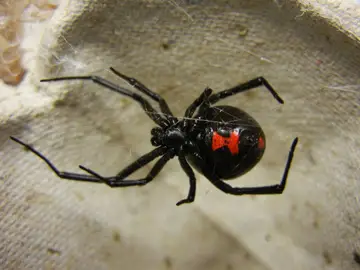
“There is only one spider in West Virginia that is harmful to humans. This spider is the black widow.”
“These animals use poisonous venom as a means to capture prey or defending of themselves or nesting areas.”
“Brown recluse spiders are not native to WV. While a small tip of the western edge of WV is near areas brown recluse spiders are native, they have never been native to WV.”
“Have an Emergency? Call 1-800-222-1222”
“…if you suspect you have been bitten by the black widow, call the poison center.”
“Bites and stings usually occur during the warmer months.”
Insects and Scorpions at Work. CDC / National Institute for Occupational Safety and Health (NIOSH). archived copy, captured October 4, 2026; checked November 3, 2026.Archived copy. Quoted passages (1)
“Stinging or biting insects include bees, wasps, hornets, and fire ants. … People who are allergic to venom may experience anaphylaxis, a severe and potentially life-threatening allergic reaction that requires immediate emergency care.”
“A severe reaction, also known as anaphylaxis, is a potentially life-threatening emergency and requires immediate attention.”
“If you experience any of the above symptoms related to anaphylaxis following a bee sting, call 911 or go to the nearest emergency room immediately.”
“Yellow jacket wasps are particularly aggressive at this time of year.”
Nature Care: Leave Young Wildlife Alone. West Virginia Division of Natural Resources (WVDNR). posted 2023-07-07; checked November 3, 2026.Quoted passages (2)
“Lyme disease is caused by the bite of a black-legged deer tick, which carries the disease.”
“Rabies can be found in mammals such as raccoons, foxes and skunks.”
“The geographic distribution of ehrlichiosis cases in humans (E. chaffeensis, E. ewingii) reflected the geographic distribution of its tick vector, the lone star tick.”
“Destructive and aggressive feral hogs are a growing problem in southern West Virginia”
“Birds Brown‐headed cowbird Molothrus ater”
“Birds House sparrow Passer domesticus”
“Birds European starling Sturnus vulgaris”
“Crustaceans Rusty crayfish Orconectes rusticus”
“Crustaceans Virile crayfish Orconectes virilis”
“Fishes Bighead carp Hypophthalmichthys nobilis”
“Fishes Goldfish Carassius auratus”
“Fishes Grass carp Ctenopharyngodon idella”
Non-Native Invasive Species. West Virginia Division of Natural Resources (WVDNR). WordPress modified 2026-04-13; checked November 3, 2026.Quoted passages (1)
“Feral and outdoor cats are a major threat to native wildlife and public health”
“Citizens may report violations to any DNR district office or call (844) 484-7367.”
“…destroy or collect for relocation any snake found in their home or outbuildings, as well as in gardens and fields used for agricultural crops or livestock.”
Living with Rattlesnakes. West Virginia Division of Natural Resources (WVDNR). 10/21 print code; checked November 3, 2026.Quoted passages (4)
“West Virginia is home to one species of rattlesnake: the timber rattlesnake.”
“If bitten by a rattlesnake, seek medical help immediately.”
“If you encounter a rattlesnake, it is best to give it space and leave it alone.”
“Breeding takes place between July and early September, before rattlesnakes enter their winter dens.”
Snakes of West Virginia. West Virginia Division of Natural Resources (WVDNR). 02/06; checked November 3, 2026.Quoted passages (3)
“Copperheads exist throughout the state in rocky, wooded areas”
“There are no confirmed records of the cottonmouth or any venomous water snakes occurring within West Virginia.”
“If, however, you are bitten by a venomous snake, see a doctor or go to a hospital immediately.”
Spiders in West Virginia. West Virginia Department of Agriculture. archived copy, captured June 18, 2025; checked November 3, 2026.Archived copy. Quoted passages (1)
“The tarantulas are not likely to be seen in West Virginia unless they arrive from the south on imported goods and commodities.”
Snakes Alive! West Virginia Division of Natural Resources (WVDNR). posted 2021-05-11; checked November 3, 2026.Quoted passages (1)
“West Virginia’s snakes are most active between April and October when temperatures are suited for these cold-blooded reptiles.”
Tickborne Diseases. WV Office of Epidemiology and Prevention Services. undated page; checked November 3, 2026.Quoted passages (1)
“Most infections occur from late spring through early fall when ticks (and people and pets) are most active.”
Cicadas. West Virginia University Extension. undated page; checked November 3, 2026.Quoted passages (1)
“From May through June the adult male cicadas will announce their presence with a loud chorus of sound”
Birds of West Virginia Checklist. West Virginia Division of Natural Resources (WVDNR). file name dated 2022-11-30; checked November 3, 2026.Quoted passages (1)