Texas has 11 venomous snakes named by official sources: Copperhead, Cottonmouth, Western Diamondback Rattlesnake, Timber Rattlesnake, Rock Rattlesnake, Black-tailed Rattlesnake, Mojave Rattlesnake, Prairie Rattlesnake, Massasauga, Pygmy Rattlesnake and Texas Coralsnake, as labelled by Texas Parks and Wildlife Department. This guide covers 10 animal groups from Texas Parks and Wildlife Department (TPWD) lists and other official sources, with photos, venomous status and when each group is active.
Identification help has limits: a photo cannot confirm that an animal is safe. Watch from a distance and never handle a wild animal.
These are the animals official sources describe as venomous or as a risk to people in Texas, across 7 groups. The reason is given in the source's own terms.
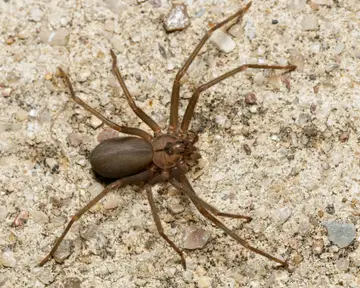
Venomous: “Although only L. reclusa and L. rufescens are known to be venomous to people, it is best to consider all these species as potentially dangerous.”
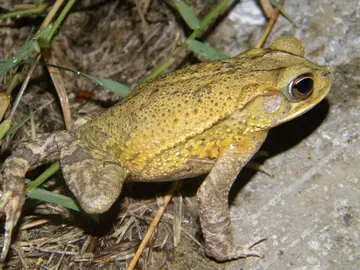
Glands produce bufotoxins, which act as neurotoxins (USGS): “…these toads have a pair of large parotoid glands that produce bufotoxins, which act as neurotoxins”
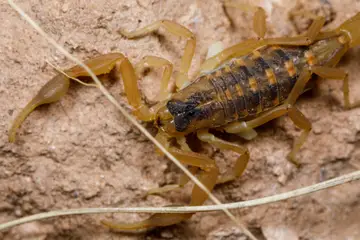
Venomous: “On the end of the tail is a bulb-like poison gland or stinger. … The stings from Texas scorpions produce only moderate reactions in most people because the poison has little effect on the nervous …”
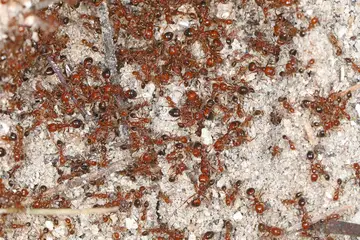
Venomous: “Cyto-toxins and hemolytics in the fire ant venom cause necrosis of the skin and underlying connective tissue, creating a characteristic sterile pustule.”
Disease: “C hagas disease is spread mainly by the feces of an infected kissing bug. … research out of Texas A&M University suggests that one in two kissing bugs in Texas are infected with the parasite.”
Stinging caterpillars (AgriLife Extension): “These fuzzy, or sometimes spiky, insects may seem harmless but can cause itchy rashes, intense pain and severe reactions requiring medical”
Disease: “Texas periodically experiences outbreaks of rabies in skunks. … Wild animals – coyotes, foxes, bats, skunks, and raccoons – which you do not usually see in the daytime”
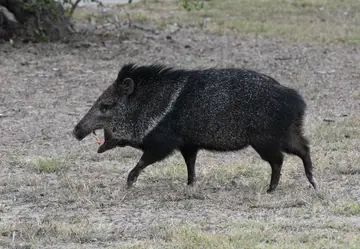
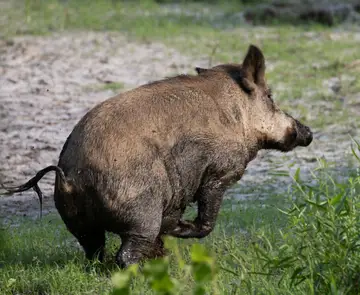
Disease: “Wild pigs are capable of carrying and transmitting at least 30 bacterial, fungal, and viral diseases which threaten humans, livestock, and wildlife”
Attacks on humans are rare but reported in Texas (TPWD): “Only four attacks on humans in Texas have been reported since 1980, all of them in remote areas of West Texas.”
Tail barb causes wounds when stepped on (NPS, Padre Island): “When stepped on, stingrays will whip their tail inflicting a laceration or puncture wound.”
5 nonnative animals are named on Texas's official lists (Texas Parks and Wildlife Department). The USGS Nonindigenous Aquatic Species database records 3 nonnative animals in our groups with an established population in Texas.
Darker cells are the months with more open-licence observation records of each group in Texas (GBIF). They show when people see and record these animals, not how many there are. The current month, this month, is highlighted.
Snakes hibernate in winter and emerge in late February or early March in Texas; in hot weather they are active in early morning, evening and night. Texas Parks and Wildlife Department
TPWD counts 15 potentially dangerous snake species or subspecies, and AgriLife Extension says 15 kinds. These fall into 11 species on the list: 2 Agkistrodon, 6 Crotalus, 2 Sistrurus and the Texas coral snake. Texas Parks and Wildlife Department
Yes. TPWD Junior Naturalists and AgriLife Extension give eight species: two Sistrurus and six Crotalus (Extension counts 10 subspecies). TPWD hunter education says 10 species. The western diamondback is the most common and widespread venomous snake in Texas. Texas Parks and Wildlife Department
Yes. AgriLife Extension: 18 species; only the striped bark scorpion occurs statewide. Stings from Texas scorpions usually cause only moderate reactions. Texas A&M AgriLife Extension Service · More
Yes. TPWD: the only breeding population is in the Trans-Pecos and Val Verde and Crockett counties, but a bear can show up almost anywhere. Texas Parks and Wildlife Department · More
Are there mountain lions in Texas?
Yes. TPWD: Trans-Pecos, South Texas brushlands and parts of the Hill Country. Attacks on people are rare: TPWD reports four in Texas since 1980, all in remote West Texas. Texas Parks and Wildlife Department
“Pit vipers are venomous snakes that have an opening on each side of the head between the eye and the nostril. In Texas, we have 3 groups of these snakes: Copperheads, Cottonmouths, and Rattlesnakes. … There are three subspecies of Copperheads in Texas; Southern copperhead (A.c. contortrix), 20-30 inches long and found in the eastern one-third of the state; Broadbanded copperhead (A.c. laticinctus), about two feet long, widely scattered in central and western Texas; and the Trans-Pecos copperhead (A.c. pictigaster), 20-30 inches in length and found near springs in the southern part of the Trans-Pecos.”
“Pit vipers are venomous snakes that have an opening on each side of the head between the eye and the nostril. In Texas, we have 3 groups of these snakes: Copperheads, Cottonmouths, and Rattlesnakes. … Also known as 'water moccasins', only one recognized supspecies is found in Texas; Western cottonmouth (A.p. leucostoma).”
“Pit vipers are venomous snakes that have an opening on each side of the head between the eye and the nostril. In Texas, we have 3 groups of these snakes: Copperheads, Cottonmouths, and Rattlesnakes. … Western diamondback (Crotalus atrox), Brown, diamond-shaped markings along the middle of the back and alternating black and white rings on the tail.”
“Pit vipers are venomous snakes that have an opening on each side of the head between the eye and the nostril. In Texas, we have 3 groups of these snakes: Copperheads, Cottonmouths, and Rattlesnakes. … Timber rattlesnake (Crotalus horridus) also known as Canebreak rattlesnake is a large, heavy-bodied snake averaging 4-1/2 feet.”
“Pit vipers are venomous snakes that have an opening on each side of the head between the eye and the nostril. In Texas, we have 3 groups of these snakes: Copperheads, Cottonmouths, and Rattlesnakes. … Mottled Rock rattlesnake (Crotalus lepidus) is light bream or pink background with widely spaced, dark crossbands and mottled areas between the crossbands.”
“Pit vipers are venomous snakes that have an opening on each side of the head between the eye and the nostril. In Texas, we have 3 groups of these snakes: Copperheads, Cottonmouths, and Rattlesnakes. … Blacktail rattlesnake (Crotalus molossus) is gray to olive green with dark blotches along the back and a black tail.”
“Pit vipers are venomous snakes that have an opening on each side of the head between the eye and the nostril. In Texas, we have 3 groups of these snakes: Copperheads, Cottonmouths, and Rattlesnakes. … Mojave rattlesnake (Crotalus scutulatus) is similar to the western diamondback in markings, but smaller and more slender and found only in extreme West Texas.”
“Pit vipers are venomous snakes that have an opening on each side of the head between the eye and the nostril. In Texas, we have 3 groups of these snakes: Copperheads, Cottonmouths, and Rattlesnakes. … Prairie rattlesnake (Crotalus viridis viridis) is a slender rattler that is greenish or grayish, with rounded blotches down the middle of its back.”
“Pit vipers are venomous snakes that have an opening on each side of the head between the eye and the nostril. In Texas, we have 3 groups of these snakes: Copperheads, Cottonmouths, and Rattlesnakes. … Western massasauga (Sistrurus catenatus tergeminus), light gray, with brown oval blotches along the middle of the back and smaller blotches along each side.”
“Pit vipers are venomous snakes that have an opening on each side of the head between the eye and the nostril. In Texas, we have 3 groups of these snakes: Copperheads, Cottonmouths, and Rattlesnakes. … Western Pygmy Rattlesnake (Sistrurus miliarius streckeri), gray or light brown body color with darks blotches down the back often with a light orange stripe.”
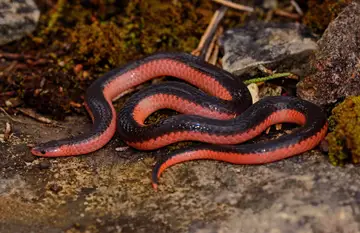
“The brightly colored Texas coral snake is the state's only member of the Elapidae family, which includes the cobras of Asia and Africa. … Coral snakes are found in the southeastern half of Texas in woodlands, canyons and coastal plains.”
“Coral snakes, which are venomous, do not have cat’s-eye pupils.”
“There are 10 species of rattlesnakes in Texas. … This is the most common and widespread venomous snake in Texas, found in all but the easternmost part of the state.”
“Also known as 'water moccasins', only one recognized subspecies is found in Texas; Western cottonmouth (A.p. leucostoma).”
“Please do not kill a snake - even a venomous one. … Freeze when snakes are known to be nearby until you know where they are. Allow the snake to retreat. If you must move, back slowly and carefully away from the snake.”
“Do not play around with a dead snake, they have been known to bite and inject venom because of muscle contractions.”
“Very few of the nearly 980 species of spiders recorded in Texas can hurt people.”
“Although only L. reclusa and L. rufescens are known to be venomous to people, it is best to consider all these species as potentially dangerous.”
“Very few of the nearly 980 species of spiders recorded in Texas can hurt people. Only two groups—recluse spiders and widow spiders—are considered medi-cally significant. … Five species of recluse spiders have been recorded in Texas: Loxosceles apachea, L. blanda, L. devia, L. reclusa and L. rufescens.”
“Very few of the nearly 980 species of spiders recorded in Texas can hurt people. Only two groups—recluse spiders and widow spiders—are considered medi-cally significant. … The southern black widow, Latrodectus mactans, and its relatives live across the entire United States. Other widow species found in Texas include the western black widow, L. hesperus, the northern black widow, L. variolus, and the brown widow, L. geometricus.”
“Tarantulas are members of the family Theraphosidae and most species in Texas are in the genus Aphonopelma.”
“Migrating male tarantulas are often seen for a few weeks in early summer.”
“Texas has 18 species, but only one, the striped bark scorpion, occurs throughout the state.”
“On the end of the tail is a bulb-like poison gland or stinger. … The stings from Texas scorpions produce only moderate reactions in most people because the poison has little effect on the nervous system.”
“Scorpions are nocturnal, hiding during the day and becoming active at night.”
“An additional AOS species, plus one species formerly accepted by the TBRC, and two species recently added to AviList bumps the total species on this list to 683. In addition, there are nine species listed as historical/ hypothetical/potential, and five non-native species where the current status is uncertain or unaccepted by the TBRC.”
“Texas has two venomous species of spiders, the black widow (Latrodectus mactans) and the brown recluse (Loxosceles reclusa). Both of these species of spiders can be found indoors and outdoors throughout the State.”
“Texas has two venomous species of spiders, the black widow (Latrodectus mactans) and the brown recluse (Loxosceles reclusa). Both of these species of spiders can be found indoors and outdoors throughout the State. … Brown recluse venom has necrotizing enzymes that generally cause local or systemic reactions.”
“Cyto-toxins and hemolytics in the fire ant venom cause necrosis of the skin and underlying connective tissue, creating a characteristic sterile pustule.”
“The red imported fire ant, Solenopsis invicta Buren (Hymenoptera: Formicidae), is an introduced species that arrived in Mobile, Alabama from South America around the 1930s. … The red imported fire ant reached Texas during the 1950s and has spread steadily across the state.”
“Asps have spines attached to venom glands that can lead to a nasty sting, rash and other issues.”
“It’s dark, spiny body is covered in clusters of sharp, branched venomous spines.”
“These fuzzy, or sometimes spiky, insects may seem harmless but can cause itchy rashes, intense pain and severe reactions requiring medical”
“Many people spend more time in outdoor areas like yards, parks and forests during warmer months from April-June – increasing the chance of encountering these insects.”
“C hagas disease is spread mainly by the feces of an infected kissing bug. … research out of Texas A&M University suggests that one in two kissing bugs in Texas are infected with the parasite.”
“T here are seven species of kissing bugs found in Texas. They are found across the state, with the most variety of species found in central Texas. … research out of Texas A&M University suggests that one in two kissing bugs in Texas are infected with the parasite.”
Rabies. Texas Department of State Health Services. undated page; checked November 3, 2026.Quoted passages (1)
“Texas periodically experiences outbreaks of rabies in skunks. … Wild animals – coyotes, foxes, bats, skunks, and raccoons – which you do not usually see in the daytime”
Feral Hogs (Wild Pigs) in Texas. Texas Parks and Wildlife Department. undated page; checked November 3, 2026.Quoted passages (3)
“Wild pigs are capable of carrying and transmitting at least 30 bacterial, fungal, and viral diseases which threaten humans, livestock, and wildlife”
“Pigs (Sus scrofa) are not native to North America … Wild pigs have been listed as one of the top 100 worst exotic invasive species in the world”
“El Paso County is the only county in Texas not occupied by feral swine as of 2019.”
“Zebra Mussels are found in lakes Amistad, Austin, Belton, Bridgeport, Brownwood, Buchanan, Canyon, Dunlap, Diversion (Medina County), Eagle Mountain, Fort Phantom Hill, Georgetown, Granger, Grapevine, Hords Creek, Inks, Lady Bird, Lavon, Lewisville, Livingston, Lyndon B. Johnson, Marble Falls, McQueeney, Medina, Meredith, Nasworthy, O.H. Ivie, Pflugerville, Placid, Ray Roberts, Richland Chambers, Stillhouse Hollow, Texoma, Travis, Walter E. Long, Worth, and four small lakes in Dallas. Grayson, and Brown counties.”
“Quagga Mussels are now found in Lake Amistad.”
“Lionfish appeared off South Florida in 1985 and spread rapidly, moving up the East Coast in the 2000s, covering the Caribbean by 2009 and then invading the Gulf of Mexico, reaching Texas in 2011.”
“For information or to report sightings of aquatic invasive species, email [email protected].”
“The American alligator is found throughout the southern U.S., including the eastern third of Texas.”
“Alligators have been known to prey on pets and must be treated with caution. Alligators can be surprisingly quick on land and are capable of running quickly over short distances.”
“Alligators in Texas are mostly inactive from mid-October until early March. March through May is the alligator's peak time for breeding and nesting.”
“Snakes cannot tolerate extreme cold and will normally hibernate in the winter, emerging from their dens late February or early March in Texas.”
“Snakes cannot tolerate extreme cold and will normally hibernate in the winter, emerging from their dens late February or early March in Texas. They also avoid extremely torrid conditions, confining their activity in hot climates to early morning, evenings, and night-time.”
“Call 9-1-1 or the Texas Poison Center Network at 1-800-222-1222 for information about which medical centers in your area have the appropriate antivenom.”
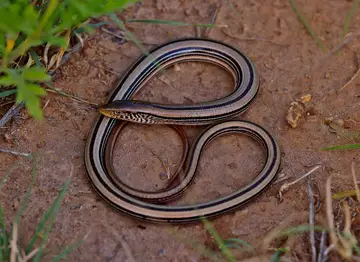
“Although most snakes in Texas are not venomous, avoid handling or playing with snakes unless you have been properly trained.”