Invasive and nonnative animals in Texas
Last checked November 3, 2026 against official sources.
On this page
5 nonnative animals are named on 3 official lists for Texas: “Feral Hogs (Wild Pigs) in Texas” (Texas Parks and Wildlife Department), “TPWD Wildlife Fact Sheet: Aquatic Invasive Species” (Texas Parks and Wildlife Department) and “Diagnosing and Treating Nondomestic and Exotic Animals for Red Imported Fire Ant Injury (ENTO-004 03/14)” (Texas A&M AgriLife Extension Service).
The USGS Nonindigenous Aquatic Species database records an established population in Texas for 3 nonnative animals in the groups this guide covers.
To report a sighting, see how to report.
Being on a list of nonnative species does not always mean an animal is harmful or established: each list below is described in its source's terms. A sighting of a listed animal is still worth reporting to the agency.
Feral Hogs (Wild Pigs) in Texas
Texas Parks and Wildlife Department, undated page. 1 animal.
-
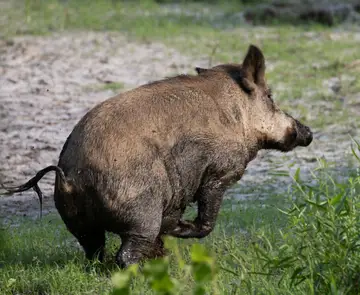
Photo: Cullen Hanks · CC BY 4.0 · iNaturalist Feral hog (wild pig) Sus scrofa
El Paso County is the only county in Texas not occupied by feral swine as of 2019. Texas Parks and Wildlife Department
TPWD Wildlife Fact Sheet: Aquatic Invasive Species
Texas Parks and Wildlife Department, undated page. 3 animals.
-
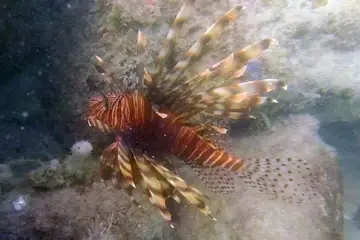
Photo: Kristof Zyskowski · CC BY 4.0 · iNaturalist Lionfish Pterois volitans/miles
Gulf of Mexico off Texas (since 2011) Texas Parks and Wildlife Department
-
Quagga mussel
Lake Amistad Texas Parks and Wildlife Department
-
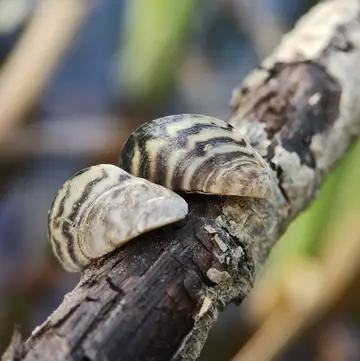
Photo: Harukano · CC0 1.0 · iNaturalist Zebra mussel
Lakes named by TPWD (see quote), e.g. Amistad, Austin, Belton, Lewisville, Texoma, Travis Texas Parks and Wildlife Department
Diagnosing and Treating Nondomestic and Exotic Animals for Red Imported Fire Ant Injury (ENTO-004 03/14)
Texas A&M AgriLife Extension Service, 03/14. 1 animal.
-
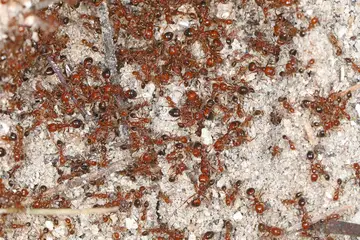
Photo: Judy Gallagher · CC BY 2.0 · Wikimedia Commons Red imported fire ant Solenopsis invicta
Across the state (Extension); source calls it introduced Texas A&M AgriLife Extension Service

Established in Texas, per USGS records
The U.S. Geological Survey's Nonindigenous Aquatic Species (NAS) database tracks nonnative aquatic animals. These have at least one record with the status "established" in Texas, which USGS defines as a population showing evidence of reproduction and overwinter survival.
| Animal | Group | First record | Latest record | Counties |
|---|---|---|---|---|
| Australian spotted jellyfish Phyllorhiza punctata | Sharks and Marine Life | 2006 | 2026 | 7 |
| Lionfish Pterois volitans/miles | Sharks and Marine Life | 2010 | 2025 | 6 |
| Nutria Myocastor coypus | Mammals | 1945 | 2026 | 132 |
Source: U.S. Geological Survey. [2026]. Nonindigenous Aquatic Species Database. Gainesville, Florida. Accessed [11/3/2026]. "Native Transplant" animals are native elsewhere in the US but not in Texas.
How to report a sighting in Texas
Aquatic invasive species: email [email protected] (TPWD). TPWD general phone: (512) 389-4800 or (800) 792-1112. Texas Parks and Wildlife Department
Do not try to catch or handle the animal. A photo taken from a safe distance, the place and the date help the agency.
Sources
- Feral Hogs (Wild Pigs) in Texas. Texas Parks and Wildlife Department. undated page; checked November 3, 2026.
Quoted passages (1)
“Pigs (Sus scrofa) are not native to North America … Wild pigs have been listed as one of the top 100 worst exotic invasive species in the world”
- TPWD Wildlife Fact Sheet: Aquatic Invasive Species. Texas Parks and Wildlife Department. undated page; checked November 3, 2026.
Quoted passages (4)
“Lionfish appeared off South Florida in 1985 and spread rapidly, moving up the East Coast in the 2000s, covering the Caribbean by 2009 and then invading the Gulf of Mexico, reaching Texas in 2011.”
“Quagga Mussels are now found in Lake Amistad.”
“Zebra Mussels are found in lakes Amistad, Austin, Belton, Bridgeport, Brownwood, Buchanan, Canyon, Dunlap, Diversion (Medina County), Eagle Mountain, Fort Phantom Hill, Georgetown, Granger, Grapevine, Hords Creek, Inks, Lady Bird, Lavon, Lewisville, Livingston, Lyndon B. Johnson, Marble Falls, McQueeney, Medina, Meredith, Nasworthy, O.H. Ivie, Pflugerville, Placid, Ray Roberts, Richland Chambers, Stillhouse Hollow, Texoma, Travis, Walter E. Long, Worth, and four small lakes in Dallas. Grayson, and Brown counties.”
“For information or to report sightings of aquatic invasive species, email [email protected].”
- Diagnosing and Treating Nondomestic and Exotic Animals for Red Imported Fire Ant Injury (ENTO-004 03/14). Texas A&M AgriLife Extension Service. 03/14; checked November 3, 2026.
Quoted passages (1)
“The red imported fire ant, Solenopsis invicta Buren (Hymenoptera: Formicidae), is an introduced species that arrived in Mobile, Alabama from South America around the 1930s. … The red imported fire ant reached Texas during the 1950s and has spread steadily across the state.”
- U.S. Geological Survey. [2026]. Nonindigenous Aquatic Species Database. Gainesville, Florida. Accessed [11/3/2026].