Texas A&M AgriLife Extension Service: Very few of the nearly 980 species of spiders recorded in Texas can hurt people.
This page lists 18 spiders.
9 are venomous by official accounts. Texas A&M AgriLife Extension Service gives a total of 980; the 18 here are the spiders official sources name one by one.
Not every species: no complete official list of Texas spiders exists, so this page covers the ones state and Extension sources name. How lists are built.
Which spiders can hurt you
Official sources single out these spiders in Texas, in their own words:
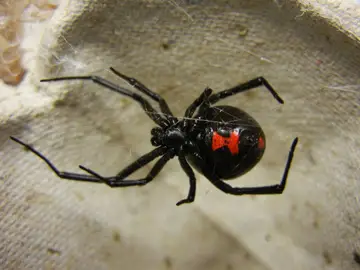
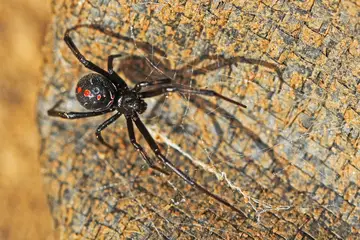
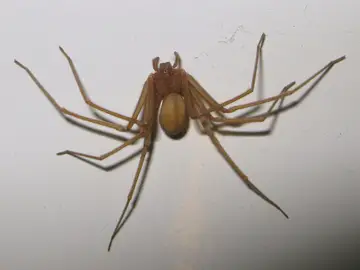
Venomous. “Texas has two venomous species of spiders, the black widow (Latrodectus mactans) and the brown recluse (Loxosceles reclusa). Both of these species of spiders can be found indoors and outdoors throughout the State.” Texas Department of State Health Services
Venomous. “Texas has two venomous species of spiders, the black widow (Latrodectus mactans) and the brown recluse (Loxosceles reclusa) …” Texas Department of State Health Services
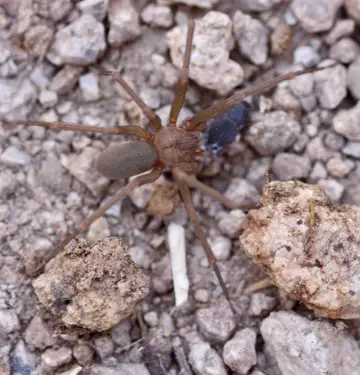
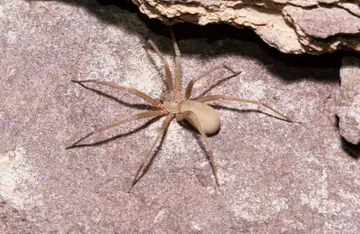
Recluse spiders
Medically significant group. “Very few of the nearly 980 species of spiders recorded in Texas can hurt people …” Texas A&M AgriLife Extension Service
Widow spiders
Medically significant group (AgriLife Extension). “Very few of the nearly 980 species of spiders recorded in Texas can hurt people …” Texas A&M AgriLife Extension Service
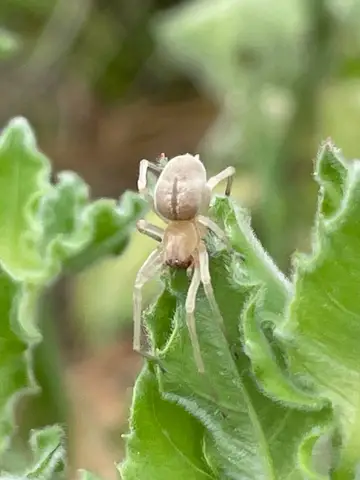
Known to cause severe reactions in some people (Extension). “The agrarian sac spider is known to cause severe reactions in some people.” Texas Cooperative Extension
All 18 spiders
Venomous species first, then A to Z. Do not handle them.
“Texas has two venomous species of spiders, the black widow (Latrodectus mactans) and the brown recluse (Loxosceles reclusa) …” Texas Department of State Health Services
Size
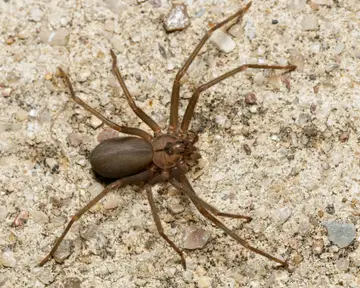
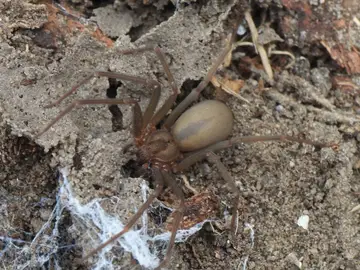
Body about 7 to 12 mm (about 3/8 inch); females average about 9 mm and males about 8 mm. UC IPM says a recluse body is not more than 3/8 inch long.
How to recognize it
Six equal-sized eyes in three pairs. UC IPM calls this the most definitive feature, since most spiders have eight eyes.
The violin mark alone is not a reliable way to identify it
UC IPM's five-point check: six eyes in pairs, evenly colored finely haired abdomen, no spines on the legs, evenly colored legs, body no more than 3/8 inch
Venom: “Texas has two venomous species of spiders, the black widow (Latrodectus mactans) and the brown recluse (Loxosceles reclusa). Both of these species of spiders can be found indoors and outdoors throughout the State.” (Texas Department of State Health Services)
Habitat: Basements and garages ... dark, undisturbed areas (DSHS) (Texas Department of State Health Services)
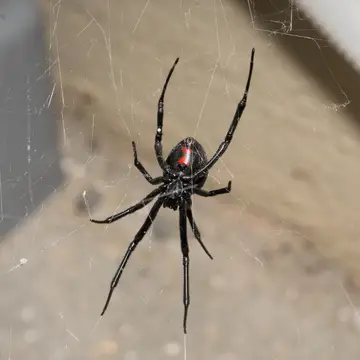
Adult female body about 8-12 mm (0.3-0.5 in); UC IPM gives about 3/8 in (10 mm), smaller than a mature western black widow. Clemson (2003) gives 1 to 1 1/2 in with legs extended. Males are tiny, 2-5 mm.
How to recognize it
Spiky egg sac (covered in silk points, like a pollen grain or sandspur; about 10 mm per LSU AgCenter, 1/2 in per Clemson 2003) is diagnostic even without the spider
Egg sac surface: blunt silken spikes, about 10 mm
Egg sac described by UC IPM
JFMAMJJASOND
93 records by month.What the sources say
Venom: “Females are larger than males and produce more venom. Four species are found in Texas; all are dangerous.” (Texas Cooperative Extension)
Venom: “Although only L. reclusa and L. rufescens are known to be venomous to people, it is best to consider all these species as potentially dangerous.” (Texas A&M AgriLife Extension Service)
Venom: “Texas has two venomous species of spiders, the black widow (Latrodectus mactans) and the brown recluse (Loxosceles reclusa). Both of these species of spiders can be found indoors and outdoors throughout the State.” (Texas Department of State Health Services)
No official source we use states whether this animal is venomous. That does not mean it is harmless: do not handle it.
Size
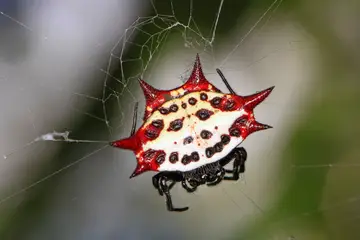
Females about 5 to nearly 9 mm (3/16 to 1/3 inch) long but wider than long, 10 to 13 mm (3/8 to 1/2 inch) wide. Males are much smaller, 2 to 3 mm (1/16 to 1/8 inch) long.
How to recognize it
Female has six pointed spines on a hard, flattened, crab-like shell, which makes it easy to tell from other spiders
Sits at the center of a round orb web, staying on the web during the day; webs have conspicuous tufts of silk, mainly on the foundation lines
Males are tiny, gray with white spots, and lack the large spines (four or five small humps at the rear)
No official source we use states whether this animal is venomous. That does not mean it is harmless: do not handle it.
Size
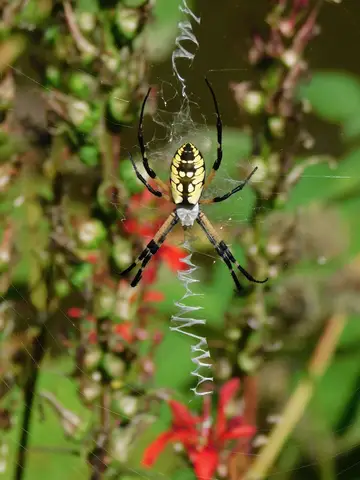
Females 3/4 to 1 inch long, not counting legs (Missouri); 19 to 28 mm (Penn State); Texas A&M says the female body is more than 1 inch. Males about 1/4 inch (Missouri); 5 to 8 mm (Penn State).
How to recognize it
Round web about 2 feet across, built only by females; the spider rests head-down at the center, where a zigzag silk band (stabilimentum) runs vertically.
Abdomen an elongated oval, pointed at the rear, with two humps (shoulders) at the front.
Males are much smaller than females and rarely noticed.
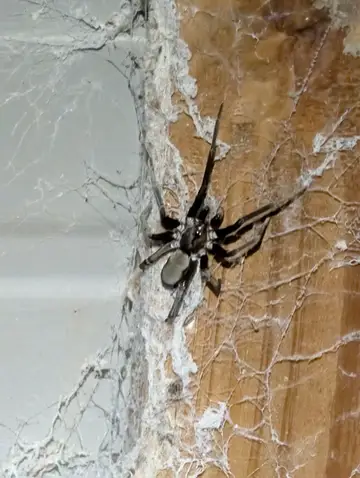
UF/IFAS says males are often mistaken for brown recluses. The brown recluse has six eyes in three separate pairs, while the southern house spider has eight eyes bunched together at the front.
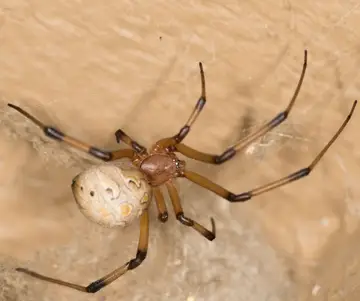
Brown widow spider or Black widow (immature western black widow)?
A mature brown widow female looks very like an immature western black widow. Brown widow: large squarish black spots on the side stripes, hourglass with bottom half larger and rough edges, broken white marks on the front of the abdomen; the spiky egg sac is a much surer way to confirm the species.
Photos show typical adults; individuals vary. Never get close to compare.
When spiders are active in Texas
Records of spiders in Texas peak in April to July and September to October. They show when people record spiders, not how many there are (about month bars).
JanFebMarAprMayJunJulAugSepOctNovDec
22,567 records of spiders in Texas by month (GBIF, CC0 and CC BY records).
If you are bitten or stung
Call 911 or Poison Help at 1-800-222-1222 right away. Poison Help connects you to your local poison center, any time of day.
“Texas has two venomous species of spiders, the black widow (Latrodectus mactans) and the brown recluse (Loxosceles reclusa). Both of these species of spiders can be found indoors and outdoors throughout the State.”
“Very few of the nearly 980 species of spiders recorded in Texas can hurt people.”
“Although only L. reclusa and L. rufescens are known to be venomous to people, it is best to consider all these species as potentially dangerous.”
“Very few of the nearly 980 species of spiders recorded in Texas can hurt people. Only two groups—recluse spiders and widow spiders—are considered medi-cally significant. … Five species of recluse spiders have been recorded in Texas: Loxosceles apachea, L. blanda, L. devia, L. reclusa and L. rufescens.”
“Very few of the nearly 980 species of spiders recorded in Texas can hurt people. Only two groups—recluse spiders and widow spiders—are considered medi-cally significant. … The southern black widow, Latrodectus mactans, and its relatives live across the entire United States. Other widow species found in Texas include the western black widow, L. hesperus, the northern black widow, L. variolus, and the brown widow, L. geometricus.”
“Texas has two venomous species of spiders, the black widow (Latrodectus mactans) and the brown recluse (Loxosceles reclusa). Both of these species of spiders can be found indoors and outdoors throughout the State.”
“Texas has two venomous species of spiders, the black widow (Latrodectus mactans) and the brown recluse (Loxosceles reclusa). Both of these species of spiders can be found indoors and outdoors throughout the State. … Brown recluse venom has necrotizing enzymes that generally cause local or systemic reactions.”