Texas has 11 venomous snakes named by official sources: Copperhead, Cottonmouth, Western Diamondback Rattlesnake, Timber Rattlesnake, Rock Rattlesnake, Black-tailed Rattlesnake, Mojave Rattlesnake, Prairie Rattlesnake, Massasauga, Pygmy Rattlesnake and Texas Coralsnake. Each one is labelled venomous by Texas Parks and Wildlife Department.
The 11 venomous snakes of Texas
Recognize them from a distance; a photo cannot confirm that a snake is safe. Identifying animals safely.
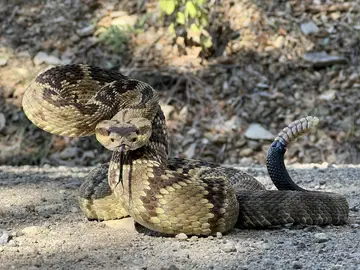
Venom: “Pit vipers are venomous snakes that have an opening on each side of the head between the eye and the nostril. In Texas, we have 3 groups of these snakes: Copperheads, Cottonmouths, and Rattlesnakes. … Blacktail rattlesnake (Crotalus molossus) is gray to olive green with dark blotches along the back and a black tail.” (Texas Parks and Wildlife Department)
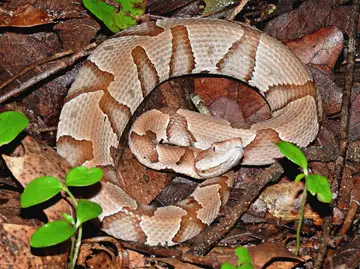
Venom: “Pit vipers are venomous snakes that have an opening on each side of the head between the eye and the nostril. In Texas, we have 3 groups of these snakes: Copperheads, Cottonmouths, and Rattlesnakes. … There are three subspecies of Copperheads in Texas; Southern copperhead (A.c. contortrix), 20-30 inches long and found in the eastern one-third of the state; Broadbanded copperhead (A.c. laticinctus), about two feet long, widely scattered in central and western Texas; and the Trans-Pecos copperhead (A.c. pictigaster), 20-30 inches in length and found near springs in the southern part of the Trans-Pecos.” (Texas Parks and Wildlife Department)
Range: There are three subspecies of Copperheads in Texas; Southern copperhead (A.c. contortrix), 20-30 inches long and found in the eastern one-third of the state; Broadbanded copperhead (A.c. laticinctus), about two feet long, widely scattered in central and western Texas; and the Trans-Pecos copperhead (A.c. pictigaster), 20-30 inches in length and found near springs in the southern part of the Trans-Pecos.
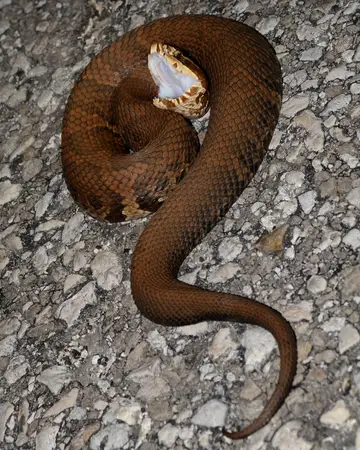
Venom: “Pit vipers are venomous snakes that have an opening on each side of the head between the eye and the nostril. In Texas, we have 3 groups of these snakes: Copperheads, Cottonmouths, and Rattlesnakes. … Also known as 'water moccasins', only one recognized supspecies is found in Texas; Western cottonmouth (A.p. leucostoma).” (Texas Parks and Wildlife Department)
Range: This heavy-bodied snake, which averages about 3-1/2 feet in length, is found over the eastern half of the state in swamps and sluggish waterways, coastal marshes, rivers, ponds and streams.
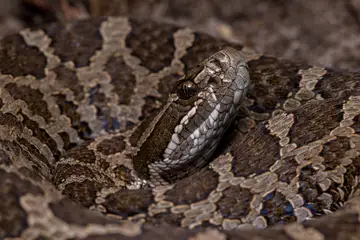
Venom: “Pit vipers are venomous snakes that have an opening on each side of the head between the eye and the nostril. In Texas, we have 3 groups of these snakes: Copperheads, Cottonmouths, and Rattlesnakes. … Western massasauga (Sistrurus catenatus tergeminus), light gray, with brown oval blotches along the middle of the back and smaller blotches along each side.” (Texas Parks and Wildlife Department)
Range: They are two feet in length and found through the middle of the state in grasslands, marshy and swampy areas. Desert massasauga (S.c. edwardsii), lighter in color than the western massasauga, smaller and more slender. Found in the Trans-Pecos, western Panhandle and the lower Rio Grande Valley.
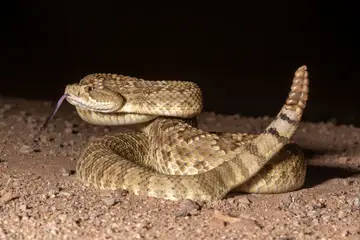
Up to 50 inches excluding the rattle (Arizona). Grand Canyon-Parashant National Monument says it averages 2 to 4 feet. Texas calls it smaller and more slender than the western diamondback.
How to recognize it
Rattle at the end of the tail
Broad triangular head on a slender neck; vertical pupils
Thin light stripe from the back corner of the eye running past the corner of the mouth
Venom: “Pit vipers are venomous snakes that have an opening on each side of the head between the eye and the nostril. In Texas, we have 3 groups of these snakes: Copperheads, Cottonmouths, and Rattlesnakes. … Mojave rattlesnake (Crotalus scutulatus) is similar to the western diamondback in markings, but smaller and more slender and found only in extreme West Texas.” (Texas Parks and Wildlife Department)
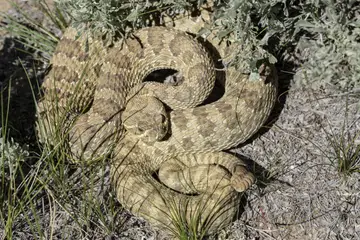
Usually about 3 to 4 feet; Montana gives 15 to 60 inches and NPS says up to 5 feet. Arizona gives a maximum of 28 to 64 inches (excluding rattle) depending on subspecies; in Colorado it is rarely over 39 inches.
How to recognize it
Rattle (or a button in newborns) at the tail tip
Head much broader than the neck, many small scales on top of the head, heat-sensing pit between eye and nostril
Venom: “Pit vipers are venomous snakes that have an opening on each side of the head between the eye and the nostril. In Texas, we have 3 groups of these snakes: Copperheads, Cottonmouths, and Rattlesnakes. … Prairie rattlesnake (Crotalus viridis viridis) is a slender rattler that is greenish or grayish, with rounded blotches down the middle of its back.” (Texas Parks and Wildlife Department)
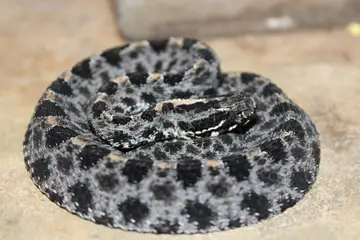
Venom: “Pit vipers are venomous snakes that have an opening on each side of the head between the eye and the nostril. In Texas, we have 3 groups of these snakes: Copperheads, Cottonmouths, and Rattlesnakes. … Western Pygmy Rattlesnake (Sistrurus miliarius streckeri), gray or light brown body color with darks blotches down the back often with a light orange stripe.” (Texas Parks and Wildlife Department)
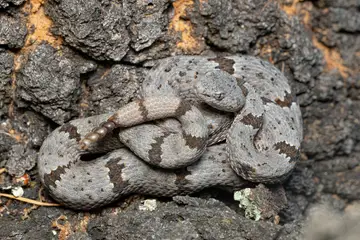
Venom: “Pit vipers are venomous snakes that have an opening on each side of the head between the eye and the nostril. In Texas, we have 3 groups of these snakes: Copperheads, Cottonmouths, and Rattlesnakes. … Mottled Rock rattlesnake (Crotalus lepidus) is light bream or pink background with widely spaced, dark crossbands and mottled areas between the crossbands.” (Texas Parks and Wildlife Department)
Range: Found in the mountainous areas of West Texas. Banded Rock rattlesnake (C.l. klauberi)Similar to the mottled rock rattlesnake, but darker greenish-gray in color. Found only in the extreme western tip of Texas.
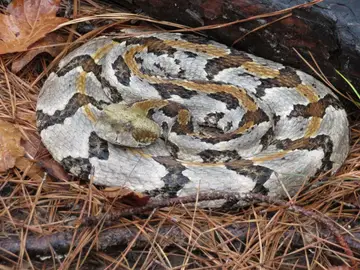
Venom: “Pit vipers are venomous snakes that have an opening on each side of the head between the eye and the nostril. In Texas, we have 3 groups of these snakes: Copperheads, Cottonmouths, and Rattlesnakes. … Timber rattlesnake (Crotalus horridus) also known as Canebreak rattlesnake is a large, heavy-bodied snake averaging 4-1/2 feet.” (Texas Parks and Wildlife Department)
Usually about 3.5 to 4.5 feet; Texas says it can reach seven feet. Arizona's maximum is 66 inches excluding the rattle; Saguaro National Park gives a range of 30 to 90 inches.
How to recognize it
Rattle at the end of the tail
Broad triangular head on a slender neck; vertical pupils
Thin light stripe from behind the eye down to the upper lip
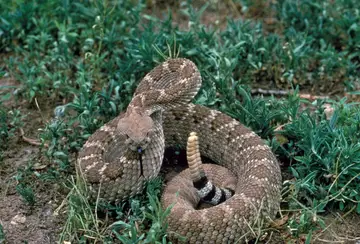
Venom: “Pit vipers are venomous snakes that have an opening on each side of the head between the eye and the nostril. In Texas, we have 3 groups of these snakes: Copperheads, Cottonmouths, and Rattlesnakes. … Western diamondback (Crotalus atrox), Brown, diamond-shaped markings along the middle of the back and alternating black and white rings on the tail.” (Texas Parks and Wildlife Department)
For 60 other snakes on Texas's list, no official source we use states whether it is venomous: Baird's Ratsnake, Big Bend Patch-nosed Snake, Black-necked Gartersnake, Brahminy Blind Snake, Brazos River Watersnake, Cat-eyed Snake, Central American Indigo Snake and Checkered Gartersnake and others. That does not make them harmless. Leave every snake alone.
See all 77 snakes, venomous and not, on Texas snakes.
Snakes people confuse
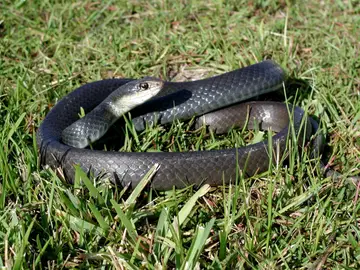
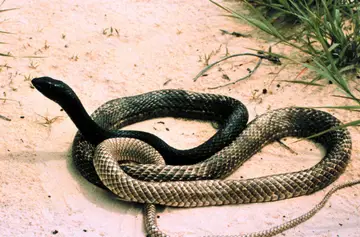
Black Racer or Cottonmouth?
Photo: Everglades NPS from Homestead, Florida, United States · Public domain · Wikimedia Commons
NPS says black racers can resemble the venomous water moccasin and advises leaving alone any snake you cannot identify. It gives no safe field mark, and none is offered here.
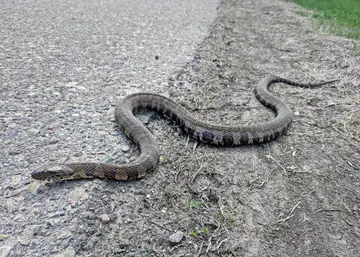
Black Racer or Timber rattlesnake?
Photo: Everglades NPS from Homestead, Florida, United States · Public domain · Wikimedia Commons
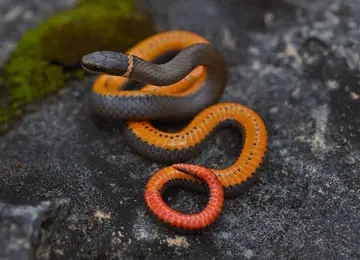
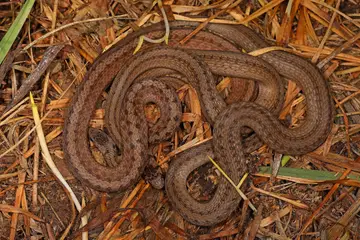
Young brown snakes also have a light collar, but their scales are keeled (ridged); the ringneck's scales are smooth.
Photos show typical adults; individuals vary. Never get close to compare.
When venomous snakes are active in Texas
Records of snakes in Texas peak in March to July. They show when people record snakes, not how many there are (about month bars).
JanFebMarAprMayJunJulAugSepOctNovDec
10,909 records of snakes in Texas by month (GBIF, CC0 and CC BY records).
Snakes hibernate in winter and emerge in late February or early March in Texas; in hot weather they are active in early morning, evening and night. Texas Parks and Wildlife Department
If you are bitten or stung
Call 911 or Poison Help at 1-800-222-1222 right away. Poison Help connects you to your local poison center, any time of day.
Official advice from Texas Department of State Health Services and Texas Parks and Wildlife Department:
The species list comes from Snakes of Texas (Herps of Texas checklist, UT Austin) (Herps of Texas, Biodiversity Collections, Dept. of Integrative Biology, The University of Texas at Austin, 2020-07-23 (archive capture date; site says distributions based on Dixon 2013 and range extensions through Dec 2012)).
Venom labels come only from official sources and link to them; "Not stated" never means harmless. How labels work.
Sources
Mission & Philosophy. Texas Parks and Wildlife Department. undated page; checked November 3, 2026.
Herps of Texas: Snakes of Texas. Herps of Texas, Biodiversity Collections, Dept. of Integrative Biology, The University of Texas at Austin. 2020-07-23 (archive capture date; checked November 3, 2026.
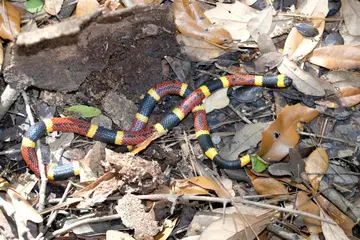
“Because harmless Texas scarlet snakes and Louisiana and Mexican milk snakes share the red, black, yellow coloration pattern, it is important to notice the order of the colored bands.”
“Coral snakes, which are venomous, do not have cat’s-eye pupils.”
“Please do not kill a snake - even a venomous one. … Freeze when snakes are known to be nearby until you know where they are. Allow the snake to retreat. If you must move, back slowly and carefully away from the snake.”
“Do not play around with a dead snake, they have been known to bite and inject venom because of muscle contractions.”
“There are 10 species of rattlesnakes in Texas. … This is the most common and widespread venomous snake in Texas, found in all but the easternmost part of the state.”
“Also known as 'water moccasins', only one recognized subspecies is found in Texas; Western cottonmouth (A.p. leucostoma).”
“…with scarlet and milk snakes, the bands do not completely encircle the body but stop at ground level, under-bellies being uniform in color.”
“Water snakes, especially the diamondback water snake, yellow-bellied water snake, and broad-banded water snake, are sometimes misidentified as cottonmouths.”
“Pit vipers are venomous snakes that have an opening on each side of the head between the eye and the nostril. In Texas, we have 3 groups of these snakes: Copperheads, Cottonmouths, and Rattlesnakes. … There are three subspecies of Copperheads in Texas; Southern copperhead (A.c. contortrix), 20-30 inches long and found in the eastern one-third of the state; Broadbanded copperhead (A.c. laticinctus), about two feet long, widely scattered in central and western Texas; and the Trans-Pecos copperhead (A.c. pictigaster), 20-30 inches in length and found near springs in the southern part of the Trans-Pecos.”
“Pit vipers are venomous snakes that have an opening on each side of the head between the eye and the nostril. In Texas, we have 3 groups of these snakes: Copperheads, Cottonmouths, and Rattlesnakes. … Also known as 'water moccasins', only one recognized supspecies is found in Texas; Western cottonmouth (A.p. leucostoma).”
“Pit vipers are venomous snakes that have an opening on each side of the head between the eye and the nostril. In Texas, we have 3 groups of these snakes: Copperheads, Cottonmouths, and Rattlesnakes. … Western diamondback (Crotalus atrox), Brown, diamond-shaped markings along the middle of the back and alternating black and white rings on the tail.”
“Averages 3 1/2 to 4-1/2 feet in length, and can reach seven feet.”
“Pit vipers are venomous snakes that have an opening on each side of the head between the eye and the nostril. In Texas, we have 3 groups of these snakes: Copperheads, Cottonmouths, and Rattlesnakes. … Timber rattlesnake (Crotalus horridus) also known as Canebreak rattlesnake is a large, heavy-bodied snake averaging 4-1/2 feet.”
“Pit vipers are venomous snakes that have an opening on each side of the head between the eye and the nostril. In Texas, we have 3 groups of these snakes: Copperheads, Cottonmouths, and Rattlesnakes. … Mottled Rock rattlesnake (Crotalus lepidus) is light bream or pink background with widely spaced, dark crossbands and mottled areas between the crossbands.”
“Pit vipers are venomous snakes that have an opening on each side of the head between the eye and the nostril. In Texas, we have 3 groups of these snakes: Copperheads, Cottonmouths, and Rattlesnakes. … Blacktail rattlesnake (Crotalus molossus) is gray to olive green with dark blotches along the back and a black tail.”
“Pit vipers are venomous snakes that have an opening on each side of the head between the eye and the nostril. In Texas, we have 3 groups of these snakes: Copperheads, Cottonmouths, and Rattlesnakes. … Mojave rattlesnake (Crotalus scutulatus) is similar to the western diamondback in markings, but smaller and more slender and found only in extreme West Texas.”
“Pit vipers are venomous snakes that have an opening on each side of the head between the eye and the nostril. In Texas, we have 3 groups of these snakes: Copperheads, Cottonmouths, and Rattlesnakes. … Prairie rattlesnake (Crotalus viridis viridis) is a slender rattler that is greenish or grayish, with rounded blotches down the middle of its back.”
“Pit vipers are venomous snakes that have an opening on each side of the head between the eye and the nostril. In Texas, we have 3 groups of these snakes: Copperheads, Cottonmouths, and Rattlesnakes. … Western massasauga (Sistrurus catenatus tergeminus), light gray, with brown oval blotches along the middle of the back and smaller blotches along each side.”
“Pit vipers are venomous snakes that have an opening on each side of the head between the eye and the nostril. In Texas, we have 3 groups of these snakes: Copperheads, Cottonmouths, and Rattlesnakes. … Western Pygmy Rattlesnake (Sistrurus miliarius streckeri), gray or light brown body color with darks blotches down the back often with a light orange stripe.”
“The coral snake is slender with a small indistinctive head and round pupils, and is usually is 2-1/2 feet or shorter.”
“The Texas Coral Snake is the only snake in Texas with touching red and yellow bands.”
“Call 9-1-1 or the Texas Poison Center Network at 1-800-222-1222 for information about which medical centers in your area have the appropriate antivenom.”
“Although most snakes in Texas are not venomous, avoid handling or playing with snakes unless you have been properly trained.”
“Snakes cannot tolerate extreme cold and will normally hibernate in the winter, emerging from their dens late February or early March in Texas. They also avoid extremely torrid conditions, confining their activity in hot climates to early morning, evenings, and night-time.”