Texas Mammals: Species List With Pictures
Last checked November 3, 2026 against official sources.
On this page
This page lists 187 mammals. 14 are nonnative.
Which mammals can hurt you
Official sources single out these mammals in Texas, in their own words:
-
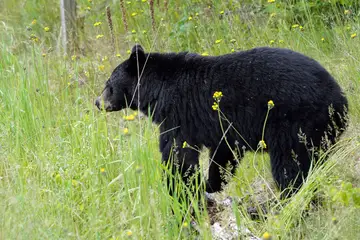
Photo: U.S. Fish and Wildlife Service - Midwest Region · Public domain · Wikimedia Commons Black bear
Can injure humans when provoked (TPWD). “Although generally harmless, Black Bears can injure humans when provoked and should be treated with caution” Texas Parks and Wildlife Department
-
Brazilian free-tailed bat
Disease. “This bat is a known carrier of rabies.” Texas Parks and Wildlife Department
-
Coyotes, foxes, bats, skunks, raccoons (wild rabies carriers)
Disease. “Texas periodically experiences outbreaks of rabies in skunks. … Wild animals – coyotes, foxes, bats, skunks, and raccoons – which you do not usually see in the daytime” Texas Department of State Health Services
-
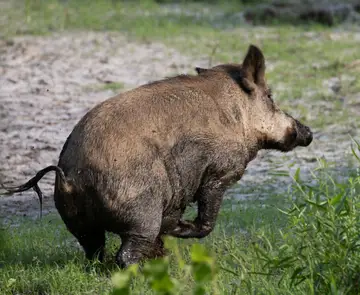
Photo: Cullen Hanks · CC BY 4.0 · iNaturalist Feral hog (wild pig)
Disease. “Wild pigs are capable of carrying and transmitting at least 30 bacterial, fungal, and viral diseases which threaten humans, livestock, and wildlife” Texas Parks and Wildlife Department
-
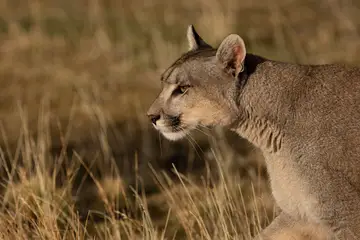
Photo: ArgentinaTurismo · CC BY 4.0 · Wikimedia Commons Mountain lion
Attacks on humans are rare but reported in Texas (TPWD). “Only four attacks on humans in Texas have been reported since 1980, all of them in remote areas of West Texas.” Texas Parks and Wildlife Department


All 187 mammals on the list
- American badger Taxidea taxus
- American beaver Castor canadensis
- American bison Bos bison
- American black bear Ursus americanus
- American mink Vison vison
- American parastrelle Parastrellus hesperus
- American perimyotis Perimyotis subflavus
- Atlantic spotted dolphin Stenella frontalis
- Attwater's pocket gopher Geomys attwateri
- axis deer Axis axisNonnative
- Baird's pocket gopher Geomys breviceps
- Barbary sheep or aoudad Ammotragus lerviaNonnative
- big brown bat Eptesicus fuscus
- big free-tailed bat Nyctinomops macrotis
- bighorn sheep Ovis canadensis
- black rat Rattus rattusNonnative
- black-footed ferret Mustela nigripes
- black-tailed jackrabbit Lepus californicus
- black-tailed prairie dog Cynomys ludovicianus
- blackbuck Antilope cervicapraNonnative
- Blainville's beaked whale Mesoplodon densirostris
- blue whale Balaenoptera musculus
- bobcat Lynx rufus
- Botta's pocket gopher Thomomys bottae
- Brazilian free-tailed bat Tadarida brasiliensis
- brush deermouse Peromyscus boylii
- Bryde's whale Balaenoptera brydei
- cactus deermouse Peromyscus eremicus
- California myotis Myotis californicus
- California sea lion Zalophus californianusNonnative
- cave myotis Myotis velifer
- Chihuahuan desert pocket mouse Chaetodipus eremicus
- Chihuahuan or Mearns's grasshopper mouse Onychomys arenicola
- Clymene dolphin Stenella clymene
- collared peccary Pecari tajacu
- common bottlenose dolphin Tursiops truncatus
- common gray fox Urocyon cinereoargenteus
- common minke whale Balaenoptera acutorostrata
- common muskrat Ondatra zibethicus
- cotton deermouse Peromyscus gossypinus
- Coues's rice rat Oryzomys couesi
- coyote Canis latrans
- Crawford's desert shrew Notiosorex crawfordi
- Cuvier's beaked whale Ziphius cavirostris
- Davis Mountains cottontail Sylvilagus robustus
- desert cottontail Sylvilagus audubonii
- desert pocket gopher Geomys arenarius
- dwarf sperm whale Kogia sima
- eastern cottontail Sylvilagus floridanus
- eastern fox squirrel Sciurus niger
- eastern gray squirrel Sciurus carolinensis
- eastern harvest mouse Reithrodontomys humulis
- eastern mole Scalopus aquaticus
- eastern red bat Lasiurus borealis
- eastern spotted skunk Spilogale putorius
- eastern woodrat Neotoma floridana
- Elliot's short-tailed shrew Blarina hylophaga
- evening bat Nycticeius humeralis
- fallow deer Dama damaNonnative
- false killer whale Pseudorca crassidens
- feral hog Sus scrofaNonnative
- fin whale Balaenoptera physalus
- Fraser's dolphin Lagenodelphis hosei
- fringed myotis Myotis thysanodes
- fulvous harvest mouse Reithrodontomys fulvescens
- Gervais's beaked whale Mesoplodon europaeus
- ghost-faced bat Mormoops megalophylla
- golden mouse Ochrotomys nuttalli
- gray wolf Canis lupus
- gray-footed chipmunk Tamias canipes
- grizzly or brown bear Ursus arctos
- Gulf Coast kangaroo rat Dipodomys compactus
- hairy-legged vampire bat Diphylla ecaudata
- Hall's pocket gopher Geomys jugossicularis
- hispid cotton rat Sigmodon hispidus
- hispid pocket mouse Chaetodipus hispidus
- hoary bat Aeorestes cinereus
- hog-nosed skunk Conepatus leuconotus
- hooded skunk Mephitis macroura
- house mouse Mus musculusNonnative
- humpback whale Megaptera novaeangliae
- jaguar Panthera onca
- jaguarundi Puma yagouaroundi
- Japanese Macaque Macaca fuscataNonnative
- Jones's pocket gopher Geomys knoxjonesi
- killer whale Orcinus orca
- kit fox Vulpes macrotis
- Lacey's white-ankled deermouse Peromyscus laceianus
- least shrew Cryptotis parva
- Llano pocket gopher Geomys texensis
- long-legged myotis Myotis volans
- long-tailed weasel Mustela frenata
- margay Leopardus wiedii
- melon-headed whale Peponocephala electra
- Merriam's kangaroo rat Dipodomys merriami
- Merriam's pocket mouse Perognathus merriami
- Mexican long-nosed bat Leptonycteris nivalis
- Mexican long-tongued bat Choeronycteris mexicana
- Mexican spiny pocket mouse Liomys irroratus
- Mexican woodrat Neotoma mexicana
- Mogollon vole Microtus mogollonensis
- mountain lion Puma concolor
- mule deer Odocoileus hemionus
- Nelson's pocket mouse Chaetodipus nelsoni
- nilgai Boselaphus tragocamelusNonnative
- Nine-Banded Armadillo Dasypus novemcinctus
- North American deermouse Peromyscus maniculatus
- North American porcupine Erethizon dorsatum
- North Atlantic right whale Eubalaena glacialis
- northern grasshopper mouse Onychomys leucogaster
- northern long-eared myotis Myotis septentrionalis
- northern pygmy mouse Baiomys taylori
- northern river otter Lontra canadensis
- northern rock deermouse Peromyscus nasutus
- northern yellow bat Dasypterus intermedius
- Norway rat Rattus norvegicusNonnative
- nutria Myocastor coypusNonnative
- ocelot Leopardus pardalis
- Ord's kangaroo rat Dipodomys ordii
- pallid bat Antrozous pallidus
- pantropical spotted dolphin Stenella attenuata
- piñon deermouse Peromyscus truei
- plains harvest mouse Reithrodontomys montanus
- plains pocket gopher Geomys bursarius
- plains pocket mouse Perognathus flavescens
- pocketed free-tailed bat Nyctinomops femorosaccus
- prairie vole Microtus ochrogaster
- pronghorn Antilocapra americana
- pygmy killer whale Feresa attenuata
- pygmy sperm whale Kogia breviceps
- raccoon Procyon lotor
- Rafinesque's big-eared bat Corynorhinus rafinesquii
- red fox Vulpes vulpesNonnative
- red wolf Canis rufus
- ringtail Bassariscus astutus
- Rio Grande ground squirrel Ictidomys parvidens
- Risso's dolphin Grampus griseus
- rock pocket mouse Chaetodipus intermedius
- rock squirrel Otospermophilus variegatus
- rough-toothed dolphin Steno bredanensis
- sei whale Balaenoptera borealis
- Seminole bat Lasiurus seminolus
- short-finned pilot whale Globicephala macrorhynchus
- sika deer Cervus nipponNonnative
- silky pocket mouse Perognathus flavus
- silver-haired bat Lasionycteris noctivagans
- southeastern myotis Myotis austoriparius
- southern flying squirrel Glaucomys volans
- southern plains woodrat Neotoma micropus
- southern short-tailed shrew Blarina carolinensis
- southern yellow bat Dasypterus ega
- southwestern little brown myotis Myotis occultus
- sperm whale Physeter macrocephalus
- spinner dolphin Stenella longirostris
- spotted bat Euderma maculatum
- spotted ground squirrel Xerospermophilus spilosoma
- Strecker's pocket gopher Geomys streckeri
- striped dolphin Stenella coeruleoalba
- striped skunk Mephitis mephitis
- swamp rabbit Sylvilagus aquaticus
- swift fox Vulpes velox
- tawny-bellied cotton rat Sigmodon fulviventer
- Texas antelope squirrel Ammospermophius interpres
- Texas deermouse Peromyscus attwateri
- Texas kangaroo rat Dipodomys elator
- Texas marsh rice rat Oryzomys texensis
- Texas pocket gopher Geomys personatus
- thirteen-lined ground squirrel Ictidomys tridecemlineatus
- Townsend's big-eared bat Corynorhinus townsendii
- Virginia Opossum Didelphis virginiana
- wapiti or elk Cervus canadensis
- West Indian Manatee Trichechus manatus
- western bonneted bat Eumops perotis
- western harvest mouse Reithrodontomys megalotis
- western red bat Lasiurus blossevillii
- western small-footed myotis Myotis ciliolabrum
- western spotted skunk Spilogale gracilis
- western yellow bat Dasypterus xanthinus
- white-footed deermouse Peromyscus leucopus
- white-nosed coati Nasua narica
- white-tailed deer Odocoileus virginianus
- white-toothed woodrat Neotoma leucodon
- woodland vole Microtus pinetorum
- yellow-faced pocket gopher Cratogeomys castanops
- yellow-nosed cotton rat Sigmodon ochrognathus
- Yuma myotis Myotis yumanensis
Mammals people confuse
Feral hog (feral swine, wild pig) or Javelina (collared peccary)?
Feral hog (feral swine, wild pig) Not stated
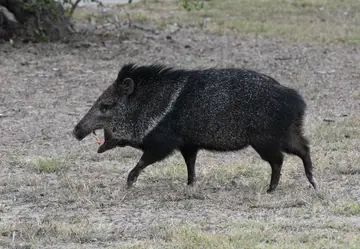
Javelina (collared peccary) Not stated
APHIS: the javelina is a native, pig-like mammal of the American Southwest. It is generally much smaller than feral swine, silver-grey to black with a lighter collar, and has no tail. Texas A&M AgriLife adds that javelinas have small, round ears, while feral hogs have longer, pointed ears and a distinct, easily visible tail. The two sources give different javelina weights: APHIS says 15 to 25 lbs, Texas A&M says an adult typically weighs 55 pounds.
Bobcat or Mountain lion (cougar)?
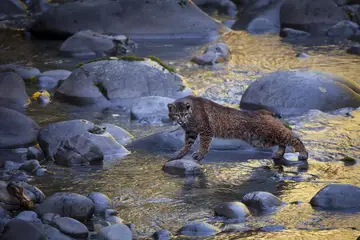

Bobcat Not stated
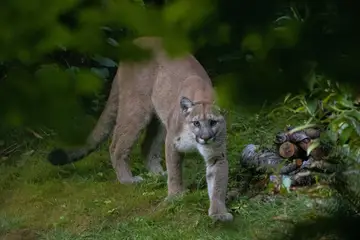
Mountain lion (cougar) Not stated
Cougars are one color (yellow-brown to light cinnamon) with a long tail. The bobcat's tail is short and its coat is spotted. TWRA says cougars are many times larger and longer, with a very long tail.
Coyote or Gray wolf?
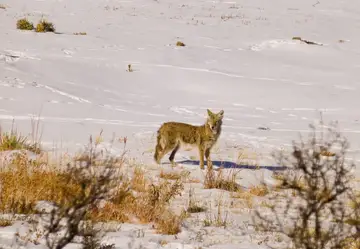

Coyote Not stated
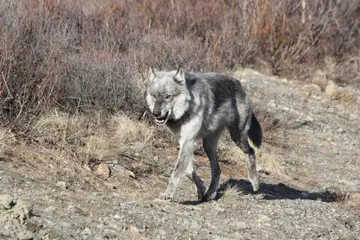
Gray wolf Not stated
NY DEC: gray wolves are much larger (females typically 50-100 lb, males 70-145 lb, 5-6 ft nose to tail, 27-33 in at the shoulder); eastern coyotes rarely exceed 50 lb and generally stand under 2 ft at the shoulder. Wolves have small rounded ears and a short blocky snout; coyotes have larger, more pointed ears (can look rounded in winter coat) and a long, narrow, pointed snout. Coyote tracks are typically 3 x 2 in, wolf tracks about 5 x 4 in. NY DEC says most wolf reports in New York were coyotes, dogs or wolf-dog hybrids.
Grizzly bear or American black bear?
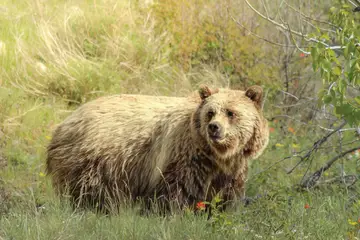
Grizzly bear Not stated
American black bear Not stated
WDFW: grizzlies have longer, curved claws, humped shoulders and a concave-looking face. ADF&G says color is not a reliable way to tell them apart, since black bears can be brown, reddish, or even grey and white.
Nutria or American beaver?
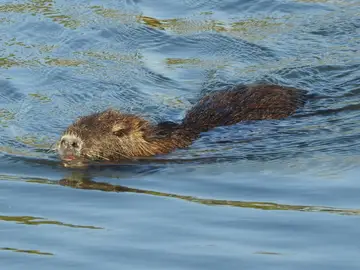
Nutria Not stated
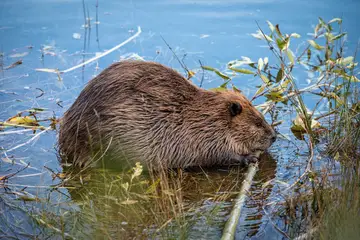

American beaver Not stated
Beavers have a wide, flat tail and dark whiskers and reach up to 60 pounds; nutria have a round, sparsely haired tail and white whiskers.
Nutria or Muskrat?
Nutria Not stated
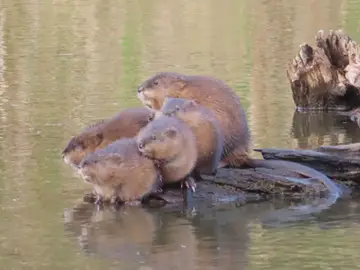
Muskrat Not stated
Muskrats have dark whiskers, a nearly triangular (side-flattened) tail and weigh at most 5 pounds. CDFW says most nutria reports it receives are actually muskrats.
Photos show typical adults; individuals vary. Never get close to compare.
When mammals are active in Texas
Records of mammals in Texas peak in January to May, July and October. They show when people record mammals, not how many there are (about month bars).
- Brazilian free-tailed bats arrive in central Texas by the millions each spring. Texas Parks and Wildlife Department
If you are bitten or stung
Call 911 or Poison Help at 1-800-222-1222 right away. Poison Help connects you to your local poison center, any time of day.
Official advice from Texas Parks and Wildlife Department:
- Treat black bears with caution. Texas Parks and Wildlife Department
How to report
Aquatic invasive species: email [email protected] (TPWD). TPWD general phone: (512) 389-4800 or (800) 792-1112. Texas Parks and Wildlife Department
Common questions
What official sources say
Are there mountain lions in Texas?
Yes. TPWD: Trans-Pecos, South Texas brushlands and parts of the Hill Country. Attacks on people are rare: TPWD reports four in Texas since 1980, all in remote West Texas. Texas Parks and Wildlife Department
“In Texas, the Mountain Lion is found throughout the Trans-Pecos, as well as the brushlands of south Texas and portions of the Hill Country.”
Are there armadillos in Texas?
Yes. TPWD fact sheet on the nine-banded armadillo. Texas Parks and Wildlife Department
“Originally native to South America, the armadillo now ranges as far north as Texas, Oklahoma, Kansas and Louisiana.”
About this list
The species list comes from The Mammals of Texas, Online Edition (7th ed., Schmidly & Bradley 2016): Species Accounts for Texas Mammals (Natural Science Research Laboratory, Museum of Texas Tech University (Schmidly & Bradley, The Mammals of Texas, 7th ed.), Feb 18, 2026 (page last-updated stamp); book: The Mammals of Texas, 7th ed. 2016). 187 more entries come from other official sources named on each card.
Venom labels come only from official sources and link to them; "Not stated" never means harmless. How labels work.
"Nonnative" and "Invasive" follow the wording of the source list. See invasive species in Texas.
Sources
- Mission & Philosophy. Texas Parks and Wildlife Department. undated page; checked November 3, 2026.
- The Mammals of Texas, Online Edition: Species Accounts for Texas Mammals. Natural Science Research Laboratory, Museum of Texas Tech University (Schmidly & Bradley, The Mammals of Texas, 7th ed.). Feb 18, 2026; checked November 3, 2026.
- The Mammals of Texas, Online Edition: Order Artiodactyla. Natural Science Research Laboratory, Museum of Texas Tech University. Feb 9, 2026; checked November 3, 2026.
- Feral Hogs (Wild Pigs) in Texas. Texas Parks and Wildlife Department. undated page; checked November 3, 2026.
Quoted passages (1)
“Wild pigs are capable of carrying and transmitting at least 30 bacterial, fungal, and viral diseases which threaten humans, livestock, and wildlife”
- The Mammals of Texas, Online Edition: California Sea Lion. Natural Science Research Laboratory, Museum of Texas Tech University. Feb 9, 2026; checked November 3, 2026.
- The Mammals of Texas, Online Edition: Order Carnivora. Natural Science Research Laboratory, Museum of Texas Tech University. Feb 9, 2026; checked November 3, 2026.
- Mountain Lions (Cougars) in Texas (PWD BR W7000-232). Texas Parks and Wildlife Department. 6/08); checked November 3, 2026.
Quoted passages (1)
“Only four attacks on humans in Texas have been reported since 1980, all of them in remote areas of West Texas.”
- TPWD Wildlife Fact Sheet: Black Bear (Ursus americanus). Texas Parks and Wildlife Department. undated page; checked November 3, 2026.
Quoted passages (1)
“Although generally harmless, Black Bears can injure humans when provoked and should be treated with caution”
- The Mammals of Texas, Online Edition: Order Chiroptera. Natural Science Research Laboratory, Museum of Texas Tech University. Feb 9, 2026; checked November 3, 2026.
- The Mammals of Texas, Online Edition: Order Cetacea. Natural Science Research Laboratory, Museum of Texas Tech University. Feb 12, 2026; checked November 3, 2026.
- TPWD Wildlife Fact Sheet: Brazilian Free-tailed Bat (Tadarida brasiliensis). Texas Parks and Wildlife Department. undated page; checked November 3, 2026.
Quoted passages (2)
“This bat is a known carrier of rabies.”
“Millions arrive in central Texas each spring”
- The Mammals of Texas, Online Edition: Order Soricomorpha. Natural Science Research Laboratory, Museum of Texas Tech University. Feb 10, 2026; checked November 3, 2026.
- The Mammals of Texas, Online Edition: species account Trichechus manatus. Natural Science Research Laboratory, Museum of Texas Tech University. Feb 10, 2026; checked November 3, 2026.
- The Mammals of Texas, Online Edition: species account Dasypus novemcinctus. Natural Science Research Laboratory, Museum of Texas Tech University. Feb 9, 2026; checked November 3, 2026.
- The Mammals of Texas, Online Edition: species account Didelphis virginiana. Natural Science Research Laboratory, Museum of Texas Tech University. Feb 26, 2026; checked November 3, 2026.
- The Mammals of Texas, Online Edition: Order Rodentia. Natural Science Research Laboratory, Museum of Texas Tech University. Feb 13, 2026; checked November 3, 2026.
- The Mammals of Texas, Online Edition: Order Lagomorpha. Natural Science Research Laboratory, Museum of Texas Tech University. Feb 9, 2026; checked November 3, 2026.
- The Mammals of Texas, Online Edition: species account Macaca fuscata. Natural Science Research Laboratory, Museum of Texas Tech University. Feb 9, 2026; checked November 3, 2026.
- The Mammals of Texas, Online Edition: House Mouse. Natural Science Research Laboratory, Museum of Texas Tech University. Feb 26, 2026; checked November 3, 2026.
- Rabies. Texas Department of State Health Services. undated page; checked November 3, 2026.
Quoted passages (1)
“Texas periodically experiences outbreaks of rabies in skunks. … Wild animals – coyotes, foxes, bats, skunks, and raccoons – which you do not usually see in the daytime”
- TPWD Wildlife Fact Sheet: Aquatic Invasive Species. Texas Parks and Wildlife Department. undated page; checked November 3, 2026.
Quoted passages (1)
“For information or to report sightings of aquatic invasive species, email [email protected].”
- TPWD Wildlife Fact Sheet: Mountain Lion (Puma concolor). Texas Parks and Wildlife Department. undated page; checked November 3, 2026.
Quoted passages (1)
“In Texas, the Mountain Lion is found throughout the Trans-Pecos, as well as the brushlands of south Texas and portions of the Hill Country.”
- TPWD Wildlife Fact Sheet: Nine-banded Armadillo (Dasypus novemcinctus). Texas Parks and Wildlife Department. undated page; checked November 3, 2026.
Quoted passages (1)
“Originally native to South America, the armadillo now ranges as far north as Texas, Oklahoma, Kansas and Louisiana.”
- GBIF.org occurrence records, human observations licensed CC0 1.0 or CC BY 4.0 only, accessed November 3, 2026. The datasets behind these counts are listed on our Sources page.