Gray Wolf
Canis lupus · also called timber wolf, wolf, grey wolf and Mexican wolf (subspecies) · Last checked November 3, 2026.
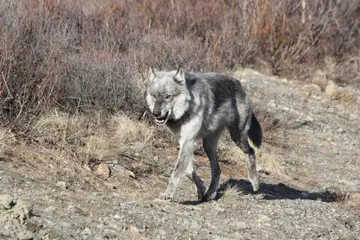
The gray wolf is the largest wild member of the dog family, gray, black, white or a mix of those colors, weighing about 40 to 175 pounds depending on sex and region. Wolves generally avoid people and rarely threaten human safety, but they are large wild predators: attacks are very rare, most involve habituated wolves or dogs, and wolves may attack and kill dogs. Official sources confirm wolves in Alaska, Minnesota, Wisconsin, Michigan, the northern Rockies (Montana, Idaho, Wyoming), Washington, Oregon, California, Colorado, and, as Mexican wolves, Arizona and New Mexico. Federal protection varies by area, and killing one is illegal in many places. US Fish and Wildlife Service
On this page
Is the gray wolf dangerous?
Wolves rarely pose a direct threat to human safety and generally fear and avoid people, but can become aggressive when they learn to link people with food. Keep dogs leashed or close in wolf country. Never feed or approach a wolf. California Department of Fish and Wildlife
“Wolves rarely pose a direct threat to human safety. Wild wolves generally fear and avoid people.”
Bites and stings: Verified attacks by healthy wolves are extremely rare. California counts 18 reports of wolf aggression toward people in the past 40 years; 11 involved wolves used to people and 6 involved domestic dogs, and it notes one confirmed human death in Alaska in recent years. Wolves often see dogs as territorial threats and may attack and kill them.
How to identify a gray wolf
A photo or description can narrow it down, but cannot confirm what an animal is or that it is safe. Look from a distance and do not handle wild animals.
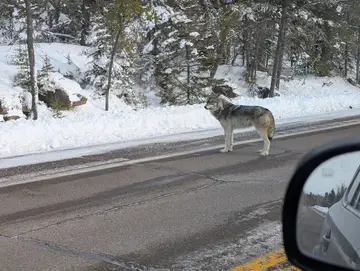
Size: Adults about 40 to 175 pounds depending on sex and region; on average about five to six feet long (Isle Royale), up to 6 feet including the tail (Washington), and 26 to 34 inches at the shoulder. Twice the size of a coyote. US Fish and Wildlife Service
Colors: Usually grizzled gray, but can be mostly or all black, white, tawny or brown; only about half of any population is actually gray. Pattern: Solid to grizzled coat; the tail hangs down or straight, never curled.
Key features
- Longer legs, larger feet, wider head and snout, shorter ears, narrow body and straight tail compared with most coyotes and dogs. Colorado Parks and Wildlife
- Tracks about 5 inches long by 4 inches wide, with claws showing. Washington Department of Fish and Wildlife
- Long, drawn-out howls, audible up to five miles. Washington Department of Fish and Wildlife
Young
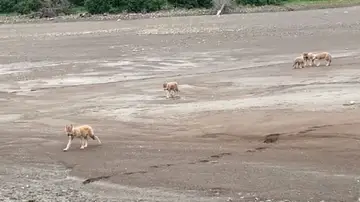
Young wolves may resemble coyotes or some larger dogs.
Animals mistaken for the gray wolf
Gray Wolf or Coyote?
Gray Wolf
Coyote Canis latrans
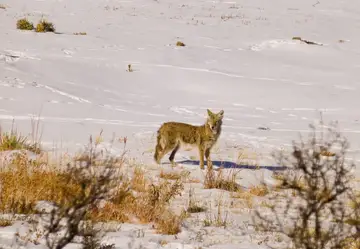

Wolves are about twice the size, with larger, blockier muzzles, shorter and more rounded ears, and shorter, bushier tails. Coyote tracks are about half the size. Washington Department of Fish and Wildlife
In Missouri, hunters have shot federally endangered wolves after mistaking them for large coyotes.
Gray Wolf or Domestic dog?
Gray Wolf
Domestic dog Canis lupus familiaris
Wolves have longer legs, larger feet, a wider head and snout and a straight tail. Wolf tails are never curled. A wolf path is usually direct; a dog path often meanders. Colorado Parks and Wildlife
Gray Wolf or Red wolf?
Gray Wolf
Red wolf Canis rufus
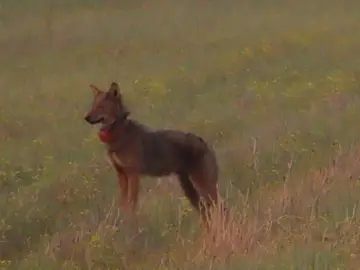
Very similar. Red wolf size falls between the coyote and the gray wolf. Its reintroduced wild population is in a small area of northeastern North Carolina. Missouri Department of Conservation
Separately listed as endangered under the federal Endangered Species Act.
Where the gray wolf lives
- Native or listed
- Nonnative or not established
- No official record in our data
- 1–9
- 10–99
- 100–999
- 1,000+
On our state guides
- Alaska mammals
- Arizona mammals
- California mammals
- Colorado mammals
- Connecticut mammals
- Idaho mammals
- Illinois mammals
- Iowa mammals
- Maine mammals
- Maryland mammals
- Massachusetts mammals
- Minnesota mammals
- Missouri mammals
- Montana mammals
- Nebraska mammals
- Nevada mammals
- New Hampshire mammals
- New York mammals
- North Dakota mammals
- Oklahoma mammals
- Oregon mammals
- Rhode Island mammals
- South Dakota mammals
- Texas mammals
- Washington mammals
- Wisconsin mammals
- Wyoming mammals
State boundaries: U.S. Census Bureau, cartographic boundary file cb_2024_us_state_20m.
When it is active
May be active at any time but tend to be more active at night (Oregon). Oregon Department of Fish and Wildlife
US open-licence records peak in January and May to September.
Habitat and habits
Habitat: Habitat generalists: temperate forests, mountains, tundra, taiga, grasslands and deserts, wherever prey is available. They do best away from people, in remote areas with few roads. US Fish and Wildlife Service
Behavior: Highly social. Live in family packs that hunt, feed and travel together and defend a territory; howling helps packs communicate. Young wolves often leave at 2 or 3 years old and can travel 500 miles or more.
Diet: Mainly medium and large hooved mammals such as moose, elk, deer and caribou, plus smaller animals and carrion. Some kill livestock and poultry.
Young: Mate in mid to late winter, with pups born about two months later. Most packs raise one litter a year, typically four to six pups, in a den in a burrow, beaver lodge, hollow tree or shallow cave.
Legal status and reporting
Federal: Protected under the Endangered Species Act in the lower 48 states and Mexico: threatened in Minnesota and endangered elsewhere, except the Northern Rocky Mountain population, which is not listed. The Mexican wolf is separately listed as endangered. Alaska has no ESA listing in the sources collected. Federal listing data (ECOS) also list wolves in Colorado as a nonessential experimental population. US Fish and Wildlife Service
Protection: Rules vary by area. California prohibits take anywhere in the state and there is no hunting season. Washington says it is illegal to kill, harm or harass them where federally and state listed. In Wisconsin they may be killed only in defense of human life. Montana, Idaho and Wyoming regulate hunting, and it is not allowed inside Yellowstone. California Department of Fish and Wildlife
Report: Report sightings to the state wildlife agency. California: Gray Wolf Sighting Report form, [email protected]. Washington: wolf reporting portal online, depredations 877-933-9847. Montana: online Wolf Observation Report. Wisconsin: suspected wolf depredation or dangerous behavior to USDA-Wildlife Services, north 1-800-228-1368 or 715-369-5221, south 1-800-433-0663 or 920-324-4514. California Department of Fish and Wildlife
Questions about the gray wolf
Are there gray wolves in wisconsin?
Yes. Wisconsin DNR estimated 1,226 pack-associated wolves in winter 2024-2025 in northern Wisconsin. Wolves there are federally endangered.
Are there grey wolves in colorado?
Yes. Colorado Parks and Wildlife reintroduced 10 wolves to Grand and Summit counties in December 2023 and also reports earlier arrivals from Wyoming.
Are there gray wolves in missouri?
Not as a resident population. Missouri considers the gray wolf extirpated, though individuals occasionally wander in from other states, particularly Minnesota, Wisconsin or Michigan.
Are there gray wolves in illinois?
FWS documents dispersing wolves from the Western Great Lakes reaching Illinois, but says it has no information that gray wolves occupy or breed in the Eastern US outside Michigan, Minnesota and Wisconsin.
Are there gray wolves in pennsylvania?
FWS says it has no information that gray wolves occupy or have formed breeding pairs anywhere in the Eastern US outside the Western Great Lakes (Michigan, Minnesota, Wisconsin). Its analysis area includes these states, and it says lone dispersing wolves have been confirmed in all but a few states of that area.
Are there grey wolves in north carolina?
FWS excludes North Carolina and South Carolina from its eastern gray wolf analysis area because they lie entirely within red wolf historical range. North Carolina's wolf story is the red wolf, reintroduced in a small area of the northeast of the state.
Are there any wolves in california?
Yes. Wolves returned on their own from other states starting in 2011. CDFW names ten confirmed packs in one passage of its page (nine in another). They are state and federally endangered in California.
Are their wolves in michigan?
Yes. FWS places gray wolves in Michigan as part of the Western Great Lakes population, not in the Lower Peninsula, and NPS reports wolves at Isle Royale National Park.
Are there any wolves in florida?
FWS excludes these states from its eastern gray wolf analysis area because they lie entirely within red wolf historical range.
Sources
- Gray Wolf (Canis lupus) species page. U.S. Fish and Wildlife Service. archived copy, captured October 26, 2026; checked November 3, 2026.
Quoted passages (3)
“…adults ranging in weight from 18 to 80 kilograms (40 to 175 pounds), depending on sex and geographic locale”
“The wide range of habitats in which wolves can thrive reflects their adaptability as a species and includes temperate forests, mountains, tundra, taiga, grasslands and deserts.”
“In North America, wolves are primarily predators of medium and large hooved mammals, such as moose, elk, white-tailed deer, mule deer, caribou”
- Gray Wolf. Colorado Parks and Wildlife. undated page; checked November 3, 2026.
Quoted passages (2)
“…wolves can be distinguished from most coyotes and dogs by their longer legs, larger feet, wider head and snout, shorter ears, narrow body and straight tail.”
“Young wolves may resemble coyotes or some larger domestic dogs.”
- Gray wolf in Wisconsin. Wisconsin Department of Natural Resources. undated page; checked November 3, 2026.
- Gray Wolf. California Department of Fish and Wildlife. undated page; checked November 3, 2026.
Quoted passages (3)
“Wolves rarely pose a direct threat to human safety. Wild wolves generally fear and avoid people.”
“The "take" of a gray wolf is prohibited anywhere in the state, including to hunt, pursue, harass, catch, capture, or kill. There is no hunting season for wolves in California.”
“REPORT suspected or confirmed wolf sightings and wolf tracks to the CDFW Gray Wolf Sighting Report”
- Gray wolf (Canis lupus). Washington Department of Fish and Wildlife. undated page; checked November 3, 2026.
Quoted passages (5)
“Wolf tracks are about 5 inches long by 4 inches wide, with four symmetrical toes and evident claws”
“Howls are audible for up to five miles, and tend to be long and drawn out compared to the shorter yapping sounds made by coyotes.”
“Gray wolves are highly social and live in packs.”
“Wolves usually mate in mid to late February, and the pups are born about two months later. Most packs produce one litter annually, typically consisting of four to six pups.”
“Wolves have larger and blockier muzzles than coyotes, shorter and more rounded ears, and shorter and bushier tails.”
- Gray Wolf Recovery News and Updates. U.S. Fish and Wildlife Service. archived copy, captured October 16, 2026; checked November 3, 2026.
Quoted passages (1)
“Following a February 10, 2022, court order, gray wolves in the contiguous 48 states and Mexico – with the exception of the Northern Rocky Mountain population – are now protected under the Endangered Species Act (ESA) as threatened in Minnesota and endangered in the remaining states.”
- Species Status Assessment for the Gray Wolf (Canis lupus) in the Eastern United States, Version 1.1. U.S. Fish and Wildlife Service. November 3, 2025; checked November 3, 2026.
- Wolf Conservation & Management Program. Montana Fish, Wildlife & Parks. archived copy, captured July 15, 2026; checked November 3, 2026.
- Gray wolf in Oregon (wildlife viewing). Oregon Department of Fish and Wildlife. undated page; checked November 3, 2026.
Quoted passages (1)
“Wolves may be active at any time, but tend to be more active at night.”
- Wolf (Canis lupus) species profile. Alaska Department of Fish and Game. undated page; checked November 3, 2026.
- Gray Wolf (field guide). Missouri Department of Conservation. undated page; checked November 3, 2026.
Quoted passages (1)
“…the gray wolf is also very similar to the red wolf (Canis rufus)”
- Wolves - Isle Royale National Park. National Park Service. updated September 17, 2024; checked November 3, 2026.
- GBIF.org occurrence records, human observations licensed CC0 1.0 or CC BY 4.0 only, accessed November 3, 2026. The datasets behind these counts are listed on our Sources page.
- State boundaries: U.S. Census Bureau, cartographic boundary file cb_2024_us_state_20m.