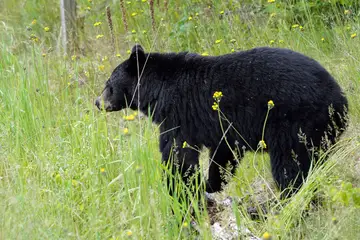
Capable of killing people, though the agency says this is extremely rare. “Yes. Black bears are capable of killing people, but it is an extremely rare occurrence. The last time someone was killed by a black bear in New Hampshire was 1784.” New Hampshire Fish and Game Department
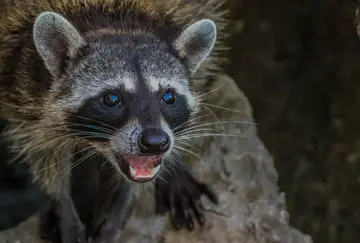
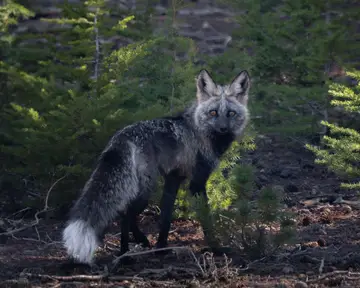
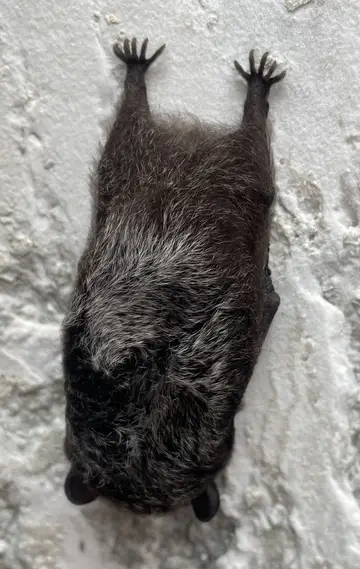
Raccoons, skunks, bats and foxes
Account for most reported rabies cases in New Hampshire, per NH Fish and Game. “…as raccoons, skunks, bats and foxes account for most of the reported rabies cases in New Hampshire.” New Hampshire Fish and Game Department
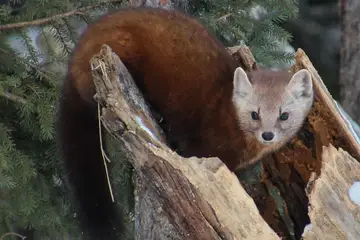
NH species of special concern; Species of Greatest Conservation Need
What the sources say
Habitat: Mixed deciduous and coniferous forests with a variety of horizontal and vertical structure. Conifer cover is important during winter and course woody debris on the ground provides denning and nesting sites and refuge from predators. Typically found in spruce-fir forests above 2,700 feet in elevation. (New Hampshire Fish and Game Department)
“Yes. Black bears are capable of killing people, but it is an extremely rare occurrence. The last time someone was killed by a black bear in New Hampshire was 1784.” New Hampshire Fish and Game Department
Size
Smokies: males average about 6 ft long, 3 ft at the shoulder and 250 lb in summer; females usually just over 100 lb. Missouri: 46 to 78 inches long, 86 to 600 lb.
How to recognize it
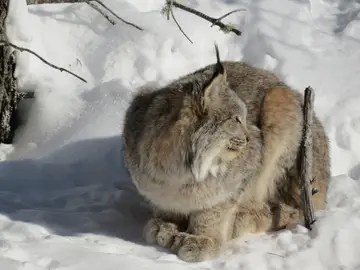
Straight facial profile, rounded erect ears, very short tail
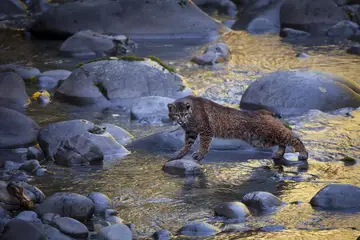
Total length 18 to 50 inches, tail 3 to 8 inches, weight 8 to 49 pounds (Missouri). About twice the size of a house cat.
How to recognize it
Short 'bobbed' tail, 4 to 8 inches, with a black tip and white underneath (Arizona). New Mexico instead describes black bars on top, white underneath and a white tip.
Pointed ears with tufts at the tips, often with cheek tufts
Backs of the ears are black with a light central spot
About 3.5 to 4 feet long including the tail and roughly 2 feet tall at the shoulder; weight varies by region: Arizona 20 to 30 lb, Florida average about 28 lb, Georgia 25 to 45 lb
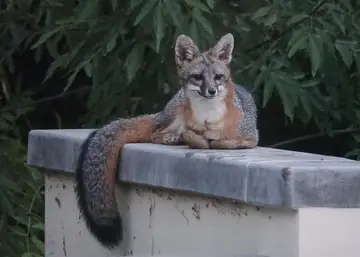
How to recognize it
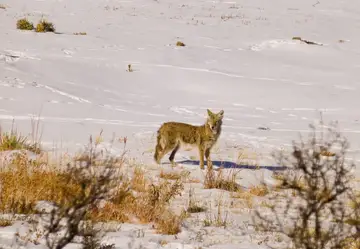
Large pointed ears, long narrow nose, bushy black-tipped tail
Like a slender medium-sized dog, much smaller than a wolf
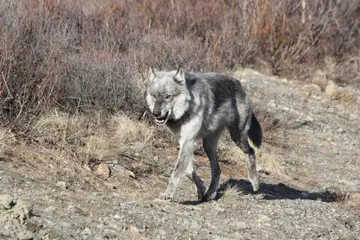
Adults about 40 to 175 pounds depending on sex and region; on average about five to six feet long (Isle Royale), up to 6 feet including the tail (Washington), and 26 to 34 inches at the shoulder. Twice the size of a coyote.
How to recognize it
Longer legs, larger feet, wider head and snout, shorter ears, narrow body and straight tail compared with most coyotes and dogs.
Tracks about 5 inches long by 4 inches wide, with claws showing.
Long, drawn-out howls, audible up to five miles.
Conservation
NH endangered; Species of Greatest Conservation Need; federally endangered
NH species of special concern; Species of Greatest Conservation Need
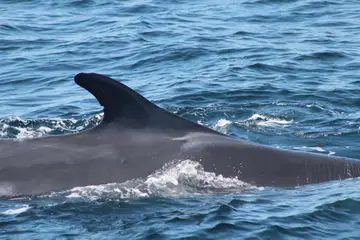
No confirmed photo of Humpback Whale
Humpback Whale
Megaptera novaeangliae
Conservation
NH Species of Greatest Conservation Need
No confirmed photo of Little brown bat
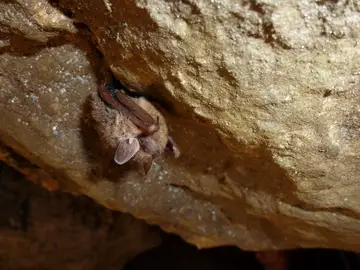
Little brown bat
Myotis lucifugus
Where in New Hampshire
The Little Brown Bat is found from Labrador west to central Alaska and south to the Appalachians in Georgia and Arkansas … New Hampshire Fish and Game Department
Conservation
NH endangered; Species of Greatest Conservation Need
What the sources say
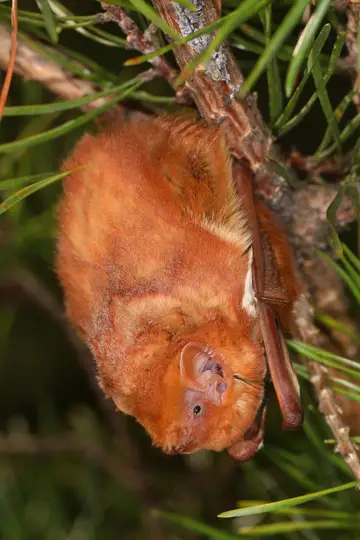
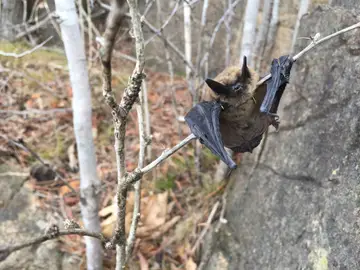
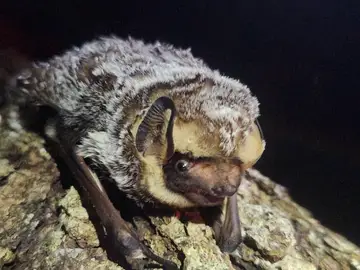
Range: The Little Brown Bat is found from Labrador west to central Alaska and south to the Appalachians in Georgia and Arkansas. Located in most states except Florida, Texas, and southern California. The little brown bat was found abundantly throughout New Hampshire until about 2010, but the entire population is now at great risk from White-nose Syndrome.
Habitat: Little brown bats feed primarily over wetlands and other still water where insects are abundant. They use rivers, streams, and trails as travel corridors to navigate across the landscape. Bats will occasionally swoop down close to mammals to indulge on the insects that swarm around them. They can follow the same flight pattern each night as they search for food. They will prefer summer roosts close to water. (New Hampshire Fish and Game Department)
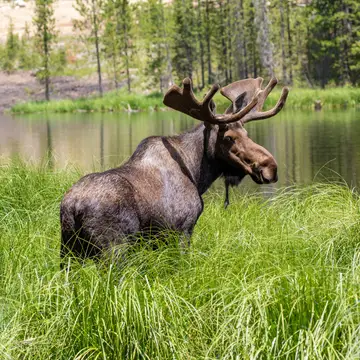
Habitat: Moose need large areas of forest with a mix of young trees and shrubs (trees/shrubs 1-12 feet tall) for food and older forest for cover. This habitat type is mainly created by timber harvesting. (New Hampshire Fish and Game Department)
A lynx has longer ear tufts and large, fur-covered feet (3.5 to 4.5 inches wide). A bobcat's feet are small and hairless (up to 2.5 inches). A lynx's tail has a black tip and no white underneath; a bobcat's tail is white underneath. Do not use the tail tip alone, because agencies describe the bobcat's tip differently (New Mexico white, Arizona black).
NY DEC: gray wolves are much larger (females typically 50-100 lb, males 70-145 lb, 5-6 ft nose to tail, 27-33 in at the shoulder); eastern coyotes rarely exceed 50 lb and generally stand under 2 ft at the shoulder. Wolves have small rounded ears and a short blocky snout; coyotes have larger, more pointed ears (can look rounded in winter coat) and a long, narrow, pointed snout. Coyote tracks are typically 3 x 2 in, wolf tracks about 5 x 4 in. NY DEC says most wolf reports in New York were coyotes, dogs or wolf-dog hybrids.
Photos show typical adults; individuals vary. Never get close to compare.
When mammals are active in New Hampshire
Records of mammals in New Hampshire peak in April to July and September. They show when people record mammals, not how many there are (about month bars).
JanFebMarAprMayJunJulAugSepOctNovDec
6,725 records of mammals in New Hampshire by month (GBIF, CC0 and CC BY records).
NH Fish and Game Wildlife Division (603) 271-2461; Law Enforcement (603) 271-3361. Invasive insects: NHBugs reporting form (nhbugs.org/reporting-form). Stranded marine animals: Seacoast Science Center (603) 997-9448 or the Northeast hotline (866) 755-6622. Sharks: Northeast Shark Hotline (401) 859-1043. New Hampshire Fish and Game Department
Bears Frequently Asked Questions. New Hampshire Fish and Game Department. archived copy, captured August 2, 2025; checked November 3, 2026.Quoted passages (2)
“Yes. Black bears are capable of killing people, but it is an extremely rare occurrence. The last time someone was killed by a black bear in New Hampshire was 1784.”
“If you see a bear, keep your distance. Make it aware of your presence by clapping, talking, singing or making other sounds.”
Moose (Species Occurring in NH). New Hampshire Fish and Game Department. archived copy, captured May 28, 2026; checked November 3, 2026.Quoted passages (1)
“Moose occur throughout New Hampshire and are most numerous north of the White Mountains.”
Bobcat (Species Occurring in NH). New Hampshire Fish and Game Department. archived copy, captured June 27, 2026; checked November 3, 2026.
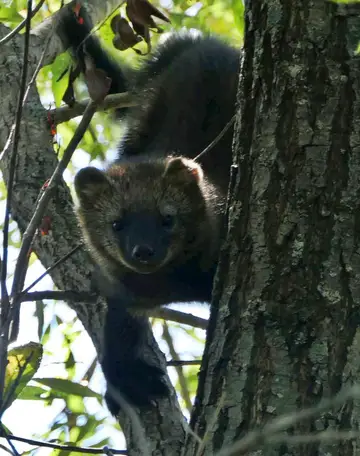
Fisher (Species Occurring in NH). New Hampshire Fish and Game Department. archived copy, captured July 17, 2025; checked November 3, 2026.