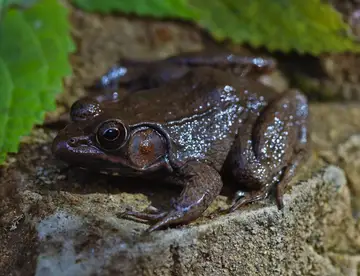
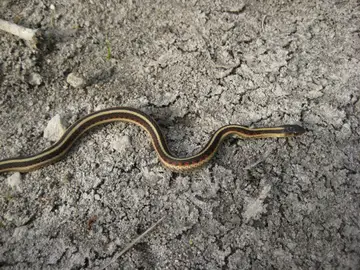
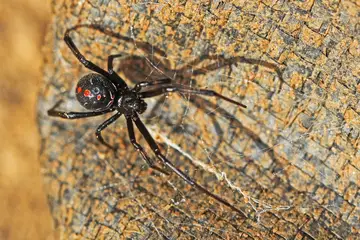
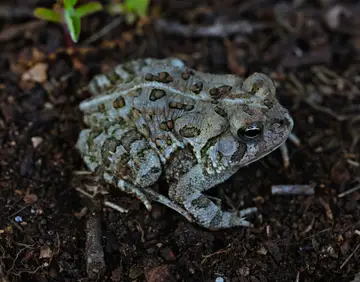
New Hampshire has 1 venomous snake named by official sources: Timber Rattlesnake, as labelled by New Hampshire Fish and Game Department. This guide covers 8 animal groups from New Hampshire Fish and Game Department lists and other official sources, with photos, venomous status and when each group is active.
Identification help has limits: a photo cannot confirm that an animal is safe. Watch from a distance and never handle a wild animal.
These are the animals official sources describe as venomous or as a risk to people in New Hampshire, across 6 groups. The reason is given in the source's own terms.
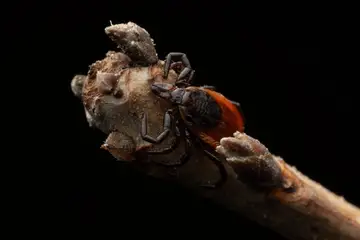
Spreads Lyme disease, anaplasmosis, babesiosis, B. miyamotoi and Powassan virus, per NH DHHS: “Lyme disease, anaplasmosis, babesiosis, B. miyamotoi and Powassan virus are transmitted by the bite of the black-legged tick”
Three mosquito-borne illnesses are currently found in NH per NH DHHS. Species not named: “While there are many mosquito borne illnesses, three types are currently found in NH; Eastern Equine Encephalitis Virus (EEEV), West Nile Virus (WNV), and Jamestown Canyon Virus (JCV).”
Poisonous fine hairs cause rashes: “Browntail moth caterpillars have poisonous fine hairs that can produce skin rashes similar to poison ivy, even when the exposure to them is airborne.”
Stings can be painful, even life-threatening, for a few highly sensitive people, per UNH Extension: “Wasp encounters can be painful, even life-threatening, for a few highly sensitive people.”
UNH Extension says it rarely turns up in NH and is a vector of human ehrlichiosis agents: “The lone Star tick is the vector for Ehrlichia chaffeensis, the agent of human monocytic ehrlichiosis (HME)”
UNH Extension says it occurs in every NH county and is a vector of a rare, serious human disease, Powassan encephalitis: “…but is a vector of a rare, serious human disease called Powassan encephalitis.”
UNH Extension says it can transmit the organism that causes Rocky Mountain spotted fever, which is rare in New England: “This species can transmit the organism that causes Rocky Mountain Spotted Fever, which is rare in New England”
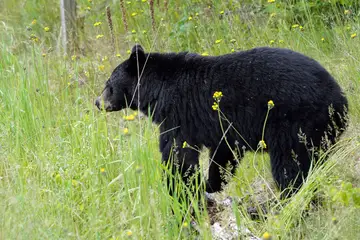
Capable of killing people, though the agency says this is extremely rare: “Yes. Black bears are capable of killing people, but it is an extremely rare occurrence. The last time someone was killed by a black bear in New Hampshire was 1784.”
Account for most reported rabies cases in New Hampshire, per NH Fish and Game: “…as raccoons, skunks, bats and foxes account for most of the reported rabies cases in New Hampshire.”
Official sources say the southern black widow and the brown recluse are not native to New Hampshire or not found there. They are not counted among the dangerous animals above; each entry quotes the source.
Southern black widow: does not live here. “Southern black widows do not live in Northern New England, but will occasionally come into the region from other parts of the country, often in produce, such as grapes.” Northern New England Poison Center
Darker cells are the months with more open-licence observation records of each group in New Hampshire (GBIF). They show when people see and record these animals, not how many there are. The current month, this month, is highlighted.
Report: NH Fish and Game Wildlife Division (603) 271-2461; Law Enforcement (603) 271-3361. Invasive insects: NHBugs reporting form (nhbugs.org/reporting-form). Stranded marine animals: Seacoast Science Center (603) 997-9448 or the Northeast hotline (866) 755-6622. Sharks: Northeast Shark Hotline (401) 859-1043. New Hampshire Fish and Game Department
Yes. NH Fish and Game says the timber rattlesnake is the only venomous snake in New Hampshire, and it is protected by law. New Hampshire Fish and Game Department
Yes, but rare. Only one known population of timber rattlesnakes remains in New Hampshire, and the species is state endangered. New Hampshire Fish and Game Department · More
Is the snake i heard buzzing a rattlesnake?
NH Fish and Game says most reported rattlesnakes turn out to be milk snakes, which can vibrate their tails and make a buzzing noise. A buzz alone does not tell you which snake it is, and timber rattlesnakes are venomous. Leave any snake you cannot identify alone and report a suspected rattlesnake to NH Fish and Game. New Hampshire Fish and Game Department
Rarely. The poison center says the northern black widow may live in the region but is rarely seen; southern black widows arrive occasionally in produce. Northern New England Poison Center
Are there brown recluse spiders in New Hampshire?
No. The poison center says brown recluses do not live in Northern New England, though one could be carried in. Northern New England Poison Center
Are there sharks in New Hampshire?
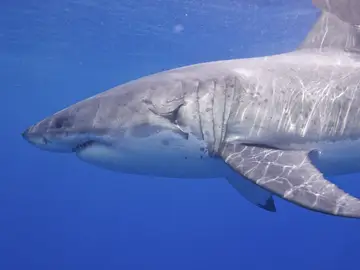
Yes. White sharks are native to the Gulf of Maine, and spiny dogfish enter its inner waters in late spring; NH Sea Grant says sightings of white sharks in the Gulf of Maine are relatively rare. New Hampshire Sea Grant / UNH Cooperative Extension
Not anymore. The Wildlife Action Plan says wolves were extirpated from New Hampshire in the early 1800s. The eastern wolf remains on the state endangered list. New Hampshire Fish and Game Department
Yes. NH Fish and Game says black bears can kill people but it is extremely rare; the last such death in the state was in 1784. New Hampshire Fish and Game Department
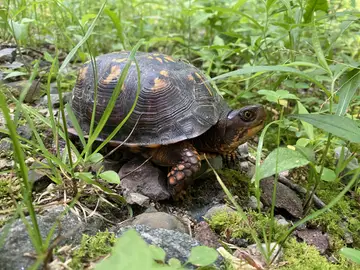
No. UNH Cooperative Extension says only turtles and snakes occur naturally among New Hampshire reptiles. It also warns that non-native reptiles should never be released into the wild. University of New Hampshire Cooperative Extension
Sources
Snakes of NH (old site page). New Hampshire Fish and Game Department. archived copy, captured August 1, 2023; checked November 3, 2026.Quoted passages (2)
“New Hampshire has only one venomous snake, the timber rattlesnake, which is protected by law.”
“If you think you see a timber rattlesnake, please leave it alone, and let us know. There is no reason to kill a New Hampshire snake.”
Snakes of New Hampshire. New Hampshire Fish and Game Department. archived copy, captured August 7, 2025; checked November 3, 2026.Quoted passages (1)
“There are 11 species of snakes that are native to New Hampshire.”
Frogs of New Hampshire. New Hampshire Fish and Game Department. archived copy, captured November 10, 2025; checked November 3, 2026.Quoted passages (1)
“There are 10 species of frogs that are native to New Hampshire.”
Turtles of New Hampshire. New Hampshire Fish and Game Department. archived copy, captured October 14, 2025; checked November 3, 2026.Quoted passages (3)
“There are 7 species of turtles that are considered native to New Hampshire.”
“…occasionally a non-native turtle is observed in New Hampshire resulting from released pets, most commonly red-eared sliders.”
“Never release pet turtles into the wild!! Report non-native species to Fish and Game.”
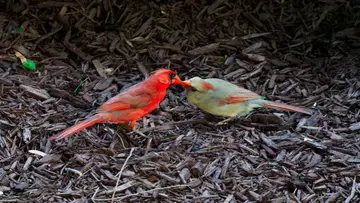
Breeding Bird Trends (old site). New Hampshire Fish and Game Department. archived copy, captured January 15, 2018; checked November 3, 2026.Quoted passages (1)
“The 186 bird species that breed regularly in New Hampshire are included in three tables above”
Venomous Spiders. CDC/NIOSH. archived copy, captured October 6, 2026; checked November 3, 2026.Quoted passages (1)
“Venomous spiders found in the United States include the black widow and the brown recluse.”
Black Widow: Poisons A to Z. Northern New England Poison Center. updated May 2, 2016; checked November 3, 2026.Quoted passages (3)
“The black widow is a type of spider with a poisonous bite.”
“Southern black widows do not live in Northern New England, but will occasionally come into the region from other parts of the country, often in produce, such as grapes.”
“…may live in our region but is rarely seen”
Tickborne Diseases. NH Department of Health and Human Services. archived copy, captured July 6, 2026; checked November 3, 2026.Quoted passages (3)
“Lyme disease, anaplasmosis, babesiosis, B. miyamotoi and Powassan virus are transmitted by the bite of the black-legged tick”
“There are five different tickborne illnesses in New Hampshire”
“Ticks are active any time the outside temperature is above 40°F and they are not covered by snow.”
“While there are many mosquito borne illnesses, three types are currently found in NH; Eastern Equine Encephalitis Virus (EEEV), West Nile Virus (WNV), and Jamestown Canyon Virus (JCV).”
“Browntail moth caterpillars have poisonous fine hairs that can produce skin rashes similar to poison ivy, even when the exposure to them is airborne.”
“This is the first confirmed incident of the species in the Granite State in 75 years.”
“Browntail moth caterpillar winter webs have been located and removed at the Isles of Shoals”
“People should not handle the caterpillars without wearing proper gloves and, when possible, a mask.”
“The lone Star tick is the vector for Ehrlichia chaffeensis, the agent of human monocytic ehrlichiosis (HME)”
“…but is a vector of a rare, serious human disease called Powassan encephalitis.”
“This species can transmit the organism that causes Rocky Mountain Spotted Fever, which is rare in New England”
Bears Frequently Asked Questions. New Hampshire Fish and Game Department. archived copy, captured August 2, 2025; checked November 3, 2026.Quoted passages (3)
“Yes. Black bears are capable of killing people, but it is an extremely rare occurrence. The last time someone was killed by a black bear in New Hampshire was 1784.”
“The last time someone was killed by a black bear in New Hampshire was 1784.”
“If you see a bear, keep your distance. Make it aware of your presence by clapping, talking, singing or making other sounds.”
“A shark attack has never been documented in New Hampshire waters”
“A shark attack has never been documented in New Hampshire waters (1837 to present.”
Brown Recluse: Poisons A to Z. Northern New England Poison Center. updated March 4, 2016; checked November 3, 2026.Quoted passages (1)
“Brown recluse spiders do not live in Northern New England and it is unusual to find one here.”
Feral Swine in New Hampshire. New Hampshire Fish and Game Department. archived copy, captured June 23, 2025; checked November 3, 2026.Quoted passages (2)
“A confirmed feral swine population in New Hampshire, primarily in Grafton, Sullivan and Cheshire Counties, presents a unique management challenge.”
“A confirmed feral swine population in New Hampshire, primarily in Grafton, Sullivan and Cheshire Counties”
“At this time, there is no evidence of an established population”
“A small number of adults were found and confirmed by USDA identifiers.”
Invasive Species and climate change. New Hampshire Fish and Game Department. archived copy, captured August 24, 2025; checked November 3, 2026.Quoted passages (2)
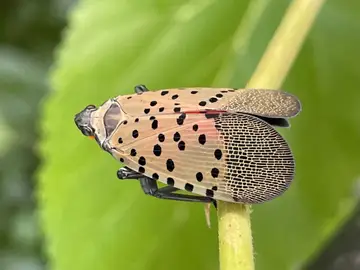
“An example of an invasive species in New Hampshire is the emerald ash borer, which is killing native ash trees.”
“Invasive species can change the face of wildlife habitats and cause significant economic harm, such as the Asian longhorned beetle”
“Sightings of white sharks in the Gulf of Maine are relatively rare”
“…white sharks usually occur in the Gulf of Maine region from the early summer through the fall.”
Mountain Lions in New Hampshire. New Hampshire Fish and Game Department. archived copy, captured August 26, 2025; checked November 3, 2026.Quoted passages (1)
“To date, the Department has not received any verifiable evidence (photographic or DNA) of mountain lions existing in New Hampshire.”
NH Wildlife Action Plan Appendix A: Mammals. New Hampshire Fish and Game Department. archived copy, captured November 11, 2025; checked November 3, 2026.Quoted passages (1)
“Wolves were extirpated from New Hampshire in the early 1800's.”
Moose (Species Occurring in NH). New Hampshire Fish and Game Department. archived copy, captured May 28, 2026; checked November 3, 2026.Quoted passages (1)
“Moose occur throughout New Hampshire and are most numerous north of the White Mountains.”
Bats in New Hampshire. New Hampshire Fish and Game Department. archived copy, captured November 11, 2025; checked November 3, 2026.Quoted passages (2)
“New Hampshire is home to 8 species of bats.”
“…some bats hibernate, from November through April in NH.”
“Reptiles include turtles, snakes, alligators, and lizards – but ONLY turtles and snakes occur naturally in New Hampshire.”
Is that snake or spider poisonous? Northern New England Poison Center. Posted July 10, 2013; checked November 3, 2026.Quoted passages (1)
“If you think you have been bitten by a poisonous animal, call the poison center at 1-800-222-1222”
Spiny Dogfish. New Hampshire Fish and Game Department. archived copy, captured June 12, 2025; checked November 3, 2026.Quoted passages (1)
“…dogfish enter the inner waters of the Gulf of Maine in late spring in search of a meal of small cod, haddock, mackerel, herring or flounder. They leave in early fall.”
Browntail Moth. NHBugs (UNH Cooperative Extension, NH Division of Forests and Lands, NH Department of Agriculture). undated page; checked November 3, 2026.Quoted passages (1)
“The browntail moth nests should be removed and destroyed between November and April.”