Cuban treefrog
Osteopilus septentrionalis · also called Cuban tree frog, Giant tree-frog and Marbled tree-toad · Last checked November 3, 2026.
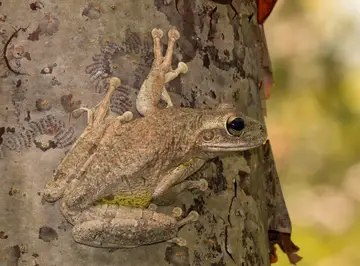

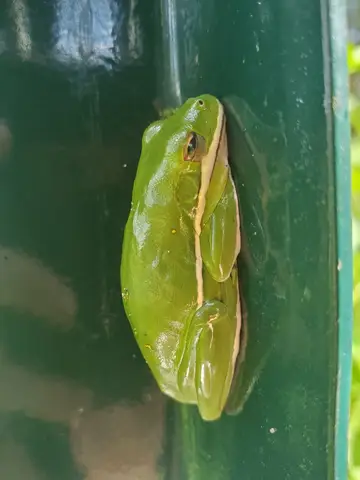
The Cuban treefrog is the largest treefrog in the US: most are 1.5 to 2.5 inches long, and big females can top 6 inches. It is warty, bug-eyed and usually creamy white to light brown, with very large toe pads. Native to Cuba, the Bahamas and the Cayman Islands, it is an invasive species established throughout peninsular Florida and parts of the Panhandle, with breeding populations in Georgia and Louisiana and stray records in many other states. Its skin secretion is toxic: it burns and itches the eyes and nose of people, and it can make dogs and cats salivate heavily, with reports of seizures. UF/IFAS Extension
On this page
Is the Cuban treefrog dangerous?
UF/IFAS: the skin secretion is extremely irritating to mucous membranes, especially in people, causing burning and itching of the eyes and nose that can last more than an hour. UF/IFAS advises not handling them with bare hands and washing hands afterward. UF/IFAS Extension
“Cuban treefrog secretions are extremely irritating to the mucous membranes of mammals, especially humans. The secretions cause a burning and itching sensation of the eyes and nose that can last for more than an hour.”
No official source we use states whether this animal is venomous. That does not mean it is harmless: do not handle it.
If someone is bitten or stung, call 911 or Poison Help at 1-800-222-1222.
How to identify a Cuban treefrog
A photo or description can narrow it down, but cannot confirm what an animal is or that it is safe. Look from a distance and do not handle wild animals.
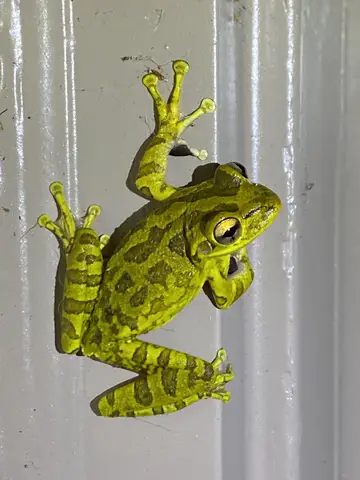
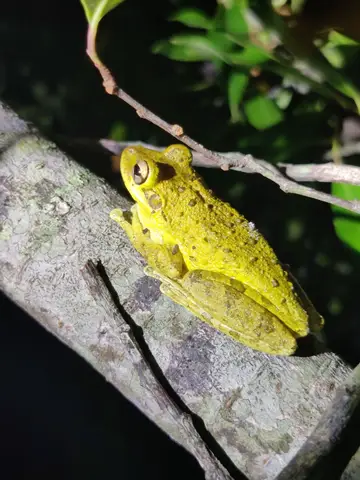
Size: Most are 1.5 to 2.5 inches long (not counting legs); adult females can exceed 6 inches. Any Florida treefrog over 3 inches is almost certainly a Cuban treefrog. UF/IFAS Extension
Colors: creamy white, light brown, green, gray, beige, yellow and dark brown. Pattern: plain; wavy dark markings or blotches on back; bands on rear legs; warty.
Key features
- Very large toe pads, much larger than native treefrogs'. UF/IFAS Extension
- Large 'bug eyes'. UF/IFAS Extension
- Warty back but no warts on top of the head; skin on the head fused to the skull once the frog is over about 1 inch long. UF/IFAS Extension
- Yellow wash in the groin and armpits, visible when the legs are stretched. UF/IFAS Extension
Young
Young frogs have a light, jagged line from the eye (not the lip) to the rear legs, usually reddish-brown eyes, and blue leg bones visible through the skin. Tadpoles grow to about 1.25 inches.
Animals mistaken for the Cuban treefrog
Cuban treefrog or Barking treefrog?
Cuban treefrog
Barking treefrog Hyla gratiosa
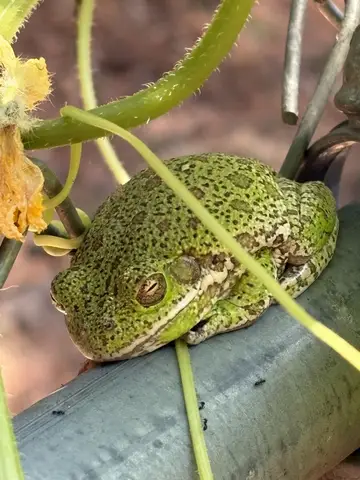
UF/IFAS names the barking treefrog and Cope's gray treefrog as the native frogs most often confused with Cuban treefrogs; native treefrogs are generally smaller with smaller eyes and toe pads. UF/IFAS Extension
Cuban treefrog or Cope's gray treefrog?
Cuban treefrog
Cope's gray treefrog Hyla chrysoscelis
Native; generally smaller, with smaller eyes and toe pads. Skin on the Cuban treefrog's head is fused to the skull, unlike native US treefrogs. UF/IFAS Extension
Cuban treefrog or Green treefrog?
Cuban treefrog
Green treefrog Dryophytes cinereus
USGS: the Cuban treefrog's toe pads are much larger than the native green treefrog's. US Geological Survey, Nonindigenous Aquatic Species Database
Where the Cuban treefrog lives
- Native or listed
- Nonnative or not established
- No official record in our data
- 1–9
- 10–99
- 100–999
- 1,000+
On our state guides
- Alabama frogs and toadsNonnative
- Arkansas frogs and toadsNonnative
- Florida frogs and toadsNonnative
- Georgia frogs and toadsNonnative
- Louisiana frogs and toadsNonnative
- New Hampshire frogs and toadsNonnative
- South Carolina frogs and toadsNonnative
State boundaries: U.S. Census Bureau, cartographic boundary file cb_2024_us_state_20m.
When it is active
Most active at night when humidity is high. Breeds mainly in spring and summer, year-round in southern Florida, especially after warm rains. UF/IFAS Extension
US open-licence records peak in March, May and July to October.
Habitat and habits
Habitat: Most common around homes and buildings in suburban areas, gardens and landscape plants, plus farms, groves and plant nurseries. In natural areas, pine forests, hardwood hammocks and swamps; not usually in dry, open scrub. UF/IFAS Extension
Behavior: Sit-and-wait predators that hang on walls and windows near lights at night. They hide by day in tight spaces such as behind shutters and siding, enter homes through doors and plumbing vents, and can cause short circuits in electrical boxes.
Diet: Snails, millipedes, spiders and many insects, plus native frogs (including other Cuban treefrogs), lizards and even small snakes.
Young: Lays eggs as a floating film on the water surface in small, fish-free water: ditches, ponds, buckets, bird baths and swimming pools. A large female may lay several thousand eggs in a season. Call: a raspy sound like a squeaking door.
Legal status and reporting
Invasive status: Invasive in Florida and elsewhere in the US (UF/IFAS). It eats native treefrogs and appears responsible for declines of some native species, especially squirrel treefrogs; in lab experiments its tadpoles were superior competitors with the tadpoles of at least two native frogs. Louisiana lists it as invasive. UF/IFAS Extension
Report: Outside peninsular Florida, UF/IFAS asks that sightings be emailed with a photo, date and location to Dr. Steve A. Johnson at [email protected]. Anywhere, including peninsular Florida, report at EDDMapS (eddmaps.org). In Florida, FWC also takes nonnative amphibian reports via the IveGot1 app or IveGot1.org. UF/IFAS Extension
Questions about the Cuban treefrog
Cuban tree frog poisonous
Its skin gives off a sticky toxin when handled. UF/IFAS says this causes burning and itching of the eyes and nose that can last more than an hour, and USGS says it may be worse for people with asthma. UF/IFAS advises not handling them with bare hands and washing your hands afterward. If someone has a reaction, call 911 or Poison Help at 1-800-222-1222.
Cuban tree frog poisonous to dogs
UF/IFAS says the toxin irritates a pet's mouth and causes heavy salivation. It is not lethal to pets, but seizures have been reported, so keep dogs and cats away from Cuban treefrogs.
Cuban tree frog size
Most are 1.5 to 2.5 inches long, but adult females can exceed 6 inches, making it the largest treefrog in the US. Any Florida treefrog over 3 inches is almost certainly a Cuban treefrog.
Cuban tree frog sound
Males have a raspy call like a squeaking door. USGS describes it as a high-pitched snoring rasp. Choruses peak before dawn and are loudest after heavy rain.
Cuban tree frog florida
It is an invasive species in Florida, established throughout the peninsula and in parts of the Panhandle. It is most common around homes. UF/IFAS asks for reports at EDDMapS, and FWC accepts reports at IveGot1.org.
Cuban tree frog baby
Young frogs have a light jagged line from the eye to the rear legs, reddish-brown eyes and bluish leg bones visible through the skin. Tadpoles have a dark brown body and grow to about 1.25 inches.
Sources
- The Cuban Treefrog in Florida (WEC218, Steven A. Johnson). UF/IFAS Extension (EDIS). Original publication May 2007; checked November 3, 2026.
Quoted passages (15)
“Cuban treefrog secretions are extremely irritating to the mucous membranes of mammals, especially humans. The secretions cause a burning and itching sensation of the eyes and nose that can last for more than an hour.”
“Most Cuban treefrogs, however, range from 1.5–2.5 inches long (not including outstretched legs).”
“Cuban treefrogs have exceptionally large toepads as compared to Florida’s native treefrogs”
“They have very large eyes, giving them a somewhat ‘bug-eyed’ appearance.”
“Once Cuban treefrogs reach a body length of approximately 1 inch, the skin on top of their head becomes tightly fused to the skull.”
“Yellow wash of color often visible in groin and armpits”
“The most obvious feature is a light-colored, jagged line that runs from eye (not the lip) to the rear legs.”
“In urban and suburban settings, they are most commonly found on and around homes and buildings, and in gardens and landscape plants.”
“Invasive Cuban treefrogs in Florida eat a wide variety of food items, including snails, millipedes, spiders, and a vast array of insects”
“On warm nights it is common to encounter them hanging on walls and windows near lighted areas as they sit and wait for insects attracted to the lights.”
“Like our native treefrogs, Cuban treefrogs are most active at night when the humidity is high”
“Cuban Treefrogs lay their eggs as a film on the water’s surface”
“Cuban treefrogs are known predators of Florida’s native treefrogs (Figure 9) and appear to be responsible for declines of some native treefrog species, especially in urbanized areas.”
“If you see a Cuban tree-frog, or suspect you have seen one, outside of peninsular Florida, please email Dr. Steve A. Johnson at tadpole@ufl. edu.”
“The native species most likely to be confused with Cuban treefrogs are the barking treefrog and Cope’s gray treefrog.”
- Cuban Treefrog (Osteopilus septentrionalis) - Species Profile. U.S. Geological Survey, Nonindigenous Aquatic Species Database. Revision Date 6/12/2024; checked November 3, 2026.
Quoted passages (1)
“The toepads are noticeably large, similar in size to its tympanum (eardrum) (Dorcas and Gibbons, 2008; Elliott et al., 2009), and much larger than the native Dryophytes cinereus.”
- Checklist of Florida's Amphibians and Reptiles (Revised 2023). Florida Fish and Wildlife Conservation Commission (FWC). Revised 2023; checked November 3, 2026.
- GBIF.org occurrence records, human observations licensed CC0 1.0 or CC BY 4.0 only, accessed November 3, 2026. The datasets behind these counts are listed on our Sources page.
- State boundaries: U.S. Census Bureau, cartographic boundary file cb_2024_us_state_20m.