States Wildlife

Florida Frogs and Toads: Pictures & ID Guide

Last checked November 3, 2026 against official sources.

On this page
  1. Which frogs and toads can hurt you
  2. All 31 frogs and toads
  3. Lookalikes
  4. When they are active
  5. If you are bitten or stung
  6. How to report
  7. What official sources say
  8. About this list
  9. Sources

This page lists 31 species: all from FWC's Checklist of Florida's Amphibians and Reptiles, Order Anura. 4 are nonnative.

Which frogs and toads can hurt you

Official sources single out these frogs and toads in Florida, in their own words:

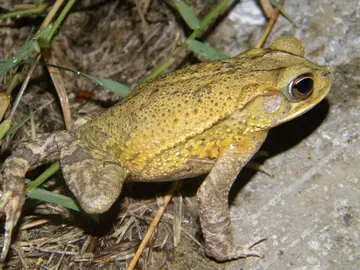
  • Cane Toad
    Photo: Maximilian Paradiz from Amsterdam, Netherlands · CC BY 2.0 · Wikimedia Commons

    Cane Toad

    Poisonous to animals that bite or eat it, including pets. “The skin-gland secretions of cane toads (called bufotoxin) are highly toxic and can sicken or even kill animals that bite or feed on them, including native animals and domestic pets …” FWC

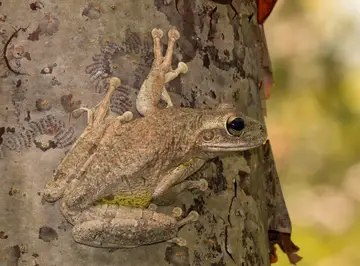
  • Cuban Treefrog
    Photo: Charles J. Sharp · CC BY-SA 4.0 · Wikimedia Commons · resized

    Cuban Treefrog

    Toxic skin secretions irritate the eyes and nose of people and the mouths of pets that bite them. “Cuban treefrog secretions are extremely irritating to the mucous membranes of mammals, especially humans.” UF/IFAS Extension

All 31 frogs and toads

From A to Z. Do not handle them.

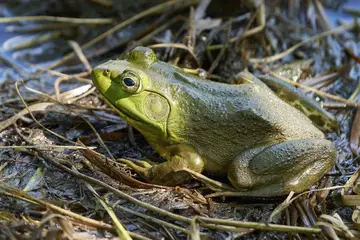
American Bullfrog
Photo: Paul Danese · CC BY-SA 4.0 · Wikimedia Commons · resized

American Bullfrog

Rana catesbeiana

Not stated

Venom
No official source we use states whether this animal is venomous. That does not mean it is harmless: do not handle it.
Size
Usually 6 to 8 inches long (NCWRC); can reach 8 inches or more and weigh over 2 pounds (CDFW). Missouri gives 3.5 to 6 inches snout to vent, occasionally to 8.75.
How to recognize it
  • No ridge (dorsolateral fold) down each side of the back
  • Large round eardrum: about twice the eye in males, about eye-sized in females
  • Fully webbed hind feet, longest toe extends past the webbing
144 records by month.

Full American Bullfrog guide

Barking Treefrog
Photo: Becky Dill · CC0 1.0 · iNaturalist

Barking Treefrog

Hyla gratiosa

Not stated

Venom
No official source we use states whether this animal is venomous. That does not mean it is harmless: do not handle it.
No confirmed photo of Bird-voiced Treefrog

Bird-voiced Treefrog

Hyla avivoca

Not stated

Venom
No official source we use states whether this animal is venomous. That does not mean it is harmless: do not handle it.
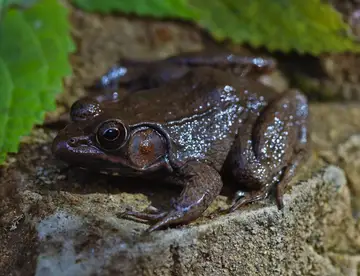
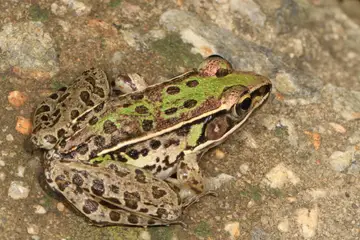
Bronze Frog
Photo: Peter Paplanus from St. Louis, Missouri · CC BY 2.0 · Wikimedia Commons

Bronze Frog

Rana clamitans

Not stated

Venom
No official source we use states whether this animal is venomous. That does not mean it is harmless: do not handle it.
99 records by month.
No confirmed photo of Cane Toad

Cane Toad

Rhinella horribilis/marina

Not stated Invasive

Venom
No official source we use states whether this animal is venomous. That does not mean it is harmless: do not handle it.
Danger to people
“The skin-gland secretions of cane toads (called bufotoxin) are highly toxic and can sicken or even kill animals that bite or feed on them, including native animals and domestic pets …” FWC
Where in Florida
Cane toads are currently found in central and south Florida, generally south of the I-4 corridor. FWC
What the sources say

Habitat: In Florida, cane toads are found in urban, suburban and agricultural areas. (FWC)

No confirmed photo of Carpenter Frog

Carpenter Frog

Rana virgatipes

Not stated

Venom
No official source we use states whether this animal is venomous. That does not mean it is harmless: do not handle it.
No confirmed photo of Cope’s Gray Treefrog

Cope’s Gray Treefrog

Hyla chrysoscelis

Not stated

Venom
No official source we use states whether this animal is venomous. That does not mean it is harmless: do not handle it.
Cuban Treefrog
Photo: Charles J. Sharp · CC BY-SA 4.0 · Wikimedia Commons · resized

Cuban Treefrog

Osteopilus septentrionalis

Not stated Nonnative

Venom
No official source we use states whether this animal is venomous. That does not mean it is harmless: do not handle it.
Danger to people
“Cuban treefrog secretions are extremely irritating to the mucous membranes of mammals, especially humans.” UF/IFAS Extension
Size
Most are 1.5 to 2.5 inches long (not counting legs); adult females can exceed 6 inches. Any Florida treefrog over 3 inches is almost certainly a Cuban treefrog.
How to recognize it
  • Very large toe pads, much larger than native treefrogs'.
  • Large 'bug eyes'.
  • Warty back but no warts on top of the head; skin on the head fused to the skull once the frog is over about 1 inch long.
1,646 records by month.

Full Cuban Treefrog guide

No confirmed photo of Eastern Cricket Frog

Eastern Cricket Frog

Acris crepitans

Not stated

Venom
No official source we use states whether this animal is venomous. That does not mean it is harmless: do not handle it.
No confirmed photo of Eastern Narrow-mouthed Toad

Eastern Narrow-mouthed Toad

Gastrophryne carolinensis

Not stated

Venom
No official source we use states whether this animal is venomous. That does not mean it is harmless: do not handle it.
235 records by month.
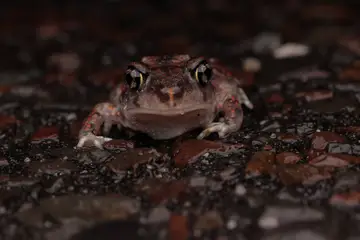
Eastern Spadefoot
Photo: User:Rstanton13 · CC BY-SA 4.0 · Wikimedia Commons · resized

Eastern Spadefoot

Scaphiopus holbrookii

Not stated

Venom
No official source we use states whether this animal is venomous. That does not mean it is harmless: do not handle it.
164 records by month.
No confirmed photo of Florida Bog Frog

Florida Bog Frog

Rana okaloosae

Not stated

Venom
No official source we use states whether this animal is venomous. That does not mean it is harmless: do not handle it.
Conservation
State Threatened
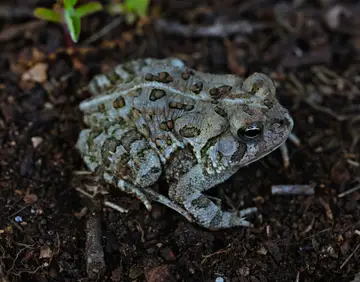
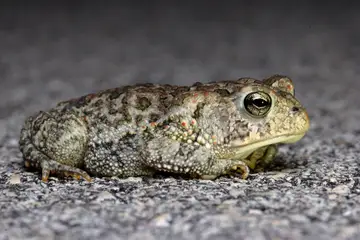
Fowler’s Toad
Photo: Peter Paplanus from St. Louis, Missouri · CC BY 4.0 · Wikimedia Commons

Fowler’s Toad

Anaxyrus fowleri

Not stated

Venom
No official source we use states whether this animal is venomous. That does not mean it is harmless: do not handle it.
Size
2 to 3 inches long (Alabama: 2 to 4 inches).
How to recognize it
  • Three or more warts in each of the large dark spots on the back (the American toad has fewer)
  • The ridge behind each eye (cranial crest) touches the parotoid gland, with no gap
  • A pale stripe usually runs down the middle of the back

Full Fowler’s Toad guide

Gopher Frog
Photo: jakeschneider00 · CC BY-SA 4.0 · iNaturalist · resized

Gopher Frog

Rana capito

Not stated

Venom
No official source we use states whether this animal is venomous. That does not mean it is harmless: do not handle it.
Conservation
Regulated Species (restrictions on collection or possession)
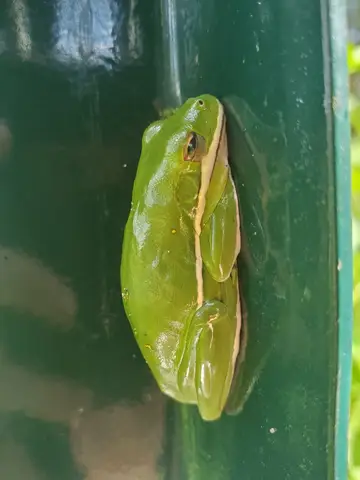
Green Treefrog
Photo: lightbed · CC0 1.0 · iNaturalist

Green Treefrog

Hyla cinerea

Not stated

Venom
No official source we use states whether this animal is venomous. That does not mean it is harmless: do not handle it.
Size
Adults reach about 2.5 inches: USGS gives 1.25 to 2.5 inches snout to vent. Virginia DWR says up to 2 inches.
How to recognize it
  • Smooth skin
  • Prominent toe pads
  • Loud nasal call, like cowbells from a distance
2,839 records by month.

Full Green Treefrog guide

Greenhouse Frog
Photo: Rachel Crane · CC BY 4.0 · iNaturalist

Greenhouse Frog

Eleutherodactylus planirostris

Not stated Nonnative

Venom
No official source we use states whether this animal is venomous. That does not mean it is harmless: do not handle it.
Little Grass Frog
Photo: smokeybear33 · CC0 1.0 · iNaturalist

Little Grass Frog

Pseudacris ocularis

Not stated

Venom
No official source we use states whether this animal is venomous. That does not mean it is harmless: do not handle it.
No confirmed photo of Oak Toad

Oak Toad

Anaxyrus quercicus

Not stated

Venom
No official source we use states whether this animal is venomous. That does not mean it is harmless: do not handle it.
Ornate Chorus Frog
Photo: Scott Allen Davis · CC BY 4.0 · iNaturalist

Ornate Chorus Frog

Pseudacris ornata

Not stated

Venom
No official source we use states whether this animal is venomous. That does not mean it is harmless: do not handle it.
No confirmed photo of Pig Frog

Pig Frog

Rana grylio

Not stated

Venom
No official source we use states whether this animal is venomous. That does not mean it is harmless: do not handle it.
Pine Barrens Treefrog
Photo: Matthew Lumsden · CC BY 4.0 · iNaturalist

Pine Barrens Treefrog

Hyla andersonii

Not stated

Venom
No official source we use states whether this animal is venomous. That does not mean it is harmless: do not handle it.
Conservation
Regulated Species (restrictions on collection or possession)
No confirmed photo of Pine Woods Treefrog

Pine Woods Treefrog

Hyla femoralis

Not stated

Venom
No official source we use states whether this animal is venomous. That does not mean it is harmless: do not handle it.
No confirmed photo of River Frog

River Frog

Rana heckscheri

Not stated

Venom
No official source we use states whether this animal is venomous. That does not mean it is harmless: do not handle it.
No confirmed photo of Southern Chorus Frog

Southern Chorus Frog

Pseudacris nigrita

Not stated

Venom
No official source we use states whether this animal is venomous. That does not mean it is harmless: do not handle it.
No confirmed photo of Southern Cricket Frog

Southern Cricket Frog

Acris gryllus

Not stated

Venom
No official source we use states whether this animal is venomous. That does not mean it is harmless: do not handle it.
Southern Leopard Frog
Photo: Judy Gallagher · CC BY-SA 4.0 · iNaturalist · resized

Southern Leopard Frog

Rana sphenocephala

Not stated

Venom
No official source we use states whether this animal is venomous. That does not mean it is harmless: do not handle it.
789 records by month.
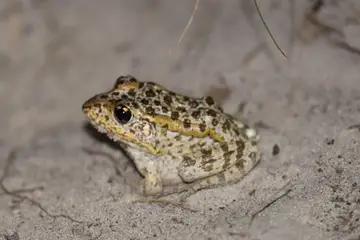
Southern Toad
Photo: Rstanton13 · CC BY-SA 4.0 · Wikimedia Commons · resized

Southern Toad

Anaxyrus terrestris

Not stated

Venom
No official source we use states whether this animal is venomous. That does not mean it is harmless: do not handle it.
Size
Usually 1.6 to 2.9 inches (SREL), with official ranges up to 3.5 inches (Virginia DWR) or 4 inches (Alabama); island populations can reach 4.4 inches. FWC: maximum of about 3 to 4 inches. Females are larger than males.
How to recognize it
  • High ridges (cranial crests) on the head that end in raised knobs in front of the glands behind the eyes, giving a "horned" look. NCWRC: this is the easiest way to tell it from American and Fowler's toads.
  • Large, elongated (Alabama: kidney-shaped) parotoid glands behind the eyes; UF/IFAS describes them as small and oval compared with the cane toad's large triangular glands.
  • A faint light stripe may run down the middle of the back.
1,477 records by month.

Full Southern Toad guide

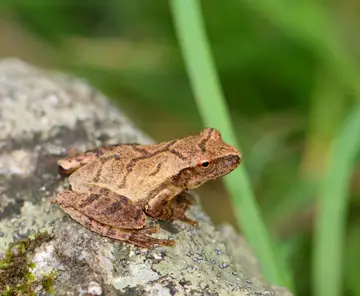
Spring Peeper
Photo: Christine Young · CC BY 4.0 · iNaturalist

Spring Peeper

Pseudacris crucifer

Not stated

Venom
No official source we use states whether this animal is venomous. That does not mean it is harmless: do not handle it.
Size
Adults 3/4 to 1 1/4 inches snout to vent, occasionally to 1 1/2 inches; males are smaller than females.
How to recognize it
  • Clear, high-pitched peep about once per second; a chorus can sound like small jingle bells
  • Adhesive pads on the tips of fingers and toes
  • Some individuals have little to no markings
32 records by month.

Full Spring Peeper guide

No confirmed photo of Squirrel Treefrog

Squirrel Treefrog

Hyla squirella

Not stated

Venom
No official source we use states whether this animal is venomous. That does not mean it is harmless: do not handle it.
No confirmed photo of Upland Chorus Frog

Upland Chorus Frog

Pseudacris feriarum

Not stated

Venom
No official source we use states whether this animal is venomous. That does not mean it is harmless: do not handle it.
No confirmed photo of Western Clawed Frog

Western Clawed Frog

Xenopus tropicalis

Not stated Nonnative

Venom
No official source we use states whether this animal is venomous. That does not mean it is harmless: do not handle it.

Frogs and Toads people confuse

Fowler's toad or Southern toad?

Fowler's toad
Photo: Peter Paplanus from St. Louis, Missouri · CC BY 4.0 · Wikimedia Commons

Fowler's toad Not stated

Southern toad
Photo: Rstanton13 · CC BY-SA 4.0 · Wikimedia Commons · resized

Southern toad Not stated

The southern toad has larger cranial ridges (crests) on the head. The two may hybridize where their ranges meet.

Fowler's toad or Eastern spadefoot?

Fowler's toad
Photo: Peter Paplanus from St. Louis, Missouri · CC BY 4.0 · Wikimedia Commons

Fowler's toad Not stated

Eastern spadefoot
Photo: User:Rstanton13 · CC BY-SA 4.0 · Wikimedia Commons · resized

Eastern spadefoot Not stated

The eastern spadefoot has no cranial crest and has vertical pupils.

Southern toad or Oak toad?

Southern toad
Photo: Rstanton13 · CC BY-SA 4.0 · Wikimedia Commons · resized

Southern toad Not stated

No confirmed photo of Oak toad

Oak toad Not stated

The oak toad is tiny (never over 1.5 inches, UF/IFAS) with a bold light stripe from snout down the back and indistinct head crests; NCWRC notes young southern toads are often mistaken for oak toads.

Green Treefrog or Cuban Treefrog?

Green Treefrog
Photo: lightbed · CC0 1.0 · iNaturalist

Green Treefrog Not stated

Cuban Treefrog
Photo: Charles J. Sharp · CC BY-SA 4.0 · Wikimedia Commons · resized

Cuban Treefrog Not stated

Florida Museum: the invasive Cuban treefrog is larger, with larger toe pads and irregularly bumpy skin. UF/IFAS: any treefrog in Florida longer than 3 inches is almost certainly a Cuban treefrog.

Cuban treefrog or Green treefrog?

Cuban treefrog
Photo: Charles J. Sharp · CC BY-SA 4.0 · Wikimedia Commons · resized

Cuban treefrog Not stated

Green treefrog
Photo: lightbed · CC0 1.0 · iNaturalist

Green treefrog Not stated

USGS: the Cuban treefrog's toe pads are much larger than the native green treefrog's.

American Bullfrog or Green Frog (Bronze Frog)?

American Bullfrog
Photo: Paul Danese · CC BY-SA 4.0 · Wikimedia Commons · resized

American Bullfrog Not stated

Green Frog (Bronze Frog)
Photo: Peter Paplanus from St. Louis, Missouri · CC BY 2.0 · Wikimedia Commons

Green Frog (Bronze Frog) Not stated

Bullfrogs lack the dorsolateral ridges that green frogs have.

Photos show typical adults; individuals vary. Never get close to compare.

When frogs and toads are active in Florida

Records of frogs and toads in Florida peak in March and May to September. They show when people record frogs and toads, not how many there are (about month bars).

14,015 records of frogs and toads in Florida by month (GBIF, CC0 and CC BY records).
  • Cane toads breed year-round. FWC

If you are bitten or stung

Call 911 or Poison Help at 1-800-222-1222 right away. Poison Help connects you to your local poison center, any time of day.

Official advice from FWC:

  • Wear gloves and eye protection when handling cane toads and wash hands afterward. FWC

How to report

Report nonnative animals to the FWC Invasive Species Hotline 888-Ive-Got1 (888-483-4681); FWC asks the public to call the Hotline for high-priority species: all nonnative snakes, monitor lizards and tegus. Other nonnative species can be reported via the IveGot1 app or IveGot1.org. Alligator or crocodile concerns: 866-FWC-GATOR (866-392-4286). FWC

What official sources say

Are there cane toads in Florida?

Yes. Cane toads are found in central and south Florida, generally south of the I-4 corridor; they are poisonous to pets. FWC

“Cane toads are currently found in central and south Florida, generally south of the I-4 corridor.”

About this list

The species list comes from Checklist of Florida's Amphibians and Reptiles (FWC, Revised 2023), Order Anura (Florida Fish and Wildlife Conservation Commission (FWC), Revised 2023).

Venom labels come only from official sources and link to them; "Not stated" never means harmless. How labels work.

"Nonnative" and "Invasive" follow the wording of the source list. See invasive species in Florida.

Want a paper copy? Print the Florida frogs and toads ID chart.

Sources

  1. Checklist of Florida's Amphibians and Reptiles (Revised 2023). Florida Fish and Wildlife Conservation Commission (FWC). Revised 2023; checked November 3, 2026.
  2. Cane Toad (species profile). Florida Fish and Wildlife Conservation Commission (FWC). archived copy, captured October 13, 2026; checked November 3, 2026. Archived copy.
    Quoted passages (4)
    “The skin-gland secretions of cane toads (called bufotoxin) are highly toxic and can sicken or even kill animals that bite or feed on them, including native animals and domestic pets. The skin secretions may irritate the skin or burn the eyes of people who handle them.”
    “To safely remove cane toads, wear eye and skin protection, and wear latex, rubber, or nitrile gloves if handling.”
    “Cane toads breed year-round in standing water, streams, canals and ditches.”
    “Cane toads are currently found in central and south Florida, generally south of the I-4 corridor.”
  3. WEC218 The Cuban Treefrog in Florida. UF/IFAS Extension (EDIS). Original publication date May 2007; checked November 3, 2026.
    Quoted passages (5)
    “Cuban treefrogs have exceptionally large toepads as compared to Florida’s native treefrogs”
    “They have very large eyes, giving them a somewhat ‘bug-eyed’ appearance.”
    “Once Cuban treefrogs reach a body length of approximately 1 inch, the skin on top of their head becomes tightly fused to the skull.”
    “Cuban treefrog secretions are extremely irritating to the mucous membranes of mammals, especially humans.”
    “Most Cuban treefrogs, however, range from 1.5–2.5 inches long (not including outstretched legs).”
  4. Report Nonnative Species. Florida Fish and Wildlife Conservation Commission (FWC). archived copy, captured October 25, 2026; checked November 3, 2026. Archived copy.
    Quoted passages (1)
    “You can call the FWC’s Invasive Species Hotline at 888-Ive-Got1 (483-4681) to report nonnative animals. We ask the public to call the Hotline to report high priority species, which include all nonnative snakes, monitor lizards, and tegus.”
  5. GBIF.org occurrence records, human observations licensed CC0 1.0 or CC BY 4.0 only, accessed November 3, 2026. The datasets behind these counts are listed on our Sources page.