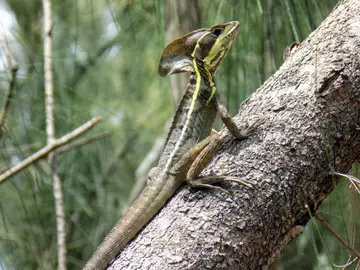
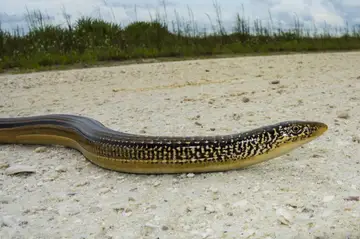
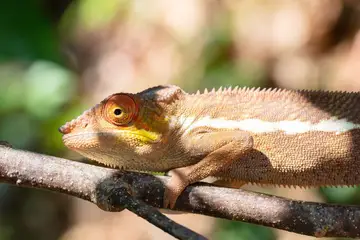
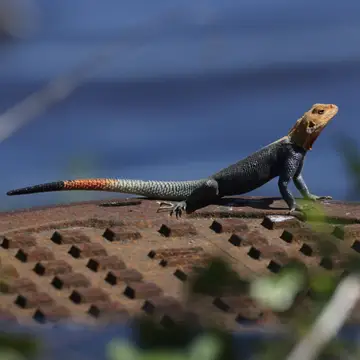
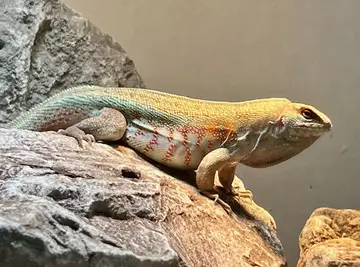
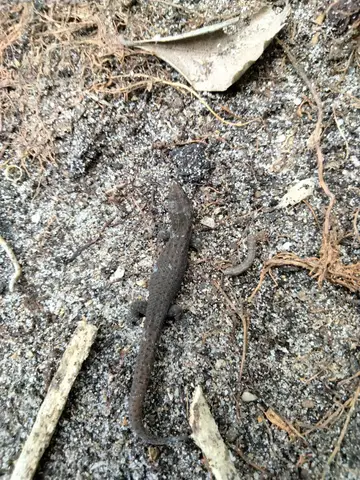
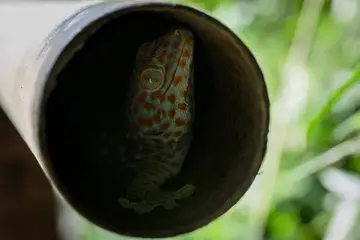
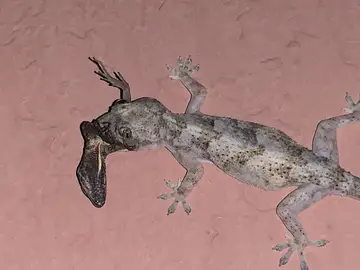
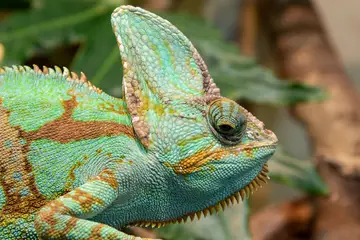
No official source we use states whether this animal is venomous. That does not mean it is harmless: do not handle it.
Size
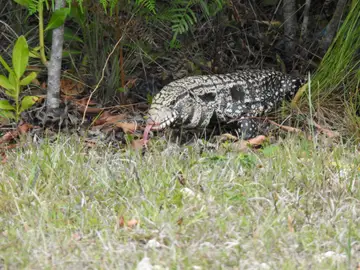
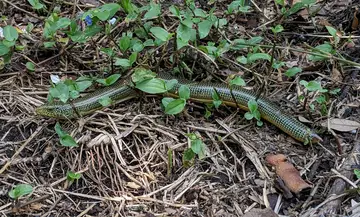
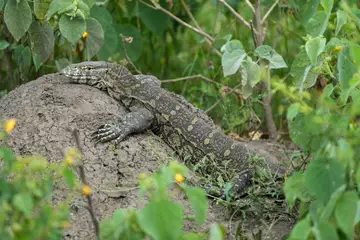
FWC: can reach nearly 5 feet. UF/IFAS: 4 to 5 feet and as much as 10 pounds. Georgia DNR: up to 4 feet, with adults documented in the wild in Georgia averaging slightly less than 2 feet.
How to recognize it
Head and neck much thicker than a Nile monitor's; fleshy, forked red tongue
Rarely climbs more than a few feet off the ground; a strong swimmer
Conservation
Regulated Species (restrictions on collection or possession)
No official source we use states whether this animal is venomous. That does not mean it is harmless: do not handle it.
Size
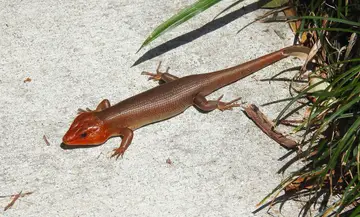
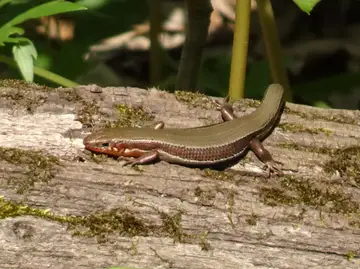
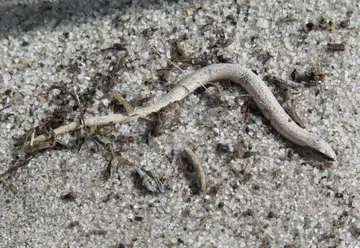
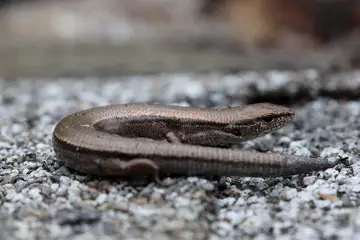
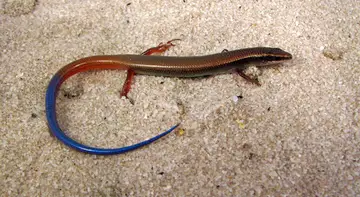
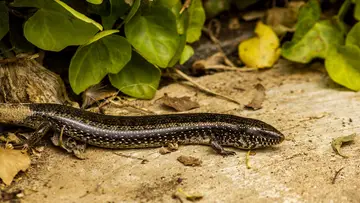
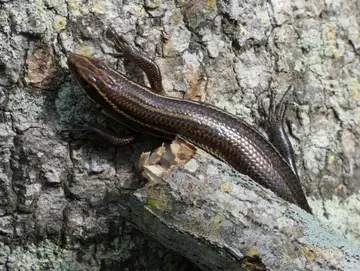
About 6.5 to 12.75 inches in total length. Oklahoma gives about 12 inches for large adults and SREL up to 13 inches. Males are larger than females.
How to recognize it
Large, wide head; breeding males have swollen orange-red jowls.
Smooth, glass-like scales, short legs and a stocky body.
Upper-lip scales separate it from five-lined skinks: Maryland, Tennessee and North Carolina count five labial scales between the nostril and the eye rather than four. Oklahoma and Missouri count differently, around 8 or 9 in the full lip row.
No official source we use states whether this animal is venomous. That does not mean it is harmless: do not handle it.
Size
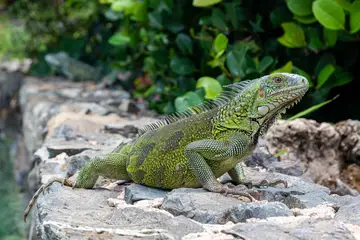
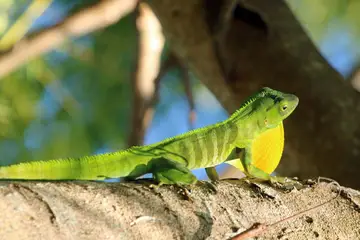
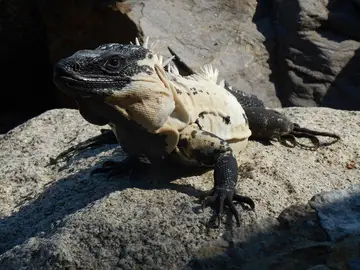
Males over 5 feet (FWC) to over 6 feet (UF/IFAS) including the tail, up to 17 lb; females about 5 feet, usually under 7 lb. Tail up to three quarters of total length. Hatchlings about 7 inches excluding the tail.
How to recognize it
Row of spike-like scales on neck, back and part of the tail (always present in adults, whatever their colour)
Dewlap (throat flap) and a large round scale at the rear of the jaw
Long tail, short legs, long toes and sharp claws
Conservation
Regulated Species (restrictions on collection or possession)
No official source we use states whether this animal is venomous. That does not mean it is harmless: do not handle it.
Size
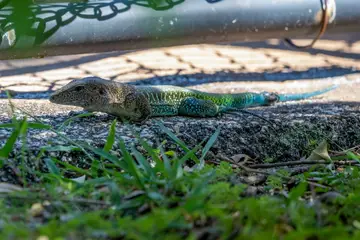
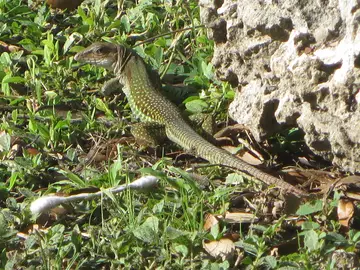
Florida FWC: a typical adult averages 5 feet and close to 15 pounds; can reach about 6.5 feet and 17.8 pounds. USGS gives higher maximums: total length may exceed 7.5 feet and weight over 22 pounds.
How to recognize it
Lightly banded, rudder-shaped tail, usually 1.5 times the body length
Blue tongue
Large strong claws, a neck longer than the narrow-snouted head, and a side-flattened tail
Conservation
Regulated Species (restrictions on collection or possession)
Photo: Everglades NPS from Homestead, Florida, United States · Public domain · Wikimedia Commons
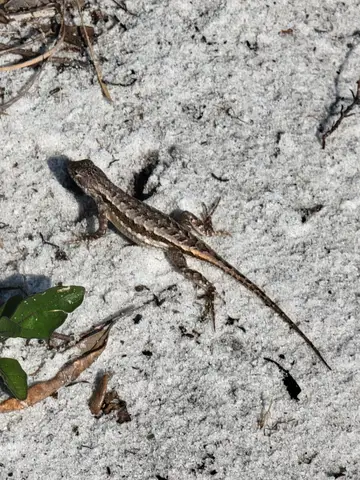
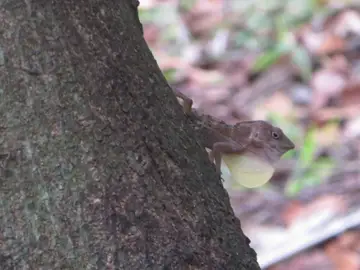
Brown anole Not stated
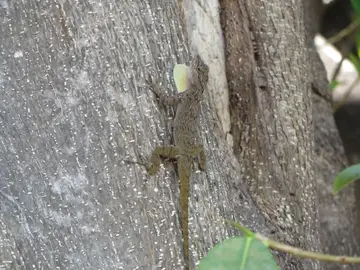
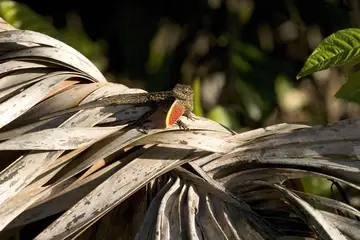
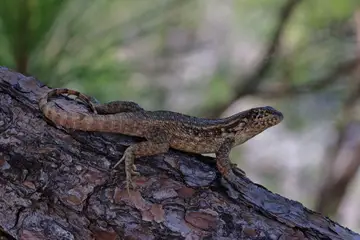
Brown anoles are brown to grayish, usually with whitish or yellowish patterns on the back. Males have an orange or red throat fan with a white edge. The green anole is green or lightly patterned brown and has a pinkish throat fan. The brown anole also has a shorter snout and is more often on the ground or in low plants.
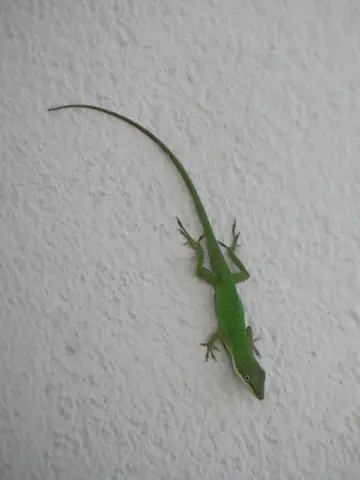
Brown anole or Green anole?
Photo: Everglades NPS from Homestead, Florida, United States · Public domain · Wikimedia Commons
The native green anole is green or lightly patterned brown, has a pinkish throat fan and a longer snout, and is generally arboreal (lives in trees), while brown anoles are usually on the ground or in low vegetation. The brown anole is brown to gray with back markings, and males have an orange or red throat fan with a white edge.
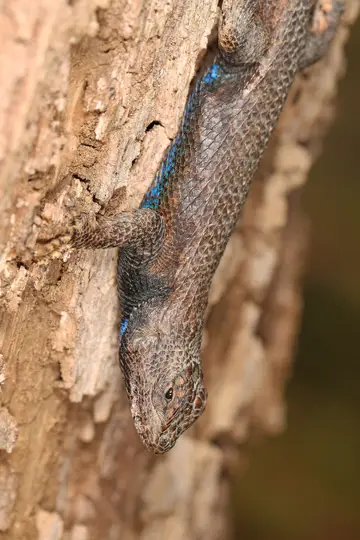
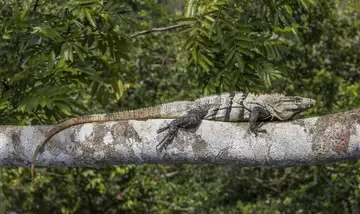
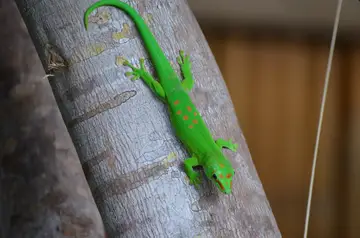
Rings of sharp, pointed scales on the tail (green iguanas have relatively smooth tails); shorter back spines; no enlarged round scale at the rear of the jaw; adults usually brown or gray with dark bands.
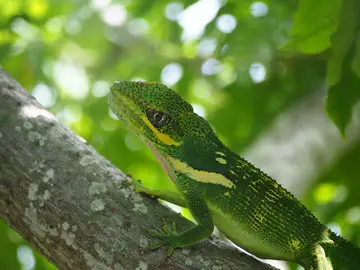
Can be confused with a hatchling green iguana; knight anoles have yellow or white stripes under the eyes and on the shoulders, a more arrow-shaped head and no round scale at the rear of the jaw.
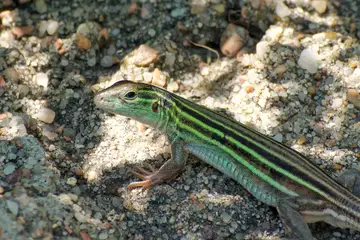
NCWRC: broadhead skinks reach a much larger size. ODWC: juveniles can be told apart by counting the upper lip scales (five-lined: seven, with two post-labials; broad-headed: nine, with no post-labials).
Photos show typical adults; individuals vary. Never get close to compare.
When lizards are active in Florida
Records of lizards in Florida peak in February to June and December. They show when people record lizards, not how many there are (about month bars).
JanFebMarAprMayJunJulAugSepOctNovDec
18,036 records of lizards in Florida by month (GBIF, CC0 and CC BY records).
How to report
Report nonnative animals to the FWC Invasive Species Hotline 888-Ive-Got1 (888-483-4681); FWC asks the public to call the Hotline for high-priority species: all nonnative snakes, monitor lizards and tegus. Other nonnative species can be reported via the IveGot1 app or IveGot1.org. Alligator or crocodile concerns: 866-FWC-GATOR (866-392-4286). FWC
Report Nonnative Species. Florida Fish and Wildlife Conservation Commission (FWC). archived copy, captured October 25, 2026; checked November 3, 2026.Archived copy. Quoted passages (1)
“You can call the FWC’s Invasive Species Hotline at 888-Ive-Got1 (483-4681) to report nonnative animals. We ask the public to call the Hotline to report high priority species, which include all nonnative snakes, monitor lizards, and tegus.”