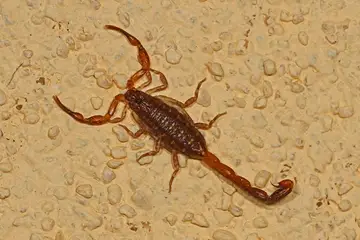
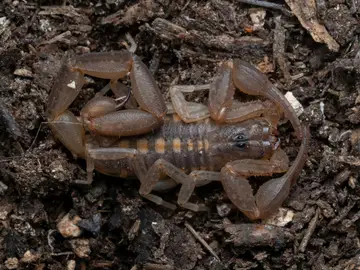
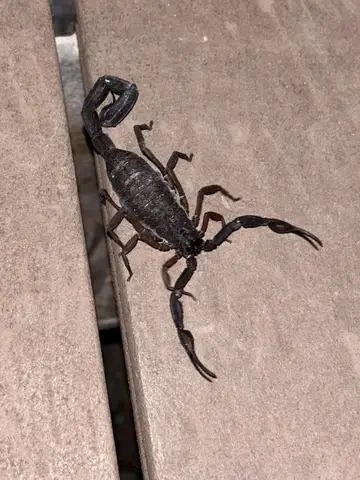
UF/IFAS Extension Sarasota County: While they may not be a common sighting, Florida is home to a handful of species.
This page lists 3 scorpions.
3 are venomous by official accounts.
Not every species: no complete official list of Florida scorpions exists, so this page covers the ones state and Extension sources name. How lists are built.
Which scorpions can hurt you
Official sources single out these scorpions in Florida, in their own words:
Scorpions (all Florida species)
Venomous sting. “Scorpion venom is a neurotoxin, but the dose injected usually is insufficient to prove fatal to an adult human. None of the several species of scorpions that occur in Florida is capable of inflicting a lethal sting.” UF/IFAS Extension
All 3 scorpions
Venomous species first, then A to Z. Do not handle them.
Venom: “Scorpion venom is a neurotoxin, but the dose injected usually is insufficient to prove fatal to an adult human. None of the several species of scorpions that occur in Florida is capable of inflicting a lethal sting.” (UF/IFAS Extension)
Venom: “Scorpion venom is a neurotoxin, but the dose injected usually is insufficient to prove fatal to an adult human. None of the several species of scorpions that occur in Florida is capable of inflicting a lethal sting.” (UF/IFAS Extension)
Venom: “Scorpion venom is a neurotoxin, but the dose injected usually is insufficient to prove fatal to an adult human. None of the several species of scorpions that occur in Florida is capable of inflicting a lethal sting.” (UF/IFAS Extension)
When scorpions are active in Florida
Records of scorpions in Florida peak in January, March to May and August. They show when people record scorpions, not how many there are (about month bars).
JanFebMarAprMayJunJulAugSepOctNovDec
141 records of scorpions in Florida by month (GBIF, CC0 and CC BY records).
Call 911 or Poison Help at 1-800-222-1222 right away. Poison Help connects you to your local poison center, any time of day.
How to report
Report nonnative animals to the FWC Invasive Species Hotline 888-Ive-Got1 (888-483-4681); FWC asks the public to call the Hotline for high-priority species: all nonnative snakes, monitor lizards and tegus. Other nonnative species can be reported via the IveGot1 app or IveGot1.org. Alligator or crocodile concerns: 866-FWC-GATOR (866-392-4286). FWC
“Scorpion venom is a neurotoxin, but the dose injected usually is insufficient to prove fatal to an adult human. None of the several species of scorpions that occur in Florida is capable of inflicting a lethal sting.”
“Scorpions are most active at night.”
Report Nonnative Species. Florida Fish and Wildlife Conservation Commission (FWC). archived copy, captured October 25, 2026; checked November 3, 2026.Archived copy. Quoted passages (1)
“You can call the FWC’s Invasive Species Hotline at 888-Ive-Got1 (483-4681) to report nonnative animals. We ask the public to call the Hotline to report high priority species, which include all nonnative snakes, monitor lizards, and tegus.”