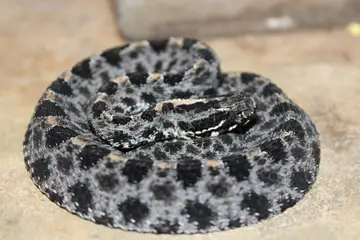
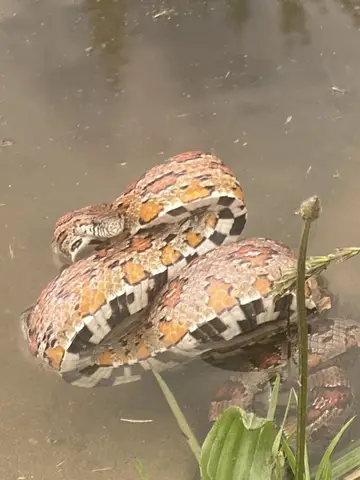
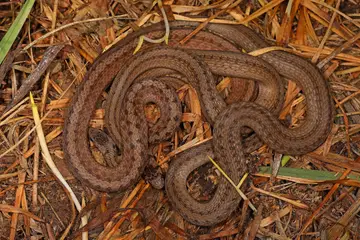
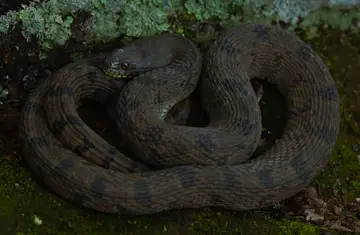
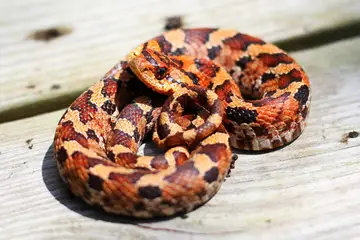
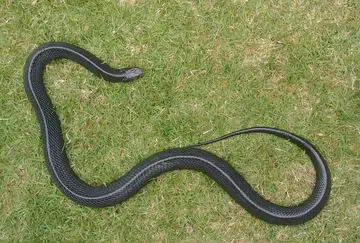
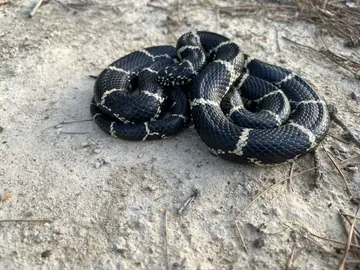
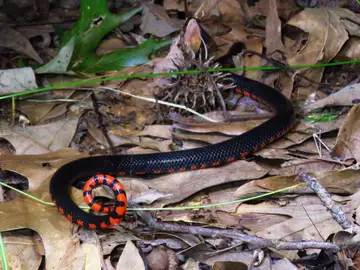
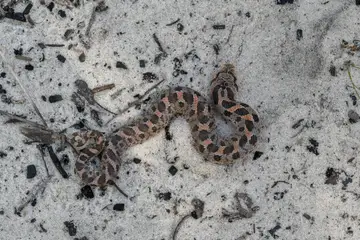
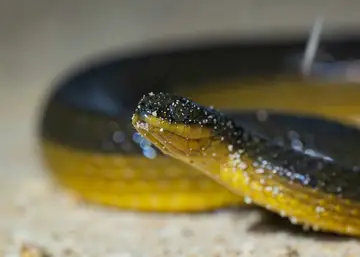
FWC: Only six of Florida's 44 snake species are venomous: the eastern coral snake, the southern copperhead, the cottonmouth, the eastern diamondback rattlesnake, the timber rattlesnake, and the dusky pygmy rattlesnake.
This page lists 55 snakes: 53 from FWC's Checklist of Florida's Amphibians and Reptiles, Suborder Serpentes and 2 named in other official sources.
6 are venomous by official accounts: Eastern or Harlequin Coralsnake, Florida Cottonmouth, Eastern Copperhead, Eastern Diamond-backed Rattlesnake, Timber Rattlesnake or Canebrake Rattlesnake and Pygmy Rattlesnake. 5 are nonnative. FWC gives a total of 44; the 55 here are the snakes official sources name one by one.
Venomous snakes in Florida
Official sources label these snakes venomous in Florida. Venomous snakes in Florida has more on each one.
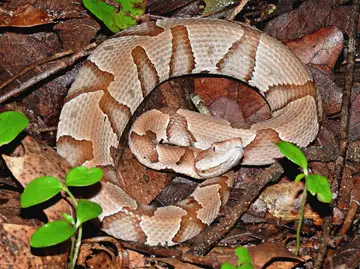
“Copperhead bites are extremely painful but rarely life-threatening for healthy adults and for most large or medium-sized pets.” Florida Museum of Natural History
Size
Adults usually about 2 to 3 feet (24-36 in); record about 53 inches.
How to recognize it
Vertical (cat-like) pupils and a heat-sensing pit between eye and nostril
Heavy-bodied; keeled scales
Head shape alone is not a reliable way to identify copperheads
Where in Florida
In Florida, copperheads occur only in the Panhandle, primarily in the western tip and along the Apalachicola River and its tributaries … Florida Museum of Natural History
What the sources say
Venom: “Only six of Florida's 44 snake species are venomous: the eastern coral snake, the southern copperhead, the cottonmouth, the eastern diamondback rattlesnake, the timber rattlesnake, and the dusky pygmy rattlesnake.” (FWC)
Range: In Florida, copperheads occur only in the Panhandle, primarily in the western tip and along the Apalachicola River and its tributaries. The herpetology collection at the Florida Museum contains verified records from Calhoun, Escambia, Gadsden, Jackson, Liberty, Okaloosa, and Santa Rosa counties. The range may extend to other nearby areas, but there are no confirmed records from other Florida counties.
Habitat: The Eastern Copperhead's preferred habitats in Florida are upland pine and hardwood forests with abundant leaf litter and in forests adjacent to low, wet areas boarding swamps, stream beds, river bottoms, and damp ravines. Large logs and piles of debris and rocks are often used as shelters. This species is occasionally found in suburban neighborhoods where development encroaches into favorable habitats. (Florida Museum of Natural History)
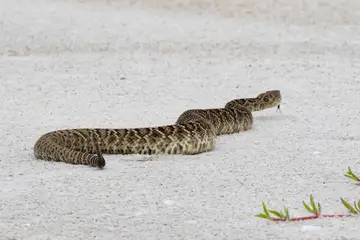
“The Eastern Diamond-backed Rattlesnake is a large and impressive snake, and bites can be very dangerous to people and pets.” Florida Museum of Natural History
Size
Most adults 33 to 72 inches (about 3 to 6 feet); record 99 inches.
How to recognize it
Light-bordered dark stripe running diagonally through each eye
Tail ends in a rattle, often held above the ground
Cat-like vertical pupil and a deep heat-sensing pit between nostril and eye
Venom: “Only six of Florida's 44 snake species are venomous: the eastern coral snake, the southern copperhead, the cottonmouth, the eastern diamondback rattlesnake, the timber rattlesnake, and the dusky pygmy rattlesnake.” (FWC)
Range: Eastern Diamond-backed Rattlesnakes are found throughout Florida and in every county. They also occur on many nearshore islands including many of the Florida Keys and several islands in the Gulf of Mexico in Levy (e.g., Cedar Keys) and Franklin (e.g., Dog, St. George, and St. Vincent islands) counties.
Habitat: Eastern Diamond-backed Rattlesnakes are often found in pine flatwoods, longleaf pine and turkey oak hammocks, sand pine scrub areas, and coastal barrier islands. These habitats contain palmetto thickets and gopher tortoise burrows in which these rattlesnakes may seek refuge. This species is occasionally found in suburban neighborhoods where development encroaches into favorable habitats. (Florida Museum of Natural History)
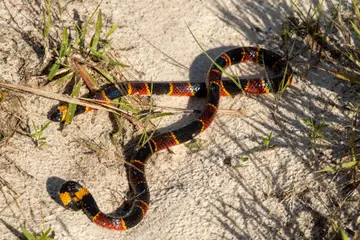
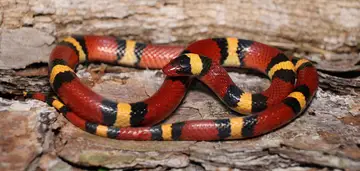
“Bites from Harlequin Coralsnakes can be very dangerous to people and pets, but bites from this species are extremely rare.” Florida Museum of Natural History
Where in Florida
Harlequin Coralsnakes are found throughout Florida and in every county. They also occur on Key Largo in the Northern Florida Keys. Florida Museum of Natural History
JFMAMJJASOND
70 records by month.What the sources say
Venom: “Only six of Florida's 44 snake species are venomous: the eastern coral snake, the southern copperhead, the cottonmouth, the eastern diamondback rattlesnake, the timber rattlesnake, and the dusky pygmy rattlesnake.” (FWC)
Habitat: Harlequin Coralsnakes occupy a variety of habitats, from dry, well–drained flatwoods and scrub areas to low, wet hammocks and the borders of swamps. They are secretive and are usually found under debris and in the ground. Occasionally they are found in the open, and they have even been seen climbing the trunks of live oaks. This species is occasionally found in suburban neighborhoods where development encroaches into favorable habitats. (Florida Museum of Natural History)
Venom: “Only six of Florida's 44 snake species are venomous: the eastern coral snake, the southern copperhead, the cottonmouth, the eastern diamondback rattlesnake, the timber rattlesnake, and the dusky pygmy rattlesnake.” (FWC)
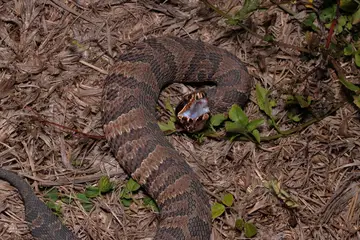
Range: Cottonmouths are found throughout Florida and in every county. They also occur on many nearshore islands including the Upper Florida Keys and several islands in the Gulf of Mexico in Levy (e.g., Cedar Keys) and Franklin (e.g., Dog, St. George, and St. Vincent islands) counties.
Habitat: Florida Cottonmouths can potentially be found in or near any wetlands or waterway in the state, including springs, rivers, lakes, ponds, saltmarshes, swamps, sloughs, reservoirs, retention pools, canals, and roadside ditches. These snakes often wander far from water and have occasionally been found in bushes and trees. Several of the islands they inhabit contain hydric hammock and lack permanent sources of freshwater. (Florida Museum of Natural History)
Venom: “Only six of Florida's 44 snake species are venomous: the eastern coral snake, the southern copperhead, the cottonmouth, the eastern diamondback rattlesnake, the timber rattlesnake, and the dusky pygmy rattlesnake.” (FWC)
Range: Dusky Pygmy Rattlesnakes are found throughout Florida and in every county. They are not known to occur in the Florida Keys, but they have been found on some barrier islands (e.g., St. Vincent in Franklin county).
Habitat: Pygmy Rattlesnakes are commonly found in habitats including lowland pine flatwoods, hydric hammocks, prairies, around lakes and ponds, and along the borders of many freshwater marshes and cypress swamps. Possibly the habitat in which Dusky Pygmy Rattlesnakes are most frequently encountered, at least in southern Florida, is along the banks of canals running through marshes and prairies. This species can be locally very abundant, and it is often found in suburban neighborhoods where development encroaches into favorable habitats. (Florida Museum of Natural History)
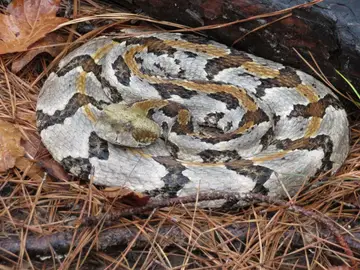
“The Timber Rattlesnake is a large and impressive snake, and bites can be very dangerous to people and pets.” Florida Museum of Natural History
Size
Most adults 36 to 60 inches (3 to 5 feet); record 74.5 inches.
How to recognize it
Black tail ending in a rattle
Heat-sensing pit between nostril and eye
Large, thick head distinct from the neck; cat-like vertical pupil
Where in Florida
Timber Rattlesnakes have a limited range in Florida and are found in only 12 counties in northern Florida … Florida Museum of Natural History
What the sources say
Venom: “Only six of Florida's 44 snake species are venomous: the eastern coral snake, the southern copperhead, the cottonmouth, the eastern diamondback rattlesnake, the timber rattlesnake, and the dusky pygmy rattlesnake.” (FWC)
Range: Timber Rattlesnakes have a limited range in Florida and are found in only 12 counties in northern Florida. The range may extend to other nearby areas, but there are no confirmed records from other Florida counties.
Habitat: Timber Rattlesnakes in Florida prefer damp bottomlands, river beds, hardwood hammocks, pine flatwoods, swamps, fields, and cane thickets. This species is occasionally found in suburban neighborhoods where development encroaches into favorable habitats (Florida Museum of Natural History)
Most adults are about 36-48 inches. Maryland gives a record of 82 inches; Alabama gives up to 6.9 feet.
How to recognize it
Smooth, shiny scales and an indistinct neck.
Round pupil.
Florida Museum counts 19-32 crossbands in Florida; Alabama counts 23 to 52.
Where in Florida
Apalachicola Kingsnakes occur in the eastern and central Florida Panhandle, primarily in the eastern Apalachicola lowlands south of Telogia Creek … Florida Museum of Natural History
What the sources say
Venom: “Non-venomous Apalachicola Kingsnakes are not dangerous to people or pets, but they occasionally bite to defend themselves.” (Florida Museum of Natural History)
Range: Apalachicola Kingsnakes occur in the eastern and central Florida Panhandle, primarily in the eastern Apalachicola lowlands south of Telogia Creek. However, Apalachicola Kingsnakes are known to interbreed with Eastern Kingsnakes (Lampropeltis getula) throughout areas surrounding this range
Habitat: Apalachicola Kingsnakes are found in scrub, pinelands, hardwood hammocks, cypress strands, prairies, marshes, estuaries, and along the edges of streams and canals. These snakes remain uncommon throughout their range, but they are occasionally found in suburban neighborhoods where development encroaches into favorable habitats. (Florida Museum of Natural History)
Most adults about 3 to 5 ft. Sources range from 20 to 56 inches (Florida Museum) to 34 to 77 inches (New Jersey); Alabama says some exceed 6 ft.
How to recognize it
Smooth scales
Long and slender with large eyes
White chin
Where in Florida
North American racers are found throughout mainland Florida in every county. They also occur on the Florida Keys. Florida Museum of Natural History
JFMAMJJASOND
1,167 records by month.What the sources say
Venom: “Non-Venomous. North American racers are not dangerous to people or pets, but they will readily bite to defend themselves.” (Florida Museum of Natural History)
Habitat: North American Racers occupy a wide variety of habitats, such as pine flatwoods, hardwood hammocks, prairies, sandhills, scrub, cypress strands, melaleuca forests, and limestone outcroppings. Adults and juveniles of this species are often found in suburban neighborhoods where development encroaches into favorable habitats. (Florida Museum of Natural History)
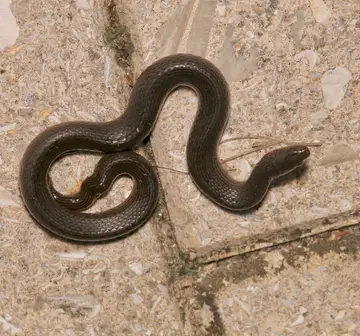
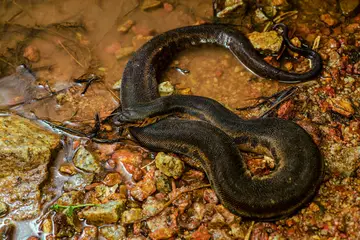
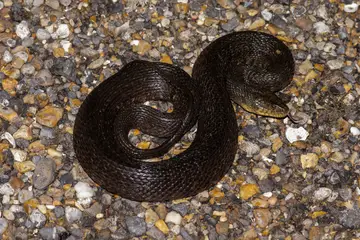
Black Swampsnakes are found throughout the Florida peninsula and Panhandle west to Blackwater River State Forest in Santa Rosa County … Florida Museum of Natural History
What the sources say
Venom: “Non-venomous. Black Swampsnakes are not dangerous to people or pets.” (Florida Museum of Natural History)
Range: Black Swampsnakes are found throughout the Florida peninsula and Panhandle west to Blackwater River State Forest in Santa Rosa County. They are not known from the Florida Keys.
Habitat: Black Swampsnakes are primarily aquatic and inhabit a variety of aquatic environments such as cypress swamps, marshes, prairies, lakes, ponds, slow moving streams and rivers, willow heads, hyacinth-choked canals, and estuaries. They are particularly fond of waters with dense aquatic vegetation. These secretive snakes are rarely encountered away from water, but they can sometimes be found under logs or debris near water, in crayfish burrows, or crossing roads during or after heavy rains. (Florida Museum of Natural History)
“However, larger boa constrictors have large, sharp teeth, and their bites can cause severe lacerations.” Florida Museum of Natural History
Where in Florida
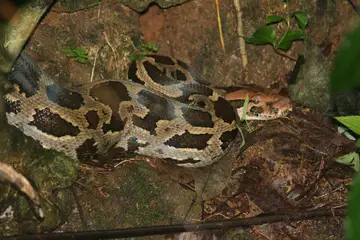
Boa Constrictors are a non-native species from Latin America that have been established in Florida since perhaps the 1970s … Florida Museum of Natural History
What the sources say
Venom: “Non-venomous. Boa Constrictors may bite to defend themselves. Small individuals are not generally dangerous to people or pets.” (Florida Museum of Natural History)
Range: Boa Constrictors are a non-native species from Latin America that have been established in Florida since perhaps the 1970s. Although they have been introduced to numerous areas in Florida, they are currently known to be established and breeding only in and around the Charles Deering Estate in Miami, Miami-Dade County.
Habitat: In Florida, Boa Constrictors have been found in diverse habitats including tropical hardwood hammocks, pine rocklands, mangrove swamps, landscaped areas, along canals and oolitic limestone walls, and occasionally in neighborhoods. The snakes may be found on the ground or in trees depending on the type of habitat and size of the snake (larger snakes are more often found on the ground). (Florida Museum of Natural History)
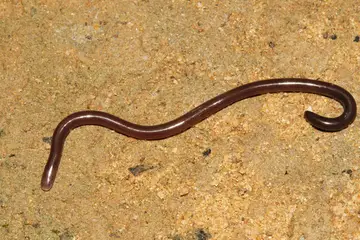
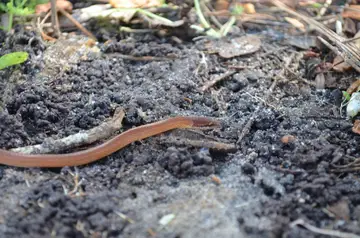
Brahminy Blindsnakes are a non-native species from southern Asia that was first reported in Miami, Florida in the 1970s … Florida Museum of Natural History
JFMAMJJASOND
138 records by month.What the sources say
Venom: “Non-venomous. Brahminy Blindsnakes are not dangerous to people or pets.” (Florida Museum of Natural History)
Range: Brahminy Blindsnakes are a non-native species from southern Asia that was first reported in Miami, Florida in the 1970s. They have now been found from Key West north throughout much of the peninsula, and there are isolated records from the Panhandle.
Habitat: Brahminy blindsnakes are excellent burrowers and can be found in loose soil and leaf litter, sawdust piles, rotting logs, and beneath rocks and other surface debris. However, these snakes are occasionally found in trees. Adults and juveniles are often found in urban and agricultural areas, where they can be locally abundant. (Florida Museum of Natural History)
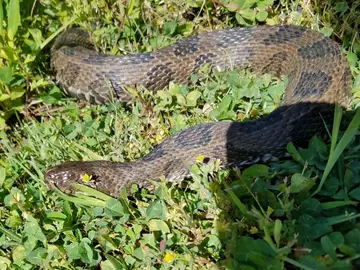
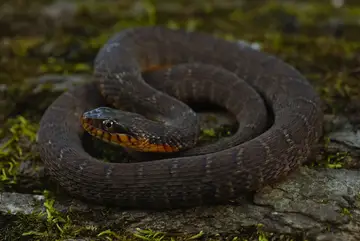
Brown Watersnakes are found throughout mainland Florida in every county. However, they are absent from the Florida Keys. Florida Museum of Natural History
What the sources say
Venom: “Non-venomous. Brown Watersnakes are not dangerous to people or pets, but they will readily bite to defend themselves.” (Florida Museum of Natural History)
Habitat: In Florida, Brown Watersnakes are commonly found in rivers, cypress strands, sawgrass prairies, swamps, lakes, ponds, canals, and flooded stands of melaleuca. Adults and juveniles of this species are occasionally found in suburban neighborhoods where development encroaches into favorable habitats. (Florida Museum of Natural History)
“However, larger Burmese Pythons have large, sharp teeth, and their bites can cause severe lacerations.” Florida Museum of Natural History
Where in Florida
Burmese Pythons are a non-native species from southern and southeastern Asia that have been established in Florida since the 1980s … Florida Museum of Natural History
Conservation
Regulated Species (restrictions on collection or possession)
What the sources say
Venom: “Non-venomous. Burmese Pythons may bite to defend themselves. Small individuals are not generally dangerous to people or pets.” (Florida Museum of Natural History)
Range: Burmese Pythons are a non-native species from southern and southeastern Asia that have been established in Florida since the 1980s. They have been introduced in numerous areas in Florida. However, they are currently known to be established only in the southern Florida peninsula from Lake Okeechobee south to Key Largo and Florida Bay. The Everglades National Park remains a stronghold for this species.
Habitat: In Florida, Burmese Pythons have been found in and around undeveloped seasonally flooded wetlands (e.g., the Florida Everglades), tree islands, hardwood hammocks, prairies, mangrove salt marshes, melaleuca and Brazilian pepper stands, agricultural areas, man-made canals and lakes, and housing developments. (Florida Museum of Natural History)
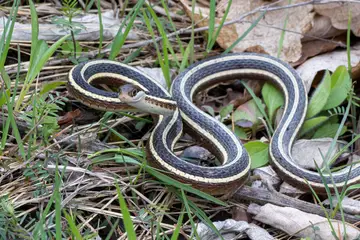
Common Gartersnakes are found throughout mainland Florida in every county, and there is one record from the Florida Keys. Florida Museum of Natural History
JFMAMJJASOND
171 records by month.What the sources say
Venom: “Non-venomous. Common Gartersnakes are not dangerous to people or pets, but they will readily bite to defend themselves.” (Florida Museum of Natural History)
Habitat: Common Gartersnakes can be found in pinelands, hardwood hammocks, cypress strands, prairies, marshes, melaleuca stands, and any wet grassy habitats, especially along the edges of any standing or flowing bodies of water. Adults and juveniles of this species are often found in suburban neighborhoods where development encroaches into favorable habitats. (Florida Museum of Natural History)
Photo: U.S. Fish and Wildlife Service - Midwest Region · Public domain · Wikimedia Commons
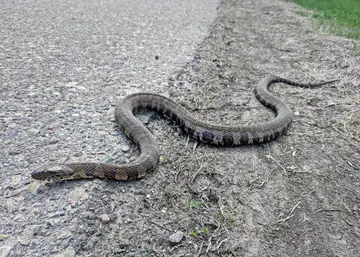
Adults 22 to 42 inches long, occasionally to 59 inches (Missouri). Pennsylvania gives 24 to over 50 inches; females are usually bigger than males.
How to recognize it
Dark crossbands on the front part of the body break up into rows of blotches from the middle of the body to the tail.
Belly white, yellow or orange, usually with dark half-moon-shaped spots.
Keeled (ridged) scales, so it feels rough; round pupils like other nonvenomous snakes in Missouri.
Where in Florida
In Florida, Midland Watersnakes are only found in the western Panhandle, within the Choctawhatchee, Escambia, and Yellow River basins … Florida Museum of Natural History
What the sources say
Venom: “Non-venomous. Midland Watersnakes are not dangerous to people or pets, but they will readily bite to defend themselves.” (Florida Museum of Natural History)
Range: In Florida, Midland Watersnakes are only found in the western Panhandle, within the Choctawhatchee, Escambia, and Yellow River basins. Verified records exist only from Escambia, Holmes, Okaloosa, Santa Rosa, and Walton counties. The range may extend to other nearby areas, but there are no confirmed records from other Florida counties. If you have a new or interesting observation for this species, please email the herpetology staff at the Florida Museum.
Habitat: In Florida, Midland Watersnakes mainly inhabit shallow streams with sandy bottoms. (Florida Museum of Natural History)
Venom: “Non-venomous. Cornsnakes are not dangerous to people or pets, but they will readily bite to defend themselves.” (Florida Museum of Natural History)
Habitat: Cornsnakes are commonly found in pinelands, hardwood hammocks, swamps, and agricultural fields. Adults and juveniles of this species are often found in suburban neighborhoods where development encroaches into favorable habitats. (Florida Museum of Natural History)
Venom: “Non-venomous. Dekay's Brownsnakes are not dangerous to people or pets.” (Florida Museum of Natural History)
Habitat: Dekay's Brownsnakes are commonly found in most terrestrial and wetland habitats throughout their range. However, these secretive snakes often remain hidden beneath leaflitter, logs, rocks, or other surface cover. Adults and juveniles of this species are often found in suburban neighborhoods where development encroaches into favorable habitats. (Florida Museum of Natural History)
The presence of Diamond-backed Watersnakes in Florida is based solely on a single specimen collected in Santa Rosa County in the 1950s … Florida Museum of Natural History
What the sources say
Venom: “Non-venomous Diamond-backed Watersnakes are not dangerous to people or pets, but they will readily bite to defend themselves.” (Florida Museum of Natural History)
Range: The presence of Diamond-backed Watersnakes in Florida is based solely on a single specimen collected in Santa Rosa County in the 1950s. Therefore, it is not known whether an established population exists in Florida.
Habitat: In other parts of their range, Diamond-backed Watersnakes can be found in a wide variety of freshwater habitats. However, they prefer bodies of water with overhanging vegetation. (Florida Museum of Natural History)
Most adults about 42 to 60 inches (3.5 to 5 ft); record 102 inches (8.5 ft). Ranges given by agencies: 41 to 84 in (Louisiana), 36 to 82 in (Oklahoma), adults average 50 to 72 in (Alabama), up to 94 in (NC State Extension), up to 80 in in Colorado and up to 68 in in Arizona.
How to recognize it
Long, slowly tapering tail whose scales look like a braided whip
Venom: “Non-Venomous. Coachwhips are not dangerous to people or pets, but they will readily bite to defend themselves.” (Florida Museum of Natural History)
Range: Coachwhips are found throughout mainland Florida in every county. However, they are not known to occur on the Florida Keys, and they appear absent from much of the wetlands south of Lake Okeechobee.
Habitat: Coachwhips generally prefer hot and dry habitats with open canopies. These snakes are often locally abundant and occur primarily in pine and palmetto flatwoods, longleaf pine-turkey oak sandhills, scrub, and along beaches interspersed with sand dunes, sea oats, and grape vines. Adults and juveniles of this species can be found in suburban neighborhoods where development encroaches into favorable habitats. (Florida Museum of Natural History)
“They do, however, produce a mild venom that is used for subduing prey.”
Where in Florida
Eastern Hog-nosed Snakes are found throughout mainland Florida in every county. Aside from two isolated records from the 1930s, they are absent from the Florida Keys. Florida Museum of Natural History
What the sources say
Venom: “Non-venomous. Eastern Hog-nosed Snakes are not dangerous to people or pets.” (Florida Museum of Natural History)
Habitat: Eastern Hog-nosed Snakes can be locally abundant in certain habitats including sandhills, scrub, high pine and turkey oak woodlands, hardwood hammocks, meadows, and cultivated fields. Adults and juveniles of this species can be found in suburban neighborhoods where development encroaches into favorable habitats. (Florida Museum of Natural History)
Most adults about 60 to 82 inches (5 to 7 feet) long; record 8.6 feet. The longest native snake in the US.
How to recognize it
Large, thick-bodied, glossy black snake with smooth scales and round pupils
Anal plate single (entire), unlike the black racer whose anal plate is divided
Where in Florida
Eastern Indigo Snakes are found throughout Florida. They appear to still occur in the Florida Keys, though sightings there are extremely rare. Florida Museum of Natural History
Conservation
Federally Threatened
What the sources say
Venom: “Non-venomous. Eastern Indigo Snakes are not dangerous to people or pets.” (Florida Museum of Natural History)
Habitat: Eastern Indigo Snakes occupy a wide range of habitats including scrub, tropical hardwood hammocks, pine flatwoods, prairies, coastal dunes, and the edges of freshwater marshes and cypress ponds. They also occupy various types of agricultural lands. They are commonly associated with Gopher Tortoise (Gopherus polyphemus) burrows, which they often use as refuges. (Florida Museum of Natural History)
Most adults are about 36-48 inches. Maryland gives a record of 82 inches; Alabama gives up to 6.9 feet.
How to recognize it
Smooth, shiny scales and an indistinct neck.
Round pupil.
Florida Museum counts 19-32 crossbands in Florida; Alabama counts 23 to 52.
Where in Florida
Eastern Kingsnakes are found north of a line from Pinellas County to Flagler County and west into the Panhandle, excluding the eastern Apalachicola lowlands south of … Florida Museum of Natural History
What the sources say
Venom: “Non-venomous. Eastern Kingsnakes are not dangerous to people or pets, but they occasionally bite to defend themselves.” (Florida Museum of Natural History)
Range: Eastern Kingsnakes are found north of a line from Pinellas County to Flagler County and west into the Panhandle, excluding the eastern Apalachicola lowlands south of Telogia Creek. They are occasionally found on barrier islands in the Gulf of Mexico (e.g., the Cedar Keys). Eastern Kingsnakes are also known to interbreed with other kingsnake species throughout large portions of their range.
Habitat: Eastern Kingsnakes are found in pinelands, hardwood hammocks, cypress strands, prairies, marshes, estuaries, and along the edges of streams and lakes. These snakes remain uncommon throughout their range, but they are occasionally found in suburban neighborhoods where development encroaches into favorable habitats. (Florida Museum of Natural History)
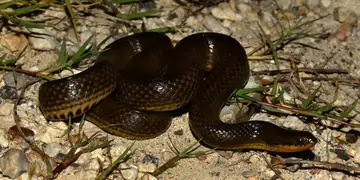
Venom: “Non-venomous. Red-bellied Mudsnakes are not dangerous to people or pets.” (Florida Museum of Natural History)
Habitat: Red-bellied Mudsnakes prefer habitats with still or slow-moving freshwater such as cypress swamps, drainage ditches, canals, marshes, rivers, and lakes. These primarily aquatic snakes are especially fond of waters with dense aquatic vegetation and with muddy bottoms and banks, but they will also enter tidal creeks and other areas with brackish water. Adults and juveniles of this species are occasionally found in suburban neighborhoods where development encroaches into favorable habitats. (Florida Museum of Natural History)
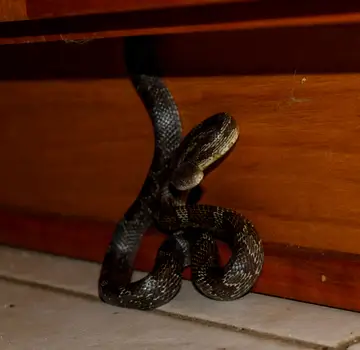
In Florida, Eastern Ratsnakes occur in the Panhandle east of the Apalachicola River and throughout the peninsula south to Key Largo … Florida Museum of Natural History
What the sources say
Venom: “Non-venomous. Eastern Ratsnakes are not dangerous to people or pets, but they will readily bite to defend themselves.” (Florida Museum of Natural History)
Range: In Florida, Eastern Ratsnakes occur in the Panhandle east of the Apalachicola River and throughout the peninsula south to Key Largo. However, they do readily interbreed with Gray Ratsnakes (Pantherophis spiloides) in the Panhandle.
Habitat: Eastern Ratsnakes are commonly found in pinelands, hardwood hammocks, cypress strands, swamps, marshes, prairies, and agricultural fields. Adults and juveniles of this species are often found in suburban neighborhoods where development encroaches into favorable habitats. (Florida Museum of Natural History)
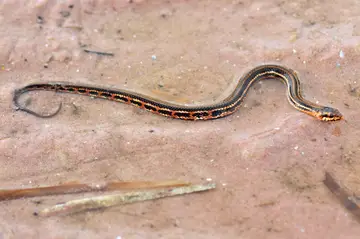
Eastern: most adults 18 to 26 inches (record 41 inches). Western: 16 to 42 inches in Louisiana; Oklahoma's orange-striped ribbonsnakes average 20 to 30 inches and can reach nearly 40.
How to recognize it
Very slender body; long tail, about one-third of total length.
Side stripes sit on the 3rd and 4th scale rows above the belly.
Upper lip scales white and unmarked; a distinct white spot in front of each eye; keeled (ridged) scales.
Where in Florida
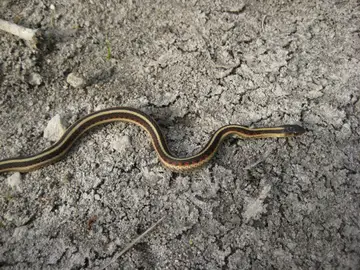
Eastern Ribbonsnakes are found throughout mainland Florida in every county. Although they are found in the Florida Keys, they appear to be absent in the Middle Keys. Florida Museum of Natural History
Venom: “Non-venomous. Eastern Ribbonsnakes are not dangerous to people or pets, and they rarely bite to defend themselves.” (Florida Museum of Natural History)
Habitat: Eastern Ribbonsnakes can be found in pinelands, hardwood hammocks, cypress strands, prairies, marshes, bogs, and any wet grassy habitats, especially along the edges of any standing or flowing bodies of water. Adults and juveniles of this species are often found in suburban neighborhoods where development encroaches into favorable habitats. (Florida Museum of Natural History)
Florida Brownsnakes are found in peninsular Florida ranging south of the Suwannee River on the Gulf side diagonally northeast to Duval County on the east coast … Florida Museum of Natural History
Conservation
State Threatened: Florida Keys population only (checklist footnote "ST* = Florida Keys population only")
What the sources say
Venom: “Non-venomous. Florida Brownsnakes are not dangerous to people or pets.” (Florida Museum of Natural History)
Range: Florida Brownsnakes are found in peninsular Florida ranging south of the Suwannee River on the Gulf side diagonally northeast to Duval County on the east coast. It is found in the Upper Florida Keys, and an apparently isolated population exists on the Lower Keys.
Habitat: Florida Brownsnakes are commonly found in most terrestrial and wetland habitats throughout their range. However, these secretive snakes often remain hidden beneath leaflitter, logs, rocks, or other surface cover. Adults and juveniles of this species are often found in suburban neighborhoods where development encroaches into favorable habitats. (Florida Museum of Natural History)
“Florida Crowned Snakes are not dangerous to people or pets even though they do produce a mild venom that is used for subduing prey.”
Where in Florida
Florida Crowned Snakes are found in several areas throughout peninsular Florida, and some populations appear to be isolated from others … Florida Museum of Natural History
What the sources say
Venom: “Non-venomous. Florida Crowned Snakes are not dangerous to people or pets even though they do produce a mild venom that is used for subduing prey.” (Florida Museum of Natural History)
Range: Florida Crowned Snakes are found in several areas throughout peninsular Florida, and some populations appear to be isolated from others. They do not occur in the Panhandle or in extreme Southern Florida, and they are absent from the Florida Keys. See the distributions of the three subspecies below for more detailed range information.
Habitat: Florida Crowned Snakes are typically found in sandhills, well-drained grassy dunes, dry pine flatwoods, and hardwood hammocks. However, these secretive snakes often remain hidden beneath leaflitter, logs, rocks, or other surface cover. These snakes can be locally abundant, and they are often found in suburban neighborhoods where development encroaches into favorable habitats. (Florida Museum of Natural History)
Venom: “Non-venomous. Florida Green Watersnakes are not dangerous to people or pets, but they will readily bite to defend themselves.” (Florida Museum of Natural History)
Range: Florida Green Watersnakes are found throughout mainland Florida west to Walton County. They have not been recorded in Escambia, Santa Rosa, Okaloosa, and Holmes counties in the western Panhandle, and they are absent from the Florida Keys.
Habitat: Florida Green Watersnakes are commonly found in calm, shallow, vegetation-choked waters of prairies, marshes, lakes, ponds, and canals, especially in areas with open canopies. (Florida Museum of Natural History)
Most adults are about 36-48 inches. Maryland gives a record of 82 inches; Alabama gives up to 6.9 feet.
How to recognize it
Smooth, shiny scales and an indistinct neck.
Round pupil.
Florida Museum counts 19-32 crossbands in Florida; Alabama counts 23 to 52.
Where in Florida
Florida Kingsnakes are found throughout the Florida peninsula south of a line from Taylor County to Duval County, and they are known from Key Largo in the Florida Keys … Florida Museum of Natural History
What the sources say
Venom: “Non-venomous. Florida Kingsnakes are not dangerous to people or pets, but they occasionally bite to defend themselves.” (Florida Museum of Natural History)
Range: Florida Kingsnakes are found throughout the Florida peninsula south of a line from Taylor County to Duval County, and they are known from Key Largo in the Florida Keys. However, Florida Kingsnakes are known to interbreed with Eastern Kingsnakes (Lampropeltis getula) throughout large portions of their northern range.
Habitat: Florida Kingsnakes are found in pinelands, hardwood hammocks, cypress strands, prairies, marshes, estuaries, sugar cane plantations, stands of melaleuca, and along drainage canals. These snakes remain uncommon throughout their range, but they are occasionally found in suburban neighborhoods where development encroaches into favorable habitats. (Florida Museum of Natural History)
Glossy Swampsnakes occur from Osceola County in the central peninsula northwest into the Panhandle. Florida Museum of Natural History
What the sources say
Venom: “Non-venomous. Glossy Swampsnakes are not dangerous to people or pets.” (Florida Museum of Natural History)
Habitat: Glossy Swampsnakes are highly aquatic and inhabit a variety of slow-moving waterways such as cypress swamps, marshes, prairies, lakes, ponds, ditches, streams, and rivers. They may enter brackish areas of the St. Johns River. These secretive snakes are rarely encountered away from water, but they can sometimes be found under logs or debris near water, in crayfish burrows, or crossing roads during or after heavy rains. (Florida Museum of Natural History)
Venom: “Non-venomous. Gray Ratsnakes are not dangerous to people or pets, but they will readily bite to defend themselves.” (Florida Museum of Natural History)
Range: In Florida, Gray Ratsnakes occur in the Panhandle west of the Apalachicola River. However, they do readily interbreed with Eastern Ratsnakes (Pantherophis alleghaniensis) in the area.
Habitat: Gray Ratsnakes are commonly found in pinelands, hardwood hammocks, cypress strands, swamps, marshes, prairies, and agricultural fields. Adults and juveniles of this species are often found in suburban neighborhoods where development encroaches into favorable habitats. (Florida Museum of Natural History)
Javan File Snakes are a non-native species from Southeast Asia that appear to have been established in Florida since the 1970s … Florida Museum of Natural History
What the sources say
Venom: “Non-venomous. Javan File Snakes are not dangerous to people or pets.” (Florida Museum of Natural History)
Range: Javan File Snakes are a non-native species from Southeast Asia that appear to have been established in Florida since the 1970s. Although they have been introduced to a few areas in Florida, they are were thought to be established and breeding only in an artificial rock pit at Jones Trailer Park in northern Miami-Dade County. However, trapping efforts at this locality in 2003 were unsuccessful and no trapping has been conducted since, so the status of this population is currently unknown.
Habitat: Javan File Snakes are fully aquatic and typically inhabit slow-moving waters such as streams, lakes, lagoons, swamps, and estuaries. (Florida Museum of Natural History)
The presence of Mississippi Green Watersnakes in the state is represented by only a few records from coastal Escambia County in the far western Panhandle … Florida Museum of Natural History
What the sources say
Venom: “Non-venomous. Mississippi Green Watersnakes are not dangerous to people or pets, but they will readily bite to defend themselves.” (Florida Museum of Natural History)
Range: The presence of Mississippi Green Watersnakes in the state is represented by only a few records from coastal Escambia County in the far western Panhandle. These snakes have not been recorded from anywhere else in Florida.
Habitat: Mississippi Green Watersnakes typically inhabit the calm slow-moving waters of cypress swamps, sloughs, streams, lakes, ponds, inundated woodlands, and other similar areas. (Florida Museum of Natural History)
“However, larger African Rock Pythons have large, sharp teeth, and their bites can cause severe lacerations.” Florida Museum of Natural History
Where in Florida
African Rock Pythons are a non-native species from sub-Saharan Africa that have likely been established in Florida since the early 2000s … Florida Museum of Natural History
Conservation
Regulated Species (restrictions on collection or possession)
What the sources say
Venom: “Non-venomous African Rock Pythons typically bite to defend themselves. Small individuals are not generally dangerous to people or pets.” (Florida Museum of Natural History)
Range: African Rock Pythons are a non-native species from sub-Saharan Africa that have likely been established in Florida since the early 2000s. They have been found in Sarasota and Miami-Dade counties. However, they are currently known to be established only in a small localized area on the southeastern side of US 41 (Tamiami Trail) and SR 997 (Krome Avenue) in Miami, Miami-Dade County.
Habitat: In Florida, African Rock Pythons have been found in and around sawgrass prairies, melaleuca stands, agricultural areas, man-made canals and lakes, and housing developments. (Florida Museum of Natural History)
Venom: “Non-venomous. Northern Mole Kingsnakes are not dangerous to people or pets, but they may bite to defend themselves.” (Florida Museum of Natural History)
Habitat: Northern Mole Kingsnakes are known to occupy pinelands, hardwood hammocks, sandhills, prairies, and agricultural fields. Areas preferred by these snakes appear to have open canopies and abundant groundcover. These highly secretive snakes are primarily burrowers and are rarely seen in suburban neighborhoods. (Florida Museum of Natural History)
Pine Woods Littersnakes are found throughout most of the Florida peninsula south to the Lake Okeechobee region, but they extend further south to Broward County along the … Florida Museum of Natural History
What the sources say
Venom: “Non-venomous. Pine Woods Littersnakes are not dangerous to people or pets.” (Florida Museum of Natural History)
Range: Pine Woods Littersnakes are found throughout most of the Florida peninsula south to the Lake Okeechobee region, but they extend further south to Broward County along the east coast. There are isolated populations along the southern tier of the Panhandle west of Franklin County. They do not occur on the Florida Keys.
Habitat: Pine Woods Littersnakes can be found in pinelands, hardwood hammocks, cypress strands, bayheads, and barrier islands. Within these habitats, these snakes prefer areas with abundant leaf litter. Adults and juveniles of this species are often found in suburban neighborhoods where development encroaches into favorable habitats. (Florida Museum of Natural History)
Most adults are 48 to 66 inches long. The Florida Museum gives a record of 90 inches; Alabama gives a maximum of 83 inches for the northern and 74 inches for the black subspecies. New Jersey gives 48 to 100 inches.
How to recognize it
Pointed snout covered by a large, triangular, cone-shaped scale, used for pushing into soft earth.
Strongly keeled (ridged) body scales and round pupils.
Four prefrontal scales between and just in front of the eyes, where most similar snakes have two.
Where in Florida
Eastern Pinesnakes occur throughout the state, excluding the Florida Keys, the Everglades, extreme southwestern Florida, and immediately north of Lake Okeechobee. Florida Museum of Natural History
Conservation
State Threatened: Florida subspecies only (checklist footnote ST*)
What the sources say
Venom: “Non-venomous Eastern Pinesnakes are not dangerous to people or pets, but they will readily bite to defend themselves.” (Florida Museum of Natural History)
Habitat: Eastern Pinesnakes require dry sandy soils for burrowing. They are found most often in open pine-turkey oak woodlands and abandoned fields, but they also inhabit scrub, sandhills, and longleaf pine forest. Adults and juveniles of this species are occasionally found in suburban neighborhoods where development encroaches into favorable habitats. (Florida Museum of Natural History)
Venom: “Non-venomous. Plain-bellied Watersnakes are not dangerous to people or pets, but they will readily bite to defend themselves.” (Florida Museum of Natural History)
Range: Plain-bellied Watersnakes are found primarily in the Panhandle west of the Ochlockonee River. However, an apparently separate population is found east of the Panhandle in parts of the Santa Fe River and Suwannee River.
Habitat: In Florida, Plain-bellied Watersnakes can be found in rivers, lakes, ponds, swamps, springs, and cypress strands. (Florida Museum of Natural History)
Venom: “Non-venomous. Queensnakes are not dangerous to people or pets.” (Florida Museum of Natural History)
Habitat: Queensnakes are semi-aquatic and inhabit cypress strands, rivers, streams, creeks, and marshes. They are especially fond of clear, cool, fast-moving streams, where they frequently bask in vegetation overhanging water. These snakes are rarely encountered away from water, but they can sometimes be found under logs or debris near the water. (Florida Museum of Natural History)
Rainbow Snakes are found throughout the Panhandle and in parts of the northern peninsula along the St. Marys, St. Johns, and Suwannee river drainages … Florida Museum of Natural History
What the sources say
Venom: “Non-venomous. Rainbow snakes are not dangerous to people or pets.” (Florida Museum of Natural History)
Range: Rainbow Snakes are found throughout the Panhandle and in parts of the northern peninsula along the St. Marys, St. Johns, and Suwannee river drainages. A separate and potentially extinct population is known only from Fisheating Creek in Glades County.
Habitat: Rainbow Snakes are primarily aquatic and mainly inhabit clear waters of springs and rivers. They are also sometimes observed in creeks, lakes, cypress swamps, marshes, and tidal mudflats. Rainbow Snakes have been found under floating vegetation, within banks at water's edge, and under shoreline debris such as Spanish moss and logs. They have also been plowed up in fields several hundred yards from the nearest water. They are occasionally observed crossing roads at night, especially during or after heavy rains. (Florida Museum of Natural History)
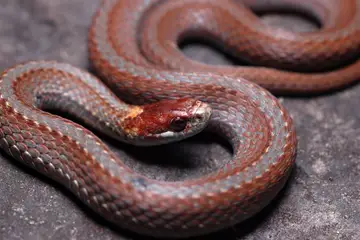
Usually 8 to 10 inches; state figures run from about 4 to 16 inches, with a Florida record of 16.6 inches.
How to recognize it
Plain, unmarked red or orange belly.
Three light spots just behind the head, which may fuse into a collar.
Keeled (ridged) scales in 15 rows at midbody and round pupils.
Where in Florida
Red-bellied Snakes are found throughout the northern peninsula south to Pasco and Orange counties, and they occur west throughout the Panhandle. Florida Museum of Natural History
What the sources say
Venom: “Non-venomous. Red-bellied Snakes are not dangerous to people or pets.” (Florida Museum of Natural History)
Habitat: Red-bellied Snakes are commonly found in most terrestrial and wetland habitats throughout their range. However, these secretive snakes often remain hidden beneath leaflitter, logs, rocks, or other surface cover. Adults and juveniles of this species are often found in suburban neighborhoods where development encroaches into favorable habitats. (Florida Museum of Natural History)
Rim Rock Crowned Snakes occur only in Miami-Dade (mainland) and Monroe (Florida Keys) counties. It has been found from Key Largo to Key West in the Florida Keys … Florida Museum of Natural History
Conservation
State Threatened
What the sources say
Venom: “Non-Venomous Rim Rock Crowned Snakes are not dangerous to people or pets even though they likely produce a mild venom that is used for subduing prey.” (Florida Museum of Natural History)
Range: Rim Rock Crowned Snakes occur only in Miami-Dade (mainland) and Monroe (Florida Keys) counties. It has been found from Key Largo to Key West in the Florida Keys. This species only occurs in Florida.
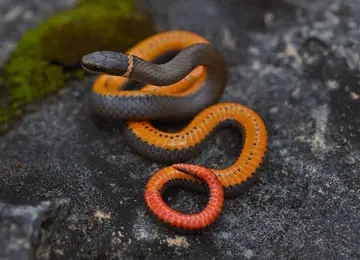
Habitat: Rim Rock Crowned Snakes are typically found in pinelands and tropical hardwood hammocks. On the mainland, they occur on a low elevation pine ridge called the Miami Rim Rock formation. These secretive snakes are mainly found under limestone rocks, logs, leaf litter, and other debris. (Florida Museum of Natural History)
Usually 8 to 15 inches long; Alabama reports up to about 18 inches, rarely 24. AZGFD gives a maximum of 34 inches for Arizona animals.
How to recognize it
A yellow, cream or orange ring around the neck; it may be incomplete, and some Lower Florida Keys and western Arizona snakes lack it.
Bright yellow to orange or red belly, often with a row of black half-moon spots; the underside of the tail is often red.
Smooth, shiny scales and a small head only slightly wider than the neck.
Where in Florida
Ring-necked Snakes are found throughout mainland Florida in every county. They also occur on the Florida Keys. Florida Museum of Natural History
Conservation
State Threatened: Florida Keys subspecies only (checklist footnote ST**)
JFMAMJJASOND
242 records by month.What the sources say
Venom: “Non-venomous. Ring-necked Snakes are not dangerous to people or pets.” (Florida Museum of Natural History)
Habitat: In peninsular Florida, Ring-necked Snakes are commonly found in meadows, prairies, pinelands, hardwood hammocks, and melaleuca stands. In the Florida Keys, they occur mainly in pinelands, tropical hardwood hammocks, and around limestone outcroppings. Adults and juveniles of this species are often found in suburban neighborhoods where development encroaches into favorable habitats. (Florida Museum of Natural History)
Rough Earthsnakes occur in the western half of the Panhandle and in the northern peninsula south to Alachua County. Florida Museum of Natural History
What the sources say
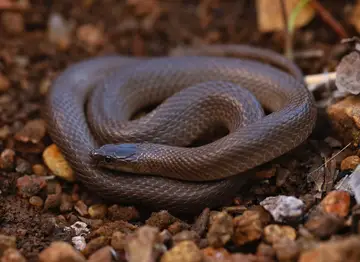
Venom: “Non-venomous. Rough Earthsnakes are not dangerous to people or pets.” (Florida Museum of Natural History)
Habitat: Rough Earthsnakes are commonly found in hardwood hammocks and pine flatwoods. However, these secretive snakes often remain hidden beneath leaflitter, logs, rocks, or other surface cover. Adults and juveniles of this species are often found in suburban neighborhoods where development encroaches into favorable habitats. (Florida Museum of Natural History)
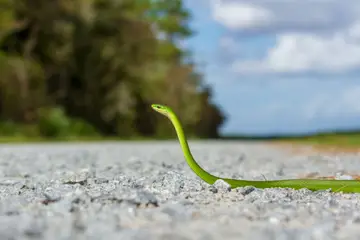
Most adults are 14 to 33 inches long (Florida Museum), with a record of 46 inches. Maryland, Missouri, Tennessee and Arkansas give 22 to 32 inches. The tail is long and thin, about a third or more of the total length.
How to recognize it
Keeled (ridged) scales in 17 rows, which feel rough; the smooth green snake has smooth scales.
Extremely long, thin tail and round pupils.
Large eyes.
Where in Florida
Rough Greensnakes are found throughout mainland Florida in every county. They also occur throughout the Florida Keys. Florida Museum of Natural History
JFMAMJJASOND
85 records by month.What the sources say
Venom: “Non-venomous. Rough Greensnakes are not dangerous to people or pets.” (Florida Museum of Natural History)
Habitat: Rough Greensnakes are often found in mixed hardwood and bottomland forest as well as hardwood hammocks. They are fairly abundant in maritime forest and dune meadows of Atlantic coast barrier islands. These snakes primarily live in trees and prefer densely leafed trees and shrubs, often at the edges of fields and around ponds. Adults of this species are often found in suburban neighborhoods where development encroaches into favorable habitats. (Florida Museum of Natural History)
In Florida, these snakes occur along most of the coastal perimeter of the state from Volusia to Martin Counties, from Broward County west to Gulf County, and in Santa … Florida Museum of Natural History
Conservation
Federally Endangered: Atlantic subspecies only (checklist footnote FE*)
What the sources say
Venom: “Non-venomous. Saltmarsh Snakes are not dangerous to people or pets, but they may bite to defend themselves.” (Florida Museum of Natural History)
Range: In Florida, these snakes occur along most of the coastal perimeter of the state from Volusia to Martin Counties, from Broward County west to Gulf County, and in Santa Rosa and Escambia counties. They are also found throughout the Florida Keys and on most barrier islands around the state. Among the coastal counties, the Florida Museum does not contain vouchered records of saltmarsh snakes from Nassau, Duval, Saint Johns, Flagler, Palm Beach, Bay, or Walton counties.
Habitat: Saltmarsh Snakes are primarily found in coastal habitats such as tidal marshes, mangroves, and mud flats in both saltwater and estuarine areas. These snakes can frequently be found hiding in tidal wrack along the shoreline and they often inhabit crab burrows in the sand or mud. (Florida Museum of Natural History)
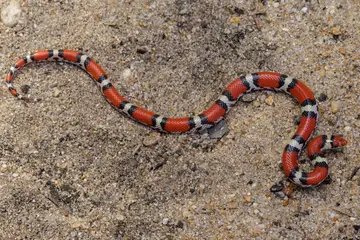
Most adults about 14-20 inches (36-51 cm); record 29.1 inches (Florida Museum). Louisiana gives 12 to 24 inches; NC State Extension says up to 27 inches.
How to recognize it
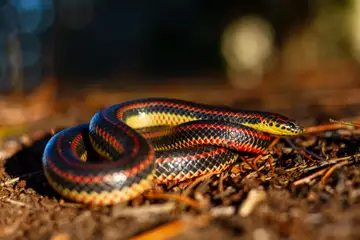
Red and yellow rings are separated by black rings, so red and yellow do not touch.
Venom: “Non-venomous. Scarlet Kingsnakes are not dangerous to people or pets.” (Florida Museum of Natural History)
Range: Scarlet Kingsnakes are found throughout Florida and in every county. There have been two specimens reported from the Florida Keys, one from Key Largo and one from Key West.
Habitat: Scarlet Kingsnakes typically inhabit wet pinelands and mesic hammocks, but they can be found in drier habitats as well. They are secretive and are usually found under rocks, logs, and debris. However, they are excellent climbers and are occasionally found climbing in trees and on buildings. Although they can be locally abundant, they are not commonly seen due to their secretive nature. This species is occasionally found in suburban neighborhoods where development encroaches into favorable habitats. (Florida Museum of Natural History)
Venom: “Non-venomous. Scarletsnakes are not dangerous to people or pets.” (Florida Museum of Natural History)
Habitat: Scarletsnakes are commonly found in pine flatwoods, dry prairies, hardwood hammocks, and sandhills. These secretive snakes are primarily burrowers and are usually found under rocks, logs, and other debris. Although they can be locally abundant, they are not commonly seen due to their secretive nature. This species is occasionally found in suburban neighborhoods where development encroaches into favorable habitats. (Florida Museum of Natural History)
Short-tailed Kingsnakes occur throughout much of upland northern central Florida, west of the St. Johns River. Florida Museum of Natural History
Conservation
State Threatened
What the sources say
Venom: “Non-venomous. Short-tailed Kingsnakes are not dangerous to people or pets.” (Florida Museum of Natural History)
Habitat: Short-tailed Kingsnakes are restricted to upland pine-turkey oak woodlands and dry, sandy-soiled habitats such as coastal live oak hammocks and sand pine scrub. These highly secretive snakes are primarily burrowers and are rarely seen. However, adults are occasionally found in suburban neighborhoods where development encroaches into favorable habitats. (Florida Museum of Natural History)
Venom: “Non-venomous. Smooth Earthsnakes are not dangerous to people or pets.” (Florida Museum of Natural History)
Range: Smooth Earthsnakes occur throughout the Panhandle and east to Alachua County. An isolated population occurs in Highlands County along the Lake Wales Ridge in central Florida.
Habitat: Smooth Earthsnakes occupy a variety of forested habitats, but they are most commonly found in mesic hammocks and pine woodlands, particularly near marshes and other damp areas. The isolated population on the Lake Wales Ridge occurs in scrub habitat. These secretive snakes typically remain hidden beneath leaflitter, logs, rocks, or other surface cover. Adults and juveniles of this species are often found in suburban neighborhoods where development encroaches into favorable habitats. (Florida Museum of Natural History)
No confirmed photo of South Florida Mole Kingsnake
South Florida Mole Kingsnakes are known to occur only in the peninsula from Brevard County south to Lake Okeechobee and west to Charlotte and DeSoto counties. Florida Museum of Natural History
Conservation
State Threatened
What the sources say
Venom: “Non-venomous. South Florida Mole Kingsnakes are not dangerous to people or pets, but they may bite to defend themselves.” (Florida Museum of Natural History)
Habitat: South Florida Mole Kingsnakes have been found in pinelands, hardwood hammocks, prairies, cattle pastures, and agricultural fields. These highly secretive snakes are primarily burrowers and are rarely seen. (Florida Museum of Natural History)
Venom: “Non-Venomous. Southeastern Crowned Snakes are not dangerous to people or pets even though they do produce a mild venom that is used for subduing prey.” (Florida Museum of Natural History)
Habitat: Southeastern Crowned Snakes are typically found around sandhills, dry pine flatwoods, and hardwood hammocks. However, these secretive snakes often remain hidden beneath leaflitter, logs, rocks, or other surface cover. Adults and juveniles of this species can be found in suburban neighborhoods where development encroaches into favorable habitats. (Florida Museum of Natural History)
“They do, however, produce a mild venom that is used for subduing prey.”
Where in Florida
Southern Hog-nosed Snakes are found throughout the Panhandle and in parts of the northern and central peninsula west of the St. Johns River … Florida Museum of Natural History
What the sources say
Venom: “Non-venomous. Southern Hog-nosed Snakes are not dangerous to people or pets.” (Florida Museum of Natural History)
Range: Southern Hog-nosed Snakes are found throughout the Panhandle and in parts of the northern and central peninsula west of the St. Johns River. They are absent from the Florida Keys.
Habitat: Southern Hog-nosed Snakes occur in sandhills, scrub, high pine and turkey oak woodlands, hardwood hammocks, dry river floodplains, and areas near temporary wetlands. Adults and juveniles of this species can be found in suburban neighborhoods where development encroaches into favorable habitats. (Florida Museum of Natural History)
No confirmed photo of Southern or Banded Watersnake
Southern Watersnakes are found throughout mainland Florida in every county. However, they are absent from the Florida Keys. Florida Museum of Natural History
JFMAMJJASOND
729 records by month.What the sources say
Venom: “Non-venomous. Southern Watersnakes are not dangerous to people or pets, but they will readily bite to defend themselves.” (Florida Museum of Natural History)
Habitat: In Florida, Southern Watersnakes can be found in generally any areas near shallow bodies of freshwater, such as ponds, swamps, marshes, and ditches. Adults and juveniles of this species are often found in suburban neighborhoods where development encroaches into favorable habitats. (Florida Museum of Natural History)
Striped Swampsnakes occur throughout the Florida peninsula and into the extreme eastern Panhandle. They do not occur in the Florida Keys. Florida Museum of Natural History
What the sources say
Venom: “Non-venomous. Striped swampsnakes are not dangerous to people or pets.” (Florida Museum of Natural History)
Habitat: Striped Swampsnakes are highly aquatic and inhabit a variety of slow-moving waterways such as cypress strands, sawgrass prairies, swamps, canals, sphagnum bogs, and flooded stands of Melaleuca trees. These snakes prefer areas with dense vegetation such as hyacinth-choked waterways, where they live and hide within the submerged roots. These secretive snakes are rarely encountered away from water, but they can sometimes be found under logs or debris near water, in crayfish burrows, or crossing roads during or after heavy rains. (Florida Museum of Natural History)
Snakes people confuse
Black Racer or Timber rattlesnake?
Photo: Everglades NPS from Homestead, Florida, United States · Public domain · Wikimedia Commons
The Florida Museum lists it as a comparison species and marks it venomous; the guide compares photos and gives no text field mark. Florida Museum of Natural History
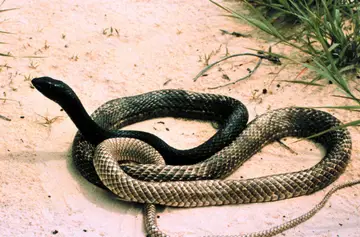
Black Racer or Eastern coachwhip (black variant)?
Photo: Everglades NPS from Homestead, Florida, United States · Public domain · Wikimedia Commons
Racers are smaller and thinner, usually have a white chin and throat, and duller black color (Florida Museum). Alabama adds that the racer is slender and fast, the indigo stout and slow, and the racer has a divided anal plate. Florida Museum of Natural History
Photos show typical adults; individuals vary. Never get close to compare.
When snakes are active in Florida
Records of snakes in Florida peak in February to June and October. They show when people record snakes, not how many there are (about month bars).
JanFebMarAprMayJunJulAugSepOctNovDec
5,634 records of snakes in Florida by month (GBIF, CC0 and CC BY records).
If you are bitten or stung
Call 911 or Poison Help at 1-800-222-1222 right away. Poison Help connects you to your local poison center, any time of day.
Official advice from FWC and UF/IFAS Extension:
If you see a snake, stand back and observe it; leave venomous snakes alone. FWC
Even a venomous snake in the woods or crossing the road poses no threat and should be left alone. FWC
Poison control hotline for snakebite and other venom exposures: 1-800-222-1222 (call 911 in an emergency). UF/IFAS Extension
How to report
Report nonnative animals to the FWC Invasive Species Hotline 888-Ive-Got1 (888-483-4681); FWC asks the public to call the Hotline for high-priority species: all nonnative snakes, monitor lizards and tegus. Other nonnative species can be reported via the IveGot1 app or IveGot1.org. Alligator or crocodile concerns: 866-FWC-GATOR (866-392-4286). FWC
Yes. Six of Florida's 44 snake species (FWC count) are venomous: eastern coral snake, southern copperhead, cottonmouth, eastern diamondback rattlesnake, timber rattlesnake and dusky pygmy rattlesnake. FWC
“Only six of Florida's 44 snake species are venomous: the eastern coral snake, the southern copperhead, the cottonmouth, the eastern diamondback rattlesnake, the timber rattlesnake, and the dusky pygmy rattlesnake.”
Are there water moccasins (cottonmouths) in Florida?
Living with Snakes. Florida Fish and Wildlife Conservation Commission (FWC). archived copy, captured June 16, 2026; checked November 3, 2026.Archived copy. Quoted passages (3)
“Only six of Florida's 44 snake species are venomous: the eastern coral snake, the southern copperhead, the cottonmouth, the eastern diamondback rattlesnake, the timber rattlesnake, and the dusky pygmy rattlesnake.”
“What should you do when you come upon a snake? Just stand back and observe it.”
“Even a venomous snake in the woods or crossing the road poses no threat and should be left alone.”
“Non-venomous. Eastern Indigo Snakes are not dangerous to people or pets.”
“The scales on the back are smooth, and there are 17 scale rows at midbody. The pupil is round.”
“Most adult Eastern Indigo Snakes are 60-82 inches (152-213 cm) in total length, with a record length recorded of 8.6 feet (2.63 m).”
“North American Racers are smaller and they have thinner bodies. They also typically have a white chin and throat, and the black coloration of their bodies is duller.”
“Eastern Coachwhips typically have a black head and neck and a tan body and tail.”
“The neck is indistinct and the scales are smooth and shiny.”
“…the pupil is round”
“…with 19-32 white to yellowish, narrow (1.5-2.5 body scale rows) crossbands down the back”
“Most adult Eastern Kingsnakes are about 36-48 inches (90-122 cm) in total length.”
“Non-venomous. Eastern Kingsnakes are not dangerous to people or pets, but they occasionally bite to defend themselves.”
“Florida Kingsnakes have more than 34 light crossbands on the body, lightening of the black interband scales, a degenerate lateral chain-like pattern, and usually 23 scale rows at midbody.”
“Apalachicola Kingsnakes have either fewer than 26 wide crossbands with considerably lightened interbands or they are non-banded (striped or patternless).”
“Non-venomous Eastern Pinesnakes are not dangerous to people or pets, but they will readily bite to defend themselves.”
“The snout is somewhat pointed and covered by a large triangular, cone-shaped scale.”
“The scales on the body are strongly keeled (each scale has a prominent raised ridge). The pupils are round.”
“Most adult Eastern Pinesnakes are 48-66 inches (122-168 cm) in total length, with a record length recorded of 90 inches (229 cm).”
“Eastern Coachwhips have a dark brown or black head and neck that transition into a tan body and tail. They lack the enlarged triangular rostral scale, and they have smooth scales.”
“Non-Venomous. Southeastern Crowned Snakes are not dangerous to people or pets even though they do produce a mild venom that is used for subduing prey.”
“Southeastern Crowned Snakes are not dangerous to people or pets even though they do produce a mild venom that is used for subduing prey.”
“Non-Venomous Rim Rock Crowned Snakes are not dangerous to people or pets even though they likely produce a mild venom that is used for subduing prey.”
“Non-venomous. Ring-necked Snakes are not dangerous to people or pets.”
“The neck ring may be incomplete, and snakes in the Lower Florida Keys may lack a ring entirely.”
“The belly is bright yellow, orange, or red with a single row of black half-moon markings down the center.”
“Most adult Ring-necked Snakes are about 8-14 inches (21-36 cm) in total length.”
“Adults are small and slender with a black or slate gray body and a yellowish ring across the neck, which may be incomplete or missing. The belly and underside of the tail are bright yellow, orange, or red.”
“Non-venomous. Eastern Ribbonsnakes are not dangerous to people or pets, and they rarely bite to defend themselves.”
“The upper lip scales are white and unmarked. … There is a distinct white spot in front of each eye. … The body scales are keeled (each scale has a prominent raised ridge)”
“Head shape is not a reliable way to identify copperheads.”
“Copperhead bites are extremely painful but rarely life-threatening for healthy adults and for most large or medium-sized pets.”
“The alternating dark and light brown crossbands are darker, narrower, and much more numerous than those on the copperhead. The banding pattern transitions to alternating blotches about halfway down the body. The pupils are round. The sides of the face have dark vertical lines near the mouth, whereas the copperhead has no such lines on the face.”
“The large and thick head is distinct from the neck and has a light bordered dark stripe running diagonally through each eye.”
“The tail ends in a rattle, which is often held above the ground.”
“The pupil is vertically elliptical, and there is a deep facial pit organ located between the nostril and the eye.”
“The Eastern Diamond-backed Rattlesnake is a large and impressive snake, and bites can be very dangerous to people and pets.”
“Most adult Eastern Diamond-backed Rattlesnakes are about 33-72 inches (84-183 cm) in total length, with a record length recorded of 99 inches (251.5 cm).”
“The Timber Rattlesnake has black chevron-like crossbands, a reddish stripe down the middle of its back, and a black tail.”
“Therefore, it is best not to attempt to capture, harass, or harm any snake.”
“Poison Control Hotline: 1-800-222-1222”
Report Nonnative Species. Florida Fish and Wildlife Conservation Commission (FWC). archived copy, captured October 25, 2026; checked November 3, 2026.Archived copy. Quoted passages (1)
“You can call the FWC’s Invasive Species Hotline at 888-Ive-Got1 (483-4681) to report nonnative animals. We ask the public to call the Hotline to report high priority species, which include all nonnative snakes, monitor lizards, and tegus.”