
No confirmed photo of Blister beetles
Blister beetles
What the sources say
Venom: “Venoms that produce blisters, or vesicating toxins (e.g., blister beetles, certain stinging caterpillars, millipedes).” (UF/IFAS Extension)
Last checked November 3, 2026 against official sources.
This page lists 11 insects. 9 are venomous by official accounts. 1 is nonnative.
Not every species: no complete official list of Florida insects exists, so this page covers the ones state and Extension sources name. How lists are built.
Official sources single out these insects in Florida, in their own words:
Stings. “Death can occur within one hour after the person has been stung by a Hymenopteran (bees, fire ants, wasps, yellow jackets, or hornets).” UF/IFAS Extension
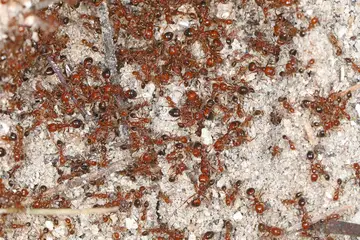
Painful sting. “The remainder of the venom contains an aqueous solution of proteins, peptides, and other small molecules that produce the allergic reaction in hypersensitive individuals.” UF/IFAS Extension
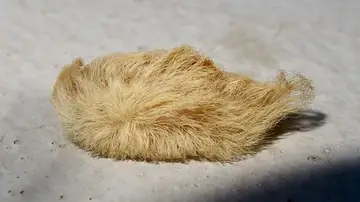
One of the most venomous caterpillars in the United States. “…the puss caterpillar, which is one of the most venomous caterpillars in the United States” UF/IFAS Extension
Venomous species first, then A to Z. Do not handle them.
Venom: “Venoms that produce blisters, or vesicating toxins (e.g., blister beetles, certain stinging caterpillars, millipedes).” (UF/IFAS Extension)
Venom: “Venoms that produce blisters, or vesicating toxins (e.g., blister beetles, certain stinging caterpillars, millipedes).” (UF/IFAS Extension)
Venom: “Venoms that attack the central nervous system, or neurotoxins (e.g., black and brown widow spiders, bark scorpions, certain ticks, Hymenoptera, wheel bugs).” (UF/IFAS Extension)
Venom: “Venoms that produce blisters, or vesicating toxins (e.g., blister beetles, certain stinging caterpillars, millipedes).” (UF/IFAS Extension)
Megalopyge opercularis
Venom: “…the puss caterpillar, which is one of the most venomous caterpillars in the United States” (UF/IFAS Extension)
Solenopsis invicta
Venom: “The sting of the RIFA possesses venom of an alkaloid nature, which exhibits potent necrotoxic activity.” (UF/IFAS Extension)
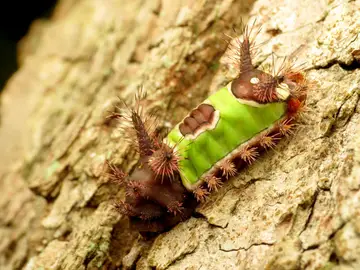
Venom: “Venoms that produce blisters, or vesicating toxins (e.g., blister beetles, certain stinging caterpillars, millipedes).” (UF/IFAS Extension)
Venom: “Venoms that attack the central nervous system, or neurotoxins (e.g., black and brown widow spiders, bark scorpions, certain ticks, Hymenoptera, wheel bugs).” (UF/IFAS Extension)
Venom: “Venoms that attack the central nervous system, or neurotoxins (e.g., black and brown widow spiders, bark scorpions, certain ticks, Hymenoptera, wheel bugs).” (UF/IFAS Extension)
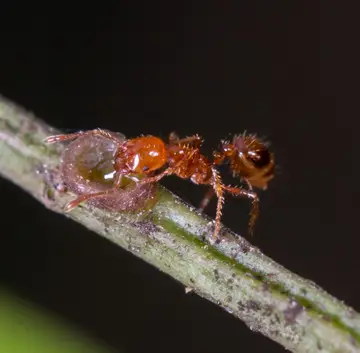
Solenopsis geminata
Records of insects in Florida peak in March to July and September. They show when people record insects, not how many there are (about month bars).
Call 911 or Poison Help at 1-800-222-1222 right away. Poison Help connects you to your local poison center, any time of day.
Official advice from FWC:
Report nonnative animals to the FWC Invasive Species Hotline 888-Ive-Got1 (888-483-4681); FWC asks the public to call the Hotline for high-priority species: all nonnative snakes, monitor lizards and tegus. Other nonnative species can be reported via the IveGot1 app or IveGot1.org. Alligator or crocodile concerns: 866-FWC-GATOR (866-392-4286). FWC
Venom labels come only from official sources and link to them; "Not stated" never means harmless. How labels work.
"Nonnative" and "Invasive" follow the wording of the source list. See invasive species in Florida.
“Venoms that attack the central nervous system, or neurotoxins (e.g., black and brown widow spiders, bark scorpions, certain ticks, Hymenoptera, wheel bugs).”
“Venoms that produce blisters, or vesicating toxins (e.g., blister beetles, certain stinging caterpillars, millipedes).”
“Death can occur within one hour after the person has been stung by a Hymenopteran (bees, fire ants, wasps, yellow jackets, or hornets).”
“The sting of the RIFA possesses venom of an alkaloid nature, which exhibits potent necrotoxic activity.”
“The remainder of the venom contains an aqueous solution of proteins, peptides, and other small molecules that produce the allergic reaction in hypersensitive individuals.”
“…the puss caterpillar, which is one of the most venomous caterpillars in the United States”
“The spines are obscured by the long soft setae in the late instars.”
“…were much larger and measured approximately 3.5 cm (1.4 inches) in body length and 4.0 cm (1.6 inches) including the tail.”
“Do the "Stingray Shuffle" to reduce the chance of stepping on these rays and risking possible injury from their spine.”
“Most stingray injuries require immediate medical attention. For more information contact the National Poison Control Center 1-800-222-1222.”
“Courtship begins in early April, and mating occurs in May or June.”
“You can call the FWC’s Invasive Species Hotline at 888-Ive-Got1 (483-4681) to report nonnative animals. We ask the public to call the Hotline to report high priority species, which include all nonnative snakes, monitor lizards, and tegus.”
