Puss caterpillar (southern flannel moth)
Megalopyge opercularis · also called asp, asp caterpillar, southern flannel moth and puss moth caterpillar · Last checked November 3, 2026.
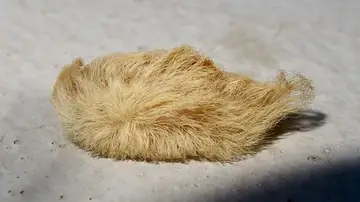
The puss caterpillar, also called the asp, is the larva of the southern flannel moth. It looks soft and furry, like a tuft of tan, gray or brown hair about 1 to 1.5 inches long, often teardrop-shaped with a hairy tail, but hidden among the hairs are hollow spines with venom glands. UF/IFAS calls it one of the most venomous caterpillars in the United States: a sting causes immediate intense burning pain and can bring headache, nausea, vomiting and other body-wide symptoms. It does not bite or attack; stings happen when people touch or brush against it. It occurs from New Jersey to Florida and west to Arkansas and Texas, and is most abundant in Texas. UF/IFAS Extension
On this page
Is the puss caterpillar dangerous?
UF/IFAS: one of the most venomous caterpillars in the United States; the sting causes immediate intense burning pain and a red grid-like pattern on the skin, and can be followed by headache, fever, nausea, vomiting, fast heart rate, low blood pressure and, more rarely, seizures. UF/IFAS Extension
“The sting produces an immediate intense burning pain followed by the appearance of a red grid-like pattern on the skin that matches the pattern of the venomous spines on the caterpillar.”
Bites and stings: It does not bite. Hollow spines hidden in the hair break off in the skin on contact and release venom; stings usually happen when the caterpillar is touched, stepped on or caught in clothing.
If someone is bitten or stung, call 911 or Poison Help at 1-800-222-1222.
How to identify a puss caterpillar
A photo or description can narrow it down, but cannot confirm what an animal is or that it is safe. Look from a distance and do not handle wild animals.
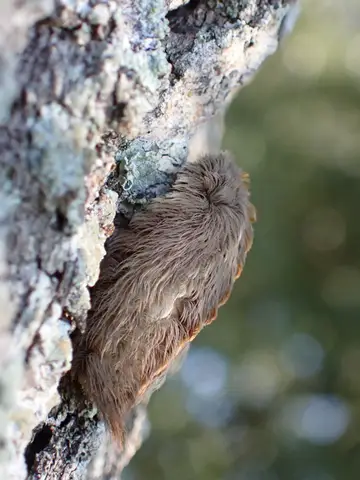
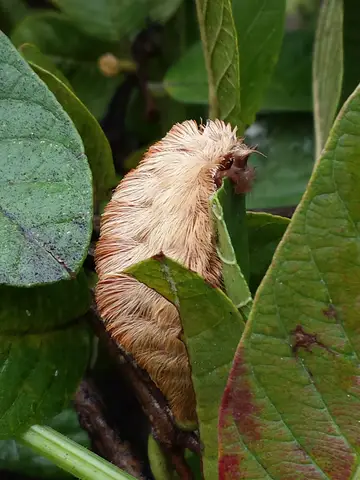

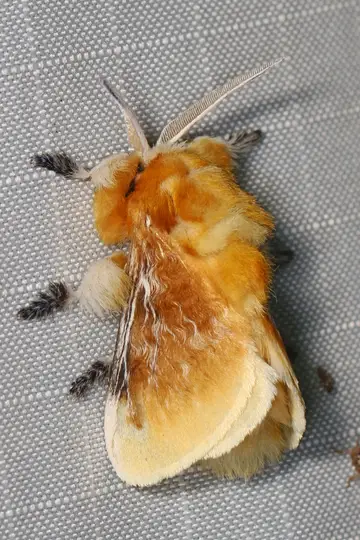

Size: About 1 inch long per most extension sources; full-grown larvae reared by UF/IFAS reached about 1.4 inches (1.6 inches including the tail). MDC says about 1.5 inches. UF/IFAS Extension
Colors: Pale yellow, gray or reddish brown, densely hairy; grayish-tan to dark brown hair with a rusty stripe down the back; tawny to grayish coat. Pattern: Crest of rusty hairs along the back, with whitish tufts along each side.
Key features
- Teardrop shape with hairs tapering to a tail; looks like a tiny mouse or a cat Missouri Department of Conservation
- Resembles a tiny mouse; younger larvae have a thick tuft of hair like a tail. Older larvae can look unkempt, with sparser hair that hides the stinging spines less well (VCE). Virginia Tech
- Venomous hollow spines hidden under the soft hair UF/IFAS Extension
- Seven pairs of prolegs (flannel moth family trait) Missouri Department of Conservation
Young
Young larvae are yellow, then pale greenish white to white under the hair; they get hairier with each molt. All stages can sting.
Animals mistaken for the puss caterpillar
Puss caterpillar (southern flannel moth) or Black-waved (crinkled) flannel moth caterpillar?
Puss caterpillar (southern flannel moth)
Black-waved (crinkled) flannel moth caterpillar Megalopyge crispata
MDC: looks much like the puss caterpillar but lacks the 'tail' of hairs. Missouri Department of Conservation
Also a flannel moth caterpillar; MDC warns the whole family can sting.
Puss caterpillar (southern flannel moth) or Saltmarsh caterpillar (a woolly bear)?
Puss caterpillar (southern flannel moth)
Saltmarsh caterpillar (a woolly bear) Estigmene acrea
Texas A&M AgriLife says saltmarsh caterpillars are often confused with stinging caterpillars because they are fuzzy, and cautions: never handle fuzzy caterpillars unless you are sure they are not a stinging species; if you aren't 100% sure what an insect is, don't touch it with bare hands. Texas A&M AgriLife
Texas A&M AgriLife says these are not stinging caterpillars.
Puss caterpillar (southern flannel moth) or Saddleback caterpillar?
Puss caterpillar (southern flannel moth)
Saddleback caterpillar Acharia stimulea
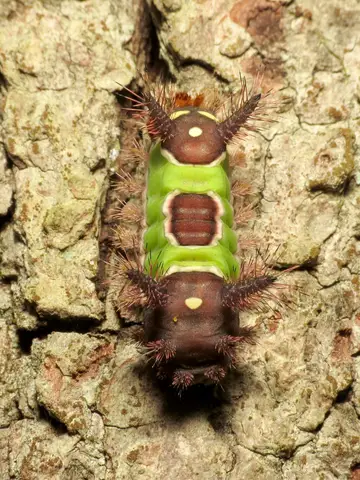
UGA: about 1 inch, with a brown slug-like body, a green middle and a brown, white-bordered saddle mark; venom-filled spines sit on fleshy knobs on all sides of the body. UGA describes puss caterpillars as densely covered with hairs. University of Georgia Cooperative Extension
Also stinging; UGA says contact can be extremely painful.
Where the puss caterpillar lives
- Native or listed
- Nonnative or not established
- No official record in our data
- 1–9
- 10–99
- 100–999
- 1,000+
On our state guides
- Florida insects and bugs
- Kentucky insects and bugs
- Louisiana insects and bugs
- Mississippi insects and bugs
- Missouri insects and bugs
- South Carolina insects and bugs
- Texas insects and bugs
- Virginia insects and bugs
State boundaries: U.S. Census Bureau, cartographic boundary file cb_2024_us_state_20m.
When it is active
Two generations a year. LSU: first-generation caterpillars May to July, second from the end of July to the end of October; adults emerge in April. UF/IFAS: sting cases peak in early summer and again in fall. LSU AgCenter
US open-licence records peak in May to September.
Habitat and habits
Habitat: On many deciduous trees and shrubs; in north central Florida most common on oaks and elms. Records include hackberry, sycamore, plum and rose. Troublesome when on shade trees in towns, where low branches bring people close. UF/IFAS Extension
Behavior: Mature caterpillars may wander off the host plant before spinning cocoons, and are often found on nearby buildings. Usually only locally common and in small numbers; outbreaks are occasional.
Diet: Leaves of many plants (recorded from 41 plant genera); adults have reduced mouthparts and apparently do not eat.
Young: Two broods a year (possibly a partial third in the Deep South). Eggs hatch in 6 to 8 days; fall-generation larvae overwinter in the cocoon and pupate in late spring.
Legal status and reporting
Federal: No Megalopyge species appears in the USFWS ECOS species database (query 2026-11-03 returned 0 rows). ECOS
Report: Not a reportable species. For pest questions in Louisiana, LSU AgCenter says to contact it; in South Carolina, Clemson HGIC is at 1-888-656-9988. For a sting, call 911 or Poison Help at 1-800-222-1222. Clemson University Cooperative Extension, Home & Garden Information Center
Questions about the puss caterpillar
Puss caterpillar sting
Puss caterpillars sting through hollow venomous spines hidden in their fur. UF/IFAS says the sting causes immediate intense burning pain and a red grid-like pattern on the skin, sometimes with headache, fever, nausea, vomiting or worse. Texas A&M AgriLife says it can require a trip to the hospital, and eye contact or an allergic reaction needs immediate medical attention. Call 911 or Poison Help at 1-800-222-1222.
Puss caterpillar bite
It does not bite. LSU AgCenter says the spines break off on contact and release venom, usually when the caterpillar is stepped on, touched or caught in clothing. Call 911 or Poison Help at 1-800-222-1222.
Puss caterpillar moth
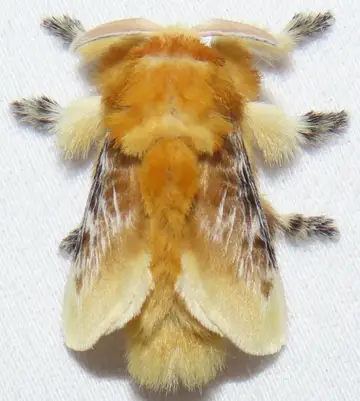
It becomes the southern flannel moth: a small, very furry moth with a 1 to 1.5 inch wingspan and yellow front wings. Adult moths of stinging caterpillars are not known to cause skin reactions (Virginia Cooperative Extension).
Puss caterpillar butterfly
It does not become a butterfly. It is the caterpillar of a moth, the southern flannel moth (Megalopyge opercularis).
Puss caterpillar location
UF/IFAS gives its range as New Jersey to Florida and west to Arkansas and Texas, with the greatest abundance in Texas. It lives on trees and shrubs, especially oaks and elms, and sometimes wanders onto buildings.
Puss caterpillar florida
UF/IFAS says it is common in Florida, especially on oaks and elms in north central Florida, and lists it among the stinging caterpillars frequently found there.
Puss caterpillar texas
Texas A&M AgriLife calls it perhaps the most common stinging caterpillar in Texas (the 'asp'). UF/IFAS says it is most abundant in Texas from Dallas southward.
Puss caterpillar georgia
UGA Extension describes puss caterpillars in its stinging pests circular and says stings on the hand can make the whole arm swell and go numb, with young children often more severely affected. The archived text does not state its Georgia distribution.
Puss caterpillar nc
UF/IFAS gives the range as New Jersey to Florida and west to Arkansas and Texas.
Sources
- EENY-545 Puss Caterpillar, Southern Flannel Moth, Megalopyge opercularis. UF/IFAS Extension (EDIS). Original Jan 2013; checked November 3, 2026.
Quoted passages (8)
“The sting produces an immediate intense burning pain followed by the appearance of a red grid-like pattern on the skin that matches the pattern of the venomous spines on the caterpillar.”
“…were much larger and measured approximately 3.5 cm (1.4 inches) in body length and 4.0 cm (1.6 inches) including the tail.”
“The spines are obscured by the long soft setae in the late instars.”
“The integument of first and second instars is yellow but becomes pale greenish white to white in later instars. … Larvae become progressively more "hairy" with each molt.”
“In north central Florida, puss caterpillars are most common on various species of oaks but are also common on elms”
“Larvae of the southern flannel moth are polyphagous (Heppner 1997) and are recorded from plant species belonging to 41 genera (Heppner 2003).”
“Some larvae wander off the host plant and are often found on adjacent buildings.”
“Individuals of the fall generation overwinter as larvae (prepupae) and pupate in late spring of the next year.”
- Start looking out for stinging caterpillars (AgriLife Today). Texas A&M AgriLife (AgriLife Today, quoting AgriLife Extension specialists). 2025-05-29 (published; checked November 3, 2026.
Quoted passages (1)
“Brown said she has been getting questions about saltmarsh caterpillars, often confused for stinging caterpillars because they’re fuzzy. … While many fuzzy caterpillars are harmless, never handle them unless you’re sure they are not a stinging species … If you aren’t 100% sure what an insect is, it’s best not to touch it with your bare hands.”
- Flannel Moths (Field Guide). Missouri Department of Conservation. undated page; checked November 3, 2026.
Quoted passages (3)
“The caterpillars, called puss caterpillars, can appear teardrop-shaped.”
“Flannel moth caterpillars have 7 pairs of prolegs, while all other butterfly and moth caterpillars have 5 or fewer pairs.”
“The caterpillars look a lot like those of the southern flannel moth, but they lack the ‘tail’ of hairs extending from the rear.”
- Stinging Caterpillars: Slug Caterpillars and Flannel Moths (ENTO-347NP / ENTO-75NP). Virginia Cooperative Extension (Virginia Tech). Revised February 7, 2020; checked November 3, 2026.
Quoted passages (1)
“Younger larvae have a thick tuft of hairs extending beyond the tip of the abdomen like a tail. Overall the caterpillar resembles a tiny mouse (about 2.5 cm or 1 inch). Older larvae tend to lose their tidy appearance and the hairs are sparser, unkempt, and do not conceal the stinging spines as well.”
- Bug Biz: Pest Management and Insect Identification Series - Puss Moth Caterpillar. LSU AgCenter (Louisiana Cooperative Extension Service). January 25, 2019; checked November 3, 2026.
Quoted passages (2)
“On contact, the spines will break away, releasing venom. Stings are typically multiple as these caterpillars are commonly stepped on, touched or lodged in clothing.”
“Adults emerge in April, with the first generation of caterpillars appearing between May and July. The second generation appears between the end of July and the end of October”
- USFWS ECOS species report export (JSON), scientific-name queries: Megalopyge. U.S. Fish and Wildlife Service (ECOS). live query 2026-11-03; checked November 3, 2026.
- Stinging Caterpillars (HGIC 2482). Clemson University Cooperative Extension, Home & Garden Information Center. Published Feb 6, 2001; checked November 3, 2026.
Quoted passages (1)
“If this document didn’t answer your questions, please contact HGIC at [email protected] or 1-888-656-9988.”
- Stinging and Biting Pests (Circular 782). University of Georgia Cooperative Extension. published with major revisions October 26, 2022; checked November 3, 2026.
Quoted passages (1)
“The saddleback caterpillar is approximately 1 in. long and has a brown sluglike body with a green mid-section. In the middle of the green mid-section there is a distinctive brown saddle mark with a white border. Venom-filled spines are located on fleshy ‘knobs’ on all sides of its body. … Puss caterpillars may be pale yellow, gray or reddish brown, about 1 in. long and densely covered with hairs.”
- ENY-215 Stinging or Venomous Insects and Related Pests. UF/IFAS Extension (EDIS). Original Jan 1996; checked November 3, 2026.
- GBIF.org occurrence records, human observations licensed CC0 1.0 or CC BY 4.0 only, accessed November 3, 2026. The datasets behind these counts are listed on our Sources page.
- State boundaries: U.S. Census Bureau, cartographic boundary file cb_2024_us_state_20m.