This page lists 21 insects and 4 ticks and mites.
13 are venomous by official accounts, and 2 mildly venomous.
Not every species: no complete official list of Missouri insects exists, so this page covers the ones state and Extension sources name. How lists are built.
Which insects can hurt you
Official sources single out these insects in Missouri, in their own words:
Yellowjackets
Stings. “Most people only experience localized pain when stung, but some people are severely allergic to wasp and bee stings, and they may experience life-threatening reactions (such as difficulty breathing) if stung.” MDC
Paper Wasps
Stinging (MDC). “Nests are defended by workers, which makes these wasps potential stinging threats if they sense their nest is under attack.” MDC
Stinging threat due to aggressive nest defense (MDC). “Aggressive nest defense makes these wasps a stinging threat, but their foragers do not collect sweets or food scraps and are not aggressive away from the nest.” MDC
Sting. “The sting is not considered medically dangerous to people, but persons who are allergic to bee or wasp venom may have a life-threatening anaphylactic reaction if stung.” MDC
Sting. “Bee stings, like those of wasps, are not considered medically dangerous to humans, but some individuals are allergic to bee venom and may have a life-threatening anaphylactic reaction if stung.” MDC
Velvet Ants
Will sting if held or stepped on with bare feet (MDC). “Don’t try to handle them: Velvet ants are not aggressive, but they will sting if held or if stepped on with bare feet.” MDC
Assassin Bugs
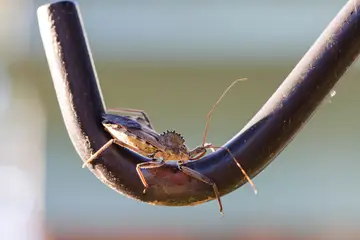
Painful bite (MDC lists as Venomous). “Handling assassin bugs is not recommended, as they can inflict a painful bite.” MDC
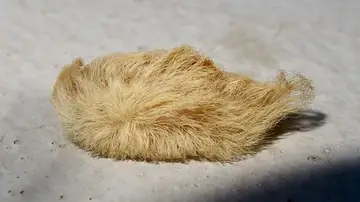
Caterpillars sting (MDC). “The fuzzy, hairy, silky caterpillars in this moth family can sting.” MDC
Tussock Moths (caterpillars)
Some caterpillars have stinging hairs (MDC). “The elongated clumps are sometimes called "pencils." Some species have hollow, barbed hairs that sting with toxic spines.” MDC
Stinging caterpillars (MDC). “Many species are brightly colored or marked, with odd-shaped tubercles, horns, and numerous stiff spines or hairs capable of delivering a painful sting.” MDC
Blister Beetles
Exude an irritating chemical that can blister skin (MDC). “When squeezed, blister beetles exude an irritating, oily chemical that can blister one’s skin.” MDC
Mosquitoes
Transmit diseases (MDC). “Worldwide, mosquitoes transmit the viruses for many diseases that affect humans and animals.” MDC
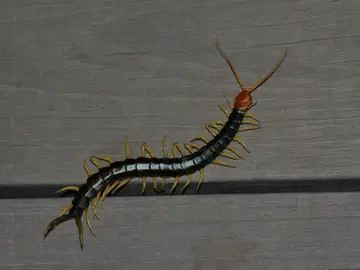
Venomous bite (MDC lists as Venomous). “It’s of the few centipedes in our state capable of inflicting a painful, venomous bite.” MDC
Giant Water Bugs
Excruciatingly painful bite if handled or stepped on by bare-footed waders.MDC
Ambush Bugs
May deliver a painful bite if pressed against the skin. “As with other types of assassin bugs, ambush bugs may deliver a painful bite if pressed against your skin. … Their venom is not considered medically significant.” MDC
Ticks and mites (arachnids, not insects)
Official sources single out these ticks and mites in Missouri, in their own words:
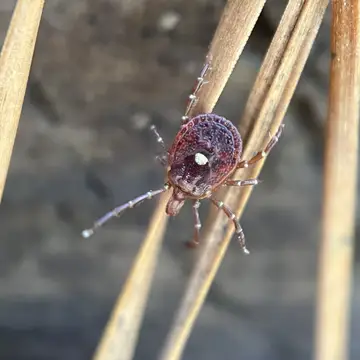
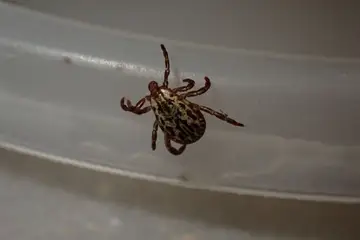
Tick-borne diseases (MDC). “Ticks can transmit Lyme disease, Rocky Mountain spotted fever, Ehrlichiosis, Bourbon virus, Heartland virus, and other diseases.” MDC
Chiggers
Itchy bites (MDC). “Their presence is best known, instead, by the intensely itchy welts they leave behind, usually where your skin is thin and tender (ankles, backs of knees, about the crotch, under the beltline, and in the armpits) and where tight clothing proves an obstacle to …” MDC
All 21 insects and 4 ticks and mites
Venomous species first, then A to Z. Do not handle them.
Venom: “Much like a single-fanged spider, an assassin bug bites its prey, delivering a venom that subdues its insect prey and causes its tissues to liquefy.” (MDC)
“Aggressive nest defense makes these wasps a stinging threat, but their foragers do not collect sweets or food scraps and are not aggressive away from the nest.” MDC
Size
Missouri: workers 1/2 to 3/4 inch, queens 3/4 inch. University of Maryland: workers 5/8 to 3/4 inch, queens just over an inch. Penn State gives 13 to 20 mm for the queen and her offspring.
How to recognize it
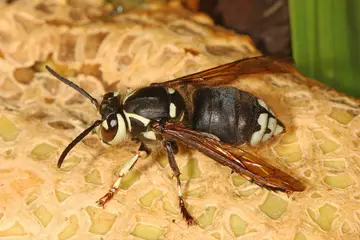
Not yellow, unlike typical yellowjackets; larger, black and ivory
Large, rounded, gray paper nest hanging in trees or shrubs, sometimes on buildings
Nest entrance is the lowest opening of the cone- or egg-shaped nest
Venom: “Some people are highly sensitive and allergic to the venom of bees, wasps, hornets, yellow jackets and ants.” (Missouri Poison Center (SSM Health Cardinal Glennon Children's Hospital), Missouri's poison-control program)
Venom: “Some people are highly sensitive and allergic to the venom of bees, wasps, hornets, yellow jackets and ants.” (Missouri Poison Center (SSM Health Cardinal Glennon Children's Hospital), Missouri's poison-control program)
About 1 1/8 to 1 5/8 inches long (OSU, NC State); females up to nearly 2 inches, males up to 1.5 inches (University of Kentucky). Females larger than males.
How to recognize it
Nests in the ground: burrow about 1/2 inch wide with a U-shaped soil mound at the entrance
Hole about 1/2 inch across with excavated soil piled around it
Venom: “Some people are highly sensitive and allergic to the venom of bees, wasps, hornets, yellow jackets and ants.” (Missouri Poison Center (SSM Health Cardinal Glennon Children's Hospital), Missouri's poison-control program)
“The sting is not considered medically dangerous to people, but persons who are allergic to bee or wasp venom may have a life-threatening anaphylactic reaction if stung.” MDC
Size
Workers up to 1 inch (25 mm); queens slightly larger, up to about 1.3 inches.
How to recognize it
Large size plus reddish-brown color on the thorax and first abdominal segment
“Nests are defended by workers, which makes these wasps potential stinging threats if they sense their nest is under attack.” MDC
Where in Missouri
Statewide. At least eight species of Polistes wasps occur in Missouri. MDC
What the sources say
Venom: “Some people are highly sensitive and allergic to the venom of bees, wasps, hornets, yellow jackets and ants.” (Missouri Poison Center (SSM Health Cardinal Glennon Children's Hospital), Missouri's poison-control program)
“The fuzzy, hairy, silky caterpillars in this moth family can sting.” MDC
Size
About 1 inch long per most extension sources; full-grown larvae reared by UF/IFAS reached about 1.4 inches (1.6 inches including the tail). MDC says about 1.5 inches.
How to recognize it
Teardrop shape with hairs tapering to a tail; looks like a tiny mouse or a cat
Resembles a tiny mouse; younger larvae have a thick tuft of hair like a tail. Older larvae can look unkempt, with sparser hair that hides the stinging spines less well (VCE).
Venomous hollow spines hidden under the soft hair
Where in Missouri
Statewide. They seem to be most numerous in the southern and eastern parts of our state. MDC
What the sources say
Venom: “They do not actively attack people, but if you brush against these caterpillars, stinging hairs, hidden among nonstinging hairs, can poke into your skin and break off, and venom inside the hairs or spines can penetrate your skin (this is a lot like the spines of stinging nettle plants).” (MDC)
Venom: “The stinger is extraordinarily long, and the sting is excruciating, hence the popular name ‘cow killer.’ A 1996 study showed that, oddly enough, their venom is comparatively less toxic than that of, say harvester ants and honeybees.” (MDC)
Venom: “Much like a single-fanged spider, a wheel bug bites its prey, delivering a subduing venom that causes the prey insect’s tissues to liquefy.” (MDC)
“Most people only experience localized pain when stung, but some people are severely allergic to wasp and bee stings, and they may experience life-threatening reactions (such as difficulty breathing) …” MDC
Where in Missouri
Two native species occur statewide, the eastern yellowjacket (V. maculifrons) and southern yellowjacket (V. squamosa); the introduced German yellowjacket (V. germanica) … MDC
What the sources say
Venom: “Although these wasps do much that benefits humans, their capacity for colonial, defensive stinging makes them a real concern when they nest near people, especially since some people are allergic to bee and wasp venom.” (MDC)
Range: Two native species occur statewide, the eastern yellowjacket (V. maculifrons) and southern yellowjacket (V. squamosa); the introduced German yellowjacket (V. germanica) is expanding its range and will eventually occur statewide, especially in urban areas.
“As with other types of assassin bugs, ambush bugs may deliver a painful bite if pressed against your skin. … Their venom is not considered medically significant.” MDC
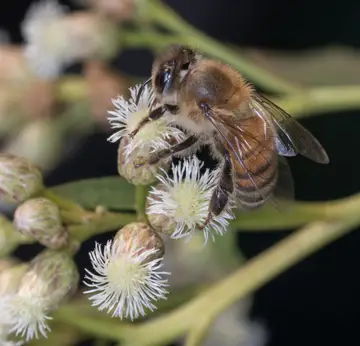
About 10 percent smaller than a European honey bee, a difference too subtle to see without measurement or lab tests.
How to recognize it
Cannot be identified by eye: only DNA testing or microscopic measurements can tell it from a European honey bee.
Clue is behavior and nest site: very defensive, and may nest in small cavities such as water meter boxes, old tires, house eaves or the ground.
Where in Missouri
Statewide. Both managed and feral populations occur throughout Missouri. MDC
JFMAMJJASOND
339 records by month.What the sources say
Venom: “Bee stings, like those of wasps, are not considered medically dangerous to humans, but some individuals are allergic to bee venom and may have a life-threatening anaphylactic reaction if stung.” (MDC)
No official source we use states whether this animal is venomous. That does not mean it is harmless: do not handle it.
Danger to people
“Their presence is best known, instead, by the intensely itchy welts they leave behind, usually where your skin is thin and tender (ankles, backs of knees, about the crotch, under the beltline, and in …” MDC
No official source we use states whether this animal is venomous. That does not mean it is harmless: do not handle it.
Danger to people
“Many species are brightly colored or marked, with odd-shaped tubercles, horns, and numerous stiff spines or hairs capable of delivering a painful sting.” MDC
Where in Missouri
Statewide. Certain species are more likely to be found in different regions. The saddleback caterpillar moth is most common in eastern Missouri, for example … MDC
What the sources say
Range: Statewide. Certain species are more likely to be found in different regions. The saddleback caterpillar moth is most common in eastern Missouri, for example. Some species are widespread but have a very localized occurrence, being abundant where colonies occur, but rare elsewhere.
No confirmed photo of Tussock Moths (caterpillars)
Tussock Moths (caterpillars)
Lymantriinae
Not stated
Venom
No official source we use states whether this animal is venomous. That does not mean it is harmless: do not handle it.
Danger to people
“The elongated clumps are sometimes called "pencils." Some species have hollow, barbed hairs that sting with toxic spines.” MDC
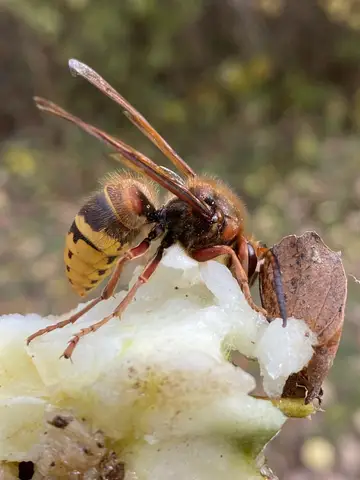
NC State Extension: European hornets are much larger (about 1 1/2 in.), brownish red with a dull yellow abdomen, and rarely build free-hanging or exposed nests (the bald-faced hornet is black and ivory and hangs its nest in the open).
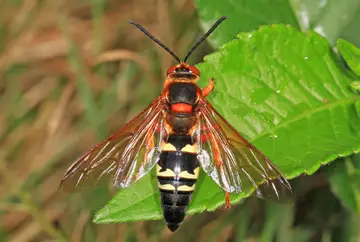
Cicada killer abdomens are mostly black with yellow markings, and cicada killers are solitary and nest in the ground; European hornet abdomens are mostly yellow with brown markings and they build paper nests in aerial locations.
Cicada killer abdomen mostly black with yellow marks and nests in the ground; European hornet abdomen mostly yellow with brown marks, paper nest above ground (often in hollow trees).
Photos show typical adults; individuals vary. Never get close to compare.
When insects are active in Missouri
Records of insects in Missouri peak in June to September. They show when people record insects, not how many there are (about month bars).
JanFebMarAprMayJunJulAugSepOctNovDec
47,201 records of insects in Missouri by month (GBIF, CC0 and CC BY records).
If you are bitten or stung
Call 911 or Poison Help at 1-800-222-1222 right away. Poison Help connects you to your local poison center, any time of day.
Official advice from Missouri Poison Center (SSM Health Cardinal Glennon Children's Hospital), Missouri's poison-control program and MDC:
“Although these wasps do much that benefits humans, their capacity for colonial, defensive stinging makes them a real concern when they nest near people, especially since some people are allergic to bee and wasp venom.”
“Most people only experience localized pain when stung, but some people are severely allergic to wasp and bee stings, and they may experience life-threatening reactions (such as difficulty breathing) if stung.”
“Nests are defended by workers, which makes these wasps potential stinging threats if they sense their nest is under attack.”
“Aggressive nest defense makes these wasps a stinging threat, but their foragers do not collect sweets or food scraps and are not aggressive away from the nest.”
“Except for individuals who are allergic to bee and wasp venom, the sting is not usually considered medically serious.”
“The sting is not considered medically dangerous to people, but persons who are allergic to bee or wasp venom may have a life-threatening anaphylactic reaction if stung.”
“Bee stings, like those of wasps, are not considered medically dangerous to humans, but some individuals are allergic to bee venom and may have a life-threatening anaphylactic reaction if stung.”
“The stinger is extraordinarily long, and the sting is excruciating, hence the popular name ‘cow killer.’ A 1996 study showed that, oddly enough, their venom is comparatively less toxic than that of, say harvester ants and honeybees.”
“Don’t try to handle them: Velvet ants are not aggressive, but they will sting if held or if stepped on with bare feet.”
“Handling assassin bugs is not recommended, as they can inflict a painful bite.”
“Handling wheel bugs is not recommended, as they can inflict a very painful bite.”
“As with other types of assassin bugs, ambush bugs may deliver a painful bite if pressed against your skin. … Their venom is not considered medically significant.”
“They are thickly covered with bristly, stinging spines that cause severe irritation in some people.”
“They do not actively attack people, but if you brush against these caterpillars, stinging hairs, hidden among nonstinging hairs, can poke into your skin and break off, and venom inside the hairs or spines can penetrate your skin (this is a lot like the spines of stinging nettle plants).”
“The fuzzy, hairy, silky caterpillars in this moth family can sting.”
“The elongated clumps are sometimes called "pencils." Some species have hollow, barbed hairs that sting with toxic spines.”
“Many species are brightly colored or marked, with odd-shaped tubercles, horns, and numerous stiff spines or hairs capable of delivering a painful sting.”
“When squeezed, blister beetles exude an irritating, oily chemical that can blister one’s skin.”
“Worldwide, mosquitoes transmit the viruses for many diseases that affect humans and animals.”
“Ticks can transmit Lyme disease, Rocky Mountain spotted fever, Ehrlichiosis, Bourbon virus, Heartland virus, and other diseases.”
“Their presence is best known, instead, by the intensely itchy welts they leave behind, usually where your skin is thin and tender (ankles, backs of knees, about the crotch, under the beltline, and in the armpits) and where tight clothing proves an obstacle to them (as where a belt or elastic band limits their wanderings).”
“It’s of the few centipedes in our state capable of inflicting a painful, venomous bite.”
“If you are uncertain about the identification of any hairy or spiny caterpillar, dead or alive, it’s best not to touch it.”