Missouri has 6 venomous snakes named by official sources: Eastern Copperhead, Northern Cottonmouth, Timber Rattlesnake, Eastern Massasauga, Prairie Massasauga and Western Pygmy Rattlesnake, as labelled by MDC. This guide covers 9 animal groups from Missouri Department of Conservation (MDC) lists and other official sources, with photos, venomous status and when each group is active.
Identification help has limits: a photo cannot confirm that an animal is safe. Watch from a distance and never handle a wild animal.
These are the animals official sources describe as venomous or as a risk to people in Missouri, across 9 groups. The reason is given in the source's own terms.
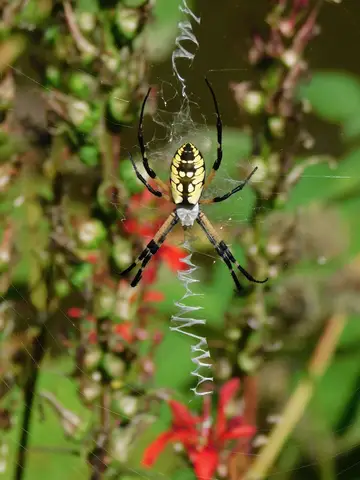
Venomous: “Only two types have venom that can be harmful to humans — the brown recluse and the widow spiders (northern black widow and southern black widow).”
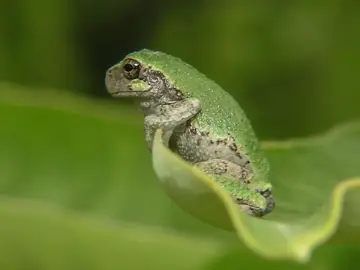
Toxic skin secretions irritating to a predator’s mucous membranes (MDC): “The warts secret toxins that are irritating to a predator’s mucous membranes.”
Toxic skin secretions irritating to a predator’s mucous membranes (MDC): “Numerous ‘warts’ over most of their bodies produce toxic skin secretions that are irritating to a predator’s mucous membranes.”
Toxic skin secretions irritating to a predator’s mucous membranes (MDC): “Numerous ‘warts’ over most of their bodies produce toxic skin secretions that are irritating to a predator’s mucous membranes.”
Toxic skin secretions irritating to a predator’s mucous membranes (MDC): “Numerous ‘warts’ over most of their bodies produce toxic skin secretions that are irritating to a predator’s mucous membranes.”
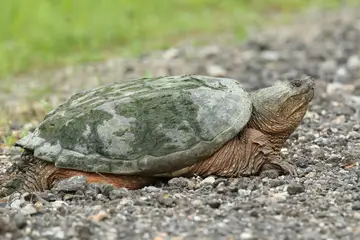
Can carry salmonella per MDC: “When it became known that the turtles and their water can harbor salmonella bacteria, and that humans handling the turtles might be affected, sales of the turtles mostly ended.”
Strong jaws: “Though softshells have notoriously strong jaws and should always be handled with caution, smooth softshells are less inclined to bite when captured compared to spiny softshells.”
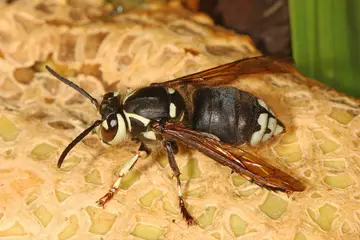
Venomous: “Although these wasps do much that benefits humans, their capacity for colonial, defensive stinging makes them a real concern when they nest near people, especially since some people are allergic to …”
Venomous: “The stinger is extraordinarily long, and the sting is excruciating, hence the popular name ‘cow killer.’ A 1996 study showed that, oddly enough, their venom is comparatively less toxic than that of …”
Venomous: “Much like a single-fanged spider, an assassin bug bites its prey, delivering a venom that subdues its insect prey and causes its tissues to liquefy.”
Venomous: “Much like a single-fanged spider, a wheel bug bites its prey, delivering a subduing venom that causes the prey insect’s tissues to liquefy.”
Venomous: “They do not actively attack people, but if you brush against these caterpillars, stinging hairs, hidden among nonstinging hairs, can poke into your skin and break off, and venom inside the hairs or …”
Sting: “Bee stings, like those of wasps, are not considered medically dangerous to humans, but some individuals are allergic to bee venom and may have a life-threatening anaphylactic reaction if stung.”
Some caterpillars have stinging hairs (MDC): “The elongated clumps are sometimes called "pencils." Some species have hollow, barbed hairs that sting with toxic spines.”
Stinging caterpillars (MDC): “Many species are brightly colored or marked, with odd-shaped tubercles, horns, and numerous stiff spines or hairs capable of delivering a painful sting.”
Exude an irritating chemical that can blister skin (MDC): “When squeezed, blister beetles exude an irritating, oily chemical that can blister one’s skin.”
Itchy bites (MDC): “Their presence is best known, instead, by the intensely itchy welts they leave behind, usually where your skin is thin and tender (ankles, backs of knees, about the crotch, under the beltline, and in …”
May deliver a painful bite if pressed against the skin: “As with other types of assassin bugs, ambush bugs may deliver a painful bite if pressed against your skin. … Their venom is not considered medically significant.”
Venomous: “Our three species of short-tailed shrews have a powerful venom in their saliva that immobilizes insect prey and extends the time fresh food is available, so it facilitates food hoarding.”
Venomous: “Our three species of short-tailed shrews have a powerful venom in their saliva that immobilizes insect prey and extends the time fresh food is available, so it facilitates food hoarding.”
Venomous: “Our three species of short-tailed shrews have a powerful venom in their saliva that immobilizes insect prey and extends the time fresh food is available, so it facilitates food hoarding.”
Can transmit rabies: “Like other mammals, bats can potentially transmit rabies. … Bats are not aggressive toward people but will bite in self-defense if handled.”
Hantavirus: “Although not yet identified in Missouri, hantaviruses that cause hemorrhagic fever with renal syndrome and hantavirus pulmonary syndrome have been identified in the deer mouse, white-footed mouse …”
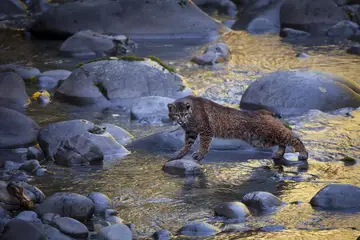
Official sources list the mountain lion as extirpated from Missouri. It is not counted among the dangerous animals above; each entry quotes the source.
Mountain Lion: extirpated. “Officially extirpated, since there is no evidence of a breeding population, but there have been confirmed sightings scattered statewide, as far east as Lewis, Madison, Warren, Wayne, and St. Louis …” MDC
21 nonnative animals are named on Missouri's official lists (MDC). The USGS Nonindigenous Aquatic Species database records 1 nonnative animal in our groups with an established population in Missouri.
Asian Clam Corbicula fluminea
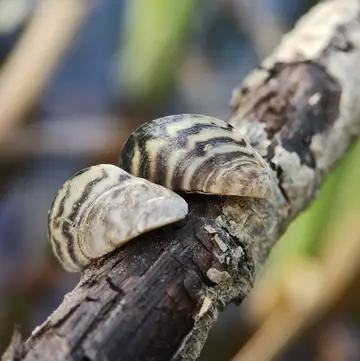
Chinese Mysterysnail Cipangopaludina chinensis malleata
Darker cells are the months with more open-licence observation records of each group in Missouri (GBIF). They show when people see and record these animals, not how many there are. The current month, this month, is highlighted.
Venomous snakes are dangerous; avoid them and any snake you cannot identify. Even freshly killed snakes can bite by reflex. MDC
Wear protective footwear where dangerous snakes may occur; never place your hands under rocks or logs; do not step over rocks or logs: step on them first, then over. MDC
Pit vipers are most active in late evening and at night. MDC
Questions people ask about Missouri wildlife
How many venomous snakes are in Missouri?
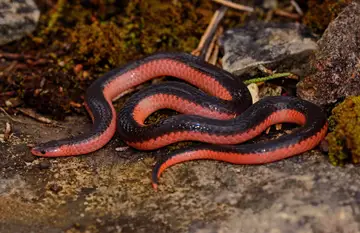
MDC state herpetologist: there are six species of venomous snakes, but one massasauga is considered extirpated, so five still occur. MDC Snake Facts lists the copperhead, cottonmouth, western pygmy rattlesnake, massasauga rattlesnake and timber rattlesnake. MDC
How many kinds of snakes are in Missouri?
MDC: Missouri "has 49 species and subspecies of snakes". MDC's guide has 43 species accounts. MDC
What is the most common venomous snake in Missouri?
MDC: the eastern copperhead is the most common venomous snake in Missouri. MDC
Are there cottonmouths (water moccasins) in Missouri?
Yes. MDC: northern cottonmouth, southeastern corner and a spotty distribution in the Ozark Region. MDC · More
Are there alligators in Missouri?
Not established. USGS NAS lists 6 nonindigenous American alligator records in Missouri (St. Louis 2003, Cass 2005, Boone 2007, Taney 2009, Jefferson 2010, Ste. Genevieve 2010), all with status "failed" (not established). US Geological Survey, Nonindigenous Aquatic Species (NAS) database · More
Are there scorpions in Missouri?
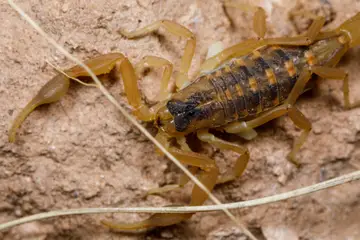
Yes. MDC: the striped bark scorpion is the only scorpion species in Missouri; MDC lists it as venomous. MDC · More
What venomous spiders are in Missouri?
MDC: only two types have venom that can be harmful to humans. MDC
Are there tarantulas in Missouri?
Yes. The Texas brown tarantula lives on dry, rocky, grassy glades in the southern half of Missouri; MDC says its venom is not considered dangerous to humans. MDC · More
Are lizards in missouri venomous?
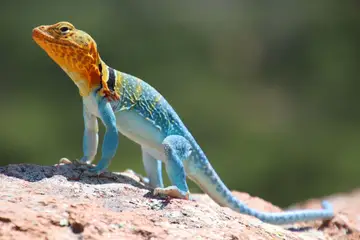
No. MDC: all of Missouri's lizards are harmless to humans; broad-headed skinks are not venomous. MDC
Are there mountain lions in Missouri?
No. MDC: no mountain lions currently breed in Missouri, but some pass through each year. MDC
Are there black bears in Missouri?
Yes. MDC: the bear population was nearly extirpated in the early 1900s but has been growing in recent decades. MDC
Are there wolves in Missouri?
Rarely. MDC: gray wolves occasionally wander in from other states; federally endangered. MDC
Are there feral hogs in Missouri?
Yes. MDC lists feral hogs as invasive and asks for sightings to be reported. MDC
Are there armadillos in Missouri?
Yes. MDC's mammal guide: primarily in the southern half of the state, but may be found as far north as the Missouri-Iowa state line; the population is expanding northward. MDC · More
Are there venomous centipedes in Missouri?
Yes. MDC lists the giant redheaded centipede (southernmost counties) as venomous. MDC
Sources
Snake Facts (MDC Wildlife Facts). Missouri Department of Conservation (MDC). undated page; checked November 3, 2026.Quoted passages (1)
“The most common venomous snake in Missouri is the copperhead.”
“There are only six species of venomous snakes in all of Missouri, and they are described in a separate section of this pamphlet.”
“…has 49 species and subspecies of snakes (a subspecies is a geographic race of a species). … There are only six species of venomous snakes in all of Missouri … MDC news release: "Only six of the 49 snake species native to Missouri are venomous." MDC podcast (state herpetologist): "There's actually 43 different species of snakes in the state." The guide has 43 species accounts (37 non-venomous, 6 venomous).”
“…has 49 species and subspecies of snakes (a subspecies is a geographic race of a species).”
“Southeastern corner and a spotty distribution in the Ozark Region.”
“In Missouri, snakes normally breed in the spring, soon after they emerge from winter dormancy.”
“Southern black widows possess the more potent venom, while northern black widows have venom that is less powerful.”
“Only two types have venom that can be harmful to humans — the brown recluse and the widow spiders (northern black widow and southern black widow).”
“The venom of this tarantula is not considered dangerous to humans. … Texas brown tarantulas inhabit dry, rocky, and grassy glades in the southern half of Missouri.”
“Brown recluses are primarily active at night and can be found year-round, most frequently from spring through fall.”
“Black widows can be found from spring through fall.”
“All of Missouri’s lizards are harmless to humans, although some will attempt to bite if handled, usually causing a mild pain similar to being pinched.”
“It is the only species of scorpion in Missouri. … This is the only one that occurs naturally in Missouri.”
“Although these wasps do much that benefits humans, their capacity for colonial, defensive stinging makes them a real concern when they nest near people, especially since some people are allergic to bee and wasp venom.”
“Except for individuals who are allergic to bee and wasp venom, the sting is not usually considered medically serious.”
“The stinger is extraordinarily long, and the sting is excruciating, hence the popular name ‘cow killer.’ A 1996 study showed that, oddly enough, their venom is comparatively less toxic than that of, say harvester ants and honeybees.”
“They do not actively attack people, but if you brush against these caterpillars, stinging hairs, hidden among nonstinging hairs, can poke into your skin and break off, and venom inside the hairs or spines can penetrate your skin (this is a lot like the spines of stinging nettle plants).”
“Bee stings, like those of wasps, are not considered medically dangerous to humans, but some individuals are allergic to bee venom and may have a life-threatening anaphylactic reaction if stung.”
“They are thickly covered with bristly, stinging spines that cause severe irritation in some people.”
“The elongated clumps are sometimes called "pencils." Some species have hollow, barbed hairs that sting with toxic spines.”
“Many species are brightly colored or marked, with odd-shaped tubercles, horns, and numerous stiff spines or hairs capable of delivering a painful sting.”
“When squeezed, blister beetles exude an irritating, oily chemical that can blister one’s skin.”
“Worldwide, mosquitoes transmit the viruses for many diseases that affect humans and animals.”
“Ticks can transmit Lyme disease, Rocky Mountain spotted fever, Ehrlichiosis, Bourbon virus, Heartland virus, and other diseases.”
“Their presence is best known, instead, by the intensely itchy welts they leave behind, usually where your skin is thin and tender (ankles, backs of knees, about the crotch, under the beltline, and in the armpits) and where tight clothing proves an obstacle to them (as where a belt or elastic band limits their wanderings).”
“As with other types of assassin bugs, ambush bugs may deliver a painful bite if pressed against your skin. … Their venom is not considered medically significant.”
“It is the only species of scorpion in Missouri.”
“It’s of the few centipedes in our state capable of inflicting a painful, venomous bite.”
“Adults fly from early May into September. … There are two broods in Missouri.”
“Missouri’s ruby-throated hummingbirds winter in Central America and arrive in Missouri around April 20. … Ruby-throats begin to depart Missouri in late September and are gone by October 10.”
“MDC is taking reports for sightings of black bears, elk, mountain lions, feral hogs, rare furbearers, and small mammals such as Franklin's ground squirrels and plains pocket gophers.”
“Although no mountain lions currently breed in Missouri, some do pass through the state each year.”
“Missouri’s bear population was nearly extirpated in the early 1900s but has been growing in recent decades, in part due to population recovery work in Arkansas in the 1960s.”
“Missouri Distribution: Primarily in the southern half of the state but may be found as far north as the Missouri- Iowa state line; the population is expanding northward.”
“When it became known that the turtles and their water can harbor salmonella bacteria, and that humans handling the turtles might be affected, sales of the turtles mostly ended.”
“Though softshells have notoriously strong jaws and should always be handled with caution, smooth softshells are less inclined to bite when captured compared to spiny softshells.”
“Spiny softshells are defensive and will try to bite when captured.”
“Our three species of short-tailed shrews have a powerful venom in their saliva that immobilizes insect prey and extends the time fresh food is available, so it facilitates food hoarding.”
“Because a bear can become a danger when it learns to associate humans with food, it is important to keep them wild.”
“Like other mammals, bats can potentially transmit rabies. … Bats are not aggressive toward people but will bite in self-defense if handled.”
“Although not yet identified in Missouri, hantaviruses that cause hemorrhagic fever with renal syndrome and hantavirus pulmonary syndrome have been identified in the deer mouse, white-footed mouse, hispid cotton rat, and marsh rice rat within the United States. … Since it is hard to tell if a mouse or a rat carries hantavirus, it is best to avoid all wild mice and rats and to safely clean up any rodent urine, droppings, or nesting materials with a disinfectant or a mixture of bleach and water.”
“Feral hogs damage property and can spread disease to humans, pets, and livestock.”
“Officially extirpated, since there is no evidence of a breeding population, but there have been confirmed sightings scattered statewide, as far east as Lewis, Madison, Warren, Wayne, and St. Louis counties.”
“In the last decade or so, Missouri hunters have occasionally shot federally endangered wolves that have wandered here from other states, having mistaken them for enormous coyotes.”
“If you see a feral hog, please report it to 573-522-4115, extension 3296, or online.”
“…there's actually six species of venomous snakes. Recent genetics had divided up massasaugas, but one we considered extirpated. So we actually have five that are still occurring in the state.”
“Even freshly killed specimens can inflict a dangerous bite due to reflex action. … Finally, avoid any snake you cannot identify.”
“Wear protective footwear in habitats where dangerous snakes may occur. … Never place your hands under rocks or logs, and do not step over rocks or logs. Step on them first, then over.”
“Pit vipers are most active in late evening and at night; be extra careful during these times.”
“Copperheads are normally active from mid-March through early November. … In Missouri, most copperheads enter overwintering sites from mid-to-late October.”
“In the hottest months (June, July, and August), they become nocturnal.”
“This species is normally active from early April to mid-October.”