Invasive and nonnative animals in Missouri
Last checked November 3, 2026 against official sources.
On this page
21 nonnative animals are named on 3 official lists for Missouri: “MDC Field Guide: Statuses > Invasive (61 results)” (MDC), “MDC Field Guide: Spongy Moth” (MDC) and “MDC Field Guide: Spotted Lanternfly” (MDC).
The USGS Nonindigenous Aquatic Species database records an established population in Missouri for 1 nonnative animal in the groups this guide covers.
To report a sighting, see how to report.
Being on a list of nonnative species does not always mean an animal is harmful or established: each list below is described in its source's terms. A sighting of a listed animal is still worth reporting to the agency.
MDC Field Guide: Statuses > Invasive (61 results)
Missouri Department of Conservation (MDC), undated page. 19 animals.
-
Asian Clam Corbicula fluminea
Statewide. MDC
-
Asian Longhorned Beetle Anoplophora glabripennis
There are no known ALB populations in Missouri. Active ALB infestations are known in Massachusetts, New York, Ohio, and South Carolina. We must remain vigilant so we can eradicate any infestations should they occur … MDC
-
Asian Needle Ant Brachyponera chinensis
Currently not known in Missouri. Have been detected in several U.S. states, including Kentucky, Tennessee, and Arkansas. MDC
-
Bighead Carp Hypophthalmichthys nobilis
Large rivers and lakes throughout Missouri: The Mississippi and Missouri rivers, and lower reaches of their major tributaries (such as the Osage); and tailwaters of Bagnell Dam (on the Osage) and Cannon Dam (on the Salt … MDC
-
Black Carp Mylopharyngodon piceus
This fish has been found in the Mississippi River system, including the Osage River, where in 1994 about 30 reportedly escaped from a fish farm during a high water event and entered that river. MDC
-
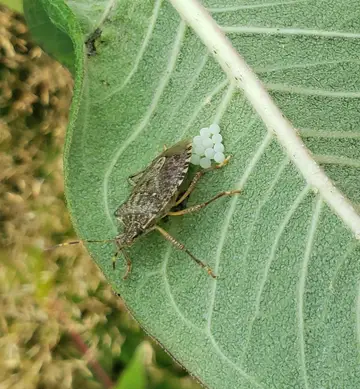
Photo: Alexa Hoffman · CC BY 4.0 · iNaturalist Brown Marmorated Stink Bug Halyomorpha halys
Potentially statewide. MDC
-
Chinese Mysterysnail Cipangopaludina chinensis malleata
Found in at least 11 counties in Missouri. MDC
-
Common Carp Cyprinus carpio
Statewide. Most abundant in big rivers, north and west prairie streams, and southeastern lowlands. MDC
-
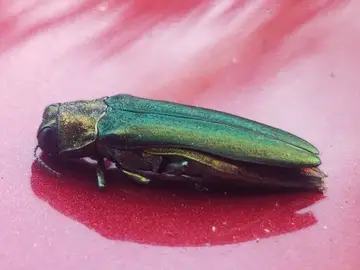
Photo: Brandon McCracken · CC BY 4.0 · iNaturalist Emerald Ash Borer Agrilus planipennis
The EAB was discovered in July 2008 in southeast Missouri in a campground at Wappapello Lake. Since then more infestations have been detected, and as of 2020 the insect has become widespread in the state. MDC
-
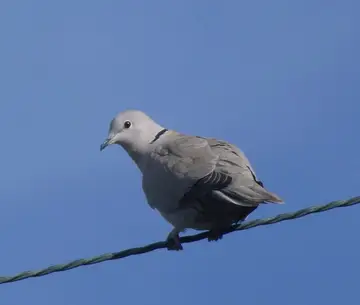
Photo: Laura Liedtke · CC BY 4.0 · iNaturalist Eurasian Collared-Dove Streptopelia decaocto
Statewide. MDC
-
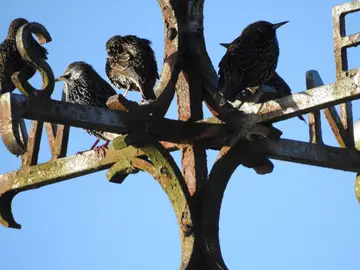
Photo: Surly Aardvark · CC0 1.0 · iNaturalist European Starling Sturnus vulgaris
Statewide. MDC
-
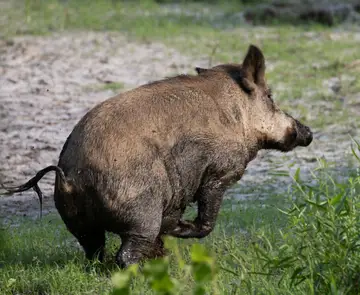
Photo: Cullen Hanks · CC BY 4.0 · iNaturalist Feral Hog (Feral Swine) Sus scrofa
Potentially statewide. Populations are established in numerous Missouri counties, mainly in the southern third of the state. MDC
-
Grass Carp Ctenopharyngodon idella
Widely distributed in the Missouri, Mississippi, and St. Francis rivers. Occasionally found in nearly any stream in the state, but most of these are the result of escape from impoundments where they have been stocked. MDC
-
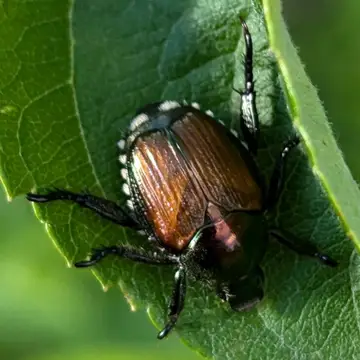
Photo: Emmett Collins-Sussman · CC BY 4.0 · iNaturalist Japanese Beetle Popillia japonica
Statewide. MDC
-
Jumping Worms Amynthas and Metaphire spp.
Potentially statewide. MDC
-
Northern Snakehead Channa argus
Southeast Missouri MDC
-
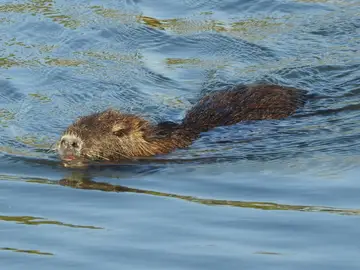
Photo: Sam Kieschnick · CC BY 4.0 · iNaturalist Nutria (Coypu) Myocastor coypus
In Missouri, the nutria has been occasionally observed or trapped in scattered counties across the state … MDC
-
Silver Carp Hypophthalmichthys molitrix
Large rivers and lakes throughout Missouri. MDC
-
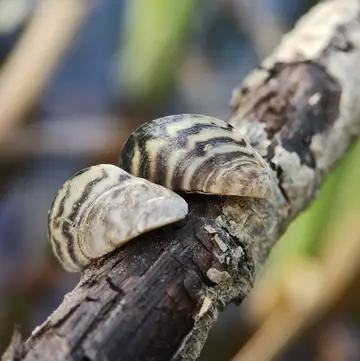
Photo: Harukano · CC0 1.0 · iNaturalist Zebra Mussel Dreissena polymorpha
The range is spreading. Present in several Missouri reservoirs, including Lake of the Ozarks, Bull Shoals Lake, Lake Taneycomo, Lake Lotawana, and Smithville Lake … MDC
MDC Field Guide: Spongy Moth
Missouri Department of Conservation (MDC), undated page. 1 animal.
-
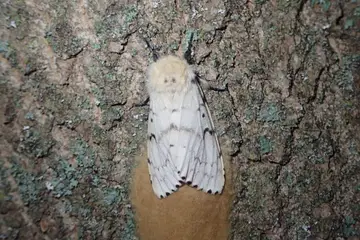
Photo: Emmett Collins-Sussman · CC BY 4.0 · iNaturalist Spongy Moth Lymantria dispar
Sporadic occurrences. Hopefully we can keep this species from establishing itself in our state. MDC
MDC Field Guide: Spotted Lanternfly
Missouri Department of Conservation (MDC), undated page. 1 animal.
-
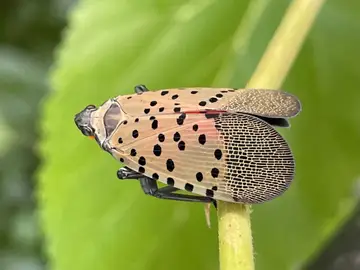
Photo: Isaac Caswell · CC0 1.0 · iNaturalist Spotted Lanternfly Lycorma delicatula
The spotted lanternfly was first found in 2014 in Pennsylvania. Since then, infestations have been detected in numerous eastern states. There are no known populations in Missouri. MDC
Established in Missouri, per USGS records
The U.S. Geological Survey's Nonindigenous Aquatic Species (NAS) database tracks nonnative aquatic animals. These have at least one record with the status "established" in Missouri, which USGS defines as a population showing evidence of reproduction and overwinter survival.
| Animal | Group | First record | Latest record | Counties |
|---|---|---|---|---|
| Nutria Myocastor coypus | Mammals | 1958 | 2005 | 4 |
Source: U.S. Geological Survey. [2026]. Nonindigenous Aquatic Species Database. Gainesville, Florida. Accessed [11/3/2026]. "Native Transplant" animals are native elsewhere in the US but not in Missouri.
How to report a sighting in Missouri
Report sightings of black bears, elk, mountain lions, feral hogs, rare furbearers and some small mammals to MDC. MDC
Do not try to catch or handle the animal. A photo taken from a safe distance, the place and the date help the agency.
Sources
- MDC Field Guide: Statuses > Invasive (61 results). Missouri Department of Conservation (MDC). undated page; checked November 3, 2026.
- MDC Field Guide: Spongy Moth. Missouri Department of Conservation (MDC). undated page; checked November 3, 2026.
- MDC Field Guide: Spotted Lanternfly. Missouri Department of Conservation (MDC). undated page; checked November 3, 2026.
- A Guide to Missouri's Common Mammals (MDC publication E00500). Missouri Department of Conservation (MDC). Copyright 2026; checked November 3, 2026.
Quoted passages (1)
“MDC is taking reports for sightings of black bears, elk, mountain lions, feral hogs, rare furbearers, and small mammals such as Franklin's ground squirrels and plains pocket gophers.”
- U.S. Geological Survey. [2026]. Nonindigenous Aquatic Species Database. Gainesville, Florida. Accessed [11/3/2026].