Japanese Beetle
Popillia japonica · also called JB · Last checked November 3, 2026.
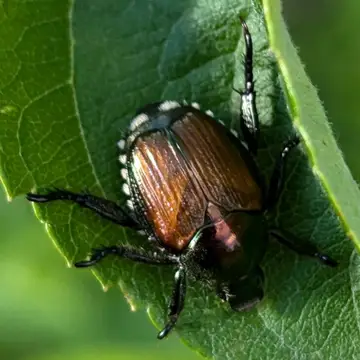
The Japanese beetle is a metallic green and copper scarab beetle from Japan. Its adults eat the leaves, flowers and fruit of about 300 kinds of plants, and its white grubs eat grass roots. Washington's agriculture department says the adults do not sting or bite. It was first found in New Jersey in 1916 and is now established across much of the eastern US. Western states are working to keep it out: Washington and Oregon are trying to eradicate introductions, and California says it is not established there. WSDA
On this page
Is the Japanese beetle dangerous?
WSDA: adult Japanese beetles do not sting or bite and are safe to touch. The harm officials describe is to plants: gardens, parks, farms and lawns. WSDA
“Adult beetles are also safe to touch as they do not sting or bite.”
Bites and stings: Does not sting or bite (WSDA).
No official source we use states whether this animal is venomous. That does not mean it is harmless: do not handle it.
How to identify a Japanese beetle
A photo or description can narrow it down, but cannot confirm what an animal is or that it is safe. Look from a distance and do not handle wild animals.
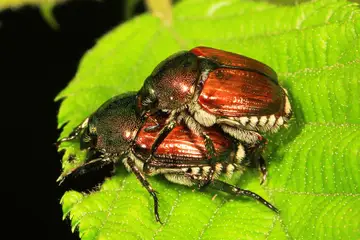

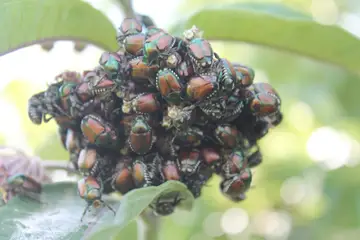
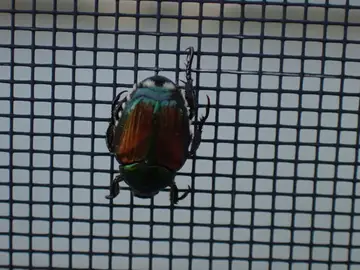
Size: Adults about 1/3 to 1/2 inch long (WSDA); 7/16 inch (Kentucky); 3/8 inch long and 1/4 inch wide (Iowa State). WSDA
Colors: Metallic green head and thorax; copper wing covers. Pattern: White hair patches: five along each side and two at the tip.
Key features
- Row of five white hair tufts on each side of the abdomen Iowa State University Extension and Outreach
- Leaves eaten between the veins look lace-like (skeletonized) Entomology
Young
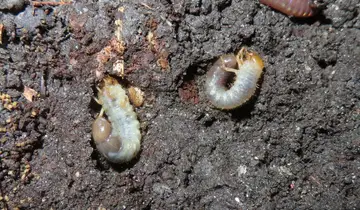
Grubs: white, C-shaped, brown/tan head with visible legs, about 1/8 to 1 inch long, in soil (especially lawns), seen in spring.
Animals mistaken for the Japanese beetle
Japanese Beetle or Little bear beetle?
Japanese Beetle
Little bear beetle
Similar color but covered in woolly fuzz; 1/3 to 3/4 inch. WSDA
Japanese Beetle or Blue milkweed beetle?
Japanese Beetle
Blue milkweed beetle
Oval, bright metallic blue, under 1/2 inch. WSDA
Japanese Beetle or Flower chafer?
Japanese Beetle
Flower chafer
Oval, light brown to brick brown, about 1/2 inch. WSDA
Japanese Beetle or Green pine chafer?
Japanese Beetle
Green pine chafer
Elongated, flat-looking, metallic green to iridescent brown, about 1/3 inch. WSDA
Japanese Beetle or Blister beetle?
Japanese Beetle
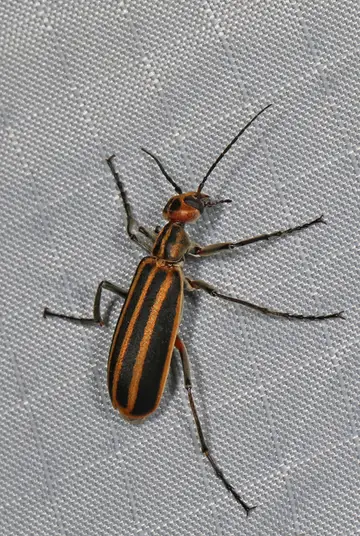
Green, blue or black, 1/4 to 1/2 inch. WSDA
Japanese Beetle or Klamath weed beetle?
Japanese Beetle
Klamath weed beetle
Oblong, metallic blue, bronze, green or purple, about 1/4 inch. WSDA
Where the Japanese beetle lives
- Native or listed
- Nonnative or not established
- No official record in our data
- 1–9
- 10–99
- 100–999
- 1,000+
On our state guides
- Colorado insects and bugsNonnative
- Idaho insects and bugsNonnative
- Illinois insects and bugsNonnative
- Louisiana insects and bugsNonnative
- Maryland insects and bugsNonnative
- West Virginia insects and bugsNonnative
State boundaries: U.S. Census Bureau, cartographic boundary file cb_2024_us_state_20m.
When it is active
Adults appear in June. Activity peaks over 4 to 6 weeks starting in late June, and each beetle lives about 30 to 45 days. Grubs spend the winter in the soil. Entomology
US open-licence records peak in June to July.
Habitat and habits
Habitat: Grubs live in soil, mostly in good-quality turf: home lawns, golf courses, parks and cemeteries. Adults feed on plants, preferring those in direct sun. Entomology
Behavior: Feeds in groups, starting at the top of a plant and working down; most active on warm, sunny days. Adults are strong fliers, and Iowa State says some accounts have them traveling up to 15 miles.
Diet: Adults eat leaves, flowers and overripe or wounded fruit of about 300 plant species. Grubs eat roots of turfgrasses and vegetable seedlings.
Young: One generation a year. Each female lays 40 to 60 eggs in the soil, and the grubs live there about 10 months.
Legal status and reporting
Invasive status: Invasive: WSDA calls it a destructive, invasive insect; Louisiana lists it on its SWAP invasive species list. WSDA
Report: Washington: report sightings to WSDA with the Japanese Beetle Watch online form, by email to [email protected], or by calling 1-800-443-6684. Note the location and include a photo if possible. WSDA
Sources
- Beetle 101 (Japanese beetle). Washington State Department of Agriculture (WSDA). undated page; checked November 3, 2026.
Quoted passages (9)
“Adult beetles are also safe to touch as they do not sting or bite.”
“…are about 1/3 – 1/2 inch long.”
“About 1/8 to one inch long”
“Little bear beetles are similar in color to Japanese beetle but are covered in a woolly fuzz and are 1/3 to 3/4 inch long.”
“Blue milkweed beetle is oval shaped, bright metallic blue in color, and is typically under a ½ inch long.”
“Flower chafer is an oval shaped beetle that is a light brown to brick brown in color, and is typically around ½ inch long.”
“Green pine chafer is a beetle with an elongated body that can appear flat, and ranges from a metallic green to iridescent brown in color, and is typically around 1/3 inch long.”
“Blister beetle is green, blue, or black in color, and are 1/4 to 1/2 inch long.”
“Klamath weed beetle is oblong in shape, metallic blue, bronze, green, or purple in color, and are typically around 1/4 inch long.”
- ENTFACT-451: Japanese Beetles in the Urban Landscape. University of Kentucky Cooperative Extension (Entomology). Revised: 3/26; checked November 3, 2026.
Quoted passages (6)
“Adults feed on the upper surface of foliage, chewing out tissue between the veins. This gives the leaf a lacelike or skeletonized appearance.”
“Grubs feed on the roots of turfgrasses and vegetable seedlings, doing best in good quality turf in home lawns, golf courses, parks, and cemeteries.”
“Japanese beetles feed on about 300 species of plants, devouring leaves, flowers, and overripe or wounded fruit.”
“They usually feed in groups, starting at the top of a plant and working downward. The beetles are most active on warm, sunny days, and prefer plants that are in direct sunlight.”
“Adults emerge from the ground and begin feeding on plants in June. Activity is most intense over a 4 to 6 week period beginning in late June, after which the beetles gradually die off. Individual beetles live about 30 to 45 days.”
“Females leave plants in the afternoon, burrow 2 to 3 inches into the soil in a suitable area, and lay their eggs--a total of 40 to 60 during their life. The developing beetles spend the next 10 months in the soil as white grubs.”
- Japanese Beetle (Yard and Garden encyclopedia). Iowa State University Extension and Outreach. originally published September 12, 2016; checked November 3, 2026.
Quoted passages (1)
“The row of five tufts of white hairs on each side of the abdomen is a distinguishing feature.”
- Japanese Beetle (Plant Health). California Department of Food and Agriculture (CDFA). undated page; checked November 3, 2026.
- Japanese Beetle. Washington State Department of Agriculture (WSDA). undated page; checked November 3, 2026.
Quoted passages (1)
“Japanese beetle (Popillia japonica) is a destructive, invasive insect that feeds on over 300 plants.”
- Report Japanese Beetle. Washington State Department of Agriculture (WSDA). undated page; checked November 3, 2026.
Quoted passages (1)
“If you have seen Japanese beetle in Washington, please report it. Note the location and include a picture if possible.”
- GBIF.org occurrence records, human observations licensed CC0 1.0 or CC BY 4.0 only, accessed November 3, 2026. The datasets behind these counts are listed on our Sources page.
- State boundaries: U.S. Census Bureau, cartographic boundary file cb_2024_us_state_20m.