On this page Which insects can hurt you Ticks (arachnids, not insects) All 16 insects and 3 ticks Lookalikes When they are active If you are bitten or stung What official sources say About this list Sources
This page lists 16 insects and 3 ticks : 9 from DNR's Invasive and Exotic Species in Maryland: Animals; Maryland Poison Center Bites and Stings and 10 named in other official sources.
1 is venomous by official accounts. 11 are nonnative.
Not every species: no complete official list of Maryland insects exists, so this page covers the ones state and Extension sources name. How lists are built .
Which insects can hurt you Official sources single out these insects in Maryland, in their own words:
Bees, wasps, and hornets Stings. “If you are stung multiple times, there is a chance that the stings might cause more harm.” Maryland Poison Center
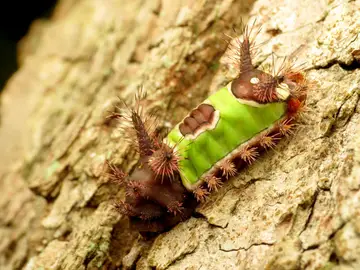
Photo: Katja Schulz · CC BY 4.0 · iNaturalist Saddleback caterpillar Irritating venom in body hairs. “Its body is covered with hairs that contain an irritating venom.” Maryland Poison Center
Stinging caterpillars (saddleback, puss, Io moth) Spines or hairs may inject poison. “When touched, the hairs break off and the poison is injected, causing an inflammation of the skin and a burning sensation that may feel like a bee sting.” University of Maryland Extension
Ticks (arachnids, not insects) Official sources single out these ticks in Maryland, in their own words:
Ticks (black-legged, American dog, lone star) Disease. “While Lyme disease is the most prevalent tickborne disease in Maryland, ticks can also transmit babesiosis, ehrlichiosis, anaplasmosis, Rocky Mountain spotted fever, and tularemia.” Maryland Department of Health
All 16 insects and 3 ticks Venomous species first, then A to Z. Do not handle them.
Photo: Katja Schulz · CC BY 4.0 · iNaturalist Saddleback caterpillar Venomous per Maryland Poison Center
What the sources say Venom: “Its body is covered with hairs that contain an irritating venom.” (Maryland Poison Center)
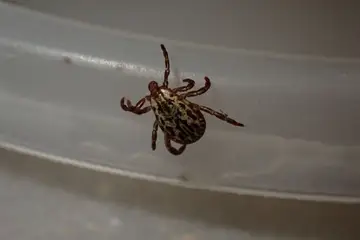
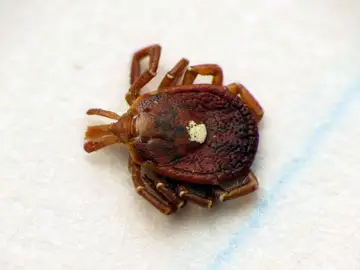
Photo: Turner Brockman · CC BY-SA 4.0 · iNaturalist · resized American dog tick Not stated Tick: an arachnid, not an insect
Venom No official source we use states whether this animal is venomous. That does not mean it is harmless: do not handle it. Where in Maryland Ticks are found throughout Maryland. Maryland Department of Health / Carroll County Health Department No confirmed photo of Asian Longhorned Beetle Asian Longhorned Beetle Anoplophora glabripennis
Not stated Invasive
Venom No official source we use states whether this animal is venomous. That does not mean it is harmless: do not handle it. What the sources say Habitat: Forested (DNR)
No confirmed photo of Bees, wasps, and hornets Bees, wasps, and hornets Not stated
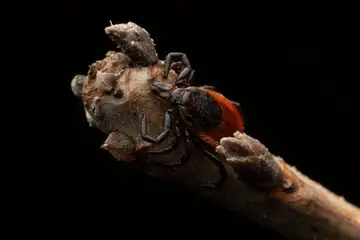
Venom No official source we use states whether this animal is venomous. That does not mean it is harmless: do not handle it. Danger to people “If you are stung multiple times, there is a chance that the stings might cause more harm.” Maryland Poison Center Photo: Jack Forrester · CC BY 4.0 · iNaturalist Black-legged tick Not stated Tick: an arachnid, not an insect
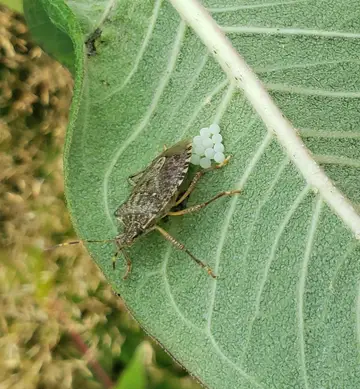
Venom No official source we use states whether this animal is venomous. That does not mean it is harmless: do not handle it. Where in Maryland Ticks are found throughout Maryland. Maryland Department of Health / Carroll County Health Department Photo: Alexa Hoffman · CC BY 4.0 · iNaturalist Halyomorpha halys
Not stated Invasive
Venom No official source we use states whether this animal is venomous. That does not mean it is harmless: do not handle it. Size Adults about 5/8 inch (about 17 mm) long; shield-shaped, almost as wide as long. How to recognize it Two white bands on the antennae; blunt front edge of head; smooth shoulder margin; dark bands at the tip of the membranous forewings; banded abdominal edge visible beside the wings Smooth (not spiny) shoulders; slightly larger than most native stink bugs Where in Maryland Statewide DNR
J F M A M J J A S O N D
311 records by month. What the sources say Habitat: Forested; Non-Forested (DNR)
Full Brown Marmorated Stink Bug guide
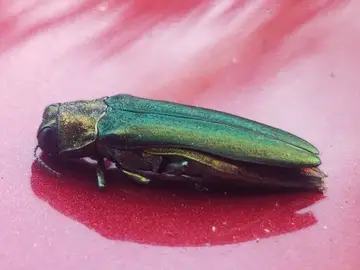
Photo: Brandon McCracken · CC BY 4.0 · iNaturalist Agrilus planipennis
Not stated Invasive
Venom No official source we use states whether this animal is venomous. That does not mean it is harmless: do not handle it. Size About 3/8 to 1/2 inch long and 1/8 inch wide; small enough to fit on a penny How to recognize it Slender, bullet-shaped body Signs on ash trees: S-shaped galleries under the bark and D-shaped exit holes about 1/8 inch across Tree symptoms: dead branches near the top, sprouts on the trunk, vertical bark cracks, and woodpecker 'blonding' Where in Maryland Western; Central; Southern DNR What the sources say Habitat: Forested (DNR)
Full Emerald Ash Borer guide
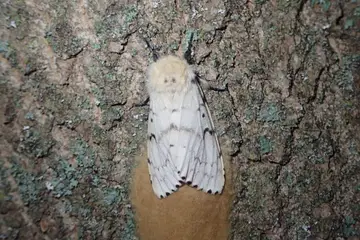
Photo: Emmett Collins-Sussman · CC BY 4.0 · iNaturalist Lymantria dispar
Not stated Invasive
Venom No official source we use states whether this animal is venomous. That does not mean it is harmless: do not handle it. Size Mature caterpillars 1.5 to 2.5 inches long (Missouri: up to 2 inches). Male moths about 1.5-inch wingspread; females larger, about 2 to 2.5 inches. How to recognize it Older caterpillars have a double row of five pairs of blue spots followed by six pairs of red spots down the back, and tufts of hair on each segment. Spongy moth caterpillars do not make silk webs or tents. Females are white and cannot fly; males are brown and fly erratically in daytime in July and August. Where in Maryland Western DNR
J F M A M J J A S O N D
88 records by month. What the sources say Habitat: Forested (DNR)
Full Gypsy Moth guide
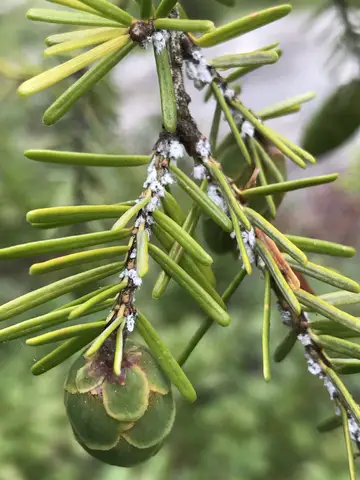
Photo: Alan Weakley · CC0 1.0 · iNaturalist Hemlock Woolly Adelgid Adelges tsugae
Not stated Invasive
Venom No official source we use states whether this animal is venomous. That does not mean it is harmless: do not handle it. Where in Maryland Western DNR What the sources say Habitat: Forested (DNR)
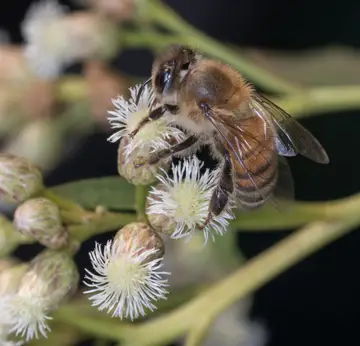
Photo: Jesse Rorabaugh · CC0 1.0 · iNaturalist Apis mellifera
Not stated Nonnative
Venom No official source we use states whether this animal is venomous. That does not mean it is harmless: do not handle it. Size About 10 percent smaller than a European honey bee, a difference too subtle to see without measurement or lab tests. How to recognize it Cannot be identified by eye: only DNA testing or microscopic measurements can tell it from a European honey bee. Clue is behavior and nest site: very defensive, and may nest in small cavities such as water meter boxes, old tires, house eaves or the ground.
J F M A M J J A S O N D
603 records by month. Full Honey bee guide
No confirmed photo of Io moth caterpillar Io moth caterpillar Not stated
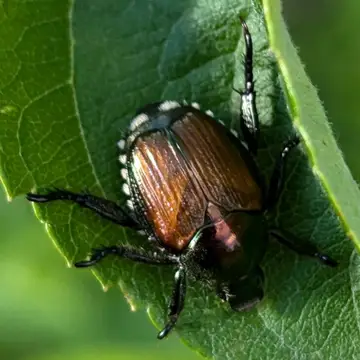
Venom No official source we use states whether this animal is venomous. That does not mean it is harmless: do not handle it. Photo: Emmett Collins-Sussman · CC BY 4.0 · iNaturalist Popillia japonica
Not stated Invasive
Venom No official source we use states whether this animal is venomous. That does not mean it is harmless: do not handle it. Size Adults about 1/3 to 1/2 inch long (WSDA); 7/16 inch (Kentucky); 3/8 inch long and 1/4 inch wide (Iowa State). How to recognize it Row of five white hair tufts on each side of the abdomen Leaves eaten between the veins look lace-like (skeletonized)
J F M A M J J A S O N D
272 records by month. What the sources say Habitat: Forested; Non-Forested (DNR)
Full Japanese Beetle guide
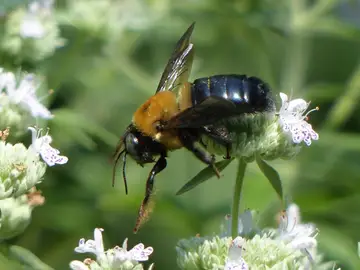
Photo: beewonder · CC0 1.0 · iNaturalist Large carpenter bee Xylocopa virginica
Not stated
Venom No official source we use states whether this animal is venomous. That does not mean it is harmless: do not handle it.
J F M A M J J A S O N D
591 records by month. Photo: Katja Schulz · CC BY 4.0 · iNaturalist Lone star tick Not stated Tick: an arachnid, not an insect
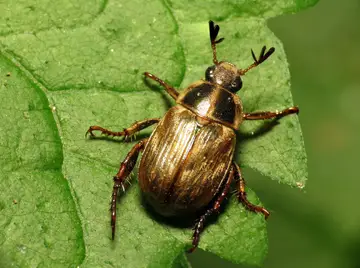
Venom No official source we use states whether this animal is venomous. That does not mean it is harmless: do not handle it. Where in Maryland Ticks are found throughout Maryland. Maryland Department of Health / Carroll County Health Department Photo: Katja Schulz · CC BY 4.0 · iNaturalist Oriental Beetle Exomala orientalis
Not stated Invasive
Venom No official source we use states whether this animal is venomous. That does not mean it is harmless: do not handle it. No confirmed photo of Pine Shoot Beetle Pine Shoot Beetle Tomicus piniperda
Not stated Invasive
Venom No official source we use states whether this animal is venomous. That does not mean it is harmless: do not handle it. What the sources say Habitat: Forested (DNR)
No confirmed photo of Puss caterpillar Puss caterpillar Not stated
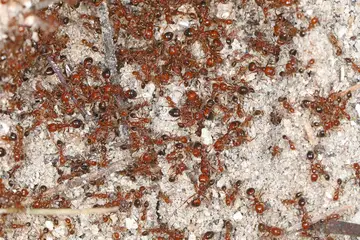
Venom No official source we use states whether this animal is venomous. That does not mean it is harmless: do not handle it. Photo: Judy Gallagher · CC BY 2.0 · Wikimedia Commons Red Imported Fire Ant Solenopsis invicta
Not stated Invasive
Venom No official source we use states whether this animal is venomous. That does not mean it is harmless: do not handle it. What the sources say Habitat: Forested; Non-Forested (DNR)
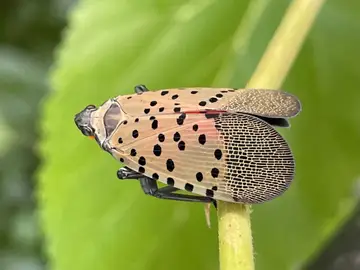
Photo: Isaac Caswell · CC0 1.0 · iNaturalist Lycorma delicatula
Not stated Invasive
Venom No official source we use states whether this animal is venomous. That does not mean it is harmless: do not handle it. Size Adults are roughly 1 inch long and 1/2 inch wide. How to recognize it Forewings brown or gray with black spots, ending in a speckled band. Hind wings scarlet with black spots, plus white and black bars. Abdomen yellow with black bars. Legs and head black. Where in Maryland As of 2025 we have seen spotted lanternfly in 20 of our 23 counties, including Baltimore city. Maryland Department of Agriculture
J F M A M J J A S O N D
1,131 records by month. Full Spotted lanternfly guide
Insects and Bugs people confuse Emerald ash borer or Japanese beetle? Listed by the Minnesota Department of Agriculture and DNR among insects confused with EAB. The sheet gives photos, not a written test.
Africanized Honey Bee or European honey bee? Not by sight: same species and same appearance. Differences are behavior and nest choice, and a confirmed ID needs testing.
Photos show typical adults; individuals vary. Never get close to compare.
When insects are active in Maryland Records of insects in Maryland peak in June to September. They show when people record insects, not how many there are (about month bars ).
Jan Feb Mar Apr May Jun Jul Aug Sep Oct Nov Dec
80,250 records of insects in Maryland by month (GBIF, CC0 and CC BY records). If you are bitten or stung Call 911 or Poison Help at 1-800-222-1222 right away. Poison Help connects you to your local poison center, any time of day.
What official sources say Are there fire ants in Maryland? DNR lists red imported fire ant on its invasive animal table with no region given. DNR
“Red Imported Fire Ant Solenopsis invicta Forested; Non-Forested” Sources Maryland's Wildlife Species . Maryland Department of Natural Resources (DNR). archived copy, captured September 6, 2026; checked November 3, 2026. Archived copy . Invasive and Exotic Species in Maryland: Animals . Maryland Department of Natural Resources (DNR). archived copy, captured May 15, 2026; checked November 3, 2026. Archived copy . Quoted passages (1) “Red Imported Fire Ant Solenopsis invicta Forested; Non-Forested” Spotted Lanternfly Identification & Management . Maryland Department of Agriculture. as of 2025 per page text; checked November 3, 2026. Common Maryland Bees . Maryland Department of Natural Resources (DNR). archived copy, captured December 26, 2025; checked November 3, 2026. Archived copy . What you need to know about Bites and Stings . Maryland Poison Center (University of Maryland School of Pharmacy). Revised 07/2023; checked November 3, 2026. Quoted passages (1) “If you are stung multiple times, there is a chance that the stings might cause more harm.” 7 Unforgettable Cases Managed by the Maryland Poison Center (eAntidote) . Maryland Poison Center. June 2022; checked November 3, 2026. Quoted passages (2) “Its body is covered with hairs that contain an irritating venom.” “They hatch from their cocoons during June and July.” Stinging Caterpillars on Shrubs . University of Maryland Extension. archived copy, captured June 6, 2026; checked November 3, 2026. Archived copy . Quoted passages (1) “When touched, the hairs break off and the poison is injected, causing an inflammation of the skin and a burning sensation that may feel like a bee sting.” Ticks . Maryland Department of Health / Carroll County Health Department. undated page; checked November 3, 2026. MDH urges Marylanders to guard against tickborne diseases . Maryland Department of Health. May 3, 2024; checked November 3, 2026. Quoted passages (2) “While Lyme disease is the most prevalent tickborne disease in Maryland, ticks can also transmit babesiosis, ehrlichiosis, anaplasmosis, Rocky Mountain spotted fever, and tularemia.” “Spring is the start of tick season, but Marylanders should continue to check for ticks after outdoor activities through the fall.” Fish Facts: Spiny Dogfish Shark . Maryland Department of Natural Resources (DNR). archived copy, captured June 12, 2026; checked November 3, 2026. Archived copy . Quoted passages (1) “In Maryland, spiny dogfish are most abundant from November to April.” GBIF.org occurrence records, human observations licensed CC0 1.0 or CC BY 4.0 only, accessed November 3, 2026. The datasets behind these counts are listed on our Sources page.