Maryland Mammals: Species List With Pictures
Last checked November 3, 2026 against official sources.
On this page
DNR: Maryland is home to an estimated 90 species of mammals
This page lists 101 mammals: all from DNR's Mammals of Maryland. 6 are nonnative. DNR gives a total of 90; the 101 here are the mammals official sources name one by one.
Which mammals can hurt you
Official sources single out these mammals in Maryland, in their own words:
-
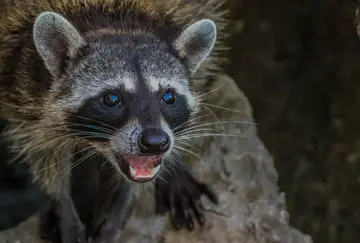
Photo: Marco Antonino Ramos Rodríguez · CC BY-SA 4.0 · Wikimedia Commons · resized Raccoon
Rabies-vector species. “Relocation of rabies-vector species (raccoon, skunk, and fox) is prohibited” DNR
-
Skunk
Rabies-vector species. “Relocation of rabies-vector species (raccoon, skunk, and fox) is prohibited” DNR
-
Fox
Rabies-vector species. “Relocation of rabies-vector species (raccoon, skunk, and fox) is prohibited” DNR
-
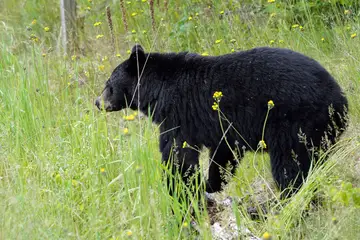
Photo: U.S. Fish and Wildlife Service - Midwest Region · Public domain · Wikimedia Commons Black bear
May bluff charge when threatened. “When threatened, a black bear may also make a bluff charge.” DNR


All 101 mammals on the list
Bats (10)
- Big brown bat Eptesicus fuscus
- Eastern small-footed bat Myotis leibii
- Evening bat Nycticeius humeralis
- Hoary bat Lasiurus cinereus
- Indiana bat Myotis sodalis
- Little brown bat Myotis lucifugus
- Northern long-eared bat Myotis septentrionalis
- Red bat Lasiurus borealis
- Silver-haired bat Lasionycteris noctivagans
- Tricolored Bat Perimyotis subflavus
Bears (1)
- Black bear Ursus americanus
Beavers (1)
- American beaver Castor canadensis
Bowhead whales and right whales (1)
- North Atlantic right whale Eubalaena glacialis
Cats (2)
- Bobcat Lynx rufus
- Eastern mountain lion Felis concolor
Coyotes, Wolves and Foxes (4)
Dwarf Sperm Whales (2)
- Dwarf sperm whale Kogia simus
- Pygmy sperm whale Kogia breviceps
Hoofed mammals (5)
- American bison Bos bison
- American elk Cervus elaphus
- Feral horse (Assateague pony) Equus caballusNonnative
- Sika deer Cervus nipponNonnative
- White-tailed deer Odocoileus virginianus
Jumping Mice (2)
- Meadow jumping mouse Zapus hudsonius
- Woodland jumping mouse Napaeozapus insignis
Lemmings (1)
- Southern bog lemming Synaptomys cooperi
Manatees (1)
- Manatee Trichechus manatus
Moles (3)
- Eastern mole Scalopus aquaticus
- Hairy-tailed mole Parascalops breweri
- Southeastern star-nosed mole Condylura cristata parva
Muskrats (1)
- Muskrat Ondatra zibethicus
New World Mice and Rats (5)
- Allegheny woodrat Neotoma magister
- Deer mouse Peromyscus maniculatus
- Eastern harvest mouse Reithrodontomys humulis
- Marsh rice rat Oryzomys palustris
- White-footed deer mouse Peromyscus leucopus
Nutria (1)
- Nutria Myocastor coypusInvasive
Oceanic Dolphins and Pilot Whales (11)
- Atlantic spotted dolphin Stenella frontalis
- Atlantic white-sided dolphin Lagenorhynchus acutus
- Bottle-nosed dolphin Tursiops truncatus
- Killer whale Orcinus orca
- Long-finned pilot whale Globicephala melas
- Melon-headed whale Peponocephala electra
- Risso's dolphin Grampus griseus
- Short-beaked common dolphin Delphinus delphis
- Short-finned pilot whale Globicephala macrorhynchus
- Striped dolphin Stenella coeruleoalba
- Tamanend's Bottlenose Dolphin Tursiops erebennus
Old World Mice and Rats (3)
- Black rat Rattus rattusNonnative
- House mouse Mus musculusNonnative
- Norway rat Rattus norvegicusNonnative
Opossums (1)
- Virginia opossum Didelphis virginiana
Porcupines (1)
- Porcupine Erethizon dorsatum
Porpoises (1)
- Harbor porpoise Phocoena phocoena
Rabbits and Hares (3)
- Appalachian cottontail Sylvilagus obscurus
- Eastern cottontail Sylvilagus floridanus
- Snowshoe hare Lepus americanus
Raccoons (1)
- Raccoon Procyon lotor
Rorqual whales (5)
- Blue whale Balaenoptera musculus
- Common minke whale Balaenoptera acutorostrata
- Fin whale Balaenoptera physalus
- Humpback whale Megaptera novaeangliae
- Sei whale Balaenoptera borealis
Seals (4)
- Gray seal Halichoerus grypus
- Harbor seal Phoca vitulina
- Harp seal Pagophilus groenlandicus
- Hooded seal Cystophora cristata
Shrews (8)
- Least shrew Cryptotis parva
- Long-tailed shrew Sorex dispar
- Masked shrew Sorex cinereus
- Northern short-tailed shrew Blarina brevicauda
- Smoky shrew Sorex fumeus
- Southeastern shrew Sorex longirostris
- Southern pygmy shrew Sorex hoyi winnemana
- Southern Water shrew Sorex palustris punctulatus
Skunks (2)
- Eastern spotted skunk Spilogale putorius
- Striped skunk Mephitis mephitis
Sperm Whales (1)
- Sperm whale Physeter macrocephalus
Squirrels and Chipmunks (7)
- Delmarva fox squirrel Sciurus niger cinereus
- Eastern chipmunk Tamias striatus
- Eastern fox squirrel Sciurus niger
- Eastern gray squirrel Sciurus carolinensis
- Groundhog (aka Woodchuck) Marmota monax
- Red squirrel Tamiasciurus hudsonicus
- Southern flying squirrel Glaucomys volans
Toothed Whales (2)
- Cuvier's beaked whale Ziphius cavirostris
- True's beaked whale Mesoplodon mirus
Voles (4)
- Meadow vole Microtus pennsylvanicus
- Southern red-backed vole Clethrionomys gapperi
- Southern Rock vole Microtus chrotorrhinus carolinensis
- Woodland vole Microtus pinetorum
Weasels, Minks and Otters (7)
- American ermine Mustela richardsonii
- American marten Martes americana
- Fisher Pekania pennanti
- Least weasel Mustela nivalis
- Long-tailed weasel Neogale frenata
- Mink Neovison vison
- Northern river otter Lontra canadensis
Mammals people confuse
Nutria or American beaver?
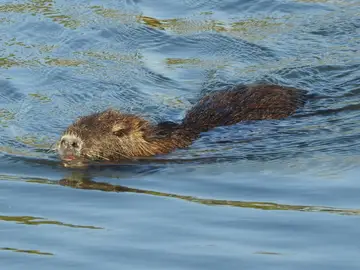
Nutria Not stated
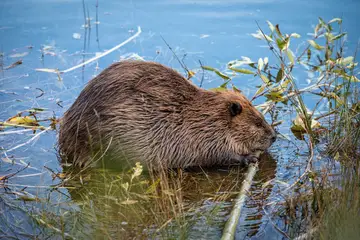

American beaver Not stated
Beavers have a wide, flat tail and dark whiskers and reach up to 60 pounds; nutria have a round, sparsely haired tail and white whiskers.
Nutria or Muskrat?
Nutria Not stated
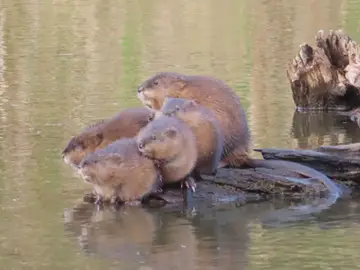
Muskrat Not stated
Muskrats have dark whiskers, a nearly triangular (side-flattened) tail and weigh at most 5 pounds. CDFW says most nutria reports it receives are actually muskrats.
Coyote or Gray wolf?
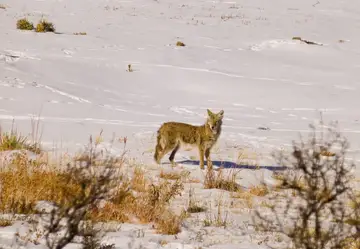

Coyote Not stated
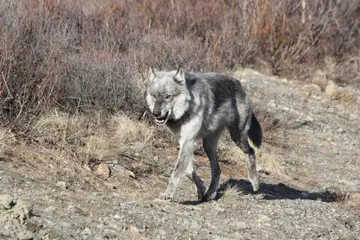
Gray wolf Not stated
NY DEC: gray wolves are much larger (females typically 50-100 lb, males 70-145 lb, 5-6 ft nose to tail, 27-33 in at the shoulder); eastern coyotes rarely exceed 50 lb and generally stand under 2 ft at the shoulder. Wolves have small rounded ears and a short blocky snout; coyotes have larger, more pointed ears (can look rounded in winter coat) and a long, narrow, pointed snout. Coyote tracks are typically 3 x 2 in, wolf tracks about 5 x 4 in. NY DEC says most wolf reports in New York were coyotes, dogs or wolf-dog hybrids.
Mountain lion or Bobcat?
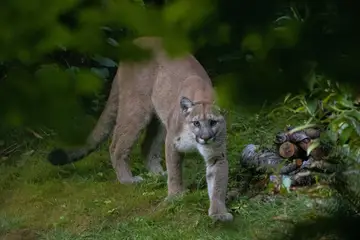
Mountain lion Not stated
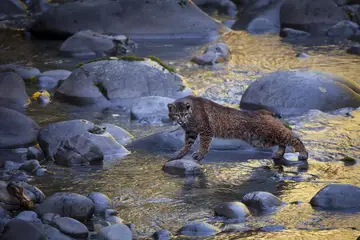

Bobcat Not stated
Bobcats are smaller with short tails and are streaked and spotted with black; mountain lions are uniformly colored with a long tail. Bobcat tracks are under 2 inches wide.
Photos show typical adults; individuals vary. Never get close to compare.
When mammals are active in Maryland
Records of mammals in Maryland peak in March to August. They show when people record mammals, not how many there are (about month bars).
If you are bitten or stung
Call 911 or Poison Help at 1-800-222-1222 right away. Poison Help connects you to your local poison center, any time of day.
What official sources say
Are there black bears in Maryland?
Yes. Primarily in Garrett, Allegany, Washington and Frederick counties (DNR spells it "Fredrick"), and often sighted elsewhere in spring. DNR
“In Maryland, Black bears are located primarily in Garrett, Allegany, Washington, and Fredrick counties.”
Are there coyotes in Maryland?
Yes. First documented in 1972; DNR says they now occur statewide. DNR
“Since that time, population densities and occupied range have expanded incrementally and coyotes now occur statewide.”
Are there mountain lions in Maryland?
No. DNR lists the Eastern mountain lion among seven mammals no longer found wild in the state. DNR
“These species include the American bison, American elk, American marten, Eastern harvest mouse, Eastern mountain lion, gray wolf, and snowshoe hare.”
About this list
The species list comes from Mammals of Maryland (Maryland Department of Natural Resources (DNR), undated page; Internet Archive capture 2026-05-14).
Venom labels come only from official sources and link to them; "Not stated" never means harmless. How labels work.
"Nonnative" and "Invasive" follow the wording of the source list. See invasive species in Maryland.
Sources
- Maryland's Wildlife Species. Maryland Department of Natural Resources (DNR). archived copy, captured September 6, 2026; checked November 3, 2026. Archived copy.
Quoted passages (1)
“Maryland is home to an estimated 90 species of mammals”
- Mammals of Maryland. Maryland Department of Natural Resources (DNR). archived copy, captured May 14, 2026; checked November 3, 2026. Archived copy.
Quoted passages (1)
“These species include the American bison, American elk, American marten, Eastern harvest mouse, Eastern mountain lion, gray wolf, and snowshoe hare.”
- Black Bear. Maryland Department of Natural Resources (DNR). archived copy, captured February 16, 2026; checked November 3, 2026. Archived copy.
Quoted passages (4)
“When threatened, a black bear may also make a bluff charge.”
“In the spring, black bears are often sighted in other areas of the state.”
“Typically, Maryland black bears den in late November through December, pending on the weather.”
“In Maryland, Black bears are located primarily in Garrett, Allegany, Washington, and Fredrick counties.”
- Wildlife Problems. Maryland Department of Natural Resources (DNR). archived copy, captured August 29, 2026; checked November 3, 2026. Archived copy.
Quoted passages (1)
“Relocation of rabies-vector species (raccoon, skunk, and fox) is prohibited”
- Coyote. Maryland Department of Natural Resources (DNR). archived copy, captured October 8, 2026; checked November 3, 2026. Archived copy.
Quoted passages (2)
“Breeding season encompasses late January through March, with peak activities occurring during February.”
“Since that time, population densities and occupied range have expanded incrementally and coyotes now occur statewide.”
- GBIF.org occurrence records, human observations licensed CC0 1.0 or CC BY 4.0 only, accessed November 3, 2026. The datasets behind these counts are listed on our Sources page.