DNR: TURTLES – 19 native species and subspecies & 3 introduced/naturalized species
This page lists 23 turtles: 22 from DNR's Reptiles and Amphibians of Maryland and 1 named in other official sources.
3 are nonnative. DNR gives a total of 22; the 23 here are the turtles official sources name one by one.
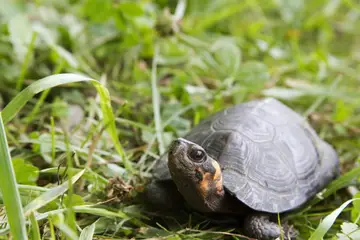
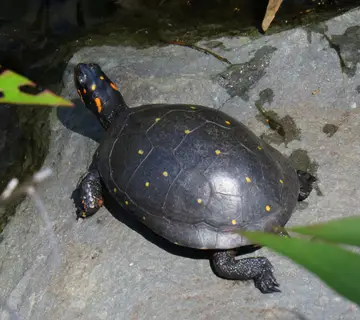
Found in small portions of Maryland north-central counties, from Cecil to Carroll. This species is Federally Threatened due to threats by collectors and habitat loss … DNR
Conservation
Federal & State Threatened (DNR herp checklist); RTE list Dec 2025: G2G3 S2, State Threatened, Federal Threatened
What the sources say
Range: Found in small portions of Maryland north-central counties, from Cecil to Carroll. This species is Federally Threatened due to threats by collectors and habitat loss. If you see one, please report sightings to Maryland Wildlife and Heritage Service.
Habitat: As its name implies, this turtle prefers spring-fed wetlands with soft highly organic soils. They like relatively open habitats with slow flowing stream systems or surface seepages. They are burrowers and need a soft substrate for digging. Dominant vegetation is usually grasses and sedges. (DNR)
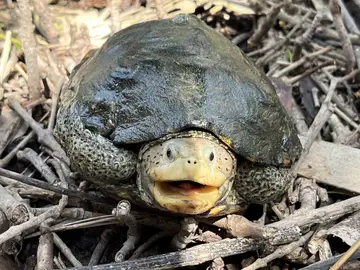
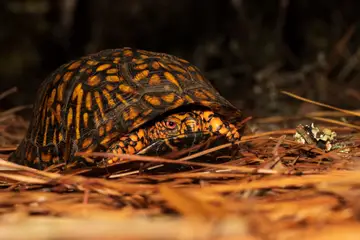
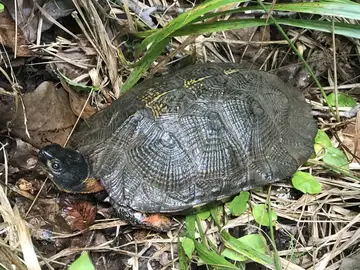
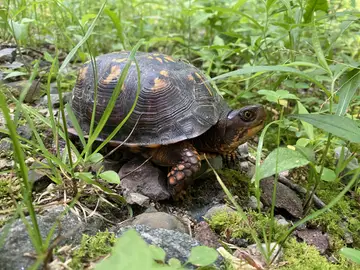
Habitat: A terrestrial species, commonly encountered in rich, open woodlands and riparian forests, but may also be found in pastures and wet meadows, and during hot weather may be found soaking in shallow waters and mucks of various wetland types or under leaf litter. (DNR)
Primarily found on the Coastal Plain but has been found on the Piedmont as far west as Washington County. DNR
What the sources say
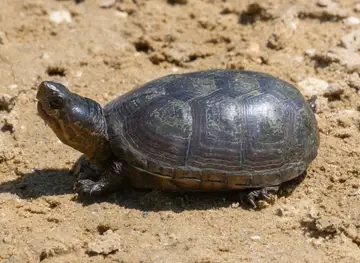
Habitat: Prefers slow-moving shallow water with soft bottoms and thick emergent and aquatic vegetation, such as ditches, wet meadows, small ponds, marshes, cypress swamps and Delmarva Bays. This species is very tolerant of brackish water, so may be locally abundant along tidal marsh edges, upland marsh hummocks and offshore islands. (DNR)
Can be found throughout Maryland but more common on the Coastal Plain. DNR
JFMAMJJASOND
46 records by month.What the sources say
Habitat: Found in most permanent bodies of water with slow current and soft bottoms, including ponds, lakes, swamps, streams and rivers. Often climbs slanting trees on swamp and marsh edges, where they occasionally fall onto boaters. (DNR)
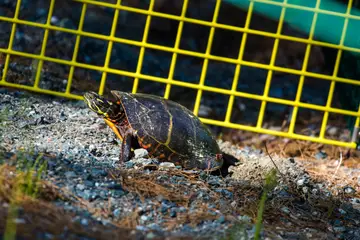
Painted turtles are found throughout Maryland … DNR
What the sources say
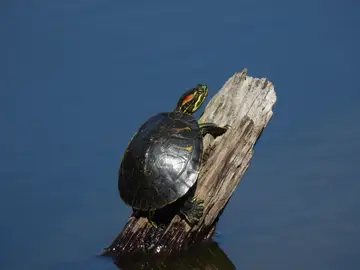
Range: Painted turtles are found throughout Maryland. Eastern Painted Turtles will be found in the southern and eastern counties and may breed with Midland Painteds where they overlap in Central Maryland.
Habitat: Slow-moving shallow water habitats with muddy bottoms and aquatic vegetation, including ponds, marshes, lakes, river pools and ditches. It can be found in both fresh and brackish water. (DNR)
No confirmed photo of False Map Turtle
False Map Turtle
Graptemys pseudogeographica
Nonnative
Where in Maryland
Introduced species. Found in Frederick County. DNR
What the sources say
Habitat: Traditionally found in rivers, lakes, ponds, and occasionally marshlands. (DNR)
No confirmed photo of Green Sea Turtle
Green Sea Turtle
Chelonia mydas
Where in Maryland
Coastal Bays of Worcester County. This turtle is listed as Federally and State Threatened … DNR
Conservation
Federal & State Threatened (DNR herp checklist); RTE list Dec 2025: G3 S1N, State Threatened, Federal Threatened
What the sources say
Range: Coastal Bays of Worcester County. This turtle is listed as Federally and State Threatened. If found, please report sightings to the Maryland Wildlife and Heritage Service. If found stranded or dead, please report sightings.
Habitat: Open ocean, near shore and in coastal bays/estuaries. Most observations in our area are of juveniles near shore, usually in shallow water with an abundance of submerged vegetation. No nesting occurs at our latitude (all is tropical). (DNR)
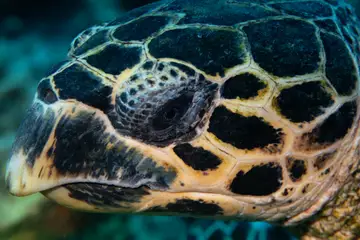
Coastal Bays of Worcester County. This turtle is listed as Federally and State Endangered … DNR
Conservation
Federal & State Endangered (DNR herp checklist); RTE list Dec 2025: G3 SNA, State Endangered, Federal Endangered
What the sources say
Range: Coastal Bays of Worcester County. This turtle is listed as Federally and State Endangered. If found, please report sightings to the Maryland Wildlife and Heritage Service. If found stranded or dead, please report sightings
Habitat: Primarily a tropical species, where it is found only in marine environments, particularly shallow areas of rocky coastlines, coral reefs, estuaries and lagoons with mud bottoms. The key is shallow areas with little or no vegetation. No nesting occurs at our latitude. (DNR)
No confirmed photo of Kemp’s Ridley Sea Turtle
Kemp’s Ridley Sea Turtle
Lepidochelys kempii
Where in Maryland
This turtle is listed as Federally and State Endangered. If found, please report sightings to the Maryland Wildlife and Heritage Service … DNR
Conservation
Federal & State Endangered (DNR herp checklist); RTE list Dec 2025: G1 S1N, State Endangered, Federal Endangered
What the sources say
Range: This turtle is listed as Federally and State Endangered. If found, please report sightings to the Maryland Wildlife and Heritage Service. If found stranded or dead, please report sightings.
Habitat: Marine waters of the Chesapeake Bay, coastal bays, near shore and the continental shelf (< 150 feet deep). Often associated with eelgrass meadows. No nesting occurs at our latitude (most nesting is at Tamaulipas, Mexico). Most of our turtles are juveniles. During the summer months, the lower Chesapeake Bay has the highest concentrations of juvenile Ridleys in the world. (DNR)
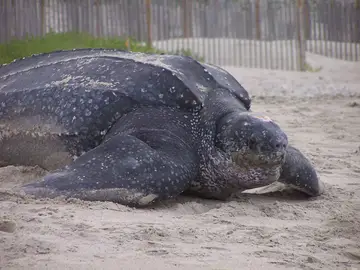
Photo: Rabon David, U.S. Fish and Wildlife Service · Public domain · Wikimedia Commons
Adults 5 to 6 feet long, 750 to 1,000 pounds (NOAA). Texas Parks and Wildlife cites weights up to 1,300 lb and shells up to 8 feet.
How to recognize it
The only sea turtle that lacks scales and a hard shell.
Front flippers proportionally longer than in other sea turtles; rear flippers paddle-shaped.
Usually a pink spot on top of the head that can identify individuals.
Where in Maryland
Off-shore Worcester County. This turtle is listed as Federally and State Endangered. If found, please report sightings to the Maryland Wildlife and Heritage Service … DNR
Conservation
Federal & State Endangered (DNR herp checklist); RTE list Dec 2025: G2 S1N, State Endangered, Federal Endangered
What the sources say
Range: Off-shore Worcester County. This turtle is listed as Federally and State Endangered. If found, please report sightings to the Maryland Wildlife and Heritage Service. If found stranded or dead, please report sightings.
Habitat: Primarily open ocean (pelagic) but can occasionally be found near shore or in the shallow waters of bays and estuaries. They follow drifting schools of jellyfish, their main prey. (DNR)
Adults 2.5 to 3.5 feet long and 200 to 350 pounds (NOAA). NCWRC gives 31 to 45 inches shell length and 170 to 350 pounds; SCDNR says adults can weigh as much as 300 pounds and reach up to four feet in shell length.
How to recognize it
Very large head with powerful jaws.
Slightly heart-shaped top shell.
Two pairs of scales (prefrontal scutes) between the eyes above the nostrils; two claws on each flipper.
Where in Maryland
Aquatic areas of the Coastal Bays and Chesapeake. May nest in Worcester County. This turtle is listed as Federally and State Threatened … DNR
Conservation
Federal & State Threatened (DNR herp checklist); RTE list Dec 2025: G2G4 S1B,S1S2N, State Threatened, Federal Threatened
What the sources say
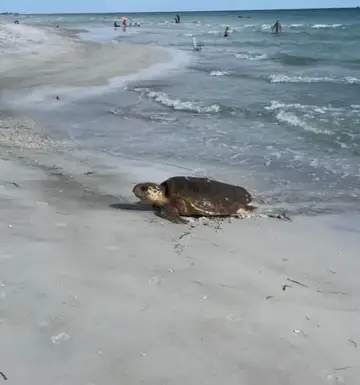
Range: Aquatic areas of the Coastal Bays and Chesapeake. May nest in Worcester County. This turtle is listed as Federally and State Threatened. If found, please report sightings to the Maryland Wildlife and Heritage Service. If found stranded or dead, please report sightings.
Habitat: Open sea to near shore and brackish bays. Occasionally found in the tidal brackish portions of larger coastal rivers. Nest on sandy ocean-side beaches. (DNR)
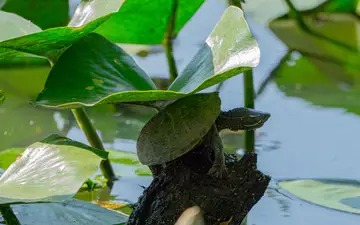
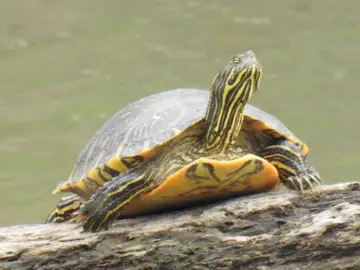
Painted turtles are found throughout Maryland … DNR
What the sources say
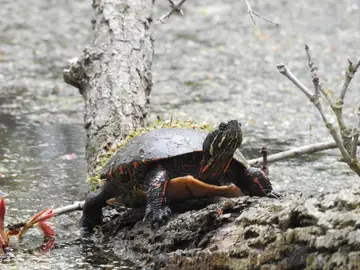
Range: Painted turtles are found throughout Maryland. Midland Painted Turtles will be found in the northern and western counties and may breed with Eastern Painteds where they overlap in Central Maryland.
Habitat: All painted turtles prefer shallow, slow-moving water with a soft bottom and aquatic vegetation. They can be found in both fresh and brackish water. (DNR)
No confirmed photo of Northern Map Turtle
Northern Map Turtle
Graptemys geographica
Where in Maryland
Found only in Harford and Cecil Counties along the Susquehanna River. This turtle is listed as State Endangered … DNR
Conservation
State Endangered (DNR herp checklist); RTE list Dec 2025: G4G5 S1, State Endangered (limited geographical area)
What the sources say
Range: Found only in Harford and Cecil Counties along the Susquehanna River. This turtle is listed as State Endangered. If found, please report sightings to the Maryland Wildlife and Heritage Service.
Habitat: Prefers the deep or shallow parts of slow-moving rivers, large streams and lakes. Needs plenty of vegetation, muddy bottoms and abundant basking sites. (DNR)
Primarily a Coastal Plain species but can be found as far west as Allegany County. DNR
What the sources say
Habitat: Usually associated with deep-water areas of coastal plain rivers and associated floodplain marshes, and ponds. Typically found in areas with a soft silt bottom, lots of aquatic vegetation and numerous basking sites, such as logs and debris. Can also be found in brackish water, near river mouths. (DNR)
This species is not native to Maryland. It is naturally found in the southern United States and was introduced by people releasing pet turtles into the wild … DNR
What the sources say
Range: This species is not native to Maryland. It is naturally found in the southern United States and was introduced by people releasing pet turtles into the wild. Currently, they can be found in the north and central parts of the state, as far south as Prince George's County.
Habitat: Prefers slow warm waters of ponds, lakes, marshes, streams with muddy bottoms, abundant aquatic vegetation and basking rocks and logs. (DNR)
This is primarily a southeastern species; its range stretches from Virginia to Florida, with some sightings in Indiana … DNR
Conservation
RTE list Dec 2025: G5 S3
What the sources say
Range: This is primarily a southeastern species; its range stretches from Virginia to Florida, with some sightings in Indiana. This turtle has not been collected in Maryland but it has been seen in tributaries of the Potomac River in Virginia.
Habitat: This species prefers slow moving waters - rivers or large streams, ponds, swamps, and marshes - with plenty of vegetation, basking sites and rocky bottoms. It is tolerant of brackish water. (DNR)
State - In Need of Conservation (DNR herp checklist); RTE list Dec 2025: G5 S1, State In Need of Conservation
What the sources say
Habitat: Primarily aquatic species, this turtle prefers rivers and tributaries in Western Maryland. Has been seen in ponds; prefers sandy substrates and aquatic vegetation. (DNR)
Habitat: A wide variety of shallow wetlands are used including wet meadows, freshwater marshes, bogs, swamps, small ponds, ditches, small woodland streams, Delmarva Bays and tidally influenced brackish streams. All typically have a soft substrate and some aquatic or emergent vegetation. They also seasonally spend time away from water, typically in woodlands, pastures and fields. (DNR)
No confirmed photo of Striped Mud Turtle
Striped Mud Turtle
Kinosternon baurii
Where in Maryland
Thus far, this has been found in Anne Arundel and Caroline Counties, though it likely is on the Coastal Plain from those counties south to the Virginia line in … DNR
Conservation
RTE list Dec 2025: G4G5 SU
What the sources say
Range: Thus far, this has been found in Anne Arundel and Caroline Counties, though it likely is on the Coastal Plain from those counties south to the Virginia line in appropriate habitat.
Habitat: The few places it has been found in Maryland and Delaware are all associated with the upper reaches of tidal fresh rivers and creeks and the adjacent forested floodplain and upland habitat. Range wide, it is also found in hardwood and cypress swamps, streams, sloughs, blackwater rivers, ponds, lakes, wet meadows, Carolina Bays, and drainage ditches. (DNR)
Combination of brown shell, orange front limbs and a lower shell solidly fused to the upper shell
Males: concave lower shell, long thick tail, broader head
Where in Maryland
May be found west of the Fall Line through the Piedmont and into Western Maryland; infrequently found in Prince George's and Charles Counties. DNR
Conservation
RTE list Dec 2025: G2G3 S2S3
What the sources say
Habitat: Takes advantage of both aquatic and terrestrial habitats, but always remains near water. On land, they may be found in a variety of usually forested habitats, but may be found in fields and meadows and wetlands. In aquatic areas, they prefer clear moving streams or rivers with gravel or hard-packed bottoms. (DNR)
Adult leatherbacks differ from all other sea turtles, including the loggerhead, in their large size, spindle-shaped body and leathery shell without scales.
Photos show typical adults; individuals vary. Never get close to compare.
When turtles are active in Maryland
Records of turtles in Maryland peak in April to July. They show when people record turtles, not how many there are (about month bars).
JanFebMarAprMayJunJulAugSepOctNovDec
2,029 records of turtles in Maryland by month (GBIF, CC0 and CC BY records).
About this list
The species list comes from The Reptiles and Amphibians of Maryland (Maryland Herp Checklist) (Maryland Department of Natural Resources (DNR), undated; "Taxonomy based on Nicholson 2025"; Internet Archive capture 2026-05-14). 1 more entry comes from other official sources named on each card.
Venom labels come only from official sources and link to them; "Not stated" never means harmless. How labels work.