Maryland has 2 venomous snakes named by official sources: Eastern Copperhead and Timber Rattlesnake, as labelled by DNR. This guide covers 9 animal groups from Maryland Department of Natural Resources (DNR), Wildlife and Heritage Service lists and other official sources, with photos, venomous status and when each group is active.
Identification help has limits: a photo cannot confirm that an animal is safe. Watch from a distance and never handle a wild animal.
These are the animals official sources describe as venomous or as a risk to people in Maryland, across 6 groups. The reason is given in the source's own terms.
Spines or hairs may inject poison: “When touched, the hairs break off and the poison is injected, causing an inflammation of the skin and a burning sensation that may feel like a bee sting.”
Disease: “While Lyme disease is the most prevalent tickborne disease in Maryland, ticks can also transmit babesiosis, ehrlichiosis, anaplasmosis, Rocky Mountain spotted fever, and tularemia.”
Official sources say the brown recluse is not native to Maryland or not found there. It is not counted among the dangerous animals above; each entry quotes the source.
Brown recluse: not native. “Brown recluse spiders are not native to Maryland, but on very rare instances they can stow away on packages from the Midwest and the Southwest where the Brown recluses are more common.” DNR
29 nonnative animals are named on Maryland's official lists (DNR). The USGS Nonindigenous Aquatic Species database records 1 nonnative animal in our groups with an established population in Maryland.
Darker cells are the months with more open-licence observation records of each group in Maryland (GBIF). They show when people see and record these animals, not how many there are. The current month, this month, is highlighted.
Report: Nuisance, injured or sick wildlife: call toll-free in Maryland 1-877-463-6497 (USDA Wildlife Services, 8:00 am to 4:30 pm, Monday through Friday, except State holidays); from outside Maryland 410-349-8055. DNR
Official safety advice
If bitten by a venomous snake, immediately contact the Maryland Poison Center at 800-222-1222 (open 24 hours). DNR
Yes. DNR names two snakes with medically significant venom: the eastern copperhead and timber rattlesnake. DNR
Are there rattlesnakes in Maryland?
Yes. Timber Rattlesnake, in western Maryland from Frederick to Garrett County. DNR
Are there copperheads in Maryland?
Yes. Found throughout Maryland except several Eastern Shore counties. DNR · More
Are there water moccasins or cottonmouths in Maryland?
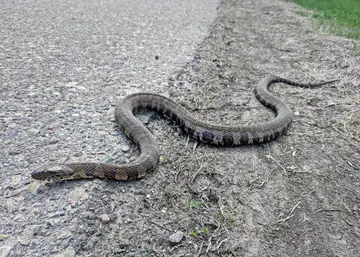
No. DNR says water moccasins do not occur in Maryland; common watersnakes are often mistaken for them. DNR
Are there coral snakes in Maryland?
Not on the official list. The Eastern Coral Snake is not on the DNR herp checklist. DNR notes that the non-venomous Scarletsnake mimics it. No DNR sentence directly says coral snakes are absent. DNR
Are there alligators in Maryland?
The DNR herp checklist lists no crocodilians, and a USGS NAS query for American alligator in Maryland returns no records. NAS does list Common Caiman among Maryland nonindigenous reptiles. USGS Nonindigenous Aquatic Species Database
Are there venomous spiders in Maryland?
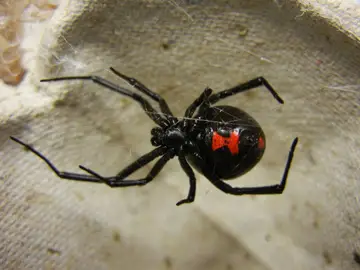
Yes. The black widow is the native spider DNR calls dangerous to people. The brown recluse is venomous but not native. DNR
Are there brown recluse spiders in Maryland?
Not established. DNR says they are not native but on very rare occasions stow away on packages. DNR
Are there black bears in Maryland?
Yes. Primarily in Garrett, Allegany, Washington and Frederick counties (DNR spells it "Fredrick"), and often sighted elsewhere in spring. DNR
Are there coyotes in Maryland?
Yes. First documented in 1972; DNR says they now occur statewide. DNR
Are there mountain lions in Maryland?
No. DNR lists the Eastern mountain lion among seven mammals no longer found wild in the state. DNR
Are there wolves in Maryland?
No. DNR lists the gray wolf among seven mammals no longer found wild in the state. DNR
Are there sharks in Maryland?
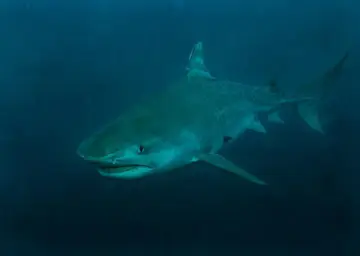
Yes. DNR manages 41 species of coastal sharks; some, like the bull shark, also occur in the main stem and some rivers of the Chesapeake Bay. DNR
“Exclusively a western Maryland species, from Frederick to Garrett County, although historical records place these snakes east to the Susquehanna River.”
“Diurnal during the spring and fall, nocturnal during summer to avoid the heat. Most active in the spring following hibernation.”
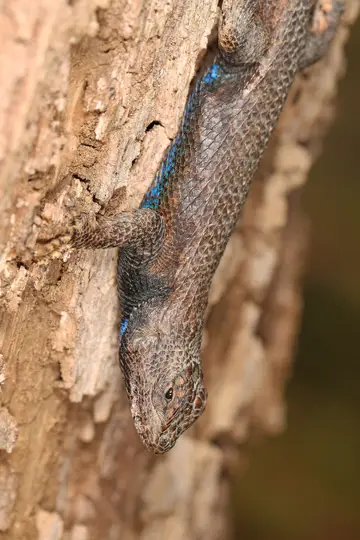
“LIZARDS – 6 native species & 1 introduced/naturalized species”
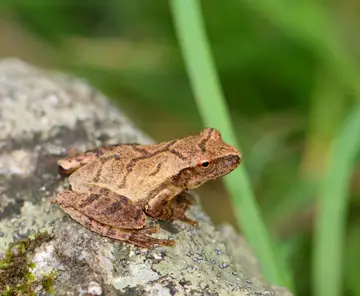
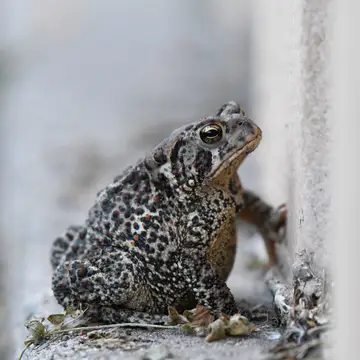
“FROGS AND TOADS – 20 native species”
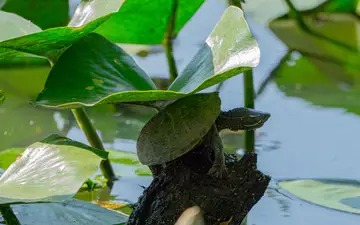
“TURTLES – 19 native species and subspecies & 3 introduced/naturalized species”
Birds of Maryland. Maryland Department of Natural Resources (DNR). archived copy, captured May 15, 2026; checked November 3, 2026.Archived copy. Quoted passages (1)
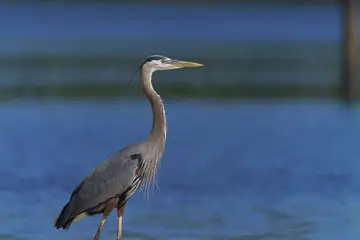
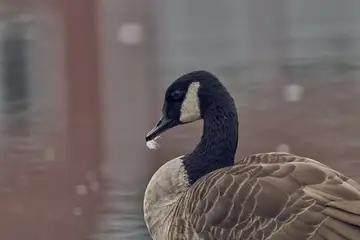
“Over 450 bird species have been documented in Maryland”
Shark Facts. Maryland Department of Natural Resources (DNR). archived copy, captured October 5, 2026; checked November 3, 2026.Archived copy. Quoted passages (2)
“Maryland manages 41 species of coastal sharks, including spiny dogfish.”
“Some sharks are found strictly in coastal waters, and others, like the bull shark, are also found in the main stem and some rivers of the Chesapeake Bay.”
“When touched, the hairs break off and the poison is injected, causing an inflammation of the skin and a burning sensation that may feel like a bee sting.”
“While Lyme disease is the most prevalent tickborne disease in Maryland, ticks can also transmit babesiosis, ehrlichiosis, anaplasmosis, Rocky Mountain spotted fever, and tularemia.”
“Spring is the start of tick season, but Marylanders should continue to check for ticks after outdoor activities through the fall.”
Wildlife Problems. Maryland Department of Natural Resources (DNR). archived copy, captured August 29, 2026; checked November 3, 2026.Archived copy. Quoted passages (2)
“Relocation of rabies-vector species (raccoon, skunk, and fox) is prohibited”
“To report nuisance, injured or sick wildlife, call toll-free in Maryland 1-877-463-6497.”
Black Bear. Maryland Department of Natural Resources (DNR). archived copy, captured February 16, 2026; checked November 3, 2026.Archived copy. Quoted passages (4)
“When threatened, a black bear may also make a bluff charge.”
“In Maryland, Black bears are located primarily in Garrett, Allegany, Washington, and Fredrick counties.”
“In the spring, black bears are often sighted in other areas of the state.”
“Typically, Maryland black bears den in late November through December, pending on the weather.”
Fish Facts: Spiny Dogfish Shark. Maryland Department of Natural Resources (DNR). archived copy, captured June 12, 2026; checked November 3, 2026.Archived copy. Quoted passages (1)
“Watch out for those two dorsal spines, they are mildly venomous.”
“Brown recluse spiders are not native to Maryland, but on very rare instances they can stow away on packages from the Midwest and the Southwest where the Brown recluses are more common.”
“Northern Snakehead Channa argus Stream, River, Pond, and Lake; Bay and Ocean Central; Southern; Eastern”
“Red Imported Fire Ant Solenopsis invicta Forested; Non-Forested”
Venomous Snakes of Maryland. Maryland Department of Natural Resources (DNR). archived copy, captured May 15, 2026; checked November 3, 2026.Archived copy. Quoted passages (6)
“Several of Maryland’s snakes possess venom, but only the copperhead and the timber rattlesnake have medically significant venom known to cause adverse reactions in humans.”
“If bitten by a venomous snake, immediately contact the Maryland Poison Center at 800-222-1222. The Maryland Poison Center is open 24 hours a day”
“Never handle venomous snakes, alive or dead.”
“Leave snakes alone. Many bites occur when people attempt to capture or kill venomous snakes.”
“Both of Maryland’s pit vipers should be treated with caution and should not be approached or handled.”
“On average, Maryland Poison Control receives 100 snake bite cases each year, about half of which are due to bites from venomous snakes, mostly copperhead bites. Snake bites are serious and require expert evaluation and treatment.”
“Mimics the color and pattern of the venomous Eastern Coral Snake, however this non-venomous species has black separating the narrow yellow (sometimes white) blotches and broad red blotches”
Common Maryland Spiders. Maryland Department of Natural Resources (DNR). archived copy, captured December 25, 2025; checked November 3, 2026.Archived copy. Quoted passages (1)
“Many of the spiders in Maryland possess venom, but the black widow is the only native Maryland spider that is dangerous to people.”
Coyote. Maryland Department of Natural Resources (DNR). archived copy, captured October 8, 2026; checked November 3, 2026.Archived copy. Quoted passages (2)
“Since that time, population densities and occupied range have expanded incrementally and coyotes now occur statewide.”
“Breeding season encompasses late January through March, with peak activities occurring during February.”
Mammals of Maryland. Maryland Department of Natural Resources (DNR). archived copy, captured May 14, 2026; checked November 3, 2026.Archived copy. Quoted passages (2)
“These species include the American bison, American elk, American marten, Eastern harvest mouse, Eastern mountain lion, gray wolf, and snowshoe hare.”
“Mammals such as the nutria, black rat, Norway rat, house mouse, sika deer and feral pony have been introduced to Maryland; nutria were eradicated in 2022.”
Sea Nettles Forecast. NOAA National Centers for Coastal Ocean Science. undated page; checked November 3, 2026.Quoted passages (1)
“The sea nettle, Chrysaora chesapeakei, is the jellyfish most commonly seen in the Chesapeake Bay.”