Bobcat
Lynx rufus · Last checked November 3, 2026.
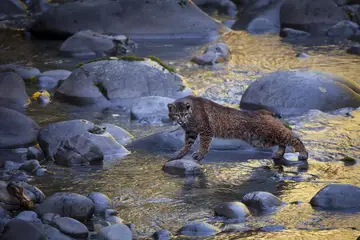

The bobcat is a medium-sized wild cat with a short 'bobbed' tail, tufted ears and a spotted tan to reddish-brown coat. South Carolina DNR says bobcats live throughout the lower 48 states but are rare in many upper Midwestern states. Arizona Game and Fish says they rarely attack people and most human attacks have been linked to rabies, and that food attracting them can include poultry and small unattended pets. If a bobcat bites someone, call 911 or Poison Help at 1-800-222-1222. South Carolina Department of Natural Resources
On this page
Is the bobcat dangerous?
Bobcats rarely attack people, and most attacks on people have been linked to rabies. Arizona Game and Fish Department
“Bobcats rarely attack people, and most human attacks have been related to rabies.”
Bites and stings: Attacks on people are rare (Arizona Game and Fish); most have been linked to rabies.
How to identify a bobcat
A photo or description can narrow it down, but cannot confirm what an animal is or that it is safe. Look from a distance and do not handle wild animals.
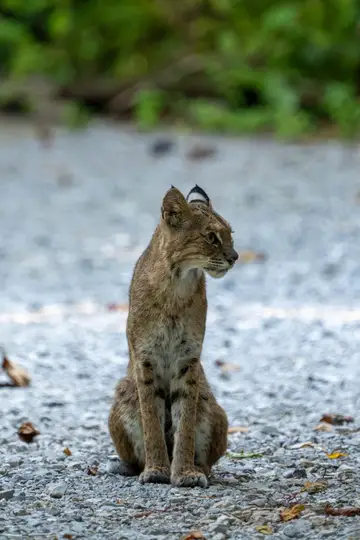
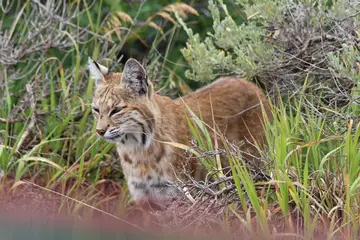

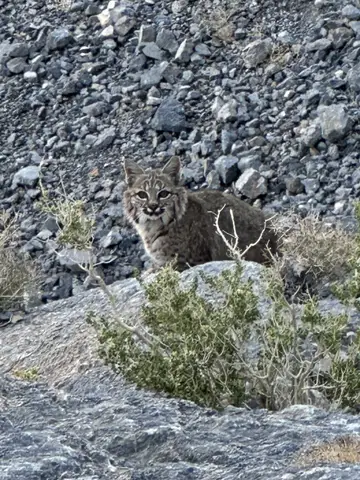
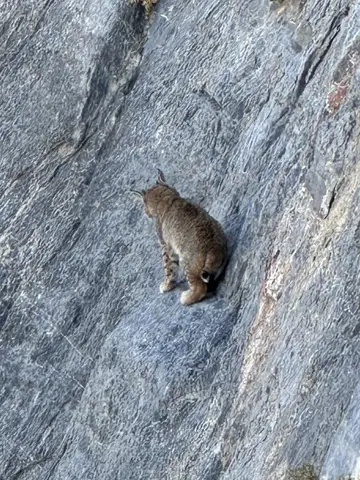
Size: Total length 18 to 50 inches, tail 3 to 8 inches, weight 8 to 49 pounds (Missouri). About twice the size of a house cat.
Colors: Yellowish to reddish brown, streaked and spotted with black; grayish brown to reddish brown, with black spots on the legs and lower sides. Pattern: Spotted and barred, especially on the legs.
Key features
- Short 'bobbed' tail, 4 to 8 inches, with a black tip and white underneath (Arizona). New Mexico instead describes black bars on top, white underneath and a white tip. Arizona Game and Fish Department
- Pointed ears with tufts at the tips, often with cheek tufts Arizona Game and Fish Department
- Backs of the ears are black with a light central spot Missouri Department of Conservation
- Long legs, longer than a house cat's South Carolina Department of Natural Resources
Young
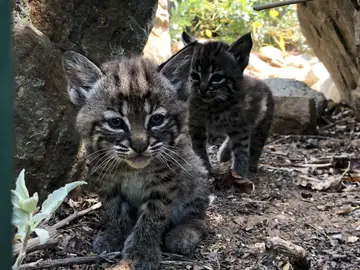
Kittens are well furred and spotted at birth and stay with their mother until early fall.
Animals mistaken for the bobcat
Bobcat or Mountain lion (cougar)?
Bobcat
Mountain lion (cougar) Puma concolor
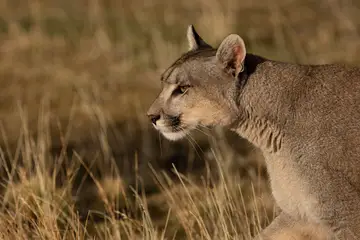

Cougars are one color (yellow-brown to light cinnamon) with a long tail. The bobcat's tail is short and its coat is spotted. TWRA says cougars are many times larger and longer, with a very long tail. New Mexico Department of Game and Fish
See the mountain-lion page for official danger statements. North Carolina's wildlife agency says cougar sightings reported in that state are nearly always misidentifications, and bobcats are among the animals most often mistaken for cougars.
Bobcat or Canada lynx?
Bobcat
Canada lynx Lynx canadensis
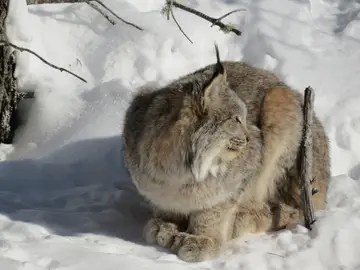
A lynx has longer ear tufts and large, fur-covered feet (3.5 to 4.5 inches wide). A bobcat's feet are small and hairless (up to 2.5 inches). A lynx's tail has a black tip and no white underneath; a bobcat's tail is white underneath. Do not use the tail tip alone, because agencies describe the bobcat's tip differently (New Mexico white, Arizona black). New Mexico Department of Game and Fish
Not stated in the sources checked.
Bobcat or Domestic cat?
Bobcat
Domestic cat Felis catus
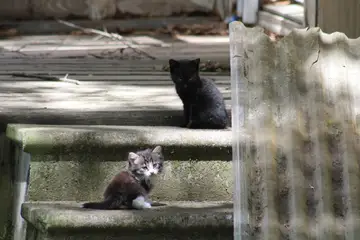
TWRA says the domestic cat is smaller, usually has a longer tail and is not spotted with black. NCWRC says a bobcat is about twice as large, and South Carolina DNR says its legs are longer. Tracks of young bobcats are easily confused with house cat tracks (Missouri). Missouri Department of Conservation
Not applicable.
Where the bobcat lives
- Native or listed
- Nonnative or not established
- No official record in our data
- 1–9
- 10–99
- 100–999
- 1,000+
On our state guides
- Alabama mammals
- Arizona mammals
- Arkansas mammals
- California mammals
- Colorado mammals
- Connecticut mammals
- Delaware mammals
- Florida mammals
- Idaho mammals
- Illinois mammals
- Indiana mammals
- Iowa mammals
- Kansas mammals
- Kentucky mammals
- Louisiana mammals
- Maine mammals
- Maryland mammals
- Massachusetts mammals
- Minnesota mammals
- Mississippi mammals
- Missouri mammals
- Montana mammals
- Nebraska mammals
- Nevada mammals
- New Hampshire mammals
- New Jersey mammals
- New York mammals
- North Carolina mammals
- North Dakota mammals
- Ohio mammals
- Oklahoma mammals
- Pennsylvania mammals
- Rhode Island mammals
- South Carolina mammals
- South Dakota mammals
- Tennessee mammals
- Texas mammals
- Vermont mammals
- Washington mammals
- West Virginia mammals
- Wisconsin mammals
- Wyoming mammals
State boundaries: U.S. Census Bureau, cartographic boundary file cb_2024_us_state_20m.
When it is active
Active year-round, day or night, but mostly at dawn and dusk. North Carolina Wildlife Resources Commission
US open-licence records peak in January to March, May, July, October and December.
Habitat and habits
Habitat: A wide range of habitats. Missouri: heavy forest cover broken by clearings and rocky outcrops, and sometimes areas near towns. Texas: favors rocky canyons or outcrops, otherwise thickets. Missouri Department of Conservation
Behavior: Solitary and elusive; it is rare to see one. Bobcats can live close to people.
Diet: Mostly rabbits, mice, rats, squirrels and other small mammals. Also birds, deer (Missouri: some likely carrion; Texas: most deer meat found in stomachs was carrion), and sometimes poultry and domestic cats.
Young: In Missouri, mating runs from December into June and peaks in March. Litters of usually 2 or 3 kittens are born 50 to 70 days later, mostly in May and June.
Legal status and reporting
Protection: Rules vary by state, so check your state wildlife agency. Sources checked: hunted and trapped in legal seasons in Missouri and North Carolina, hunted and trapped in Tennessee, commercial harvest allowed in South Carolina, a game species with a set season in New York. In Pennsylvania, landowners and homeowners may not trap bobcats.
Report: No national program found. Arizona: if a bobcat bites a person or appears hyperactive, contact your county animal control office and your local Arizona Game and Fish Department office. Elsewhere, contact your state wildlife agency. Arizona Game and Fish Department
Questions about the bobcat
Are there bobcats in louisiana?
Yes. The bobcat (Lynx rufus) appears on the Louisiana Department of Wildlife and Fisheries poster "Common Mammals of Louisiana".
Mountain lion vs bobcat
A mountain lion (cougar) is one color, yellow-brown to light cinnamon, with a long tail. A bobcat is much smaller and spotted, with a short 'bobbed' tail and tufted ears. North Carolina's wildlife agency says bobcats are among the animals most often mistaken for cougars.
Sources
- Bobcat. South Carolina Department of Natural Resources. undated page; checked November 3, 2026.
Quoted passages (1)
“Their legs are longer than those of domestic cats.”
- Living With Bobcats. Arizona Game and Fish Department. archived copy, captured January 16, 2026; checked November 3, 2026.
Quoted passages (4)
“Bobcats rarely attack people, and most human attacks have been related to rabies.”
“Short, ‘bobbed’ tail (4 to 8 inches long) with a black tip and white underneath.”
“Pointed ears with tufts of hair at the tips and often with cheek tufts.”
“Contact your county animal control office.”
- Bobcat (Field Guide). Missouri Department of Conservation. undated page; checked November 3, 2026.
Quoted passages (5)
“The backs of the prominent, pointed ears are black with a central light-colored spot.”
“Bobcats live in heavy forest cover, preferably second-growth timber with much underbrush, broken with clearings such as glades and rocky outcrops. They are, however, highly adaptive and can inhabit many types of Missouri landscapes, including areas near urban developments.”
“Rabbits, mice, rats, squirrels, and other small mammals make up most of the diet, as well as deer (some likely eaten as carrion), opossums, domestic cats, wild turkeys, quail, and other animals.”
“Mating begins in December and can extend into June, with the peak in March. Litters of usually 2 or 3 kittens are born after 50 to 70 days, most in May and June.”
“Tracks of young bobcats are easily confused with those of housecats.”
- Bobcat (Lynx rufus). Texas Parks and Wildlife Department. undated page; checked November 3, 2026.
Quoted passages (1)
“The young are well-furred and spotted at birth; their eyes open in about 9 days. … They remain with their mother until early fall”
- Bobcat. North Carolina Wildlife Resources Commission. undated page; checked November 3, 2026.
Quoted passages (2)
“In fact, due to their elusive nature, it is a rarity to see a bobcat.”
“Bobcats are active year-round and can be active day or night, but tend to exhibit crepuscular (dawn and dusk) activity.”
- Living with Large Predators in New Mexico. New Mexico Department of Game and Fish (now Department of Wildlife). 2016; checked November 3, 2026.
Quoted passages (2)
“Cougars (Puma concolor, translated "cat of one color") are a yellow-brown to light-cinnamon color with black-tipped ears and tail. … Cougars, even young cats, are distinguished from other wild cats by the long tail.”
“Though both the bobcat and lynx have erect, tufted ears, the lynx has longer tufts. … Bobcats have small, hairless feet (up to 2-1/2 inches wide) while lynx have larger, fur-covered feet (3-1/2 to 4-1/2 inches wide).”
- Common Mammals of Louisiana (poster). Louisiana Department of Wildlife and Fisheries. 2018; checked November 3, 2026.
- Eastern Cougar. North Carolina Wildlife Resources Commission. undated page; checked November 3, 2026.
- Mammals (Tennessee Watchable Wildlife species accounts). Tennessee Wildlife Resources Agency. undated page; checked November 3, 2026.
- GBIF.org occurrence records, human observations licensed CC0 1.0 or CC BY 4.0 only, accessed November 3, 2026. The datasets behind these counts are listed on our Sources page.
- State boundaries: U.S. Census Bureau, cartographic boundary file cb_2024_us_state_20m.