States Wildlife

Florida Mammals: Species List With Pictures

Last checked November 3, 2026 against official sources.

On this page
  1. Which mammals can hurt you
  2. All 55 mammals
  3. When they are active
  4. If you are bitten or stung
  5. How to report
  6. Common questions
  7. About this list
  8. Sources

FWC: This checklist identifies the 99 species of wild mammals currently found in Florida, 11 of which have been introduced or recently expanded their range into the state.

This page lists 55 mammals: 47 from FWC's Checklist of Florida's Mammals and 8 named in other official sources. 6 are nonnative. FWC gives a total of 99; the 55 here are the mammals official sources name one by one.

Not every species: this page shows the mammals named in the official sources below. How lists are built.

Which mammals can hurt you

Official sources single out these mammals in Florida, in their own words:

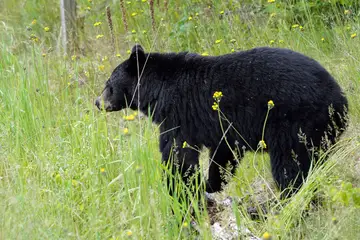
  • Florida black bear
    Photo: U.S. Fish and Wildlife Service - Midwest Region · Public domain · Wikimedia Commons

    Florida black bear

    Can seriously harm or kill people, though injuries in Florida are rare. “Even though they are typically quiet and shy animals, they have the potential to seriously harm or kill people.” FWC

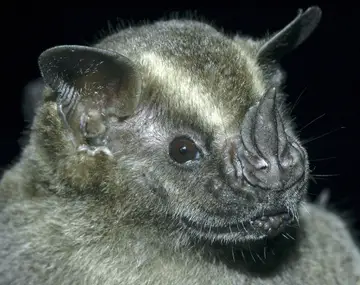
  • Bats

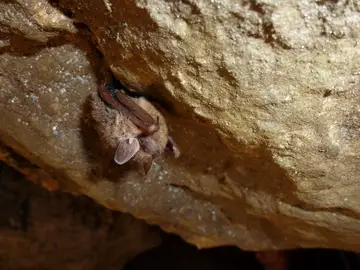
    Disease. “Bats do carry rabies, and are one of the primary vectors for rabies exposure in the United States.” FWC

  • Raccoons and foxes

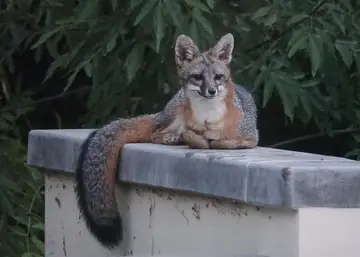
    Disease. “However, any mammal is capable of carrying rabies, and in Florida, foxes and raccoons have a higher incidence of rabies than bats do.” FWC

All 55 mammals

From A to Z. Do not handle them.

No confirmed photo of Big brown bat

Big brown bat

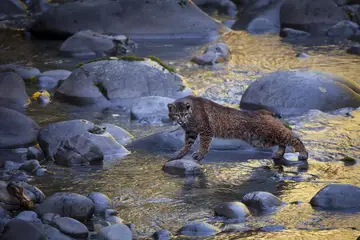
Bobcat
Photo: National Marine Sanctuaries · Public domain · Wikimedia Commons

Bobcat

Lynx rufus

Size
Total length 18 to 50 inches, tail 3 to 8 inches, weight 8 to 49 pounds (Missouri). About twice the size of a house cat.
How to recognize it
  • Short 'bobbed' tail, 4 to 8 inches, with a black tip and white underneath (Arizona). New Mexico instead describes black bars on top, white underneath and a white tip.
  • Pointed ears with tufts at the tips, often with cheek tufts
  • Backs of the ears are black with a light central spot
104 records by month.

Full Bobcat guide

No confirmed photo of Brazilian free-tailed bat

Brazilian free-tailed bat

Tadarida brasiliensis

No confirmed photo of Bryde’s whale

Bryde’s whale

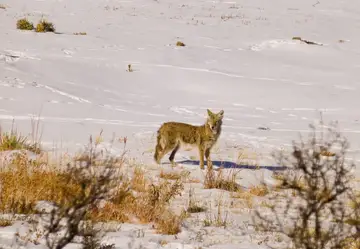
Coyote
Photo: Gaurav Vaidya from Chapel Hill, USA · CC BY 2.0 · Wikimedia Commons

Coyote

Where in Florida
Coyotes are found throughout Florida, having been documented in all 67 Florida counties. FWC
What the sources say

Habitat: This medium-sized canine, a close relative of the domestic dog, is extremely adaptable and can be found in rural, suburban and urban landscapes. (FWC)

No confirmed photo of Eastern mole

Eastern mole

Scalopus aquaticus

No confirmed photo of Eastern spotted skunk

Eastern spotted skunk

No confirmed photo of Evening bat

Evening bat

Florida black bear
Photo: U.S. Fish and Wildlife Service - Midwest Region · Public domain · Wikimedia Commons

Florida black bear

Ursus americanus floridanus

Danger to people
“Even though they are typically quiet and shy animals, they have the potential to seriously harm or kill people.” FWC
Where in Florida
The subspecies currently lives in seven separated subpopulations throughout Florida, as well as in southern Alabama and southern Georgia. FWC
Conservation
Listed by the state as threatened from 1974 to 2012 (FWC)
No confirmed photo of Gambian Pouched Rat

Gambian Pouched Rat

Cricetomys gambianus

Nonnative

No confirmed photo of Gray bat

Gray bat

Myotis grisescens

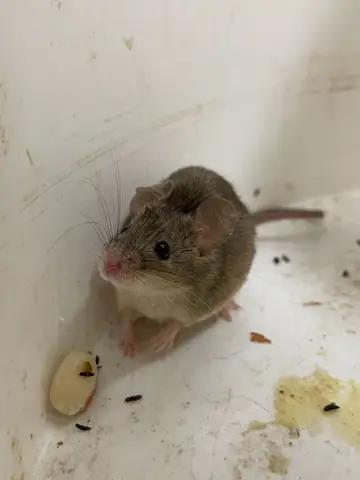
House Mouse
Photo: Emily Langdon-Lassagne · CC0 1.0 · iNaturalist

House Mouse

Mus musculus

Nonnative

No confirmed photo of Humpback whale

Humpback whale

No confirmed photo of Indiana bat

Indiana bat

Myotis sodalis

No confirmed photo of Least shrew

Least shrew

No confirmed photo of Little brown bat

Little brown bat

Myotis lucifugus

No confirmed photo of Little mastiff bat

Little mastiff bat

Molossus molossus

Nonnative

No confirmed photo of Mink

Mink

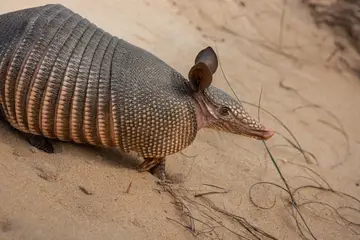
Nine-banded armadillo
Photo: MartinKlippel · CC BY-SA 4.0 · Wikimedia Commons · resized

Nine-banded armadillo

Dasypus novemcinctus

Nonnative

Size
Cat-sized: 15-17 in long not counting the tail, 8-17 lb (FWC); 24-32 in including a 9.5-14.5 in tail (UGA).
How to recognize it
  • Bony skin plates that form a shell, which make it easy to identify
  • Long scaly tail, deer-like ears, long pig-like snout
  • Tail encased in 12 bony rings; no canine or incisor teeth

Full Nine-banded armadillo guide

No confirmed photo of Northern long-eared bat

Northern long-eared bat

Myotis septentrionalis

No confirmed photo of Northern yellow bat

Northern yellow bat

Lasiurus intermedius

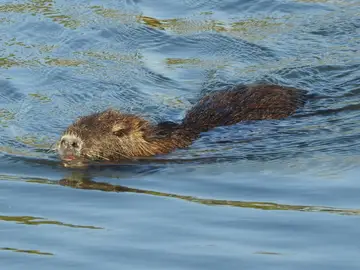
Nutria
Photo: Sam Kieschnick · CC BY 4.0 · iNaturalist

Nutria

Myocastor coypus

Nonnative

Size
Body 47 to 61 cm (about 1.5 to 2 ft) plus a tail of about 37 to 41 cm (USGS). Males reach about 20 lb and females 18 lb (USGS). CDFW: up to 2.5 ft body length, 12 to 18 inch tail, 20+ lb.
How to recognize it
  • White whiskers and a large, round, sparsely haired tail.
  • Large dark-orange front teeth (incisors).
  • Hind feet webbed on four of five toes.

Full Nutria guide

No confirmed photo of Panther or cougar

Panther or cougar

No confirmed photo of Perdido Key Beach Mouse

Perdido Key Beach Mouse

Where in Florida
Only resides in the dunes of Perdido Key, a small island located near Pensacola FWC
Conservation
federally listed endangered
No confirmed photo of Pygmy killer whale

Pygmy killer whale

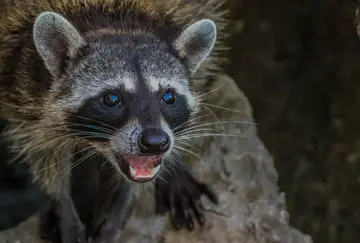
Raccoon
Photo: Marco Antonino Ramos Rodríguez · CC BY-SA 4.0 · Wikimedia Commons · resized

Raccoon

Procyon lotor

949 records by month.
No confirmed photo of Rafinesque’s big-eared bat

Rafinesque’s big-eared bat

No confirmed photo of Right whale

Right whale

No confirmed photo of Risso’s dolphin or grampus

Risso’s dolphin or grampus

No confirmed photo of Sei whale

Sei whale

No confirmed photo of Seminole bat

Seminole bat

Lasiurus seminolus

No confirmed photo of Short-finned pilot whale

Short-finned pilot whale

Globicephala macrorhynchus

No confirmed photo of Southeastern bat

Southeastern bat

No confirmed photo of Southeastern shrew

Southeastern shrew

Sorex longirostris

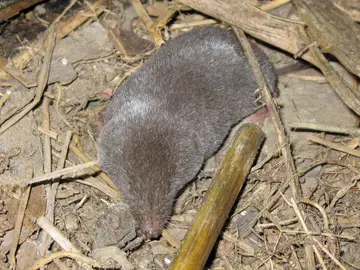
Southern short-tailed shrew
Photo: Greg Schechter from San Francisco, USA · CC BY 2.0 · Wikimedia Commons

Southern short-tailed shrew

Blarina carolinensis

No confirmed photo of Star-nosed mole

Star-nosed mole

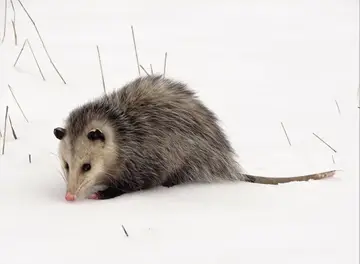
Virginia opossum
Photo: Shirley Zundell · CC BY 4.0 · iNaturalist

Virginia opossum

Didelphis virginiana

Size
Weighs 4 to 7 lb and stands 6 to 8 inches high at the shoulder (South Carolina DNR); about the size of a house cat
How to recognize it
  • Long pointed nose, black hairless ears, dark eyes, nearly hairless grasping (prehensile) tail
  • Long scaly tail and a pointed snout ending in a pink nose
  • Opposable thumb-like big toe (hallux) on each hind foot
419 records by month.

Full Virginia opossum guide

No confirmed photo of Wagner's mastiff bat

Wagner's mastiff bat

Eumops glaucinus

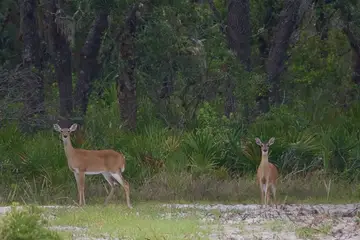
White-tailed deer (South Florida)
Photo: James Rogers · CC BY 4.0 · iNaturalist

White-tailed deer (South Florida)

Odocoileus virginianus seminolus

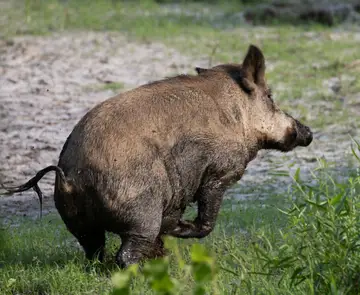
Wild Hog
Photo: Cullen Hanks · CC BY 4.0 · iNaturalist

Wild Hog

Sus scrofa

Nonnative

Size
Adults average 75 to 250 pounds, but some get twice as large. They can stand up to 3 feet tall and reach 5 feet long, and males (boars) are larger than females (sows). FWC says Florida wild hogs can weigh more than 150 pounds and be 5 to 6 feet long. Ohio State Extension says Ohio adults typically weigh 125 to 200 pounds.
How to recognize it
  • Look much like domestic hogs but are generally thinner, with thicker hides of coarse, bristly hair and longer tusks
  • Four continuously growing tusks, 2 on top and 2 below
  • Russian (Eurasian) boar type: long, straight, narrow snout; dark-colored or camouflage coat; light-tipped bristles
154 records by month.

Full Wild Hog guide

When mammals are active in Florida

Records of mammals in Florida peak in January to May and December. They show when people record mammals, not how many there are (about month bars).

9,452 records of mammals in Florida by month (GBIF, CC0 and CC BY records).

If you are bitten or stung

Call 911 or Poison Help at 1-800-222-1222 right away. Poison Help connects you to your local poison center, any time of day.

Official advice from FWC:

  • Don't touch or go near any wild animal, especially one acting abnormally (rabies). FWC
  • Do not run from a bear. FWC
  • Coyotes rarely pose a threat to people; scare them away by yelling, waving arms and making noise. FWC

How to report

Report nonnative animals to the FWC Invasive Species Hotline 888-Ive-Got1 (888-483-4681); FWC asks the public to call the Hotline for high-priority species: all nonnative snakes, monitor lizards and tegus. Other nonnative species can be reported via the IveGot1 app or IveGot1.org. Alligator or crocodile concerns: 866-FWC-GATOR (866-392-4286). FWC

Common questions

About this list

The species list comes from Checklist of Florida's Mammals (FWC; undated, archived copy captured 2008-10-28, incomplete scan) (Florida Fish and Wildlife Conservation Commission (FWC), undated; web capture 2008-10-28). 8 more entries come from other official sources named on each card.

Venom labels come only from official sources and link to them; "Not stated" never means harmless. How labels work.

"Nonnative" and "Invasive" follow the wording of the source list. See invasive species in Florida.

Sources

  1. Checklist of Florida's Amphibians and Reptiles (Revised 2023). Florida Fish and Wildlife Conservation Commission (FWC). Revised 2023; checked November 3, 2026.
  2. Checklist of Florida's Mammals (FWC; archived copy, incomplete). Florida Fish and Wildlife Conservation Commission (FWC). undated page; checked November 3, 2026.
    Quoted passages (1)
    “This checklist identifies the 99 species of wild mammals currently found in Florida, 11 of which have been introduced or recently expanded their range into the state.”
  3. Terrestrial Mammals (FWRI research). Florida Fish and Wildlife Conservation Commission (FWC). archived copy, captured January 15, 2026; checked November 3, 2026. Archived copy.
  4. Bear encounters (Living with Bears). Florida Fish and Wildlife Conservation Commission (FWC). archived copy, captured May 12, 2026; checked November 3, 2026. Archived copy.
    Quoted passages (2)
    “Even though they are typically quiet and shy animals, they have the potential to seriously harm or kill people.”
    “Run - running can trigger a chase instinct and bears can sprint up to 35 mph”
  5. Living with Coyotes. Florida Fish and Wildlife Conservation Commission (FWC). archived copy, captured September 15, 2026; checked November 3, 2026. Archived copy.
    Quoted passages (1)
    “Coyotes are not large animals and rarely pose a threat to people, especially adults.”
  6. Species Not Native to Florida. Florida Fish and Wildlife Conservation Commission (FWC). archived copy, captured September 9, 2025; checked November 3, 2026. Archived copy.
  7. Bats and Rabies. Florida Fish and Wildlife Conservation Commission (FWC). archived copy, captured May 12, 2026; checked November 3, 2026. Archived copy.
    Quoted passages (3)
    “Bats do carry rabies, and are one of the primary vectors for rabies exposure in the United States.”
    “However, any mammal is capable of carrying rabies, and in Florida, foxes and raccoons have a higher incidence of rabies than bats do.”
    “Don’t touch or go near any wild animal, particularly one that is not acting normally.”
  8. Report Nonnative Species. Florida Fish and Wildlife Conservation Commission (FWC). archived copy, captured October 25, 2026; checked November 3, 2026. Archived copy.
    Quoted passages (1)
    “You can call the FWC’s Invasive Species Hotline at 888-Ive-Got1 (483-4681) to report nonnative animals. We ask the public to call the Hotline to report high priority species, which include all nonnative snakes, monitor lizards, and tegus.”
  9. GBIF.org occurrence records, human observations licensed CC0 1.0 or CC BY 4.0 only, accessed November 3, 2026. The datasets behind these counts are listed on our Sources page.