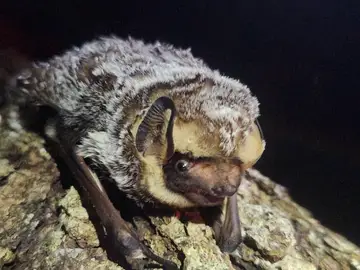
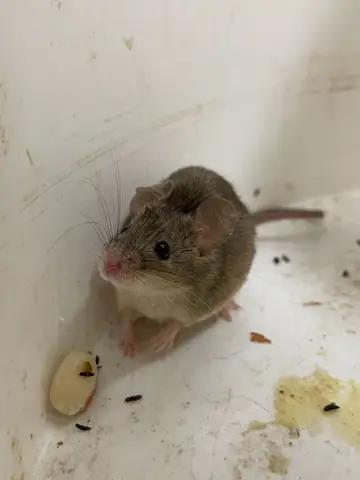
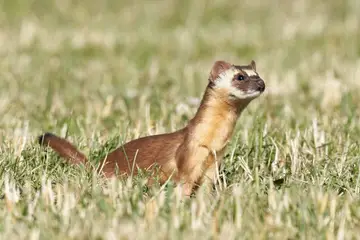
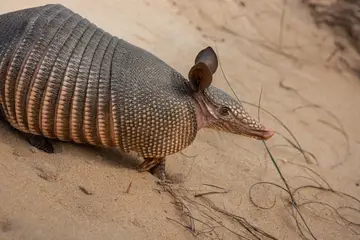
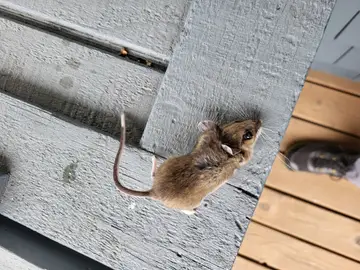
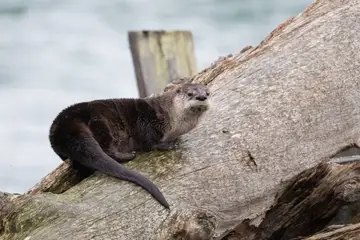
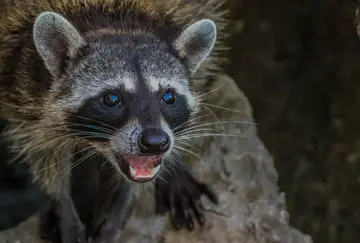
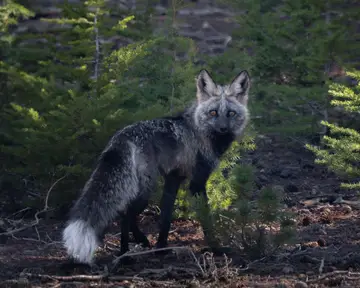
Tennessee Wildlife Resources Agency: Wildlife Species in Tennessee … Currently, there are more than 325 species of fish, 89 mammals, 61 reptiles, 70 amphibians, and 340+ birds known to inhabit or migrate through Tennessee.
This page lists 79 mammals: all from Tennessee Wildlife Resources Agency's Mammals » Bats / Large / Medium / Small.
2 are venomous by official accounts. 5 are nonnative. Tennessee Wildlife Resources Agency gives a total of 89; the 79 here are the mammals official sources name one by one.
Which mammals can hurt you
Official sources single out these mammals in Tennessee, in their own words:
Disease (carries a large number of communicable diseases). “This rat also produces a considerable amount of damage to property and foods, and carries a large number of communicable diseases.” Tennessee Wildlife Resources Agency
Disease (carries a large number of communicable diseases). “This rat also produces a considerable amount of damage to property and foods, and carries a large number of communicable diseases.” Tennessee Wildlife Resources Agency
Disease. “Wild Pigs cause extensive damage to farm crops, wildlife habitat, contribute to extreme erosion and stream pollution, and carry diseases harmful to livestock or other animals as well as humans.” Tennessee Wildlife Resources Agency
Raccoons, skunks, bats and foxes
Rabies. TWRA. “The vast majority of rabies cases reported to the Centers for Disease Control and Prevention each year occur in wild animals like raccoons, skunks, bats, and foxes.” Tennessee Department of Health
All 79 mammals
Venomous species first, then A to Z. Do not handle them.
No confirmed photo of Northern Short-tailed Shrew
Northern Short-tailed Shrew
Blarina brevicauda
Where in Tennessee
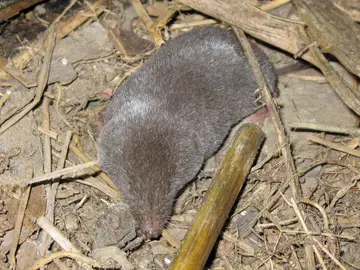
This is the largest shrew, and one of the most common mammals, in North America; it occurs in middle and eastern Tennessee. Tennessee Wildlife Resources Agency
What the sources say
Venom: “Shrews in the genus Blarina are the only mammals in North America that produce a salivary toxin secreted from a duct at the base of the incisors. The powerful toxin, much like snake venom, is injected into the bite wounds of its prey to kill them.” (Tennessee Wildlife Resources Agency)
Habitat: The Northern Short-tailed Shrew occurs in a variety of habitats including woodlands, grasslands, brushlands, field edges, and marshy areas. They can often be found living in thick, weedy growth, under mossy banks, under old logs, and under the humus layer on a forest floor. (Tennessee Wildlife Resources Agency)
Venom: “Shrews in the genus Blarina are the only mammals in North America that produce a salivary toxin secreted from a duct at the base of the incisors. The powerful toxin, much like snake venom, is injected into the bite wounds of its prey to kill them.” (Tennessee Wildlife Resources Agency)
Habitat: Prefers moist, well-drained hardwood forests for easier excavation of their underground tunnels, but also occurs in a variety of other wet and dry habitats such as fields and marshy areas. (Tennessee Wildlife Resources Agency)
No confirmed photo of Allegheny Woodrat
Allegheny Woodrat
Neotoma magister
Where in Tennessee
These "pack rats," which are very similar in appearance to Eastern Woodrats, occur in the central part of Tennessee north of the Tennessee River. Tennessee Wildlife Resources Agency
Conservation
Status in Tennessee: The Allegheny Woodrat is uncommon, and Deemed in Need of Management by Tennessee Department or Environment and Conservation.
What the sources say
Habitat: Generally restricted to rocky habitats in forested areas, often at higher elevations, including caves, rock shelters, cliff faces, talus slopes, and rock outcrops. (Tennessee Wildlife Resources Agency)
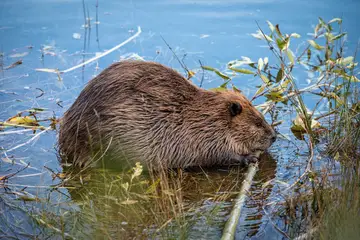
Habitat: These highly aquatic mammals live in streams, rivers, wetlands, ponds, and small lakes. Beavers are well known for their skills in building dams made of tree limbs, branches, mud, stones, and other debris in streams and rivers to slow down the water. Lodges, which provide a living space, are built into the dam or in shallow water nearby, although sometimes they will excavate a den in a bank instead. (Tennessee Wildlife Resources Agency)
Photo: U.S. Fish and Wildlife Service - Midwest Region · Public domain · Wikimedia Commons
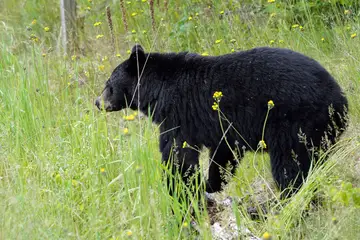
Smokies: males average about 6 ft long, 3 ft at the shoulder and 250 lb in summer; females usually just over 100 lb. Missouri: 46 to 78 inches long, 86 to 600 lb.
How to recognize it
Straight facial profile, rounded erect ears, very short tail
Range: This is the largest carnivore in the state. They predominantly occur in the Appalachian Mountains of eastern Tennessee, but also occur in smaller numbers in the northern Cumberland Mountains and in a few places on the Cumberland Plateau (i.e.
Habitat: They are primarily found in heavily wooded areas. Black bears den in hollow trees, caves, holes in the ground, or under downed trees or roots in the winter. The dens contain beds typically lined with grass, leaves, twigs, and bark. (Tennessee Wildlife Resources Agency)
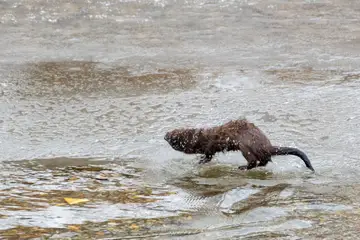
Habitat: Permanent water is a habitat requirement for mink. They will use lakes, ponds, rivers, streams, marshes, and other areas with permanent water, especially if near the presence of standing timber. Dens are made in banks, under tree roots, in hollow trees, or in abandoned burrows of other mammals. (Tennessee Wildlife Resources Agency)
Habitat: Occupies a wide range of habitats, including grassy openings, coniferous and deciduous forests, floodplains, and bogs. (Tennessee Wildlife Resources Agency)
No confirmed photo of American Water Shrew
American Water Shrew
Sorex palustris
Where in Tennessee
The American Water Shrew, which is semi-aquatic and the largest shrew in the state, occurs only in the Appalachian Mountains of extreme eastern Tennessee. Tennessee Wildlife Resources Agency
Conservation
Status in Tennessee: American Water Shrews are uncommon and Deemed in Need of Management by both TWRA and Tennessee Department or Environment and Conservation.
What the sources say
Habitat: Prefers small, cold mountain streams with thick overhanging vegetation; however, can also be associated with rivers, lakes, and bogs. (Tennessee Wildlife Resources Agency)
No confirmed photo of Appalachian Cottontail
Appalachian Cottontail
Sylvilagus obscurus
Where in Tennessee
These rabbits occur in the forests of eastern and middle Tennessee mountains. Appalachian Cottontails are more forest dwelling than Eastern Cottontails. Tennessee Wildlife Resources Agency
What the sources say
Habitat: Prefers more dense, forested environments than the Eastern Cottontail; also generally occurs in higher elevations. Vegetation in these areas includes rhododendron, mountain laurel, greenbrier, and cane. (Tennessee Wildlife Resources Agency)
No confirmed photo of Big Brown Bat
Big Brown Bat
Eptesicus fuscus
What the sources say
Habitat: They hibernate in many different places such as hollow trees, rocky crevices, buildings, caves, mines, or road culverts. Females establish nursery colonies during the summer in hollow trees, attics, chimneys, lofts, or caves. Males will roost in trees or man-made structures. (Tennessee Wildlife Resources Agency)
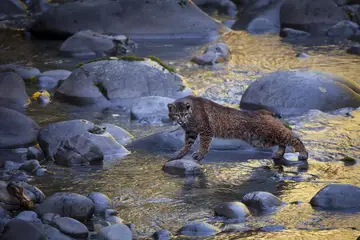
Photo: National Marine Sanctuaries · Public domain · Wikimedia Commons
Total length 18 to 50 inches, tail 3 to 8 inches, weight 8 to 49 pounds (Missouri). About twice the size of a house cat.
How to recognize it
Short 'bobbed' tail, 4 to 8 inches, with a black tip and white underneath (Arizona). New Mexico instead describes black bars on top, white underneath and a white tip.
Pointed ears with tufts at the tips, often with cheek tufts
Backs of the ears are black with a light central spot
Where in Tennessee
The Bobcat, which is a stealthy hunter aided by keen eyesight, hearing, and a well developed sense of smell, is the most common and widely distributed wildcat in North … Tennessee Wildlife Resources Agency
JFMAMJJASOND
43 records by month.What the sources say
Range: The Bobcat, which is a stealthy hunter aided by keen eyesight, hearing, and a well developed sense of smell, is the most common and widely distributed wildcat in North America. It can be found all across Tennessee.
Habitat: Bobcats occur in a variety of habitats, but they prefer heavily forested areas with thick underbrush. They also occur in timbered swamps; farmland; scrubland; and rocky terrain such as glades, bluffs, and rocky outcrops. Maternity dens are made of dry leaves and moss and usually located under fallen tree, in hollow log, or in rock shelter. (Tennessee Wildlife Resources Agency)
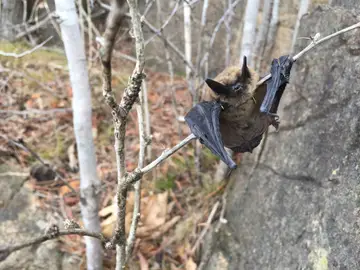
These bats, which are regarded as one of the most abundant mammals in North America, are named because their naked tails extend well beyond the edge of their … Tennessee Wildlife Resources Agency
What the sources say
Range: These bats, which are regarded as one of the most abundant mammals in North America, are named because their naked tails extend well beyond the edge of their interfemoral (tail) membrane. This species is known from only one record in Tennessee; it was found in a building in Montgomery County.
Habitat: These bats occur in caves in the southwestern U.S., but occur only in man-made structures in the eastern U.S. They prefer buildings and attics, especially hot attics. The high temperatures are essential for the rapid growth of young bats. (Tennessee Wildlife Resources Agency)
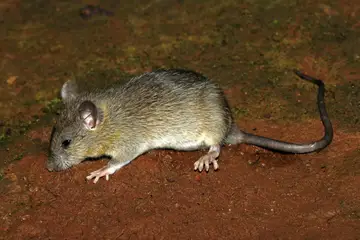
“This rat also produces a considerable amount of damage to property and foods, and carries a large number of communicable diseases.” Tennessee Wildlife Resources Agency
Where in Tennessee
The Brown Rat, which is very similar to the Roof Rat, occurs all across the state. It is also known as the Norway Rat, Common Rat, or Sewer Rat. Tennessee Wildlife Resources Agency
What the sources say
Habitat: Brown Rats are generally found near human sites, but will occur in other habitats such as fields and woodlands. Most often found in buildings, sewers, garbage dumps, or near feed stores. They dig tunnels underground, usually beneath an object such as a board, for escape cover and a place to nest. (Tennessee Wildlife Resources Agency)
No confirmed photo of Cinereus Shrew
Cinereus Shrew
Sorex cinereus
Where in Tennessee
This shrew, which is also known as the Masked Shrew because of the sometimes darker coloration over the eyes, is primarily found in eastern Tennessee with some records … Tennessee Wildlife Resources Agency
What the sources say
Range: This shrew, which is also known as the Masked Shrew because of the sometimes darker coloration over the eyes, is primarily found in eastern Tennessee with some records in middle Tennessee.
Habitat: Prefers rich, moist woodlands with plenty of moss, leaf litter, and rotting logs, but also uses open fields, floodplains, and marshes. (Tennessee Wildlife Resources Agency)
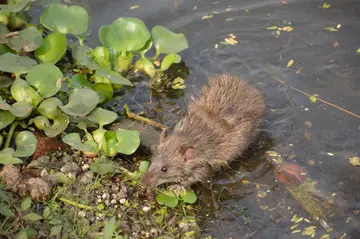
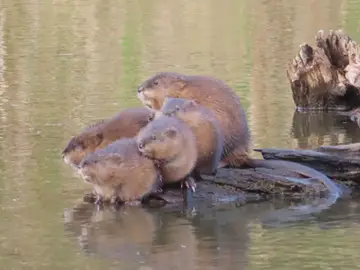
This semi-aquatic rodent is an excellent swimmer, partly due to its rudder-like tail, and is found state-wide in Tennessee. Tennessee Wildlife Resources Agency
What the sources say
Habitat: Prefers still or slow moving water habitats such as lakes, ponds, streams, rivers, drainage ditches, or wetlands. Vegetation is usually present in the water and along the banks. Dens are created in banks with interconnecting tunnels and chambers, or, if the water is shallow, they build small lodges similar to the shape of a beavers lodge. (Tennessee Wildlife Resources Agency)
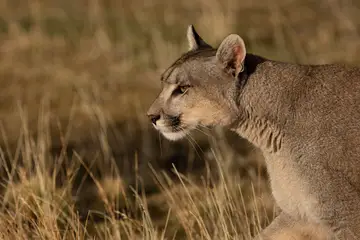
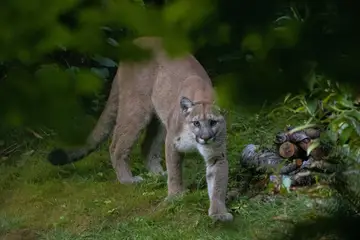
Total length 5 to 8.5 feet including a 21 to 37.5 inch tail; males 79 to 265 lb, females 64 to 141 lb (Missouri Department of Conservation).
How to recognize it
Very large, slender cat with a small head, small rounded ears without tufts and a long, heavy tail.
The tail may be one-third of the total length; much larger than a bobcat or lynx.
Tracks: 2.75 to 3.75 inches wide, three lobes at the bottom of the heel pad, claw marks usually absent.
Where in Tennessee
Historically, the Cougar could be found roaming all across Tennesseee and was considered the most widely distributed land mammal in the Western Hemisphere … Tennessee Wildlife Resources Agency
What the sources say
Range: Historically, the Cougar could be found roaming all across Tennesseee and was considered the most widely distributed land mammal in the Western Hemisphere. It was believed that persecution and loss of their preferred isolated and undisturbed habitat, it was believed that they had been eliminated in Tennessee and across much of their original range in the eastern U.S.
Habitat: Cougars occupied a wide range of habitats, but preferred dense cover or rocky, rugged, mountainous areas in areas with low human densities. (Tennessee Wildlife Resources Agency)
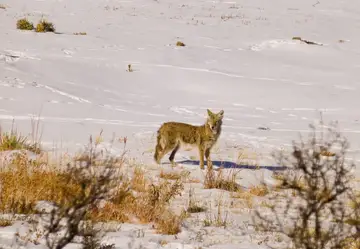
About 3.5 to 4 feet long including the tail and roughly 2 feet tall at the shoulder; weight varies by region: Arizona 20 to 30 lb, Florida average about 28 lb, Georgia 25 to 45 lb
How to recognize it
Large pointed ears, long narrow nose, bushy black-tipped tail
Like a slender medium-sized dog, much smaller than a wolf
Paw track about 2 inches long (Florida)
Where in Tennessee
Coyotes are very adaptable, secretive canines that occur in a diversity of habitats all across the state … Tennessee Wildlife Resources Agency
JFMAMJJASOND
74 records by month.What the sources say
Range: Coyotes are very adaptable, secretive canines that occur in a diversity of habitats all across the state. They are dog-like in appearance and somewhat resemble a small German Shephard.
Habitat: Coyotes are found in many different habitats. They can live almost anywhere including fields, forests, farmlands, shrubland, and urban areas. Dens are usually located in remote or unused fields, often in a bank, under a hollow log, in a rock cavity, or under a deserted building. (Tennessee Wildlife Resources Agency)
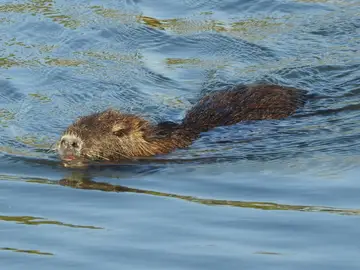
Body 47 to 61 cm (about 1.5 to 2 ft) plus a tail of about 37 to 41 cm (USGS). Males reach about 20 lb and females 18 lb (USGS). CDFW: up to 2.5 ft body length, 12 to 18 inch tail, 20+ lb.
How to recognize it
White whiskers and a large, round, sparsely haired tail.
Large dark-orange front teeth (incisors).
Hind feet webbed on four of five toes.
Where in Tennessee
This semi-aquatic rodent, which was originally introduced in Louisiana in the 1930's from South America, has spread northward and occurs in western Tennessee … Tennessee Wildlife Resources Agency
What the sources say
Range: This semi-aquatic rodent, which was originally introduced in Louisiana in the 1930's from South America, has spread northward and occurs in western Tennessee. It is more commonly known as the Nutria or "River Rat."
Habitat: Coypu can be found in freshwater streams, rivers, ponds, and marshes. (Tennessee Wildlife Resources Agency)
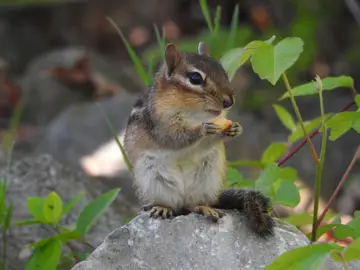
These small, ground-dwelling squirrels, which are frequently observed with full cheek pouches, occur all across Tennessee. Tennessee Wildlife Resources Agency
What the sources say
Habitat: Chipmunks generally choose forest borders as places to make their shallow burrows, often near brush piles, stone heaps, and decaying logs. These burrows have openings of two inches in diameter, and a main tunnel that leads to a chamber they use to store food and use as a nest. (Tennessee Wildlife Resources Agency)
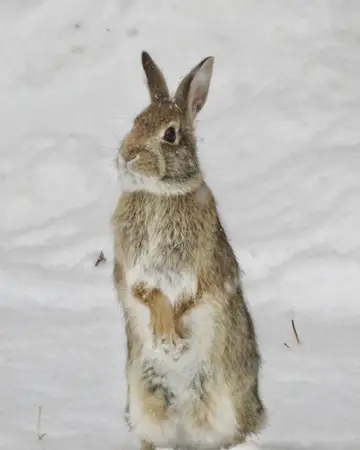
This is the most common and widespread rabbit in North America, and occurs across the entire state of Tennessee. Tennessee Wildlife Resources Agency
What the sources say
Habitat: Eastern Cottontails inhabit many areas such as farmlands, hedgerows, orchard, and backyards, particularly where shrubby forest borders meet open areas. (Tennessee Wildlife Resources Agency)
Habitat: Mostly found in mature hardwood forests, but prefers oak/hickory forests and commonly found along upland ridges. (Tennessee Wildlife Resources Agency)
Habitat: Prefers dense hardwood forests in rural and urban areas, but frequently occurs in yards and city parks. Forest habitats usually have bushy understory vegetation. (Tennessee Wildlife Resources Agency)
Habitat: They use a variety of open or brushy habitats, but prefer old fields, abandoned fields, and briar thickets. Tall grasses, such as broom sedge, are usually associated with their old field habitats. Roadside ditches and wet bottomlands are used as well. (Tennessee Wildlife Resources Agency)
No confirmed photo of Eastern Mole
Eastern Mole
Scalopus aquaticus
What the sources say
Habitat: Occurs in a variety of habitats including forests, fields, pastures, gardens, lawns, and other areas with loose, well-drained soils. (Tennessee Wildlife Resources Agency)
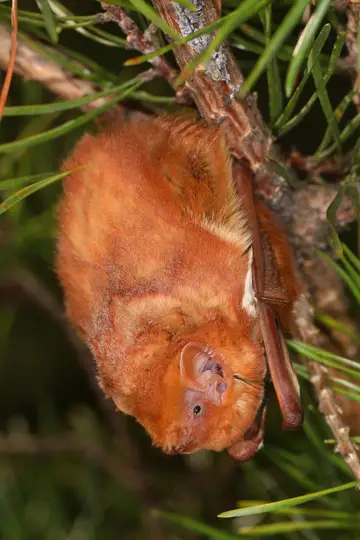
These bats, which are one of the easier bats to identify due to their reddish color, often emerge in the early evening, and can be seen feeding under street lights … Tennessee Wildlife Resources Agency
What the sources say
Range: These bats, which are one of the easier bats to identify due to their reddish color, often emerge in the early evening, and can be seen feeding under street lights. Eastern Red Bats occur all across Tennessee.
Habitat: Eastern Red Bats are primarily a tree dwelling species, spending time in forests and around shade trees in cities and farms. Daytime roosts can be the outer canopy of large trees, shrubs, and bushes. They hibernate in hollow trees or under loose bark; they rarely enter caves or buildings. (Tennessee Wildlife Resources Agency)
This is the smallest Myotis in Tennessee and the smallest bat in the eastern U.S. Their tiny feet distinguish it from all other bats. Tennessee Wildlife Resources Agency
What the sources say
Habitat: They hibernate in caves or mines, especially near entrances. Also, found in cave floors, cracks, and crevices. Summer roosts and nursery sites include caves, buildings, and cavities in the ground or beneath rocks. (Tennessee Wildlife Resources Agency)
No confirmed photo of Eastern Spotted Skunk
Eastern Spotted Skunk
Spilogale putorius
Where in Tennessee
Of the two skunks occurring in Tennessee, the Eastern Spotted Skunk is slightly smaller and less common. They are found in the eastern and middle parts of the state. Tennessee Wildlife Resources Agency
What the sources say
Habitat: Occurs around rocky, dense habitat, including fencerows, shrubby field borders, and farmland. Underground dens can be in grassy banks, rocky crevices, or along fencerows, while aboveground dens can include barns, woodpiles, haystacks, or rock or brush piles. (Tennessee Wildlife Resources Agency)
No confirmed photo of Eastern Woodrat
Eastern Woodrat
Neotoma floridana
Where in Tennessee
Two subspecies occur in Tennessee, Eastern Woodrat (N. f. illinoensis) and Southern Appalachian Woodrat (N. f. haematoreia) … Tennessee Wildlife Resources Agency
What the sources say
Range: Two subspecies occur in Tennessee, Eastern Woodrat (N. f. illinoensis) and Southern Appalachian Woodrat (N. f. haematoreia). The Southern Appalachian Woodrat occurs in the southeastern part of the state, while the Eastern Woodrat occurs in the western part of the state generally.
Habitat: The Eastern Woodrat primarily occurs in forested areas, but also uses caves and rocky outcrops. The Southern Appalachian Woodrat is found in forests, and it occurs on talus slopes. (Tennessee Wildlife Resources Agency)
No confirmed photo of Elk (Red Deer)
Elk (Red Deer)
Cervus elaphus
Where in Tennessee
Historical records indicate Elk were abundant in Tennessee before European settlement, but became extirpated as settlers moved westward … Tennessee Wildlife Resources Agency
Range: Historical records indicate Elk were abundant in Tennessee before European settlement, but became extirpated as settlers moved westward. TWRA began re-introducing Elk into North Cumberland Wildlife Management Area, in the eastern part of the state, during the late 1990's.
Habitat: Generally prefers open woodlands or a mixed habitat of meadows and woods. They will also occur in foothills and valleys. (Tennessee Wildlife Resources Agency)
No confirmed photo of Evening Bat
Evening Bat
Nycticeius humeralis
Where in Tennessee
The name of this bat refers to their usual foraging time, which is during the last half hour before daylight … Tennessee Wildlife Resources Agency
What the sources say
Range: The name of this bat refers to their usual foraging time, which is during the last half hour before daylight. They typically fly slow and high (40 to 75 feet) in the evening before descending to a lower flight at night.
Habitat: Evening Bats mostly use tree cavities during the spring and summer months, but they will use buildings and other man-made structures such as attics and barns. They almost never enter caves. Winter habitat is unknown, but accumulations of fat reserves suggest they migrate or hibernate. Nursery colonies are formed under the bark of dead trees or in houses. (Tennessee Wildlife Resources Agency)
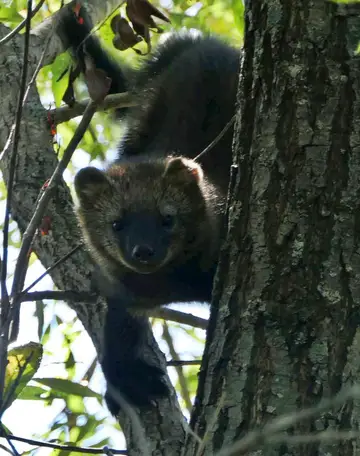
Fishers originally occurred in northeastern Tennessee more than 200 years ago, but were extirpated by intensive trapping and logging … Tennessee Wildlife Resources Agency
Range: Fishers originally occurred in northeastern Tennessee more than 200 years ago, but were extirpated by intensive trapping and logging. These carnivores, which are members of the musk-scented weasel family, were re-introduced into Cumberland County in 2002.
Habitat: Fishers prefer large expanses of undisturbed, mature forest habitat. They will use coniferous, deciduous, or mixed forests as long as it has high canopy closure. Hollow trees or rock crevices are typically used for dens. (Tennessee Wildlife Resources Agency)
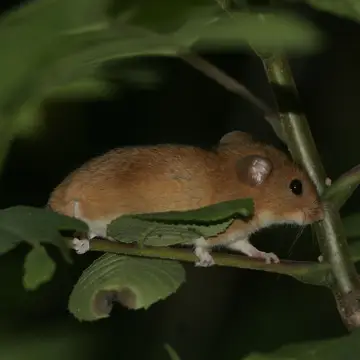
The Golden Mouse, which occurs state-wide, has a distinctive yellow coloration distinguishing it from all other mice in Tennessee. Tennessee Wildlife Resources Agency
What the sources say
Habitat: Golden mice occupy a variety of habitats, but generally prefer moist thickets, forests, and borders of broomsedge fields, especially containing vines and dense underbrush. (Tennessee Wildlife Resources Agency)
Range: This is one of the 2 endangered bats in Tennessee (along with Indiana Bat). It is the largest of the "mouse-eared bats" in Tennessee, and its grayish overall color helps distinguish it from other Myotis bats.
Habitat: Inhabits caves year round, but they usually use different caves for winter and summer residence. They will sometimes use man-made tunnels as their summer quarters. (Tennessee Wildlife Resources Agency)
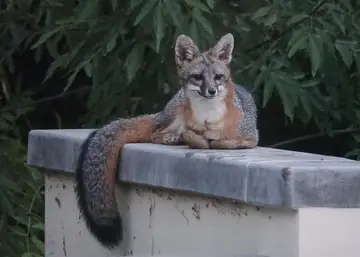
Habitat: Usually prefers brushy edge habitat created by a mixture of woods and fields. Gray Foxes generally use more wooded habitat than Red Foxes. (Tennessee Wildlife Resources Agency)
No confirmed photo of Hairy-tailed Mole
Hairy-tailed Mole
Parascalops breweri
Where in Tennessee
Of the 3 moles that are found in the state, the Hairy-tailed mole is the smallest. It occurs in the mountains of eastern and middle Tennessee. Tennessee Wildlife Resources Agency
What the sources say
Habitat: Occurs in forested and open areas with loose, well-drained soils. Usually found in elevations above 1400 feet. (Tennessee Wildlife Resources Agency)
Habitat: Occurs primarily in open fields or borders of fields with dense, grassy growth. Also, occurs along borders of agricultural fields and along roadsides. They build small nests of grasses, plant fibers, or other materials under rocks or logs. A system of runways is created as the rats move around in the soil and grass. (Tennessee Wildlife Resources Agency)
Range: The Hoary Bat is the largest bat species in Tennessee, living primarily in trees. It occurs across the entire state, and is also the most widely distributed bat in the U.S.
Habitat: They roost almost entirely in trees 10-15 feet above the ground hanging from their hind feet on branches, covered by leaves above, and generally open beneath. Most migrate southward in October and November as the temperatures drop and food sources are depleted. (Tennessee Wildlife Resources Agency)
Habitat: The House Mouse occurs in a variety of habitats, but is usually found among houses, barns, and buildings. They can also be found in old fields, grain fields, fencerows, weedy roadsides, and woodlots. (Tennessee Wildlife Resources Agency)
No confirmed photo of Indiana Bat
Indiana Bat
Myotis sodalis
Where in Tennessee
The Indiana Bat is one of 2 endangered bat species in the state (along with Gray Bat). They occur primarily in eastern and middle Tennessee. Tennessee Wildlife Resources Agency
What the sources say
Habitat: They winter in the largest and coolest limestone caves, and prefer areas in the cave with high humidity. They rarely inhabit buildings or other man-made structures. Females deliver their young in hollow trees or beneath tree bark. (Tennessee Wildlife Resources Agency)
No confirmed photo of Least Weasel
Least Weasel
Mustela nivalis
Where in Tennessee
The Least Weasel, which is the smallest carnivore in North America, can be found in the middle and eastern areas of the state … Tennessee Wildlife Resources Agency
Conservation
Status in Tennessee: Least Weasels are uncommon in the state. They are Deemed in Need of Management by Tennessee Department or Environment and Conservation.
What the sources say
Range: The Least Weasel, which is the smallest carnivore in North America, can be found in the middle and eastern areas of the state. They are very secretive and wary, but also very aggressive.
Habitat: Least Weasels can be found in a wide variety of habitats, but prefer forests and woodlands with rocky slopes. They also occur in grasslands, brushy fields, marshy areas, and edge habitats. Least Weasels occupy, and build nests of grass, in old mole burrows or other holes in the ground. (Tennessee Wildlife Resources Agency)
Habitat: Males are solitary, or live in colonies up to 20 individuals, during the summer using rocky crevices, hollow trees, loose bark, or under shingles or siding of buildings. Females live in nursery colonies in the spring and summer, which may be in cliff crevices, hollow trees, under loose tree bark, or in undisturbed parts of buildings such as attics. Little brown bats hibernate in limestone caves during the winter. (Tennessee Wildlife Resources Agency)
No confirmed photo of Long-tailed Shrew
Long-tailed Shrew
Sorex dispar
Where in Tennessee
The Long-tailed Shrew, also known as the Rock Shrew for its habitat preference, can be found in the mountains of middle and eastern Tennessee. Tennessee Wildlife Resources Agency
What the sources say
Habitat: Prefers cool and damp rocky slopes in coniferous and deciduous forests, sometimes areas with moss-covered rocks. Long-tailed shrews spend most of their time in the deep crevices between rocks about a foot beneath the surface. (Tennessee Wildlife Resources Agency)
This weasel, which is found across Tennessee, has the largest distribution of any mustelid in North America. Tennessee Wildlife Resources Agency
What the sources say
Habitat: Long-tailed Weasels occur in a variety of habitats, but tend to prefer woodlands, thickets, and brushy fencerows near water. They will live in old burrows of other small mammals, in rock crevices, under tree roots, or under barns where they will build their own nest made of grass and lined with mouse hair. (Tennessee Wildlife Resources Agency)
Habitat: As its name indicates this rat is found primarily in marshes and wet open areas, but will use a variety of habitats. (Tennessee Wildlife Resources Agency)
No confirmed photo of Meadow Jumping Mouse
Meadow Jumping Mouse
Zapus hudsonius
What the sources say
Habitat: Meadow Jumping Mice prefer open-grassy fields, but also use hay fields, shrubby fields, fence rows, and edges of woods. They are frequently found in moist areas or near water. (Tennessee Wildlife Resources Agency)
No confirmed photo of Meadow Vole
Meadow Vole
Microtus pennsylvanicus
Where in Tennessee
The Meadow Vole, which is very similar in appearance and life history to the Prairie Vole, is found in the eastern part of Tennessee. Tennessee Wildlife Resources Agency
What the sources say
Habitat: They prefer moist, low areas of fields composed of thick grasses and sedges. Also, they occur in grassy marshes, orchards, road sides, and fields near streams and lakes. Voles use a system of runways on top of the ground and underground tunnels, where they spend most of their time. Nests, made of dry grass, can be above or below ground. (Tennessee Wildlife Resources Agency)
Cat-sized: 15-17 in long not counting the tail, 8-17 lb (FWC); 24-32 in including a 9.5-14.5 in tail (UGA).
How to recognize it
Bony skin plates that form a shell, which make it easy to identify
Long scaly tail, deer-like ears, long pig-like snout
Tail encased in 12 bony rings; no canine or incisor teeth
Where in Tennessee
These unusual looking animals have only reached Tennessee in the last thirty years or so, but their range continues to expand … Tennessee Wildlife Resources Agency
What the sources say
Range: These unusual looking animals have only reached Tennessee in the last thirty years or so, but their range continues to expand. They occur across the state except in eastern Tennessee.
Habitat: Generally prefer forests of mature shortleaf pine, oak, and hickory. (Tennessee Wildlife Resources Agency)
Range: This species is found statewide in two different forms. The short-tailed form (P. m. bardii) occurs in West Tennessee, while the long-tailed form (P. m. nubiterrae) lives in the eastern part of the state.
Habitat: The short-tailed form (P. m. bardii) occurs primarily in early successional habitat, such as prairies, pastures, and fencerows. The long-tailed form (P. m. nubiterrae) lives in woodland habitat. (Tennessee Wildlife Resources Agency)
Habitat: Occurs primarily in open grassy fields, brushy areas, weedy fields, and fencerows. Occasionally found in marshy areas or timbered habitat. (Tennessee Wildlife Resources Agency)
These graceful, powerful swimmers are very sociable, and may be seen in aquatic habitats all across the state. Tennessee Wildlife Resources Agency
What the sources say
Habitat: They primarily use rivers, streams, and lakes, which are frequently bordered by woods. Dens are usually located in banks, beneath rocky ledges, under tree roots, under fallen trees, or in thick vegetation; often they use old lodgings of beavers, muskrats, or woodchucks. (Tennessee Wildlife Resources Agency)
No confirmed photo of Northern Flying Squirrel
Northern Flying Squirrel
Glaucomys sabrinus
Where in Tennessee
Closely related to the Southern Flying Squirrel, this nocturnal rodent is one of the smallest tree squirrels … Tennessee Wildlife Resources Agency
Conservation
Status in Tennessee: Glaucomys sabrinus coloratus is a federally and state listed endangered subspecies.
What the sources say
Range: Closely related to the Southern Flying Squirrel, this nocturnal rodent is one of the smallest tree squirrels. The subspecies which occurs in the state, Carolina Northern Flying Squirrel (G. s. coloratus), occurs only in the mountains of eastern Tennessee.
Habitat: Occurs in both coniferous and deciduous moist forests at higher elevations (usually greater than 4500 feet), especially at the transition zone between the two. They also prefer mature trees that are widely spaced and a large number of dead snags. (Tennessee Wildlife Resources Agency)
No confirmed photo of Northern Long-eared Bat
Northern Long-eared Bat
Myotis septentrionalis
Conservation
Status in Tennessee: Northern Long-eared Bats, which are uncommon in Tennessee, were federally-listed as a threatened species in April of 2015.
What the sources say
Habitat: Winters in caves and mines that are cool and moist. In summer, they roost in a variety of shelters including barns and attics, and under tree bark or shutters. They usually roost singly, except for small maternity colonies. They seem to prefer tight crevices and holes, although they will also frequently hang out in the open. (Tennessee Wildlife Resources Agency)
No confirmed photo of Prairie Vole
Prairie Vole
Microtus ochrogaster
Where in Tennessee
The Prairie Vole has a very fitting name as it describes the grassy habitat in which they are typically found … Tennessee Wildlife Resources Agency
What the sources say
Range: The Prairie Vole has a very fitting name as it describes the grassy habitat in which they are typically found. They range throughout Tennessee, except in the extreme eastern portion of the state.
Habitat: Their name describes their habitat very well as they prefer open grassy fields such as prairies, pastures, weedy fields, and fallow fields. Also, they will occur in hayfields and along fence rows. Voles use a system of runways on top of the ground and underground tunnels, where they spend most of their time. (Tennessee Wildlife Resources Agency)
Habitat: Raccoons are found in various rural and urban habitats, but are partial to hardwood swamps, marshes, and bottomland forests. Dens are usually located in hollow trees, caves, rocky ledges, old woodchuck burrows, squirrel nests, or abandoned farm buildings. (Tennessee Wildlife Resources Agency)
No confirmed photo of Rafinesque's Big-eared Bat
Rafinesque's Big-eared Bat
Corynorhinus rafinesquii
Where in Tennessee
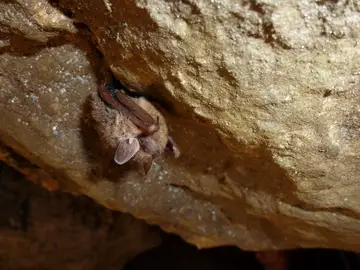
These bats have very large ears somewhat resembling rabbit ears. The large ears do not interfere with their flight as they are very swift and nimble fliers. Tennessee Wildlife Resources Agency
What the sources say
Habitat: They are generally associated with forested riparian areas. Roosting occurs in hollow trees, abandoned buildings, cave entrances, and under bridges and loose tree bark. (Tennessee Wildlife Resources Agency)
Habitat: Red Foxes use a variety of habitats, but usually prefer the edges of forests and fields. They use urban areas quite frequently. (Tennessee Wildlife Resources Agency)
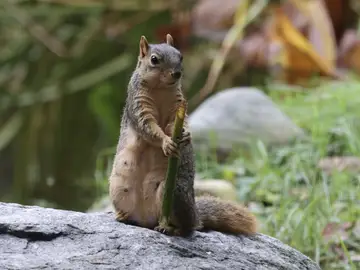
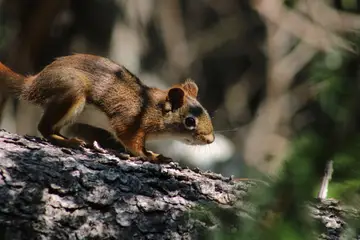
This small tree squirrel, which is a game species, is found only in the higher elevations of eastern Tennessee. Tennessee Wildlife Resources Agency
What the sources say
Habitat: Prefers coniferous forests in higher elevations, but can be found in hardwood and mixed coniferous-hardwood forests as well. (Tennessee Wildlife Resources Agency)
No confirmed photo of Rock Vole
Rock Vole
Microtus chrotorrhinus
Where in Tennessee
This rare vole, with a diagnostic yellow nose, is known only from the mountains of far eastern Tennessee. Tennessee Wildlife Resources Agency
Conservation
Status in Tennessee: The Rock Vole is uncommon, and Deemed in Need of Management by TWRA and Tennessee Department or Environment and Conservation.
What the sources say
Habitat: Rock Voles occur in a specialized habitat of cool, moist talus slopes with mossy rocks and logs, in the mountains. (Tennessee Wildlife Resources Agency)
“This rat also produces a considerable amount of damage to property and foods, and carries a large number of communicable diseases.” Tennessee Wildlife Resources Agency
Where in Tennessee
The Roof Rat, which is very similar to the Brown Rat, occurs all across the state. It is also known as the Black Rat, House Rat, or Ship Rat. Tennessee Wildlife Resources Agency
What the sources say
Habitat: It is almost always found among human dwellings, usually in upper stories of buildings. They can also be found in trees or on ships; it occurs less frequently on the ground or in open fields. (Tennessee Wildlife Resources Agency)
No confirmed photo of Seminole Bat
Seminole Bat
Lasiurus seminolus
Where in Tennessee
Seminole Bats are more common around the Gulf Coast states, where their preferred Spanish Moss (Tillandsia usneoides) roosting habitat occurs, but their range does … Tennessee Wildlife Resources Agency
What the sources say
Range: Seminole Bats are more common around the Gulf Coast states, where their preferred Spanish Moss (Tillandsia usneoides) roosting habitat occurs, but their range does extend across Tennessee. They were once considered a sub-species of the very similar Eastern Red Bat (L. borealis).
Habitat: Generally found in lowland mixed deciduous and pine forests associated with waterways. Their favorite habitat includes Spanish Moss, but they are also known to roost beneath loose bark, in clumps of foliage, and in caves. (Tennessee Wildlife Resources Agency)
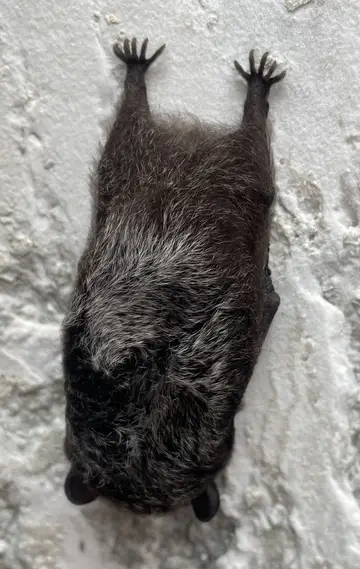
This bat, which is easily identified by its "frosted" appearance, is also readily recognized in flight, as this is the slowest flying bat in North America … Tennessee Wildlife Resources Agency
What the sources say
Range: This bat, which is easily identified by its "frosted" appearance, is also readily recognized in flight, as this is the slowest flying bat in North America. It occurs state-wide in Tennessee.
Habitat: This bat is usually found in forests along wooded waterways. It usually roosts during the day under tree bark or in cavities. They may also be found in buildings, but prefers open air structures such as carports and garages to enclosed attics. During migration, they may be encountered in a wide variety of other shelters including piles of slab, railroad ties, lumber, and fence posts. (Tennessee Wildlife Resources Agency)
Habitat: Smoky Shrews prefer moist hardwood forests with decaying logs, thick leaf litter, and moss-covered rocks; frequently found in higher elevations. (Tennessee Wildlife Resources Agency)
No confirmed photo of Southeastern Bat
Southeastern Bat
Myotis austroriparius
Where in Tennessee
This is one of six "mouse-eared bats" (Myotis) in the state. Distribution in the state occurs primarily west of the Tennessee River. Tennessee Wildlife Resources Agency
What the sources say
Habitat: Primarily roosts in buildings and hollow trees in the south, but will also use caves and other man-made structures. Maternity colonies are formed in caves. Southeastern Myotis are usually associated with water, often roosting over water. (Tennessee Wildlife Resources Agency)
Habitat: Occurs in a variety of habitats, but often found in bogs, marshes, or swampy areas, or in dense ground cover (briers or honeysuckle vines) in wooded areas. (Tennessee Wildlife Resources Agency)
Range: The Southern Bog Lemming is the only lemming which occurs in Tennessee, and it is found state-wide. Lemmings are legendary for their population fluctuations leading to alterations in their predator-prey relationships.
Habitat: Prefers low areas of moist, grassy fields, meadows, or swamps with thick vegetation; also occurs less frequently in bogs and damp woods. They use runways, like voles, and make underground tunnels for nesting, feeding, resting, and food storage. (Tennessee Wildlife Resources Agency)
Habitat: Generally prefers mature oak-hickory forests near water and containing plenty of snags with cavities. They may also live in forests near human houses, sometimes living in attics or birdhouses. (Tennessee Wildlife Resources Agency)
No confirmed photo of Southern Red-backed Vole
Southern Red-backed Vole
Myodes gapperi
Where in Tennessee
The Southern Red-backed Vole, which is easily distinguished from the other voles in Tennessee by its reddish back, occurs in eastern and middle Tennessee. Tennessee Wildlife Resources Agency
What the sources say
Habitat: Prefers cool, moist habitats including forests with moss-covered boulders, wet meadows, and swamps. Unlike other voles, these voles do not build elaborate tunnel systems, but rather use burrows of other animals and natural features like rocks and logs. (Tennessee Wildlife Resources Agency)
Status in Tennessee: Star-nosed Moles are uncommon, and Deemed in Need of Management by both TWRA and Tennessee Department or Environment and Conservation.
What the sources say
Range: This mole has one of the most uniquely specialized noses in the animal kingdom. It is also the most aquatic Tennessee mole and only occurs in the eastern part of the state.
Habitat: Star-nosed Moles are found in a variety of habitats with moist soil, including woods, bogs, marshes, and fields. Frequently adjacent to water and in higher elevations. (Tennessee Wildlife Resources Agency)
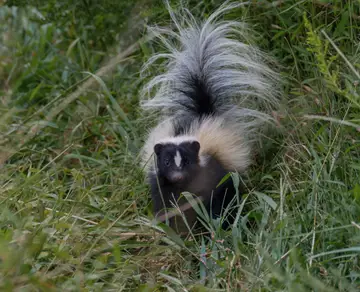
This is the most common skunk in Tennessee and it occurs state-wide. They are slightly larger and their scent is not as strong as the Eastern Spotted Skunk's. Tennessee Wildlife Resources Agency
JFMAMJJASOND
82 records by month.What the sources say
Habitat: They occur in a variety of habitats in both rural and urban areas, but tend to prefer forest borders, brushy field corners, fencerows, open grassy fields, rocky outcrops, and agricultural fields. They typically use underground dens which can be in grassy banks, rocky crevices, or along fencerows, although sometimes they use aboveground dens including barns, woodpiles, haystacks, or rock or brush piles. (Tennessee Wildlife Resources Agency)
No confirmed photo of Swamp Rabbit
Swamp Rabbit
Sylvilagus aquaticus
Where in Tennessee
The Swamp Rabbit is generally found near water, as its name suggests, and is an excellent swimmer. It occurs in western Tennessee and some parts of middle Tennessee. Tennessee Wildlife Resources Agency
What the sources say
Habitat: Always occurs near water; usually in swampy lowlands, wetlands, marshes, cypress swamps, or canebrakes. (Tennessee Wildlife Resources Agency)
Range: Tri-colored bats occupy more caves in eastern North America than any other bat species. They typically roost alone and prefer warmer caves compared to other cave-hibernating bats.
Habitat: Hibernates in caves, rock crevices and mines. Summer roosts include trees, cliffs, and sometimes buildings. (Tennessee Wildlife Resources Agency)
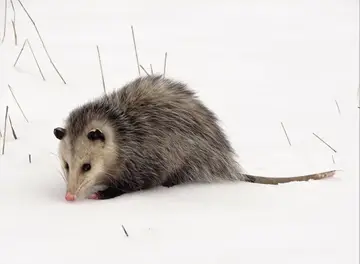
Weighs 4 to 7 lb and stands 6 to 8 inches high at the shoulder (South Carolina DNR); about the size of a house cat
How to recognize it
Long pointed nose, black hairless ears, dark eyes, nearly hairless grasping (prehensile) tail
Long scaly tail and a pointed snout ending in a pink nose
Opposable thumb-like big toe (hallux) on each hind foot
Where in Tennessee
The American opossums are actually quite a diverse group whose members are almost exclusively found in South America, the exception being the Virginia opossum. Tennessee Wildlife Resources Agency
JFMAMJJASOND
117 records by month.What the sources say
Habitat: Part of the success of the Virginia opossum in Tennessee is owed to its willingness to rarely, if ever, pass up a meal, which undoubtedly allows it to exploit a variety of habitat types and situations whether on the ground or in a tree. Though it prefers open forests with a permanent water source, it is equally at home almost anywhere, including agricultural lands and even suburban and urban areas where it is frequently seen along roadways. Known as a solitary wanderer, the opossum seldom remains in a single location for more than a few days. Being primarily active at night, it seeks out cover in the form of brush, hollow trees or logs, or man-made structures by day. (Tennessee Wildlife Resources Agency)
Habitat: Primarily found in forests and around forest edges, but can be found in a variety of habitats including scrubland, oldfields, and fencerows. (Tennessee Wildlife Resources Agency)
No confirmed photo of White-tailed Deer
White-tailed Deer
Odocoileus virginianus
Where in Tennessee
The White-tailed Deer, easily one of the most recognizable mammals, is Tennessee's most popular big game animal and occurs state-wide … Tennessee Wildlife Resources Agency
JFMAMJJASOND
1,283 records by month.What the sources say
Range: The White-tailed Deer, easily one of the most recognizable mammals, is Tennessee's most popular big game animal and occurs state-wide. Although deer are plentiful and widespread today, they were nearly extirpated during the early 20th century due to over-harvesting for food and hides.
Habitat: Occurs in a variety of habitats, but generally prefers wooded areas during the day. They also use crop fields, pastures, shrubby areas, thickets, field edges, yards, and orchards. (Tennessee Wildlife Resources Agency)
“Wild Pigs cause extensive damage to farm crops, wildlife habitat, contribute to extreme erosion and stream pollution, and carry diseases harmful to livestock or other animals as well as humans.” Tennessee Wildlife Resources Agency
Size
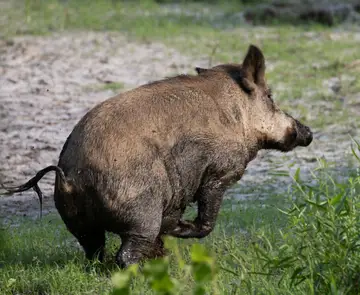
Adults average 75 to 250 pounds, but some get twice as large. They can stand up to 3 feet tall and reach 5 feet long, and males (boars) are larger than females (sows). FWC says Florida wild hogs can weigh more than 150 pounds and be 5 to 6 feet long. Ohio State Extension says Ohio adults typically weigh 125 to 200 pounds.
How to recognize it
Look much like domestic hogs but are generally thinner, with thicker hides of coarse, bristly hair and longer tusks
Four continuously growing tusks, 2 on top and 2 below
Wild Pigs, which were originally introduced from Europe into the United States as a big game species, can be found in many areas of Tennessee … Tennessee Wildlife Resources Agency
What the sources say
Range: Wild Pigs, which were originally introduced from Europe into the United States as a big game species, can be found in many areas of Tennessee. These pigs have recently been removed from big game status to a non-protected nuisance animal marked for eradication.
Habitat: Wild Pigs live in many types of habitats, but are generally found in upland and bottomland hardwood forests, mountainous terrain, brushlands, or swamps. (Tennessee Wildlife Resources Agency)
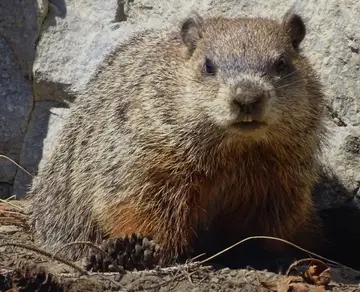
Range: This is the largest member of the Sciuridae (Squirrel) Family and it occurs all across Tennessee. Woodchucks, also known as "groundhogs", are well-known for their habitat of excavating burrows and sitting upright next to them.
Habitat: Woodchucks prefer sloping pastures and cultivated fields, adjacent to small woodlots and sometimes stream banks. They utilize loamy soil to build burrow systems, usually with separate dens for nesting and hibernating. (Tennessee Wildlife Resources Agency)
Status in Tennessee: Woodland Jumping Mouse is Deemed in Need of Management by both TWRA and Tennessee Department or Environment and Conservation.
What the sources say
Habitat: Prefers moist areas and edges of coniferous and deciduous forests with dense, herbaceous growth. (Tennessee Wildlife Resources Agency)
No confirmed photo of Woodland Vole
Woodland Vole
Microtus pinetorum
Where in Tennessee
This small rodent, which spends most of its time in underground tunnel systems, is found across the state … Tennessee Wildlife Resources Agency
What the sources say
Range: This small rodent, which spends most of its time in underground tunnel systems, is found across the state. Its other name, Pine Vole, refers to the habitat where the first specimen was collected, not necessarily its preferred habitat.
Habitat: Woodland Voles occur in a variety of habitats, both in open lands and in woodlands. They occur in fields next to wooded areas, along fencerows, and in orchards, gardens, and thickets along forest edges. (Tennessee Wildlife Resources Agency)
Bobcats are smaller with short tails and are streaked and spotted with black; mountain lions are uniformly colored with a long tail. Bobcat tracks are under 2 inches wide.
Muskrats have dark whiskers, a nearly triangular (side-flattened) tail and weigh at most 5 pounds. CDFW says most nutria reports it receives are actually muskrats.
Photos show typical adults; individuals vary. Never get close to compare.
When mammals are active in Tennessee
Records of mammals in Tennessee peak in January to July. They show when people record mammals, not how many there are (about month bars).
JanFebMarAprMayJunJulAugSepOctNovDec
3,850 records of mammals in Tennessee by month (GBIF, CC0 and CC BY records).
If you are bitten or stung
Call 911 or Poison Help at 1-800-222-1222 right away. Poison Help connects you to your local poison center, any time of day.
How to report
TWRA "Report Wildlife Encounters, Incidents, or Illness" page (https://www.tn.gov/twra/wildlife/report-wildlife.html): bear conflicts (800) 831-1174; online forms for bear sightings, sick deer, and dead or sick birds. Rare birds: [email protected] (2013 checklist). Aquatic invasive species: TWRA directs people to its Invasive Fish Species page. Tennessee Wildlife Resources Agency
Yes. Status in Tennessee: The Tennessee black bear population has significantly increased since the 1970's through management and enforcement. Tennessee Wildlife Resources Agency
“Status in Tennessee: The Tennessee black bear population has significantly increased since the 1970's through management and enforcement.”
“Wild Pigs cause extensive damage to farm crops, wildlife habitat, contribute to extreme erosion and stream pollution, and carry diseases harmful to livestock or other animals as well as humans.”
“Shrews in the genus Blarina are the only mammals in North America that produce a salivary toxin secreted from a duct at the base of the incisors. The powerful toxin, much like snake venom, is injected into the bite wounds of its prey to kill them.”
“This rat also produces a considerable amount of damage to property and foods, and carries a large number of communicable diseases.”
“Status in Tennessee: The Tennessee black bear population has significantly increased since the 1970's through management and enforcement.”
Wildlife Species in Tennessee. Tennessee Wildlife Resources Agency. archived copy, captured August 11, 2026; checked November 3, 2026.Quoted passages (1)
“Wildlife Species in Tennessee … Currently, there are more than 325 species of fish, 89 mammals, 61 reptiles, 70 amphibians, and 340+ birds known to inhabit or migrate through Tennessee.”
Rabies. Tennessee Department of Health. archived copy, captured September 3, 2025; checked November 3, 2026.Quoted passages (1)
“The vast majority of rabies cases reported to the Centers for Disease Control and Prevention each year occur in wild animals like raccoons, skunks, bats, and foxes.”