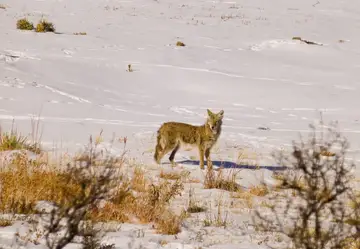
Tennessee has 4 venomous snakes named by official sources: Copperhead, Cottonmouth, Timber Rattlesnake and Pygmy Rattlesnake, as labelled by Tennessee Wildlife Resources Agency. This guide covers 9 animal groups from Tennessee Wildlife Resources Agency (TWRA) lists and other official sources, with photos, venomous status and when each group is active.
Identification help has limits: a photo cannot confirm that an animal is safe. Watch from a distance and never handle a wild animal.
These are the animals official sources describe as venomous or as a risk to people in Tennessee, across 8 groups. The reason is given in the source's own terms.
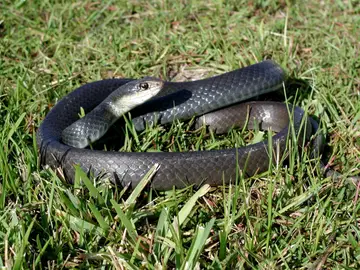
Venomous: “These venomous snakes, also commonly known as ‘water moccasin,’ occur in the western third of Tennessee, including counties on the northern Highland Rim.”
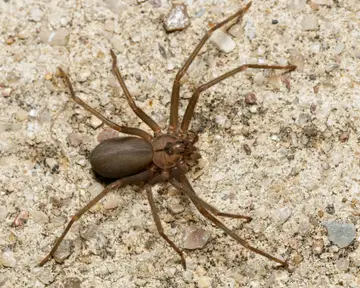
Venomous: “Tennessee is home to many species of spiders; however, only two are venomous - the black widow and the brown recluse. Both species are found in every Tennessee county.”
Toxic skin secretions irritating to humans, deadly to small animals: “One of the few poisonous frogs found in the U.S., Pickerel Frogs produce toxic skin secretions that can be irritating to humans and deadly to small animals”
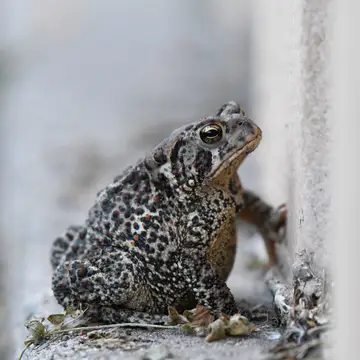
Skin toxins harmful on contact with eyes, nose or mouth: “Like many toads, Eastern spadefoots secret toxins from their skin which can be harmful if they come into contact with the eyes, nose or mouth”
Venomous: “Wasp, hornet and yellowjacket stings can be a serious health threat to animals and humans, especially if a person being stung is allergic to yellowjacket venom.”
Venomous: “Wasp, hornet and yellowjacket stings can be a serious health threat to animals and humans, especially if a person being stung is allergic to yellowjacket venom.”
Venomous: “Wasp, hornet and yellowjacket stings can be a serious health threat to animals and humans, especially if a person being stung is allergic to yellowjacket venom.”
Venomous: “Wasp, hornet and yellowjacket stings can be a serious health threat to animals and humans, especially if a person being stung is allergic to yellowjacket venom.”
Venomous: “Wasp, hornet and yellowjacket stings can be a serious health threat to animals and humans, especially if a person being stung is allergic to yellowjacket venom.”
Venomous: “Wasp, hornet and yellowjacket stings can be a serious health threat to animals and humans, especially if a person being stung is allergic to yellowjacket venom.”
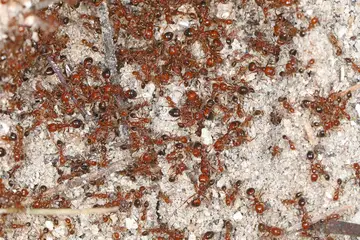
Stings: “The red imported fire ant, Solenopsis invicta Buren, the black imported fire ant, Solenopsis richteri Forel, and their hybrid are nuisance insects and their stings can cause serious medical problems.”
Stings: “The red imported fire ant, Solenopsis invicta Buren, the black imported fire ant, Solenopsis richteri Forel, and their hybrid are nuisance insects and their stings can cause serious medical problems.”
Stings: “Wasp, hornet and yellowjacket stings can be a serious health threat to animals and humans, especially if a person being stung is allergic to yellowjacket venom.”
Venomous stinging spines: “The Southern United States is home to at least 6 known ‘stinging’ caterpillars that are of medical significance. The Hickory Tussock, Hag or Monkey Slug, Saddleback, Buck, Lo Moth and Puss or Asp.”
Strikes people near its nest (rare): “An aggressive defender of its nest, the Brown Thrasher has been known to (although rarely) strike people and dogs hard enough to draw blood.”
Venomous: “Shrews in the genus Blarina are the only mammals in North America that produce a salivary toxin secreted from a duct at the base of the incisors …”
Venomous: “Shrews in the genus Blarina are the only mammals in North America that produce a salivary toxin secreted from a duct at the base of the incisors …”
Disease (carries a large number of communicable diseases): “This rat also produces a considerable amount of damage to property and foods, and carries a large number of communicable diseases.”
Disease (carries a large number of communicable diseases): “This rat also produces a considerable amount of damage to property and foods, and carries a large number of communicable diseases.”
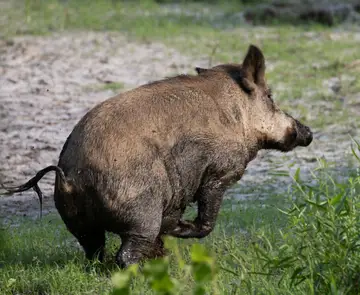
Disease: “Wild Pigs cause extensive damage to farm crops, wildlife habitat, contribute to extreme erosion and stream pollution, and carry diseases harmful to livestock or other animals as well as humans.”
Rabies. TWRA: “The vast majority of rabies cases reported to the Centers for Disease Control and Prevention each year occur in wild animals like raccoons, skunks, bats, and foxes.”
17 nonnative animals are named on Tennessee's official lists (Tennessee Wildlife Resources Agency). The USGS Nonindigenous Aquatic Species database records 1 nonnative animal in our groups with an established population in Tennessee.
Darker cells are the months with more open-licence observation records of each group in Tennessee (GBIF). They show when people see and record these animals, not how many there are. The current month, this month, is highlighted.
Report: TWRA "Report Wildlife Encounters, Incidents, or Illness" page (https://www.tn.gov/twra/wildlife/report-wildlife.html): bear conflicts (800) 831-1174; online forms for bear sightings, sick deer, and dead or sick birds. Rare birds: [email protected] (2013 checklist). Aquatic invasive species: TWRA directs people to its Invasive Fish Species page. Tennessee Wildlife Resources Agency
Keep alligators out of captivity and release: TWRA says possessing or releasing them is illegal and poses safety and ecological risks. Tennessee Wildlife Resources Agency
Questions people ask about Tennessee wildlife
Are there alligators in Tennessee?
Yes. TWRA: "Since 2018, confirmed sightings in Shelby, Fayette, and Hardin counties have been recorded by the TWRA", and an alligator was caught in Norris Lake in East Tennessee in March 2024. TWRA says alligators are expanding their range naturally from southern border states. USGS NAS separately lists two nonindigenous records (Marion 2009, Union 2024), both status "failed". Tennessee Wildlife Resources Agency · More
Are there water moccasins (cottonmouths) in Tennessee?
Yes. These venomous snakes, also commonly known as “water moccasin,” occur in the western third of Tennessee, including counties on the northern Highland Rim. TWRA poster: "COTTONMOUTHS (Agkistrodon piscivorus) DO NOT OCCUR IN EAST TENNESSEE. MOST REPORTED SIGHTINGS CAN BE ATTRIBUTED TO MISIDENTIFICATION OF THE NORTHERN WATERSNAKE." Tennessee Wildlife Resources Agency
Are there rattlesnakes in Tennessee?
Yes. TWRA lists two: the Timber Rattlesnake and the Pygmy Rattlesnake. This is the largest, and the most dangerous, of the 4 venomous snakes in Tennessee; it occurs across the state. Tennessee Wildlife Resources Agency
Yes. The brown recluse spider is found in every county in Tennessee with the possible exception of a few extreme eastern counties. University of Tennessee Extension
Are there black widows in Tennessee?
Yes. Both the northern and the southern black widows are found in Tennessee, with the southern species being most common. University of Tennessee Extension
Are there joro spiders in Tennessee?
Yes. In Tennessee, the first two counties where Jorō spiders were found were Hamilton and Bradley counties in October 2021. While they are large and brightly colored in appearance, they are unlikely to bite people or their pets (9). University of Tennessee Extension · More
Are there scorpions in Tennessee?
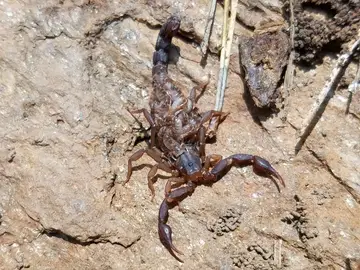
Yes. UT Extension's home pest guide covers scorpions but names no species. GBIF holds 53 preserved specimens of Vaejovis carolinianus from Tennessee. No official source checked states where in Tennessee scorpions occur or how dangerous they are. University of Tennessee Extension · More
Are there mountain lions (cougars) in Tennessee?
Rarely. Status in Tennessee: Cougars in TN are a rare and infrequent sighting. However there were mulitple confirmed sightings in the fall of 2015. Tennessee Wildlife Resources Agency · More
Are there black bears in Tennessee?
Yes. Status in Tennessee: The Tennessee black bear population has significantly increased since the 1970's through management and enforcement. Tennessee Wildlife Resources Agency
Yes. These pigs have recently been removed from big game status to a non-protected nuisance animal marked for eradication. Tennessee Wildlife Resources Agency
Are there fire ants in Tennessee?
Yes. UT says Tennessee has an Imported Fire Ant Quarantine Rule, established in 1990, and publishes a 2024 county list. The black imported fire ant's range includes southern Tennessee. University of Tennessee Institute of Agriculture · More
Are there venomous lizards in Tennessee?
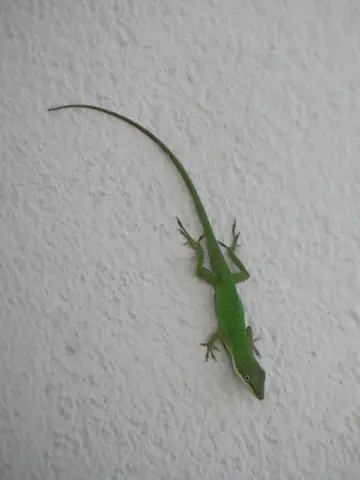
Southeastern Five-lined Skink account: "Both the five-lined skinks are mistakenly thought to be venomous." Tennessee Wildlife Resources Agency
“One of 4 venomous snakes in Tennessee; this pit viper occurs across the entire state.”
“These venomous snakes, also commonly known as ‘water moccasin,’ occur in the western third of Tennessee, including counties on the northern Highland Rim.”
“This is the largest, and the most dangerous, of the 4 venomous snakes in Tennessee; it occurs across the state.”
“The Pygmy Rattlesnake (also Pigmy) is the smallest, and one of the least known, venomous snakes in Tennessee.”
“The Scarletsnake is a mimic of the venomous Coral Snake, which does not occur in Tennessee.”
Bites & Stings | Tennessee Poison Center. Tennessee Poison Center (Vanderbilt University Medical Center), Tennessee's poison-control program. undated page; checked November 3, 2026.Quoted passages (10)
“Tennessee plays host to 34 species of snakes, four of which are considered venomous”
“Tennessee is home to many species of spiders; however, only two are venomous - the black widow and the brown recluse. Both species are found in every Tennessee county.”
“Tennessee plays host to 34 species of snakes, four of which are considered venomous: the Copperhead, the Timber Rattlesnake, the Pygmy Rattlesnake, and the Western Cottonmouth.”
“The Eastern Diamondback Rattlesnake (Crotalus adamanteus) is not usually found in Tennessee.”
“FREE 24/7 Poison Help Hotline 800.222.1222”
“Distinguishing between a venomous bite and a non-venomous bite cannot be done based on the appearance of the bite site alone”
“Shake clothing and shoes before wearing”
“Since most brown recluse spiders hibernate in the winter (except for those that live indoors), most bites occur between March and October when humans accidentally disturb their habitat: closets, out-buildings or woodpiles.”
“In the South, tick borne illnesses are in season during the summer months. Rocky Mountain Spotted Fever (RMSF), Southern Tick-Associated Rash Illness (STARI), and Ehrlichiosis are endemic here in TN while Lyme disease is not.”
“So, what is the point of this ode? Well, spring is around the corner, bringing a fresh batch of snake bites and envenomations.”
Wildlife Species in Tennessee. Tennessee Wildlife Resources Agency. archived copy, captured August 11, 2026; checked November 3, 2026.Quoted passages (1)
“Wildlife Species in Tennessee … Currently, there are more than 325 species of fish, 89 mammals, 61 reptiles, 70 amphibians, and 340+ birds known to inhabit or migrate through Tennessee.”
PB1193 The Black Widow Spider. University of Tennessee Extension (UT Institute of Agriculture). PB1193-500-7/02 [July 2002 revision]; checked November 3, 2026.Quoted passages (2)
“Although both male and female black widow spiders are highly venomous [PB1193];”
“Both the northern and the southern black widows are found in Tennessee, with the southern species being most common.”
“Like many toads, the American toad produces a milky poison from its skin.”
“One of the few poisonous frogs found in the U.S., Pickerel Frogs produce toxic skin secretions that can be irritating to humans and deadly to small animals”
“Like many toads, Eastern spadefoots secret toxins from their skin which can be harmful if they come into contact with the eyes, nose or mouth”
“Like many toads, the Fowler’s toad produces a toxin from its skin.”
“Scorpions: have eight legs, a pair of large pedipalps to catch prey, and a segmented abdomen that ends in a stinger.”
“Other organisms such as spiders, scorpions, centipedes, millipedes, ticks, sowbugs, pillbugs, mites, rats, mice, snakes, bats, squirrels, birds, molds and fungi may also enter homes.”
“Wasp, hornet and yellowjacket stings can be a serious health threat to animals and humans, especially if a person being stung is allergic to yellowjacket venom.”
“Yellowjackets are often considered the most dangerous stinging insects in the United States.”
“In Tennessee, 11 species of yellowjacket wasps can be found (Table 1).”
“Workers foraging away from their nest are seldom aggressive in the spring or early summer, but in late summer they become more aggressive.”
Fire Ants in Tennessee. University of Tennessee Institute of Agriculture, Department of Entomology and Plant Pathology. undated page; checked November 3, 2026.Quoted passages (1)
“The red imported fire ant, Solenopsis invicta Buren, the black imported fire ant, Solenopsis richteri Forel, and their hybrid are nuisance insects and their stings can cause serious medical problems.”
What can sting but cannot fly … yet? Tennessee Poison Center (Vanderbilt University Medical Center). July 21, 2014; checked November 3, 2026.Quoted passages (1)
“The Southern United States is home to at least 6 known ‘stinging’ caterpillars that are of medical significance. The Hickory Tussock, Hag or Monkey Slug, Saddleback, Buck, Lo Moth and Puss or Asp.”
Vector-Borne Diseases. Tennessee Department of Health. archived copy, captured August 6, 2026; checked November 3, 2026.Quoted passages (6)
“Transmits: Tularemia and Rocky Mountain spotted fever”
“They will vigorous defend nests and attack human intruders.”
“In urban areas, Mississippi Kites are known to attack people who venture too close to their nest.”
“An aggressive defender of its nest, the Brown Thrasher has been known to (although rarely) strike people and dogs hard enough to draw blood.”
“The Mute Swan is an exotic species in North America.”
“In Tennessee it is an exotic, non-native species that occasionally breeds in the state.”
“The Rock Pigeon, formerly known as the Rock Dove, was introduced to North America in the early 17th-century by colonists on the Atlantic coast and is now a common sight in urban areas from southern Alaska across North America to the tip of South America.”
“Shrews in the genus Blarina are the only mammals in North America that produce a salivary toxin secreted from a duct at the base of the incisors. The powerful toxin, much like snake venom, is injected into the bite wounds of its prey to kill them.”
“This rat also produces a considerable amount of damage to property and foods, and carries a large number of communicable diseases.”
“Wild Pigs cause extensive damage to farm crops, wildlife habitat, contribute to extreme erosion and stream pollution, and carry diseases harmful to livestock or other animals as well as humans.”
“These pigs have recently been removed from big game status to a non-protected nuisance animal marked for eradication.”
“Coypu (Nutria) Introduced — Myocastor coypus — This semi-aquatic rodent, which was originally introduced in Louisiana in the 1930's from South America, has spread northward and occurs in western Tennessee. It is more commonly known as the Nutria or "River Rat."”
“Roof Rat (Introduced) — Rattus rattus — The Roof Rat, which is very similar to the Brown Rat, occurs all across the state. It is also known as the Black Rat, House Rat, or Ship Rat.”
“Brown Rat (Introduced) — Rattus norvegicus — The Brown Rat, which is very similar to the Roof Rat, occurs all across the state. It is also known as the Norway Rat, Common Rat, or Sewer Rat.”
“House Mouse (Introduced) — Mus musculus — The House Mouse, which is probably the most well-known rodent, is found state-wide in Tennessee.”
“Status in Tennessee: Cougars in TN are a rare and infrequent sighting. However there were mulitple confirmed sightings in the fall of 2015.”
“Status in Tennessee: The Tennessee black bear population has significantly increased since the 1970's through management and enforcement.”
“Status in Tennessee: Population seems to be increasing, and spreading from west to east.”
Rabies. Tennessee Department of Health. archived copy, captured September 3, 2025; checked November 3, 2026.Quoted passages (1)
“The vast majority of rabies cases reported to the Centers for Disease Control and Prevention each year occur in wild animals like raccoons, skunks, bats, and foxes.”
Alligators in Tennessee. Tennessee Wildlife Resources Agency. archived copy, captured October 22, 2026; checked November 3, 2026.Quoted passages (4)
“There have been several confirmed sightings of alligators in Southwest Tennessee in recent years.”
“If you come across one while exploring the outdoors in West TN, don’t interact with, feed, or harass it, just view it from afar and leave it alone while enjoying Tennessee’s unique biodiversity. … Alligators are a testament to the biodiversity in Tennessee and are a protected species; any attempt to capture or kill them is a violation of the law.”
“…we would like to remind everyone that possessing or releasing alligators in Tennessee is illegal and poses safety and ecological risks.”
“Alligators can survive Tennessee winters by going into a hibernation-like dormancy called brumation”
PB1191 The Brown Recluse Spider. University of Tennessee Extension (UT Institute of Agriculture). PB1191-500-7/02 [July 2002 reprint]; checked November 3, 2026.Quoted passages (1)
“The brown recluse spider is found in every county in Tennessee with the possible exception of a few extreme eastern counties.”
W1415 Jorō Spider. University of Tennessee Extension (UT Institute of Agriculture). W1415 08/26 [August 2026]; checked November 3, 2026.Quoted passages (1)
“In Tennessee, the first two counties where Jorō spiders were found were Hamilton and Bradley counties in October 2021.”
Quarantine | Fire Ants in Tennessee. University of Tennessee Institute of Agriculture. undated page; checked November 3, 2026.Quoted passages (1)
“In Tennessee the Department of Agriculture, Division of Regulatory Services established the Imported Fire Ant Quarantine Rule in 1990.”