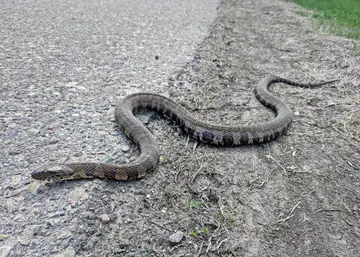
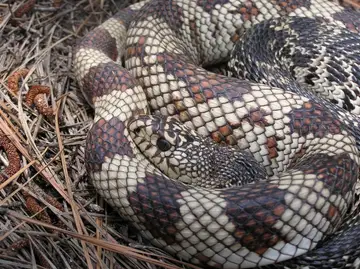
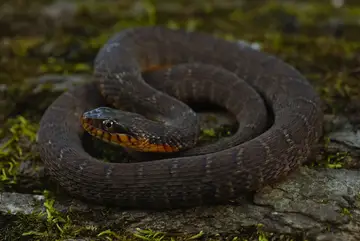
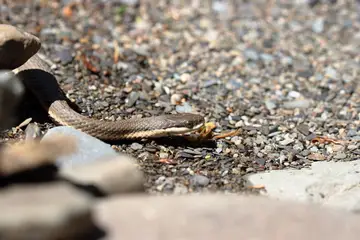
Tennessee Poison Center (Vanderbilt University Medical Center), Tennessee's poison-control program: Tennessee plays host to 34 species of snakes, four of which are considered venomous
This page lists 32 snakes.
4 are venomous by official accounts: Copperhead, Cottonmouth, Timber Rattlesnake and Pygmy Rattlesnake. Tennessee Poison Center (Vanderbilt University Medical Center), Tennessee's poison-control program gives a total of 34; the 32 here are the snakes official sources name one by one.
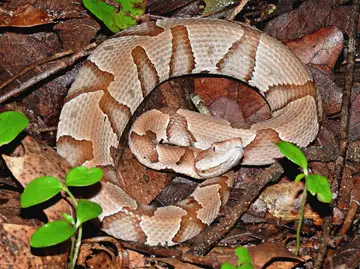
Venom: “One of 4 venomous snakes in Tennessee; this pit viper occurs across the entire state.” (Tennessee Wildlife Resources Agency)
Range: One of 4 venomous snakes in Tennessee; this pit viper occurs across the entire state. Two subspecies are found in Tennessee: Southern Copperhead (A. c. contortrix), which occurs in extreme West Tennessee, and Northern Copperhead (A. c. mokasen), which occurs across the rest of the state.
Habitat: Generally prefers forested habitat and avoids open areas such as pastures and agricultural fields. Often found on rocky, wooded hillsides with abundant logs, leaf litter, or rocks for cover. Copperheads can also be found in urban and suburban environments, as well as near wetland and stream edges. (Tennessee Wildlife Resources Agency)
Typically 30 to 48 inches (about 3 to 4 feet); recorded up to 75 inches.
How to recognize it
Heat-sensing pit between nostril and eye; no rattle
Head much wider than the neck, with a dark bar from the eye to the jaw; vertical (cat-eye) pupils
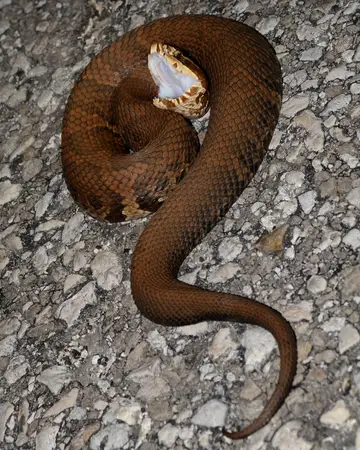
Gapes to show the white lining of its mouth when threatened
Where in Tennessee
These venomous snakes, also commonly known as “water moccasin,” occur in the western third of Tennessee, including counties on the northern Highland Rim … Tennessee Wildlife Resources Agency
JFMAMJJASOND
127 records by month.What the sources say
Venom: “These venomous snakes, also commonly known as ‘water moccasin,’ occur in the western third of Tennessee, including counties on the northern Highland Rim.” (Tennessee Wildlife Resources Agency)
Range: These venomous snakes, also commonly known as “water moccasin,” occur in the western third of Tennessee, including counties on the northern Highland Rim. One subspecies, Western Cottonmouth (A. p. leucostoma), is recognized in the state.
Habitat: Occurs mainly in the swamps, sloughs, wetlands, and drainage ditches of western coastal plain; occasionally found around rivers and lakes. They can be found swimming in the water, coiled on the bank, or in vegetation along the shore. (Tennessee Wildlife Resources Agency)
Adults usually 12-24 inches (30-61 cm); record 31-33 inches. Newborns about 5-6 inches.
How to recognize it
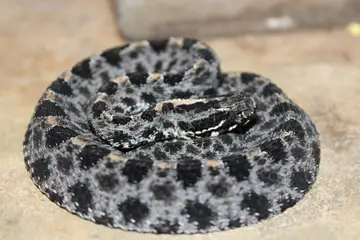
Tiny rattle at the end of a slender tail; buzz sounds like an insect
Pit viper: heat-sensing pit between nostril and eye, vertical (cat-like) pupils, keeled scales; nine large plates on top of the head
Large head scales (other rattlesnakes have small scales on the head)
Where in Tennessee
The Pygmy Rattlesnake (also Pigmy) is the smallest, and one of the least known, venomous snakes in Tennessee … Tennessee Wildlife Resources Agency
What the sources say
Venom: “The Pygmy Rattlesnake (also Pigmy) is the smallest, and one of the least known, venomous snakes in Tennessee.” (Tennessee Wildlife Resources Agency)
Range: The Pygmy Rattlesnake (also Pigmy) is the smallest, and one of the least known, venomous snakes in Tennessee. One subspecies, Western Pygmy Rattlesnake (S. m. streckeri), occurs along the western Highland Rim from Stewart County to the southern border.
Habitat: Found in a variety of habitats, but is usually in close proximity to water. Occurs in flood plains, wetlands, and moist fields; occasionally found in rocky uplands, pine woods, and glades. (Tennessee Wildlife Resources Agency)
Most adults 36 to 60 inches (3 to 5 feet); record 74.5 inches.
How to recognize it
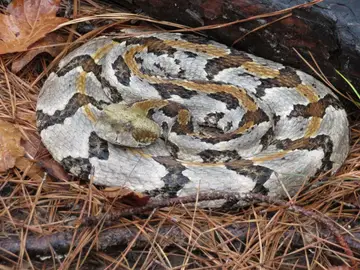
Black tail ending in a rattle
Heat-sensing pit between nostril and eye
Large, thick head distinct from the neck; cat-like vertical pupil
Where in Tennessee
This is the largest, and the most dangerous, of the 4 venomous snakes in Tennessee; it occurs across the state. Tennessee Wildlife Resources Agency
JFMAMJJASOND
42 records by month.What the sources say
Venom: “This is the largest, and the most dangerous, of the 4 venomous snakes in Tennessee; it occurs across the state.” (Tennessee Wildlife Resources Agency)
Habitat: Prefers mature, heavily wooded forests with rocky, south-facing hillsides; often associated with bluffs or ledges. They can also be found around mountains, swamps, cane thickets, wooded stream corridors, and rural habitats. It is common to see Timber Rattlesnakes coiled near fallen logs or sunning on rocks. (Tennessee Wildlife Resources Agency)
From A to Z. "Not stated" means no official source we use gives a venom status, not that the snake is harmless. Some harmless snakes mimic venomous ones: leave every snake alone.
No official source we use states whether this animal is venomous. That does not mean it is harmless: do not handle it.
Size
Most adults about 42 to 60 inches (3.5 to 5 ft); record 102 inches (8.5 ft). Ranges given by agencies: 41 to 84 in (Louisiana), 36 to 82 in (Oklahoma), adults average 50 to 72 in (Alabama), up to 94 in (NC State Extension), up to 80 in in Colorado and up to 68 in in Arizona.
How to recognize it
Long, slowly tapering tail whose scales look like a braided whip
Habitat: Occurs primarily in dry, open habitats with sandy soils. Eastern Coachwhips can also be associated with scrub, wooded hillsides, pine woods, old fields, and farmland. (Tennessee Wildlife Resources Agency)
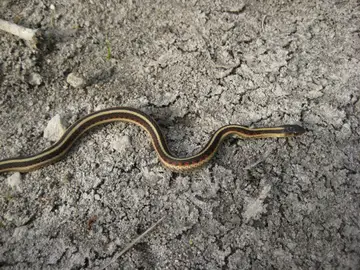
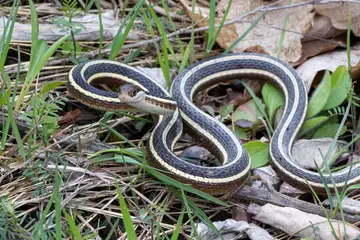
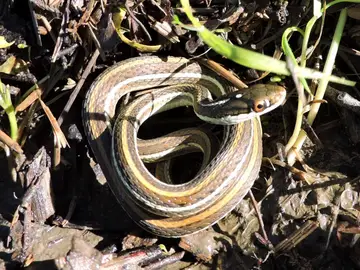
This is one of the most common snakes throughout Tennessee. One subspecies, Eastern Gartersnake (T. s. sirtalis), occurs from border to border. Tennessee Wildlife Resources Agency
JFMAMJJASOND
107 records by month.What the sources say
Venom: “NONVENOMOUS SNAKES FOUND IN EAST TENNESSEE … COMMON GARTERSNAKE Thamnophis sirtalis” (Tennessee Wildlife Resources Agency, Region IV)
Habitat: Lives in a variety of habitats, but most are found near water such as ponds, wetlands, drainage ditches, edges of streams, or damp woods. Also occurs in fields, vacant city lots, parks, cemeteries, and old farms. (Tennessee Wildlife Resources Agency)
No official source we use states whether this animal is venomous. That does not mean it is harmless: do not handle it.
Size
Most adults are about 36-48 inches. Maryland gives a record of 82 inches; Alabama gives up to 6.9 feet.
How to recognize it
Smooth, shiny scales and an indistinct neck.
Round pupil.
Florida Museum counts 19-32 crossbands in Florida; Alabama counts 23 to 52.
Where in Tennessee
Three subspecies occur in the state: Eastern Kingsnake (L. g. getula) is found in extreme southeastern Tennessee, Eastern Black Kingsnake (L. g. nigra) occurs over most … Tennessee Wildlife Resources Agency
What the sources say
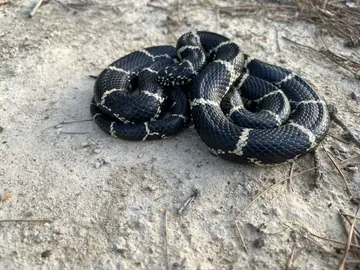
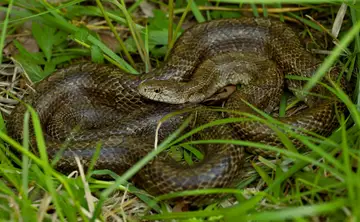
Range: Three subspecies occur in the state: Eastern Kingsnake (L. g. getula) is found in extreme southeastern Tennessee, Eastern Black Kingsnake (L. g. nigra) occurs over most of Tennessee except the northeastern corner, and Speckled Kingsnake (L. g. holbrooki) is found in the western and southwestern third of Tennessee where it interbreeds with Eastern Black Kingsnake.
Habitat: Found in a variety of habitats including forests, fields, shrubby areas, forest edges, urban areas, and edges of wetlands. Common Kingsnakes have a preference for streambanks and wetlands, but are also seen under wood or debris piles, climbing in barns or on stonewalls, and sunning in clearings or on hillsides. (Tennessee Wildlife Resources Agency)
Most adults 9 to 13 inches; occasionally up to about 20 inches.
How to recognize it
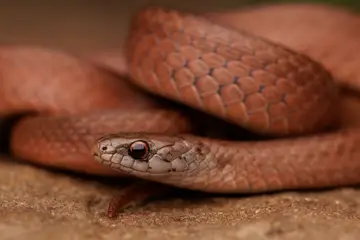
Dark top of head; a dark spot under each eye and on each side of the neck
Keeled (ridged) scales in 17 rows; round pupil
Tennessee: a small dark downward streak on the side of the head
Where in Tennessee
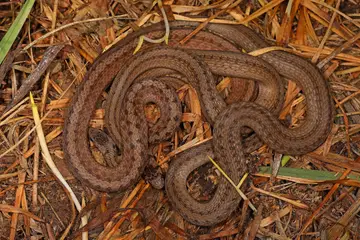
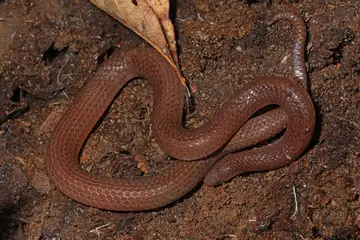
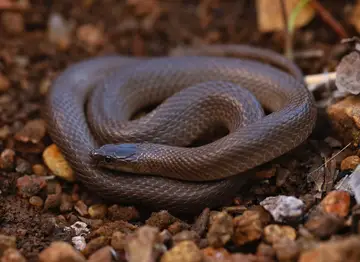
There are 2 subspecies of this secretive snake in Tennessee: Midland Brownsnake (S. d. wrightorum), which occurs across most of the state, and Northern Brownsnake (S. d … Tennessee Wildlife Resources Agency
JFMAMJJASOND
96 records by month.What the sources say
Venom: “NONVENOMOUS SNAKES FOUND IN EAST TENNESSEE … DEKAY'S BROWNSNAKE Storeria dekayi” (Tennessee Wildlife Resources Agency, Region IV)
Range: There are 2 subspecies of this secretive snake in Tennessee: Midland Brownsnake (S. d. wrightorum), which occurs across most of the state, and Northern Brownsnake (S. d. dekayi), which occurs in the southeastern quarter of the state (where the two subspecies interbreed as well).
Habitat: Occurs in a variety of habitats. DeKay’s Brownsnake prefers moist environments in pine or hardwood forests, river floodplains, urban areas, or edges of wetlands. Often found in gardens, rock piles, wood piles, cemeteries, parks, and empty lots. (Tennessee Wildlife Resources Agency)
No official source we use states whether this animal is venomous. That does not mean it is harmless: do not handle it.
Where in Tennessee
One subspecies, Northern Diamond-backed Watersnake (N. r. rhombifer), occurs in the Mississippi and Tennessee River drainages in West Tennessee, and also known from the … Tennessee Wildlife Resources Agency
What the sources say
Range: One subspecies, Northern Diamond-backed Watersnake (N. r. rhombifer), occurs in the Mississippi and Tennessee River drainages in West Tennessee, and also known from the Cumberland River drainage in Stewart and Montgomery counties in Middle Tennessee.
Habitat: Found in a variety of aquatic habitats, but usually in oxbow lakes, rivers, cypress swamps, marshes, and sloughs. (Tennessee Wildlife Resources Agency)
This snake, which has the most elaborate defensive behavior of any other snake in Tennessee, occurs across the state. Also known as the “puff adder” or “hissing viper.” Tennessee Wildlife Resources Agency
What the sources say
Venom: “NONVENOMOUS SNAKES FOUND IN EAST TENNESSEE … EASTERN HOG-NOSED SNAKE Heterodon platirhinos” (Tennessee Wildlife Resources Agency, Region IV)
Habitat: Found in a variety of habitats, but generally prefers areas with sandy or loose soil where they can burrow. They can occur around farms, old fields, river floodplains, open woods, or rocky hillsides. (Tennessee Wildlife Resources Agency)
Common Ribbonsnake (T. s. sauritus), the only subspecies in the state, occurs in West Tennessee and in several counties on the Highland Rim in southern and western … Tennessee Wildlife Resources Agency
What the sources say
Venom: “NONVENOMOUS SNAKES FOUND IN EAST TENNESSEE … EASTERN RIBBONSNAKE Thamnophis sauritus” (Tennessee Wildlife Resources Agency, Region IV)
Range: Common Ribbonsnake (T. s. sauritus), the only subspecies in the state, occurs in West Tennessee and in several counties on the Highland Rim in southern and western Middle Tennessee.
Habitat: A semi-aquatic snake which rarely travels far from water. Often found along the grassy or brushy edges of streams, rivers, ponds, lakes, sloughs, or wetlands. (Tennessee Wildlife Resources Agency)
Two subspecies are recognized in Tennessee: Eastern Wormsnake (C. a. amoenus) and Midwestern Wormsnake (C. a. helenae) … Tennessee Wildlife Resources Agency
JFMAMJJASOND
55 records by month.What the sources say
Venom: “NONVENOMOUS SNAKES FOUND IN EAST TENNESSEE … EASTERN WORMSNAKE Carphophis amoenus” (Tennessee Wildlife Resources Agency, Region IV)
Range: Two subspecies are recognized in Tennessee: Eastern Wormsnake (C. a. amoenus) and Midwestern Wormsnake (C. a. helenae). The Eastern Wormsnake occurs in the Great Valley and Unaka Mountains of east Tennessee, while the Midwestern Wormsnake occurs across the rest of the state.
Habitat: Under rocks, rotten logs, leaf litter, and other debris of hardwood forests, usually moist. Prefers to remain underground or under cover. (Tennessee Wildlife Resources Agency)
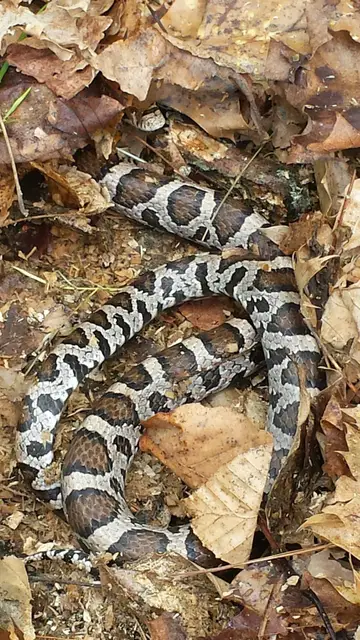
Venom: “NONVENOMOUS SNAKES FOUND IN EAST TENNESSEE … RATSNAKE Elaphe spiloides … The poster uses the older genus Elaphe; TWRA Watchable Wildlife uses Pantherophis for the same species name.” (Tennessee Wildlife Resources Agency, Region IV)
Habitat: Lives in a variety of habitats including woodlands (pine and hardwood), field edges, near streams, and around farms and suburban areas. Gray Ratsnakes take shelter in woodpiles, hollow trees, barns, and old houses. (Tennessee Wildlife Resources Agency)
Eastern milksnake 24 to 52 inches (Alabama); TN gives 24 to 36 inches for eastern and 21 to 28 for red milksnake.
How to recognize it
Eastern milksnake: black-and-white checkerboard belly (Ohio). Western milksnake in Louisiana: underside dull white with scattered black marks.
Eastern milksnake: a light Y- or V-shaped mark is usually present on the nape
Smooth, shiny scales and round pupils
Where in Tennessee
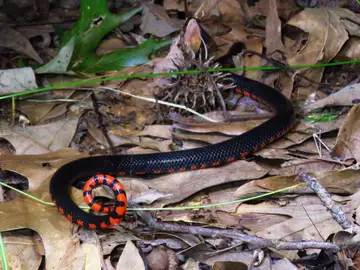
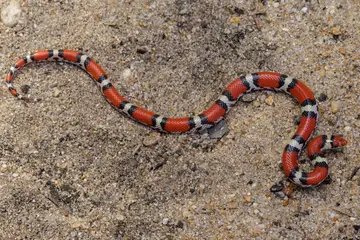
Three subspecies of this brightly colored and strongly patterned snake occur in Tennessee: Eastern Milksnake (L. t. triangulum) occurs in upper East Tennessee, Red … Tennessee Wildlife Resources Agency
JFMAMJJASOND
37 records by month.What the sources say
Venom: “NONVENOMOUS SNAKES FOUND IN EAST TENNESSEE … EASTERN MILKSNAKE Lampropeltis triangulum … SCARLET KINGSNAKE Lampropeltis elapsoides” (Tennessee Wildlife Resources Agency, Region IV)
Range: Three subspecies of this brightly colored and strongly patterned snake occur in Tennessee: Eastern Milksnake (L. t. triangulum) occurs in upper East Tennessee, Red Milksnake (L. t. syspila) is distributed across most of West Tennessee, and Scarlet Kingsnake (L. t. elapsoides) extends from southern Land Between the Lakes southward along the Tennessee River to the Mississippi/Alabama border.
Habitat: Milksnakes are found in a variety of habitats, but generally prefer pine or hardwood forests with rock outcroppings. They also live under rocks or logs in other habitats including fields, savannahs, agricultural, suburban, wetlands, and forest edges. (Tennessee Wildlife Resources Agency)
Habitat: Prefers the quiet waters of swamps, wetlands, river sloughs, and lake edges; frequently found around cypress or tupelo swamps. (Tennessee Wildlife Resources Agency)
Photo: Everglades NPS from Homestead, Florida, United States · Public domain · Wikimedia Commons
Most adults about 3 to 5 ft. Sources range from 20 to 56 inches (Florida Museum) to 34 to 77 inches (New Jersey); Alabama says some exceed 6 ft.
How to recognize it
Smooth scales
Long and slender with large eyes
White chin
Where in Tennessee
Two subspecies are recognized in Tennessee: Northern Black Racer (C. c. constrictor) and Southern Black Racer (C. c. priapus) … Tennessee Wildlife Resources Agency
JFMAMJJASOND
72 records by month.What the sources say
Venom: “NONVENOMOUS SNAKES FOUND IN EAST TENNESSEE … BLACK RACER Coluber constrictor” (Tennessee Wildlife Resources Agency, Region IV)
Range: Two subspecies are recognized in Tennessee: Northern Black Racer (C. c. constrictor) and Southern Black Racer (C. c. priapus). The Northern Black Racer occurs in the eastern half of the state and the Southern Black Racer occurs in the western half.
Habitat: Found in a variety of habitats, but prefers open areas such as old fields, agricultural fields, pastures, and forest edges. (Tennessee Wildlife Resources Agency)
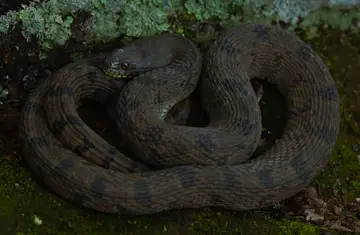
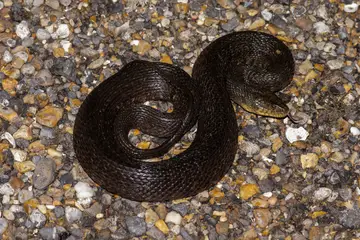
Venom: “NONVENOMOUS SNAKES FOUND IN EAST TENNESSEE … NORTHERN WATERSNAKE Nerodia sipedon” (Tennessee Wildlife Resources Agency, Region IV)
Range: This is the most common watersnake in Tennessee and it occurs statewide. Two subspecies are found in the state: Midland Watersnake (N. s. pleuralis), which occurs in the western two-thirds of Tennessee, and Common Watersnake (N. s. sipedon), which occurs in northeastern Tennessee.
Habitat: This habitat generalist is found in every type of water body, but prefers quiet waters. Northern Watersnakes occur in ponds, lakes, rivers, streams, sloughs, wetlands, and temporary water pools. Frequently found around edges of ponds or lakes, basking on rocks, or on vegetation overhanging water. (Tennessee Wildlife Resources Agency)
Most adults are 48 to 66 inches long. The Florida Museum gives a record of 90 inches; Alabama gives a maximum of 83 inches for the northern and 74 inches for the black subspecies. New Jersey gives 48 to 100 inches.
How to recognize it
Pointed snout covered by a large, triangular, cone-shaped scale, used for pushing into soft earth.
Strongly keeled (ridged) body scales and round pupils.
Four prefrontal scales between and just in front of the eyes, where most similar snakes have two.
Where in Tennessee
These secretive snakes, which produce a loud hissing noise when encountered, are found across the state except in most of West Tennessee, the Central Basin of Middle … Tennessee Wildlife Resources Agency
What the sources say
Venom: “NONVENOMOUS SNAKES FOUND IN EAST TENNESSEE … NORTHERN PINESNAKE Pituophis melanoleucus” (Tennessee Wildlife Resources Agency, Region IV)
Range: These secretive snakes, which produce a loud hissing noise when encountered, are found across the state except in most of West Tennessee, the Central Basin of Middle Tennessee, and the northern parts of East Tennessee. One subspecies, Northern Pinesnake (P. m. melanoleucus), occurs in Tennessee.
Habitat: Pinesnakes are primarily associated with well-drained, sandy soils, especially in pine or mixed pine-hardwood forests. They can also use scrub, agricultural, and dry mountain ridge habitats. (Tennessee Wildlife Resources Agency)
No official source we use states whether this animal is venomous. That does not mean it is harmless: do not handle it.
Where in Tennessee
Yellow-bellied Watersnake (N. e. flavigastor) and Copper-bellied Watersnake (N. e. neglecta) are the 2 subspecies recognized in Tennessee … Tennessee Wildlife Resources Agency
JFMAMJJASOND
44 records by month.What the sources say
Range: Yellow-bellied Watersnake (N. e. flavigastor) and Copper-bellied Watersnake (N. e. neglecta) are the 2 subspecies recognized in Tennessee. Yellow-bellied Watersnake occurs in south-central and southwestern Tennessee, while Copper-bellied Watersnake occurs in the lower Cumberland River and Tennessee River watersheds of Middle Tennessee.
Habitat: Found in quiet pools of water such as lakes, cypress swamps, wetlands, ponds, river sloughs, and slow-moving rivers. (Tennessee Wildlife Resources Agency)
Also known as the “willow snake” or “leather snake,” the Queen Snake occurs in Middle and East Tennessee. Tennessee Wildlife Resources Agency
What the sources say
Venom: “NONVENOMOUS SNAKES FOUND IN EAST TENNESSEE … QUEEN SNAKE Regina septemvittata” (Tennessee Wildlife Resources Agency, Region IV)
Habitat: Prefers cool, rocky streams and rivers. Often found under large rocks or logs around the edges of these streams or rivers, occasionally basking on branches over water. (Tennessee Wildlife Resources Agency)
Most adults 30-48 inches (76-122 cm); record 74 inches (188 cm)
How to recognize it
Spear-shaped head marking from the neck to a point between the eyes is a reliable identification feature
Weakly keeled scales and round pupil
Where in Tennessee
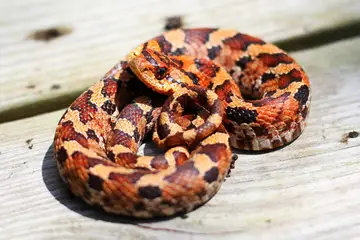
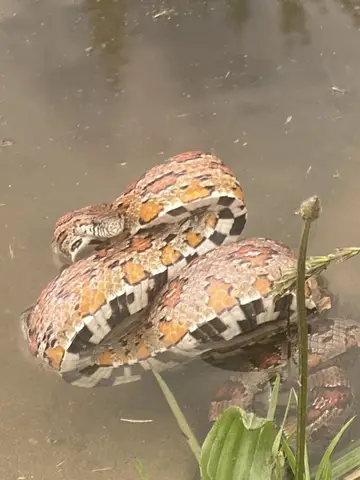
Occurs mainly in the southern two-thirds of East Tennessee and the southwestern corner of the state. Also known as the “red rat snake.” Tennessee Wildlife Resources Agency
What the sources say
Venom: “NONVENOMOUS SNAKES FOUND IN EAST TENNESSEE … CORNSNAKE Elaphe guttata … The poster uses the older genus Elaphe; TWRA Watchable Wildlife uses Pantherophis for the same species name.” (Tennessee Wildlife Resources Agency, Region IV)
Habitat: Found in a variety of habitats including wood lots, rocky hillsides, fields, farms, and suburban settings, but more abundant in habitats with pine trees. Occurs in barns, abandoned buildings, trees, and stumps; also occurs under leaf litter, soil, and other objects. (Tennessee Wildlife Resources Agency)
Habitat: Typically found in stagnant, muddy waters of shallow streams, rivers, and swamps. Often found under rotten or water-soaked logs, or other debris. (Tennessee Wildlife Resources Agency)
Usually 8 to 10 inches; state figures run from about 4 to 16 inches, with a Florida record of 16.6 inches.
How to recognize it
Plain, unmarked red or orange belly.
Three light spots just behind the head, which may fuse into a collar.
Keeled (ridged) scales in 15 rows at midbody and round pupils.
Where in Tennessee
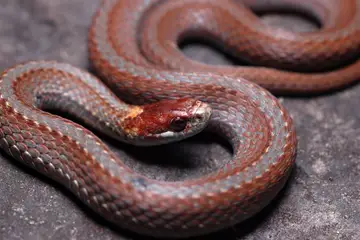
This secretive, but easily recognizable, snake has 2 subspecies in Tennessee: Northern Red-bellied Snake (S. o. occipitomaculata), which occurs across most of the state … Tennessee Wildlife Resources Agency
What the sources say
Venom: “NONVENOMOUS SNAKES FOUND IN EAST TENNESSEE … RED-BELLIED SNAKE Storeria occipitomaculata” (Tennessee Wildlife Resources Agency, Region IV)
Range: This secretive, but easily recognizable, snake has 2 subspecies in Tennessee: Northern Red-bellied Snake (S. o. occipitomaculata), which occurs across most of the state, and Florida Red-bellied Snake (S. o. obscura), which occurs in the southwestern counties of the state (where the two subspecies interbreed as well).
Habitat: Found under leaf litter, rotten logs, bark, and rocks in moist hardwood or mixed pine-hardwood forests and other moist sites such as bottomland habitat. Red-bellied Snakes can also be found around human habitations such as vacant lots where they hide under boards, trash, and other debris. (Tennessee Wildlife Resources Agency)
Usually 8 to 15 inches long; Alabama reports up to about 18 inches, rarely 24. AZGFD gives a maximum of 34 inches for Arizona animals.
How to recognize it
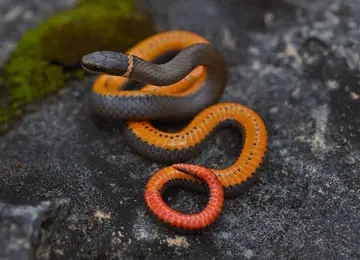
A yellow, cream or orange ring around the neck; it may be incomplete, and some Lower Florida Keys and western Arizona snakes lack it.
Bright yellow to orange or red belly, often with a row of black half-moon spots; the underside of the tail is often red.
Smooth, shiny scales and a small head only slightly wider than the neck.
Where in Tennessee
Two subspecies are recognized in Tennessee: Northern Ring-necked Snake (D. p. edwardsii) and Mississippi Ring-necked Snake (D. p. stictogenys) … Tennessee Wildlife Resources Agency
JFMAMJJASOND
245 records by month.What the sources say
Venom: “NONVENOMOUS SNAKES FOUND IN EAST TENNESSEE … RING-NECKED SNAKE Diadophis punctatus” (Tennessee Wildlife Resources Agency, Region IV)
Range: Two subspecies are recognized in Tennessee: Northern Ring-necked Snake (D. p. edwardsii) and Mississippi Ring-necked Snake (D. p. stictogenys). The Northern Ring-necked Snake occurs in the eastern half of the state, while the Mississippi Ring-necked Snake occurs in the western half.
Habitat: Ring-necked snakes are habitat generalists occurring in a wide variety of habitats, but tend to be found in moist woodlands. They spend most of their time underground or hidden under logs, rocks, leaf litter, or debris. (Tennessee Wildlife Resources Agency)
No official source we use states whether this animal is venomous. That does not mean it is harmless: do not handle it.
Where in Tennessee
This plain-looking snake occurs only in a few counties in the southwestern corner of the state, mostly around the city of Memphis. Tennessee Wildlife Resources Agency
What the sources say
Habitat: Found in a variety of habitats including rocky hillsides, pine and hardwood forests, forest edges, and suburban and urban areas. Rough Earthsnakes are secretive, burrowers that spend most of their time under rocks, leaf litter, logs, or trash. (Tennessee Wildlife Resources Agency)
Most adults are 14 to 33 inches long (Florida Museum), with a record of 46 inches. Maryland, Missouri, Tennessee and Arkansas give 22 to 32 inches. The tail is long and thin, about a third or more of the total length.
How to recognize it
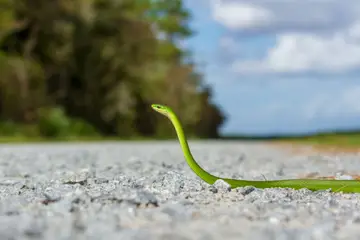
Keeled (ridged) scales in 17 rows, which feel rough; the smooth green snake has smooth scales.
Extremely long, thin tail and round pupils.
Large eyes.
Where in Tennessee
The Rough Greensnake, also known as the “vine snake,” occurs across the state except for upper northeastern Tennessee … Tennessee Wildlife Resources Agency
JFMAMJJASOND
67 records by month.What the sources say
Venom: “NONVENOMOUS SNAKES FOUND IN EAST TENNESSEE … ROUGH GREENSNAKE Opheodrys aestivus” (Tennessee Wildlife Resources Agency, Region IV)
Range: The Rough Greensnake, also known as the “vine snake,” occurs across the state except for upper northeastern Tennessee. Only one subspecies, Northern Rough Greensnake (O. a. aestivus), is found in Tennessee.
Habitat: Occurs in dense vegetation, especially along the edges of streams, rivers, ponds, and lakes; often found on overhanging limbs. They can also be found along river bluffs, on forested hillsides, and in shrub and forest-edge habitat. (Tennessee Wildlife Resources Agency)
Occurs across most of Tennessee except northwestern section, western Highland Rim, and upper East Tennessee … Tennessee Wildlife Resources Agency
What the sources say
Venom: “NONVENOMOUS SNAKES FOUND IN EAST TENNESSEE … SCARLETSNAKE Cemophora coccinea” (Tennessee Wildlife Resources Agency, Region IV)
Range: Occurs across most of Tennessee except northwestern section, western Highland Rim, and upper East Tennessee. One subspecies, Northern Scarletsnake (C. c. copei), recognized in Tennessee.
Habitat: Prefers pine or hardwood forests with sandy or loamy soils, for easier burrowing. Found beneath logs, rocks, leaf litter, or trash such as boards or tin. (Tennessee Wildlife Resources Agency)
Unlike the very similar Rough Earthsnake, this snake has smooth (or weakly keeled) scales and occurs across most of Tennessee … Tennessee Wildlife Resources Agency
What the sources say
Venom: “NONVENOMOUS SNAKES FOUND IN EAST TENNESSEE … SMOOTH EARTHSNAKE Virginia valeriae” (Tennessee Wildlife Resources Agency, Region IV)
Range: Unlike the very similar Rough Earthsnake, this snake has smooth (or weakly keeled) scales and occurs across most of Tennessee. Two subspecies are found in the state: Western Smooth Earthsnake (V. v. elegans), which occurs in West Tennessee and northwest Middle TN, and Eastern Smooth Earthsnake, which occurs in East Tennessee except the northeast corner.
Habitat: Found in a variety of habitats including rocky hillsides, pine and hardwood forests, forest edges, fields, and some suburban areas. These snakes, which are similar to Rough Earthsnakes, are secretive, burrowers that spend most of their time under rocks, leaf litter, logs, or trash. (Tennessee Wildlife Resources Agency)
No confirmed photo of Southeastern Crowned Snake
Southeastern Crowned Snake
Tantilla coronata
Not stated
Venom
No official source we use states whether this animal is venomous. That does not mean it is harmless: do not handle it.
Where in Tennessee
This secretive, black-capped snake occurs across the southern two-thirds of the state plus Stewart County. Tennessee Wildlife Resources Agency
What the sources say
Habitat: Frequently found in sandy-soiled areas, pine forests, hardwoods, and swamps. Southeastern Crowned Snakes are mainly burrowers living beneath rocks, woody debris, leaf litter, and other debris. (Tennessee Wildlife Resources Agency)
No confirmed photo of Southern Watersnake
Southern Watersnake
Nerodia fasciata
Not stated
Venom
No official source we use states whether this animal is venomous. That does not mean it is harmless: do not handle it.
Where in Tennessee
One subspecies, Broad-banded Watersnake (N. f. confluens), occurs at Reelfoot Lake and counties that border the Mississippi River. Tennessee Wildlife Resources Agency
What the sources say
Habitat: Prefers cypress swamps, marshes, river sloughs, and shallow lakes. Frequently found among thick vegetation, basking on logs, or on branches overhanging water. (Tennessee Wildlife Resources Agency)
No official source we use states whether this animal is venomous. That does not mean it is harmless: do not handle it.
Where in Tennessee
One subspecies, Orange-striped Ribbonsnake (T. p. proximus), occurs in Tennessee and it is found in only 4 counties in the far western part of the state. Tennessee Wildlife Resources Agency
What the sources say
Habitat: These semi-aquatic snakes prefer areas near water such as streams, rivers, wetlands, sloughs, and ponds. (Tennessee Wildlife Resources Agency)
No official source we use states whether this animal is venomous. That does not mean it is harmless: do not handle it.
Where in Tennessee
Two subspecies are recognized in Tennessee: Prairie Kingsnake (L. c. calligaster), which occurs in the northern half of western and central Tennessee, and Mole Kingsnake … Tennessee Wildlife Resources Agency
What the sources say
Range: Two subspecies are recognized in Tennessee: Prairie Kingsnake (L. c. calligaster), which occurs in the northern half of western and central Tennessee, and Mole Kingsnake (L. c. rhombomaculata), which occurs in the eastern part of the state. Populations of the two subspecies interbreed in the southern half of western and central Tennessee.
Habitat: Typically found in upland forests, woodlots, agricultural fields, and suburban areas. Prairie Kingsnakes are generally found in prairie grasslands, agricultural fields, or other open habitat. Although both subspecies are secretive, the Mole Kingsnake is more so by spending much of its life underground in burrows. (Tennessee Wildlife Resources Agency)
Snakes people confuse
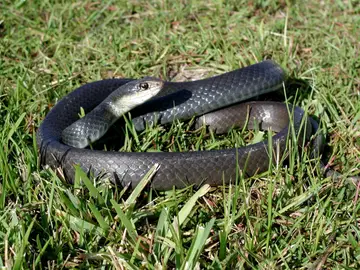
Black Racer or Cottonmouth?
Photo: Everglades NPS from Homestead, Florida, United States · Public domain · Wikimedia Commons
NPS says black racers can resemble the venomous water moccasin and advises leaving alone any snake you cannot identify. It gives no safe field mark, and none is offered here.
Black Racer or Timber rattlesnake?
Photo: Everglades NPS from Homestead, Florida, United States · Public domain · Wikimedia Commons
TWRA "Report Wildlife Encounters, Incidents, or Illness" page (https://www.tn.gov/twra/wildlife/report-wildlife.html): bear conflicts (800) 831-1174; online forms for bear sightings, sick deer, and dead or sick birds. Rare birds: [email protected] (2013 checklist). Aquatic invasive species: TWRA directs people to its Invasive Fish Species page. Tennessee Wildlife Resources Agency
Are there water moccasins (cottonmouths) in Tennessee?
Yes. These venomous snakes, also commonly known as “water moccasin,” occur in the western third of Tennessee, including counties on the northern Highland Rim. TWRA poster: "COTTONMOUTHS (Agkistrodon piscivorus) DO NOT OCCUR IN EAST TENNESSEE. MOST REPORTED SIGHTINGS CAN BE ATTRIBUTED TO MISIDENTIFICATION OF THE NORTHERN WATERSNAKE." Tennessee Wildlife Resources Agency
“These venomous snakes, also commonly known as ‘water moccasin,’ occur in the western third of Tennessee, including counties on the northern Highland Rim.”
Are there rattlesnakes in Tennessee?
Yes. TWRA lists two: the Timber Rattlesnake and the Pygmy Rattlesnake. This is the largest, and the most dangerous, of the 4 venomous snakes in Tennessee; it occurs across the state. Tennessee Wildlife Resources Agency
“This is the largest, and the most dangerous, of the 4 venomous snakes in Tennessee; it occurs across the state.”
Are there eastern diamondback rattlesnakes in Tennessee?
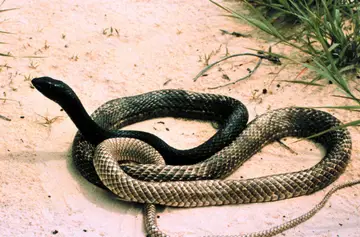
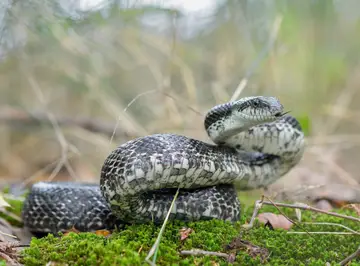
“A large, slender, solid black snake (36.0 to 60.0 inches in length) with smooth and shiny scales.”
“The top of the head is dark and a dark, downward streak occurs on each side of the head.”
“One of 4 venomous snakes in Tennessee; this pit viper occurs across the entire state.”
“These venomous snakes, also commonly known as ‘water moccasin,’ occur in the western third of Tennessee, including counties on the northern Highland Rim.”
“This is the largest, and the most dangerous, of the 4 venomous snakes in Tennessee; it occurs across the state.”
“The Pygmy Rattlesnake (also Pigmy) is the smallest, and one of the least known, venomous snakes in Tennessee.”
“Gray Ratsnake has keeled scales and body has loaf of bread shape”
“Eastern Coachwhip (black variant) is distinctly lighter or reddish towards rear of body.”
“Red Cornsnake has a spearpoint pattern between the eyes and underside of tail is striped.”
“North American Racer does not have reddish tint along the sides of the tail.”
“Ring-necked Snakes have smooth scales and yellow bellies with paired dots down the center.”
“DeKay’s Brownsnake has a yellowish, tan, or pinkish belly with very small black dots on the sides.”
Snakes of East Tennessee (poster). Tennessee Wildlife Resources Agency, Region IV. archived copy, captured September 2, 2025; checked November 3, 2026.Quoted passages (17)
“NONVENOMOUS SNAKES FOUND IN EAST TENNESSEE … EASTERN WORMSNAKE Carphophis amoenus”
“NONVENOMOUS SNAKES FOUND IN EAST TENNESSEE … SCARLETSNAKE Cemophora coccinea”
“NONVENOMOUS SNAKES FOUND IN EAST TENNESSEE … BLACK RACER Coluber constrictor”
“NONVENOMOUS SNAKES FOUND IN EAST TENNESSEE … RING-NECKED SNAKE Diadophis punctatus”
“NONVENOMOUS SNAKES FOUND IN EAST TENNESSEE … CORNSNAKE Elaphe guttata … The poster uses the older genus Elaphe; TWRA Watchable Wildlife uses Pantherophis for the same species name.”
“NONVENOMOUS SNAKES FOUND IN EAST TENNESSEE … RATSNAKE Elaphe spiloides … The poster uses the older genus Elaphe; TWRA Watchable Wildlife uses Pantherophis for the same species name.”
“NONVENOMOUS SNAKES FOUND IN EAST TENNESSEE … EASTERN HOG-NOSED SNAKE Heterodon platirhinos”
“NONVENOMOUS SNAKES FOUND IN EAST TENNESSEE … EASTERN MILKSNAKE Lampropeltis triangulum … SCARLET KINGSNAKE Lampropeltis elapsoides”
“NONVENOMOUS SNAKES FOUND IN EAST TENNESSEE … NORTHERN WATERSNAKE Nerodia sipedon”
“NONVENOMOUS SNAKES FOUND IN EAST TENNESSEE … ROUGH GREENSNAKE Opheodrys aestivus”
“NONVENOMOUS SNAKES FOUND IN EAST TENNESSEE … NORTHERN PINESNAKE Pituophis melanoleucus”
“NONVENOMOUS SNAKES FOUND IN EAST TENNESSEE … QUEEN SNAKE Regina septemvittata”
“NONVENOMOUS SNAKES FOUND IN EAST TENNESSEE … DEKAY'S BROWNSNAKE Storeria dekayi”
“NONVENOMOUS SNAKES FOUND IN EAST TENNESSEE … RED-BELLIED SNAKE Storeria occipitomaculata”
“NONVENOMOUS SNAKES FOUND IN EAST TENNESSEE … EASTERN RIBBONSNAKE Thamnophis sauritus”
“NONVENOMOUS SNAKES FOUND IN EAST TENNESSEE … COMMON GARTERSNAKE Thamnophis sirtalis”
“NONVENOMOUS SNAKES FOUND IN EAST TENNESSEE … SMOOTH EARTHSNAKE Virginia valeriae”