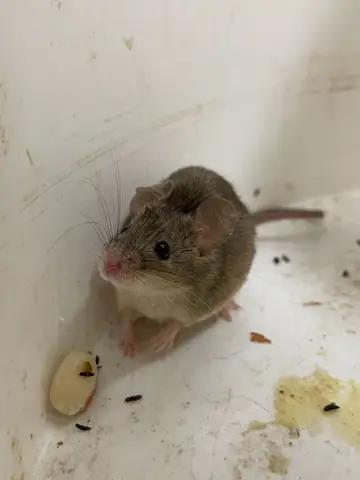
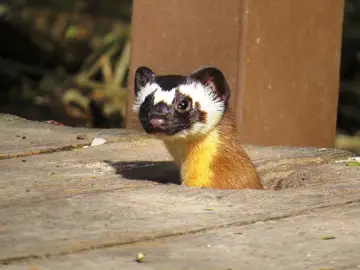
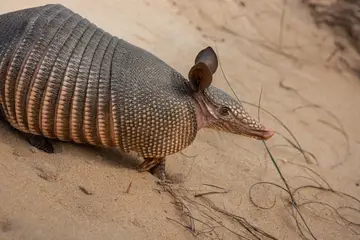
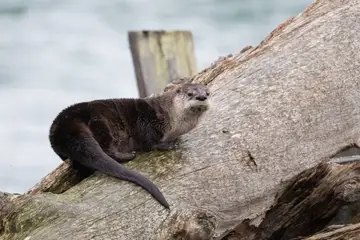
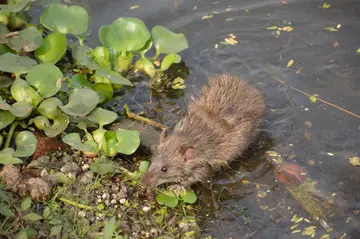
This page lists 48 mammals: 20 from Louisiana Department of Wildlife and Fisheries's Common Mammals of Louisiana + 2025 SWAP Table 4.13 and 28 named in other official sources.
8 are nonnative. Louisiana Department of Wildlife and Fisheries gives a total of 83; the 48 here are the mammals official sources name one by one.
Which mammals can hurt you
Official sources single out these mammals in Louisiana, in their own words:
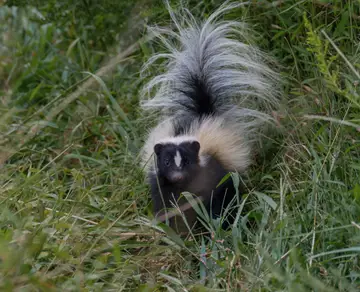
Disease. “All species of mammals are susceptible to classical rabies, but only a few species are considered important reservoirs, such as bats, skunks, raccoons, foxes and coyotes.” Louisiana Department of Wildlife and Fisheries
Disease. “All species of mammals are susceptible to classical rabies, but only a few species are considered important reservoirs, such as bats, skunks, raccoons, foxes and coyotes.” Louisiana Department of Wildlife and Fisheries
Disease. “All species of mammals are susceptible to classical rabies, but only a few species are considered important reservoirs, such as bats, skunks, raccoons, foxes and coyotes.” Louisiana Department of Wildlife and Fisheries
Disease. “All species of mammals are susceptible to classical rabies, but only a few species are considered important reservoirs, such as bats, skunks, raccoons, foxes and coyotes.” Louisiana Department of Wildlife and Fisheries
Disease. “All species of mammals are susceptible to classical rabies, but only a few species are considered important reservoirs, such as bats, skunks, raccoons, foxes and coyotes.” Louisiana Department of Wildlife and Fisheries
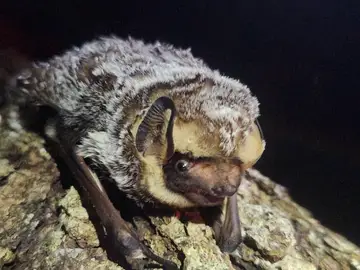
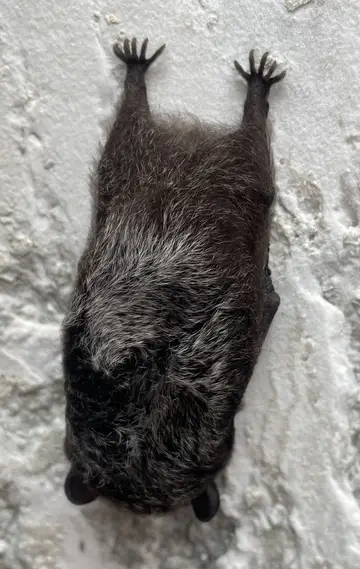
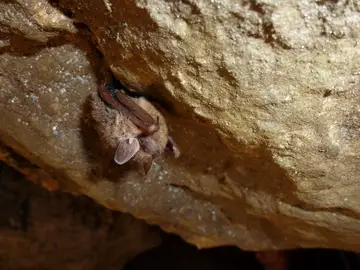
Bats
Disease. “All species of mammals are susceptible to classical rabies, but only a few species are considered important reservoirs, such as bats, skunks, raccoons, foxes and coyotes.” Louisiana Department of Wildlife and Fisheries
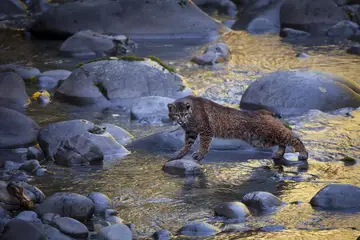
Total length 18 to 50 inches, tail 3 to 8 inches, weight 8 to 49 pounds (Missouri). About twice the size of a house cat.
How to recognize it
Short 'bobbed' tail, 4 to 8 inches, with a black tip and white underneath (Arizona). New Mexico instead describes black bars on top, white underneath and a white tip.
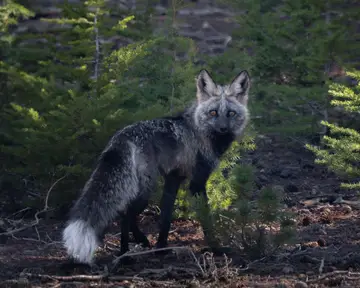
Pointed ears with tufts at the tips, often with cheek tufts
Backs of the ears are black with a light central spot
“All species of mammals are susceptible to classical rabies, but only a few species are considered important reservoirs, such as bats, skunks, raccoons, foxes and coyotes.” Louisiana Department of Wildlife and Fisheries
Size
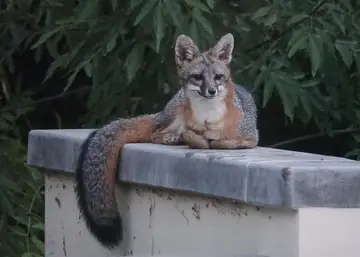
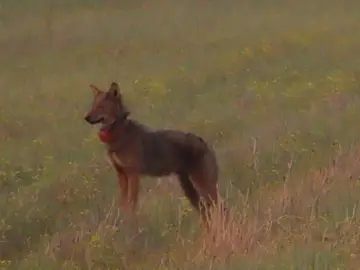
About 3.5 to 4 feet long including the tail and roughly 2 feet tall at the shoulder; weight varies by region: Arizona 20 to 30 lb, Florida average about 28 lb, Georgia 25 to 45 lb
How to recognize it
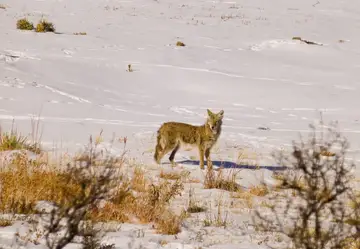
Large pointed ears, long narrow nose, bushy black-tipped tail
Like a slender medium-sized dog, much smaller than a wolf
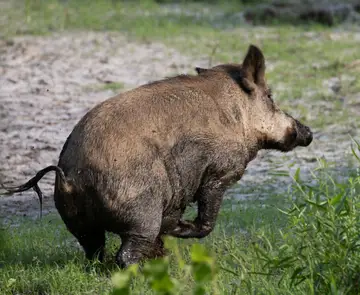
Adults average 75 to 250 pounds, but some get twice as large. They can stand up to 3 feet tall and reach 5 feet long, and males (boars) are larger than females (sows). FWC says Florida wild hogs can weigh more than 150 pounds and be 5 to 6 feet long. Ohio State Extension says Ohio adults typically weigh 125 to 200 pounds.
How to recognize it
Look much like domestic hogs but are generally thinner, with thicker hides of coarse, bristly hair and longer tusks
Four continuously growing tusks, 2 on top and 2 below
“All species of mammals are susceptible to classical rabies, but only a few species are considered important reservoirs, such as bats, skunks, raccoons, foxes and coyotes.” Louisiana Department of Wildlife and Fisheries
JFMAMJJASOND
33 records by month.
No confirmed photo of Hispid Pocket Mouse
Hispid Pocket Mouse
Chaetodipus hispidus
Conservation
Louisiana SGCN, state rank S2 (imperiled) (2025 SWAP Table)
“All species of mammals are susceptible to classical rabies, but only a few species are considered important reservoirs, such as bats, skunks, raccoons, foxes and coyotes.” Louisiana Department of Wildlife and Fisheries
JFMAMJJASOND
274 records by month.
No confirmed photo of Northern Yellow Bat
Northern Yellow Bat
Lasiurus intermedius
Conservation
Louisiana SGCN, state rank S4 (apparently secure) (2025 SWAP Table)
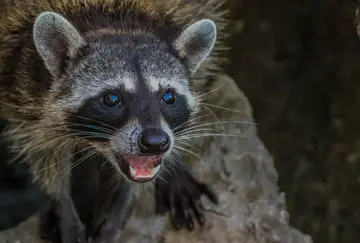
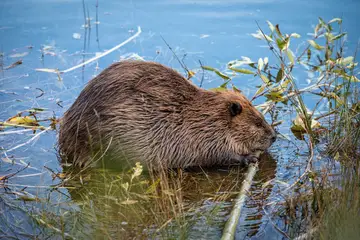
Body 47 to 61 cm (about 1.5 to 2 ft) plus a tail of about 37 to 41 cm (USGS). Males reach about 20 lb and females 18 lb (USGS). CDFW: up to 2.5 ft body length, 12 to 18 inch tail, 20+ lb.
How to recognize it
White whiskers and a large, round, sparsely haired tail.
“All species of mammals are susceptible to classical rabies, but only a few species are considered important reservoirs, such as bats, skunks, raccoons, foxes and coyotes.” Louisiana Department of Wildlife and Fisheries
“All species of mammals are susceptible to classical rabies, but only a few species are considered important reservoirs, such as bats, skunks, raccoons, foxes and coyotes.” Louisiana Department of Wildlife and Fisheries
TWRA says the domestic cat is smaller, usually has a longer tail and is not spotted with black. NCWRC says a bobcat is about twice as large, and South Carolina DNR says its legs are longer. Tracks of young bobcats are easily confused with house cat tracks (Missouri).
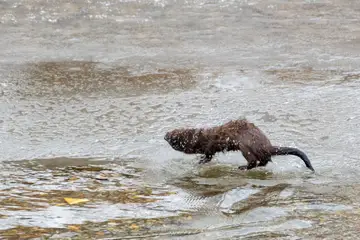
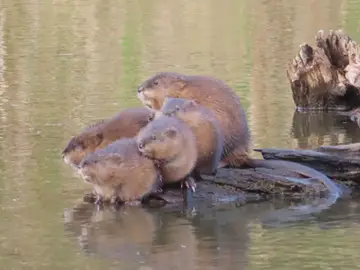
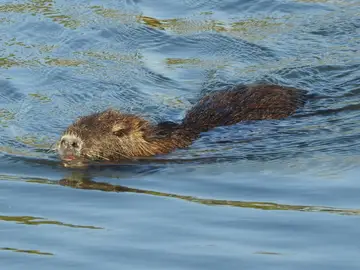
Muskrats have dark whiskers, a nearly triangular (side-flattened) tail and weigh at most 5 pounds. CDFW says most nutria reports it receives are actually muskrats.
Photos show typical adults; individuals vary. Never get close to compare.
When mammals are active in Louisiana
Records of mammals in Louisiana peak in January, March to June and December. They show when people record mammals, not how many there are (about month bars).
JanFebMarAprMayJunJulAugSepOctNovDec
2,480 records of mammals in Louisiana by month (GBIF, CC0 and CC BY records).
If you are bitten or stung
Call 911 or Poison Help at 1-800-222-1222 right away. Poison Help connects you to your local poison center, any time of day.
Official advice from Louisiana Department of Wildlife and Fisheries:
“Outlaw quadrupeds include the feral hog, an invasive species which has caused severe crop and land damage throughout the state, as well coyotes and armadillos.”
Injured and Orphaned Wildlife. Louisiana Department of Wildlife and Fisheries. undated page; checked November 3, 2026.Quoted passages (1)
“All species of mammals are susceptible to classical rabies, but only a few species are considered important reservoirs, such as bats, skunks, raccoons, foxes and coyotes.”
Louisiana BearWise. Louisiana Department of Wildlife and Fisheries. undated page; checked November 3, 2026.Quoted passages (2)
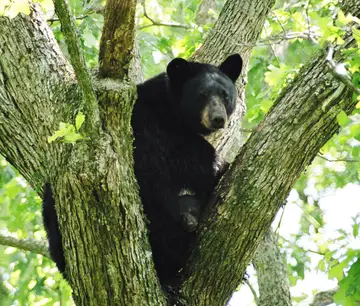
“Ursus americanus luteolus Louisiana Black Bear G5T2 S3”
Feral Hogs. Louisiana Department of Wildlife and Fisheries. undated page; checked November 3, 2026.Quoted passages (1)
“In addition, feral hogs carry several diseases, some which can infect humans.”
Outlaw Quadrupeds. Louisiana Department of Wildlife and Fisheries. undated page; checked November 3, 2026.Quoted passages (1)
“Outlaw quadrupeds include the feral hog, an invasive species which has caused severe crop and land damage throughout the state, as well coyotes and armadillos.”