States Wildlife

Louisiana wildlife: what lives here and what is dangerous

Last checked November 3, 2026 against official sources.

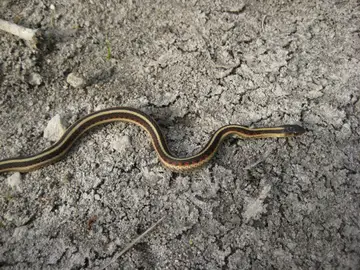
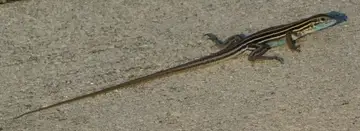
Six-lined Racerunner
Photo: Jade Fortnash · CC0 1.0 · iNaturalist

Louisiana has 7 venomous snakes named by official sources: Eastern Copperhead, Eastern Diamond-backed Rattlesnake, Harlequin Coralsnake, Northern Cottonmouth, Pygmy Rattlesnake, Timber Rattlesnake and Texas Coralsnake, as labelled by Louisiana Department of Wildlife and Fisheries. This guide covers 10 animal groups from Louisiana Department of Wildlife and Fisheries (LDWF) lists and other official sources, with photos, venomous status and when each group is active.

Identification help has limits: a photo cannot confirm that an animal is safe. Watch from a distance and never handle a wild animal.

On this page
  1. Animal groups
  2. Dangerous animals
  3. Invasive species
  4. Seasons
  5. Official agency and reporting
  6. Questions
  7. Sources

Animal groups in Louisiana

Dangerous animals in Louisiana

These are the animals official sources describe as venomous or as a risk to people in Louisiana, across 5 groups. The reason is given in the source's own terms.

AnimalGroupWhy, per the sourceSource
Eastern CopperheadSnakesVenomousLouisiana Department of Wildlife and Fisheries
Eastern Diamond-backed RattlesnakeSnakesVenomousLouisiana Department of Wildlife and Fisheries
Harlequin CoralsnakeSnakesVenomousLouisiana Department of Wildlife and Fisheries
Northern CottonmouthSnakesVenomousLouisiana Department of Wildlife and Fisheries
Pygmy RattlesnakeSnakesVenomousLouisiana Department of Wildlife and Fisheries
Timber RattlesnakeSnakesVenomousLouisiana Department of Wildlife and Fisheries
Texas CoralsnakeSnakesVenomousLouisiana Department of Wildlife and Fisheries
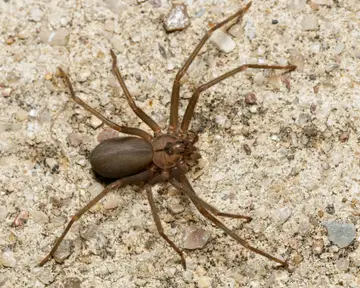
Brown RecluseSpidersVenomous: “Recluse spiders are among the few medically significant spiders in the southern U.S. (widow spiders, Latrodectus spp., are the other).”LSU AgCenter
Mediterranean RecluseSpidersVenomous: “Recluse spiders are among the few medically significant spiders in the southern U.S. (widow spiders, Latrodectus spp., are the other).”LSU AgCenter
Southern Black WidowSpidersVenomous: “…if contact is made they are capable of delivering a potent venom with both local and systemic neurotoxic effects.”LSU AgCenter
Northern Black WidowSpidersVenomous: “…if contact is made they are capable of delivering a potent venom with both local and systemic neurotoxic effects.”LSU AgCenter
Brown WidowSpidersVenomous: “Even in rare cases of bites, the amount of venom injected is less than with other species and usually results in milder symptoms.”LSU AgCenter
Brown RecluseSpidersMedically significant venomous spider (LSU AgCenter): “Recluse spiders are among the few medically significant spiders in the southern U.S. (widow spiders, Latrodectus spp., are the other).”LSU AgCenter
Black widowsSpidersVenomous: “Black widow bites pose a significant medical event that require prompt treatment.”LSU AgCenter
Texas Brown TarantulaSpidersPainful bite and irritating urticating hairs when cornered (LDWF): “Although much more prone to flee and hide than attack, when cornered, this species can inflict a painful bite and may fling urticating hairs, which are irritating to skin and dangerous if cast into …”LDWF species profile: Texas Brown Tarantula
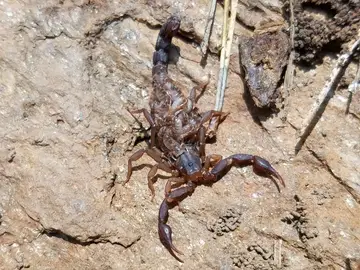
Southern Unstriped ScorpionScorpionsSting (LDWF compares it to a bee or wasp sting): “Its sting has been compared to that of a bee or wasp.”LDWF species profile: Southern Unstriped Scorpion
Puss Moth CaterpillarInsects and BugsVenomous: “On contact, the spines will break away, releasing venom.”LSU AgCenter
Saddleback CaterpillarInsects and BugsVenomous: “Then thoroughly wash the area with soap and water to help remove irritating venom.”LSU AgCenter
Red Imported Fire AntInsects and BugsBites and painful stings (LDWF): “Readily bites and inflicts painful stings.”LDWF species profile: Red Imported Fire Ant
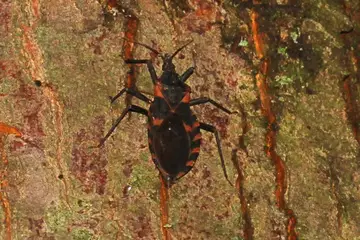
Kissing bugsInsects and BugsDisease: “Kissing bugs are of medical concern due to their ability to vector to humans the parasite Trypanosoma cruzi”LSU AgCenter
Feral HogMammalsDisease: “In addition, feral hogs carry several diseases, some which can infect humans.”Louisiana Department of Wildlife and Fisheries
Striped SkunkMammalsDisease: “All species of mammals are susceptible to classical rabies, but only a few species are considered important reservoirs, such as bats, skunks, raccoons, foxes and coyotes.”Louisiana Department of Wildlife and Fisheries
Northern RaccoonMammalsDisease: “All species of mammals are susceptible to classical rabies, but only a few species are considered important reservoirs, such as bats, skunks, raccoons, foxes and coyotes.”Louisiana Department of Wildlife and Fisheries
Gray FoxMammalsDisease: “All species of mammals are susceptible to classical rabies, but only a few species are considered important reservoirs, such as bats, skunks, raccoons, foxes and coyotes.”Louisiana Department of Wildlife and Fisheries
Red FoxMammalsDisease: “All species of mammals are susceptible to classical rabies, but only a few species are considered important reservoirs, such as bats, skunks, raccoons, foxes and coyotes.”Louisiana Department of Wildlife and Fisheries
CoyoteMammalsDisease: “All species of mammals are susceptible to classical rabies, but only a few species are considered important reservoirs, such as bats, skunks, raccoons, foxes and coyotes.”Louisiana Department of Wildlife and Fisheries
BatsMammalsDisease: “All species of mammals are susceptible to classical rabies, but only a few species are considered important reservoirs, such as bats, skunks, raccoons, foxes and coyotes.”Louisiana Department of Wildlife and Fisheries
Louisiana Black BearMammalsCan attack: “Running may trigger an attack.”Louisiana Department of Wildlife and Fisheries

Venomous snakes in Louisiana shows each venomous snake with photos and range.

Invasive and nonnative species

64 nonnative animals are named on Louisiana's official lists (Louisiana Department of Wildlife and Fisheries). The USGS Nonindigenous Aquatic Species database records 5 nonnative animals in our groups with an established population in Louisiana.

  • Island Apple Snail or Maculata Apple Snail Pomacea maculata
  • Argentine Ant Linepithema humile
  • Red Imported Fire Ant Solenopsis invicta
  • Grass Carp Ctenopharyngodon idella
  • Common Carp Cyprinus carpio
  • Silver Carp Hypophthalmichthys molitrix
  • Bighead Carp Hypophthalmichthys nobilis
  • Black Carp Mylopharyngodon piceus

All invasive species in Louisiana, with where they live and how to report them.

When animals are active in Louisiana

Darker cells are the months with more open-licence observation records of each group in Louisiana (GBIF). They show when people see and record these animals, not how many there are. The current month, this month, is highlighted.

JanFebMarAprMayJunJulAugSepOctNovDec
SnakesJanuary: 38 recordsFebruary: 123 recordsMarch: 306 recordsApril: 462 recordsMay: 253 recordsJune: 136 recordsJuly: 98 recordsAugust: 123 recordsSeptember: 79 recordsOctober: 80 recordsNovember: 72 recordsDecember: 47 records
SpidersJanuary: 87 recordsFebruary: 148 recordsMarch: 325 recordsApril: 569 recordsMay: 429 recordsJune: 447 recordsJuly: 435 recordsAugust: 451 recordsSeptember: 358 recordsOctober: 261 recordsNovember: 173 recordsDecember: 116 records
LizardsJanuary: 52 recordsFebruary: 144 recordsMarch: 359 recordsApril: 420 recordsMay: 251 recordsJune: 217 recordsJuly: 212 recordsAugust: 178 recordsSeptember: 152 recordsOctober: 131 recordsNovember: 69 recordsDecember: 72 records
Frogs and ToadsJanuary: 54 recordsFebruary: 127 recordsMarch: 255 recordsApril: 429 recordsMay: 261 recordsJune: 163 recordsJuly: 210 recordsAugust: 197 recordsSeptember: 173 recordsOctober: 114 recordsNovember: 70 recordsDecember: 61 records
TurtlesJanuary: 46 recordsFebruary: 132 recordsMarch: 214 recordsApril: 287 recordsMay: 176 recordsJune: 118 recordsJuly: 77 recordsAugust: 55 recordsSeptember: 44 recordsOctober: 109 recordsNovember: 99 recordsDecember: 81 records
Insects and BugsJanuary: 502 recordsFebruary: 1,125 recordsMarch: 5,156 recordsApril: 8,401 recordsMay: 5,896 recordsJune: 6,041 recordsJuly: 7,281 recordsAugust: 5,666 recordsSeptember: 3,908 recordsOctober: 3,439 recordsNovember: 1,774 recordsDecember: 955 records
MammalsJanuary: 216 recordsFebruary: 174 recordsMarch: 223 recordsApril: 397 recordsMay: 251 recordsJune: 204 recordsJuly: 154 recordsAugust: 119 recordsSeptember: 134 recordsOctober: 192 recordsNovember: 189 recordsDecember: 227 records
Sharks and Marine LifeJanuary: 0 recordsFebruary: 0 recordsMarch: 3 recordsApril: 15 recordsMay: 39 recordsJune: 27 recordsJuly: 20 recordsAugust: 18 recordsSeptember: 33 recordsOctober: 23 recordsNovember: 5 recordsDecember: 1 record

What official sources say about seasons

Official agency and how to report

Louisiana's wildlife agency is the Louisiana Department of Wildlife and Fisheries (LDWF).

Report: Nuisance alligators: contact an LDWF field office, or Operation Game Thief 800-442-2511 after hours and weekends. Sick/injured/stranded sea turtles or marine mammals: 844-SEA-TRTL (844-732-8785). Rabies: Louisiana Department of Health, Office of Public Health, 1-800-256-2748. Louisiana Department of Wildlife and Fisheries

Official safety advice

Questions people ask about Louisiana wildlife

Are there alligators in Louisiana?

Yes. LDWF says Louisiana's wild alligator population has grown to more than 3 million. Louisiana Department of Wildlife and Fisheries · More

Are there venomous snakes in Louisiana?

Yes. LDWF's field guide lists six venomous species (Eastern Copperhead, Harlequin Coralsnake, Eastern Diamond-backed Rattlesnake, Northern Cottonmouth, Pygmy Rattlesnake, Timber Rattlesnake); the LDWF 2022 poster also shows the Texas Coralsnake under "Venomous Snakes". Louisiana Department of Wildlife and Fisheries

Are there water moccasins (cottonmouths) in Louisiana?

Yes. The Northern Cottonmouth (also known as Water Moccasin) is found throughout Louisiana. Louisiana Department of Wildlife and Fisheries

Are there coral snakes in Louisiana?

Rarely. LDWF lists the Harlequin Coralsnake as venomous and says there have been no confirmed Louisiana records since the 1980s; the 2025 SWAP says it "may be extirpated from the state". The LDWF 2022 Snakes of Louisiana poster also shows the Texas Coralsnake under "Venomous Snakes" (no Louisiana range given). Louisiana Department of Wildlife and Fisheries

Are there rattlesnakes in Louisiana?

Yes. LDWF lists Timber, Pygmy and Eastern Diamond-backed Rattlesnakes as venomous. LDWF says there are no more than eight verifiable Eastern Diamond-backed records in Louisiana (last in 1995) and ranks it S1; the 2025 SWAP says it "may be extirpated from the state". Louisiana Department of Wildlife and Fisheries

Are there copperheads in Louisiana?

Yes. LDWF: found throughout wooded and forested areas except permanent swamps and coastal cheniers. Louisiana Department of Wildlife and Fisheries

Are there black bears in Louisiana?

Yes. The Louisiana Black Bear (Ursus americanus luteolus) is on LDWF's Common Mammals poster and is a state SGCN (S3). Louisiana Department of Wildlife and Fisheries

Are there scorpions in Louisiana?

Rarely. LDWF: the Southern Unstriped Scorpion is restricted in Louisiana to West Feliciana Parish. LDWF species profile: Southern Unstriped Scorpion

Are there brown recluse spiders in Louisiana?

Yes. LSU AgCenter: common in the northern half of the state, exceedingly uncommon in southern Louisiana. LSU AgCenter

Are there black widow spiders in Louisiana?

Yes. LSU AgCenter: southern and northern black widows both occur in Louisiana; the introduced brown widow is also present. LSU AgCenter

Are there feral hogs in Louisiana?

Yes. LDWF: in all 64 parishes, estimated at 700,000. Louisiana Department of Wildlife and Fisheries

Are there pythons in Louisiana?

Burmese, Reticulated and Ball Pythons appear on LDWF's 2025 Invasive Species List (Tier 3); the list defines Tiers 1-4 as non-native species currently known to occur in Louisiana. No locations or population sizes are given. Louisiana Department of Wildlife and Fisheries · More

Are there wolves in Louisiana?

No. The Red Wolf is ranked SX (presumed extirpated) in Louisiana in the 2025 SWAP. Louisiana Department of Wildlife and Fisheries

Are there armadillos in Louisiana?

Yes. Nine-banded Armadillo is on LDWF's Common Mammals poster; LDWF classes armadillos as outlaw quadrupeds. Louisiana Department of Wildlife and Fisheries

Sources

  1. About Us. Louisiana Department of Wildlife and Fisheries. undated page; checked November 3, 2026.
  2. Snake Species Field Guide: Eastern Copperhead. Louisiana Department of Wildlife and Fisheries. undated page; checked November 3, 2026.
    Quoted passages (2)
    “Found throughout wooded and forested areas of Louisiana except for permanent swamps and coastal cheniers.”
    “During the summer, they are active at night and very early in the morning.”
  3. Snake Species Field Guide: Eastern Diamond-backed Rattlesnake. Louisiana Department of Wildlife and Fisheries. undated page; checked November 3, 2026.
    Quoted passages (1)
    “There are no more than eight verifiable records of this snake in Louisiana”
  4. Snake Species Field Guide: Harlequin Coralsnake. Louisiana Department of Wildlife and Fisheries. undated page; checked November 3, 2026.
    Quoted passages (2)
    “There have been no confirmed records from Louisiana since the 1980s.”
    “They should not be held under any circumstances—if carelessly handled, they may bite unexpectedly.”
  5. Snake Species Field Guide: Northern Cottonmouth. Louisiana Department of Wildlife and Fisheries. undated page; checked November 3, 2026.
    Quoted passages (1)
    “Found throughout Louisiana.”
  6. Snake Species Field Guide: Pygmy Rattlesnake. Louisiana Department of Wildlife and Fisheries. undated page; checked November 3, 2026.
  7. Snake Species Field Guide: Timber Rattlesnake. Louisiana Department of Wildlife and Fisheries. undated page; checked November 3, 2026.
    Quoted passages (1)
    “Move from hibernation sites to summer foraging grounds in mid-spring and return to winter quarters in late summer and early fall; most often observed during these periods of travel.”
  8. Snakes of Louisiana (17x22 poster). Louisiana Department of Wildlife and Fisheries. undated page; checked November 3, 2026.
  9. LDWF species profile: Southern Unstriped Scorpion. archived copy, captured April 21, 2025; checked November 3, 2026.
    Quoted passages (2)
    “Its sting has been compared to that of a bee or wasp.”
    “In Louisiana, restricted to the East Gulf Coastal Plain Southern Loess Bluff Forest of West Feliciana Parish.”
  10. 2025 Louisiana State Wildlife Action Plan. Louisiana Department of Wildlife and Fisheries. 2025 plan; checked November 3, 2026.
    Quoted passages (11)
    “Louisiana hosts a remarkable diversity of birds, with 493 species documented within the state's boundaries and adjacent waters (Conover and Dittmann 2025), including over 160 breeding species”
    “Island Apple Snail or Maculata Apple Snail Pomacea maculata”
    “Argentine Ant Linepithema humile”
    “Red Imported Fire Ant Solenopsis invicta”
    “Grass Carp Ctenopharyngodon idella”
    “Common Carp Cyprinus carpio”
    “Silver Carp Hypophthalmichthys molitrix”
    “Bighead Carp Hypophthalmichthys nobilis”
    “Black Carp Mylopharyngodon piceus”
    “Ursus americanus luteolus Louisiana Black Bear G5T2 S3”
    “Burmese Python Python bivittatus”
  11. Common Mammals of Louisiana (poster). Louisiana Department of Wildlife and Fisheries. undated page; checked November 3, 2026.
  12. Loxosceles spp., Brown Recluse and Mediterranean Recluse Spiders (Araneae: Sicariidae). LSU AgCenter (Louisiana Cooperative Extension Service). April 1, 2019; checked November 3, 2026.
    Quoted passages (2)
    “Recluse spiders are among the few medically significant spiders in the southern U.S. (widow spiders, Latrodectus spp., are the other).”
    “In Louisiana, brown recluses are common in the northern half of the state approximately north of a line drawn through Alexandria.”
  13. Latrodectus mactans and L. variolus, Southern and Northern Black Widow Spiders (Araneae: Theridiidae). LSU AgCenter (Louisiana Cooperative Extension Service). November 10, 2021; checked November 3, 2026.
    Quoted passages (3)
    “…if contact is made they are capable of delivering a potent venom with both local and systemic neurotoxic effects.”
    “Black widow bites pose a significant medical event that require prompt treatment.”
    “Both the northern and southern black widow overlap in distribution in the southern U.S., including Louisiana.”
  14. Latrodectus geometricus, Brown Widow Spider (Araneae: Theridiidae). LSU AgCenter (Louisiana Cooperative Extension Service). November 10, 2021; checked November 3, 2026.
    Quoted passages (1)
    “Even in rare cases of bites, the amount of venom injected is less than with other species and usually results in milder symptoms.”
  15. LDWF species profile: Texas Brown Tarantula. archived copy, captured August 22, 2023; checked November 3, 2026.
    Quoted passages (1)
    “Although much more prone to flee and hide than attack, when cornered, this species can inflict a painful bite and may fling urticating hairs, which are irritating to skin and dangerous if cast into the eyes.”
  16. Bug Biz: Pest Management and Insect Identification Series - Puss Moth Caterpillar. LSU AgCenter (Louisiana Cooperative Extension Service). January 25, 2019; checked November 3, 2026.
    Quoted passages (1)
    “On contact, the spines will break away, releasing venom.”
  17. 2 nuisance caterpillars are out in greater numbers this year. LSU AgCenter (news release; Tim Schowalter, LSU AgCenter entomologist). June 1, 2012; checked November 3, 2026.
    Quoted passages (1)
    “Then thoroughly wash the area with soap and water to help remove irritating venom.”
  18. LDWF species profile: Red Imported Fire Ant. archived copy, captured December 5, 2023; checked November 3, 2026.
    Quoted passages (1)
    “Readily bites and inflicts painful stings.”
  19. Kissing Bugs of Louisiana - Biology, Identification and Prevention. LSU AgCenter (Louisiana Cooperative Extension Service). April 13, 2026; checked November 3, 2026.
    Quoted passages (1)
    “Kissing bugs are of medical concern due to their ability to vector to humans the parasite Trypanosoma cruzi”
  20. Feral Hogs. Louisiana Department of Wildlife and Fisheries. undated page; checked November 3, 2026.
    Quoted passages (2)
    “In addition, feral hogs carry several diseases, some which can infect humans.”
    “Feral hogs are found in all 64 parishes in Louisiana, and Louisiana’s feral hog population is currently estimated at 700,000.”
  21. Injured and Orphaned Wildlife. Louisiana Department of Wildlife and Fisheries. undated page; checked November 3, 2026.
    Quoted passages (1)
    “All species of mammals are susceptible to classical rabies, but only a few species are considered important reservoirs, such as bats, skunks, raccoons, foxes and coyotes.”
  22. Louisiana BearWise. Louisiana Department of Wildlife and Fisheries. undated page; checked November 3, 2026.
    Quoted passages (2)
    “Running may trigger an attack.”
    “Never feed or approach bears.”
  23. Nuisance Alligators. Louisiana Department of Wildlife and Fisheries. undated page; checked November 3, 2026.
    Quoted passages (7)
    “Operation Game Thief: 800-442-2511 / (for nuisance alligator reports after hours and on weekends)”
    “If you see an alligator in a roadway, yard, or other unexpected place, DO NOT attempt to move it. It is dangerous and illegal for the general public to handle or possess alligators.”
    “Don’t feed or entice alligators. Alligators overcome their natural shyness and become accustomed or attracted to humans when fed.”
    “View and photograph wild alligators from a safe distance of at least 50 feet.”
    “Don’t swim at night or during dusk or dawn when alligators most actively feed.”
    “In spring and summer, alligators move to breed or find new habitat.”
    “During the summer, some nesting females won’t retreat and will attempt to protect their nest.”
  24. Alligator. Louisiana Department of Wildlife and Fisheries. undated page; checked November 3, 2026.
    Quoted passages (1)
    “Louisiana’s wild alligator population has increased from less than 100,000 to more than 3 million in the past 50 years.”
  25. Snake Species Field Guide. Louisiana Department of Wildlife and Fisheries. undated page; checked November 3, 2026.
    Quoted passages (1)
    “Venomous Snake Species”
  26. Outlaw Quadrupeds. Louisiana Department of Wildlife and Fisheries. undated page; checked November 3, 2026.
    Quoted passages (1)
    “Outlaw quadrupeds include the feral hog, an invasive species which has caused severe crop and land damage throughout the state, as well coyotes and armadillos.”
  27. Snake Species Field Guide: Louisiana Pinesnake. Louisiana Department of Wildlife and Fisheries. undated page; checked November 3, 2026.
    Quoted passages (1)
    “Most active in March through May and in the fall, especially November.”
  28. GBIF.org occurrence records, human observations licensed CC0 1.0 or CC BY 4.0 only, accessed November 3, 2026. The datasets behind these counts are listed on our Sources page.