Arizona Mammals: Species List With Pictures
Last checked November 3, 2026 against official sources.
On this page
This page lists 171 mammals: all from Arizona Game and Fish Department - Heritage Data Management System's HDMS Web Species List.
Which mammals can hurt you
Official sources single out these mammals in Arizona, in their own words:
-
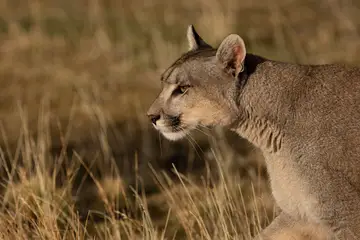
Photo: ArgentinaTurismo · CC BY 4.0 · Wikimedia Commons Mountain Lion
Attacks (can seriously injure or kill people). “Mountain lions are predators capable of seriously injuring or killing humans.” Arizona Game and Fish Department
-
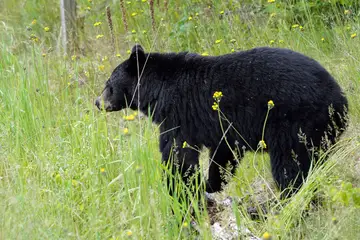
Photo: U.S. Fish and Wildlife Service - Midwest Region · Public domain · Wikimedia Commons American Black Bear
Attacks (uncommon). “Although uncommon, black bear attacks on humans occasionally occur, especially in areas where they come into frequent contact with people and human-related food sources.” Arizona Game and Fish Department
-
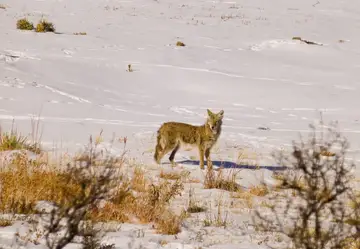
Photo: Gaurav Vaidya from Chapel Hill, USA · CC BY 2.0 · Wikimedia Commons Coyote
Bites (rare, human-fed coyotes). “On rare occasions, human-fed coyotes have bitten people.” Arizona Game and Fish Department
-
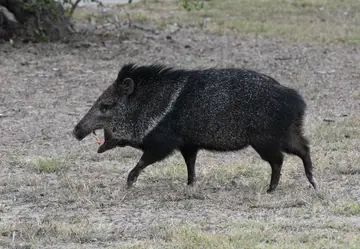
Photo: Cody Stricker · CC BY 4.0 · iNaturalist Javelina
Bites. “Javelina occasionally bite humans, but incidents of bites are almost always associated with people providing the javelina with food …” Arizona Game and Fish Department
-
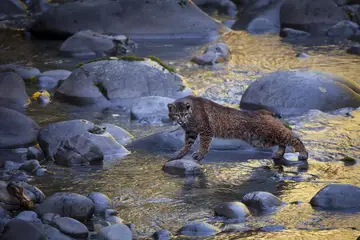
Photo: National Marine Sanctuaries · Public domain · Wikimedia Commons Bobcat
Attacks are rare. “Bobcats rarely attack people, and most human attacks have been related to rabies.” Arizona Game and Fish Department
-
Bats (28 species in Arizona)
Disease (rabies). “While some people appreciate bats and the ways they benefit us, others fear bats because a small percentage of them can expose humans and pets to rabies.” Arizona Game and Fish Department


All 171 mammals on the list
- Abert's Squirrel Sciurus aberti
- Allen's Lappet-browed Bat Idionycteris phyllotis
- American Badger Taxidea taxus
- American Beaver Castor canadensis
- American Bison Bos bison
- American Black Bear Ursus americanus
- American Ermine Mustela richardsonii
- American Pika Ochotona princeps
- Antelope Jackrabbit Lepus alleni
- Arizona Cotton Rat Sigmodon arizonae
- Arizona Gray Squirrel Sciurus arizonensis
- Arizona Myotis Myotis occultus
- Arizona Pocket Mouse Perognathus amplus
- Arizona Shrew Sorex arizonae
- Arizona Woodrat Neotoma devia
- Bailey's Pocket Mouse Chaetodipus baileyi
- Barbary Sheep or Aoudad Ammotragus lervia
- Big Brown Bat Eptesicus fuscus
- Big Free-tailed Bat Nyctinomops macrotis
- Bighorn Sheep Ovis canadensis
- Black or House Rat Rattus rattus
- Black-eared Mouse Peromyscus melanotis
- Black-footed Ferret Mustela nigripes
- Black-tailed Jackrabbit Lepus californicus
- Black-tailed Prairie Dog Cynomys ludovicianus
- Bobcat Lynx rufus
- Botta's Pocket Gopher Thomomys bottae
- Brazilian Free-tailed Bat Tadarida brasiliensis
- Brush Mouse Peromyscus boylii
- Bushy-tailed Woodrat Neotoma cinerea
- Cactus Mouse Peromyscus eremicus
- California Leaf-nosed Bat Macrotus californicus
- California Myotis Myotis californicus
- Canada Lynx Lynx canadensis
- Canyon Bat Parastrellus hesperus
- Canyon Mouse Peromyscus crinitus
- Cave Myotis Myotis velifer
- Chisel-toothed Kangaroo Rat Dipodomys microps
- Cliff Chipmunk Neotamias dorsalis
- Cockrum's Desert Shrew Notiosorex cockrumi
- Collared Peccary Dicotyles tajacu
- Colorado Chipmunk Neotamias quadrivittatus
- Common Gray Fox Urocyon cinereoargenteus
- Common Muskrat Ondatra zibethicus
- Coyote Canis latrans
- Crawford's Desert Shrew Notiosorex crawfordi
- Deer Mouse Peromyscus maniculatus
- Desert Cottontail Sylvilagus audubonii
- Desert Kangaroo Rat Dipodomys deserti
- Desert Red Bat Lasiurus frantzii
- Desert Spotted Skunk Spilogale leucoparia
- Desert Woodrat Neotoma lepida
- Dusky Shrew Sorex monticolus
- Dwarf Shrew Sorex nanus
- Eastern Red Bat Lasiurus borealis
- European Ferret Mustela putorius
- Feral Burro Equus asinus
- Feral Horse Equus caballus
- Feral Pig or Wild Boar Sus scrofa
- Fremont's Squirrel Tamiasciurus fremonti
- Fringed Myotis Myotis thysanodes
- Fulvous Harvest Mouse Reithrodontomys fulvescens
- Gambel's Deermouse Peromyscus gambelii
- Ghost-faced Bat Mormoops megalophylla
- Golden-mantled Ground Squirrel Callospermophilus lateralis
- Gray Wolf Canis lupus
- Gray-collared Chipmunk Neotamias cinereicollis
- Great Basin Pocket Mouse Perognathus mollipilosus
- Grizzly or Brown Bear Ursus arctos
- Gunnison's Prairie Dog Cynomys gunnisoni
- Harris' Antelope Squirrel Ammospermophilus harrisii
- Hispid Cotton Rat Sigmodon hispidus
- Hispid Pocket Mouse Chaetodipus hispidus
- Hoary Bat Lasiurus cinereus
- Hog-nosed Skunk Conepatus leuconotus
- Holzner's Cottontail Sylvilagus holzneri
- Hooded Skunk Mephitis macroura
- Hopi Chipmunk Neotamias rufus
- House Mouse Mus musculus
- Jaguar Panthera onca
- Jaguarundi Herpailurus yagouaroundi
- Kit Fox Vulpes macrotis
- Lacey's White-ankled Mouse Peromyscus laceianus
- Least Chipmunk Neotamias minimus
- Lesser Long-nosed Bat Leptonycteris yerbabuenae
- Little Brown Bat Myotis lucifugus
- Little Pocket Mouse Perognathus longimembris
- Long-eared Myotis Myotis evotis
- Long-legged Myotis Myotis volans
- Long-tailed Pocket Mouse Chaetodipus formosus
- Long-tailed Vole Microtus longicaudus
- Long-tailed Weasel Neogale frenata
- Mearns' Grasshopper Mouse Onychomys arenicola
- Merriam's Deermouse Peromyscus merriami
- Merriam's Kangaroo Rat Dipodomys merriami
- Merriam's Shrew Sorex merriami
- Mexican Fox Squirrel Sciurus nayaritensis
- Mexican Long-nosed Bat Leptonycteris nivalis
- Mexican Long-tongued Bat Choeronycteris mexicana
- Mexican Woodrat Neotoma mexicana
- Mogollon Vole Microtus mogollonensis
- Montane Vole Microtus montanus
- Mountain Cottontail Sylvilagus nuttallii
- Mountain Lion Puma concolor
- Mule Deer Odocoileus hemionus
- North American Porcupine Erethizon dorsatum
- North American River Otter Lontra canadensis
- Northern Flying Squirrel Glaucomys sabrinus
- Northern Grasshopper Mouse Onychomys leucogaster
- Northern Pocket Gopher Thomomys talpoides
- Northern Pygmy Mouse Baiomys taylori
- Northern Raccoon Procyon lotor
- Northern Rock Deermouse Peromyscus nasutus
- Norway or Brown Rat Rattus norvegicus
- Nutria or Coypu Myocastor coypus
- Ocelot Leopardus pardalis
- Ord's Kangaroo Rat Dipodomys ordii
- Osgood's Mouse Peromyscus gratus
- Pallid Bat Antrozous pallidus
- Pinon Mouse Peromyscus truei
- Plains Harvest Mouse Reithrodontomys montanus
- Plains Pocket Mouse Perognathus flavescens
- Pocketed Free-tailed Bat Nyctinomops femorosaccus
- Pronghorn Antilocapra americana
- Pygmy Rabbit Sylvilagus idahoensis
- Red Fox Vulpes vulpes
- Ringtail Bassariscus astutus
- Rock Pocket Mouse Chaetodipus intermedius
- Rock Squirrel Otospermophilus variegatus
- Round-tailed Ground Squirrel Xerospermophilus tereticaudus
- Silky Pocket Mouse Perognathus flavus
- Silver-haired Bat Lasionycteris noctivagans
- Sonoran Desert Pocket Mouse Chaetodipus penicillatus
- Southern Deermouse Peromyscus labecula
- Southern Grasshopper Mouse Onychomys torridus
- Southern Plains Woodrat Neotoma micropus
- Southern Pocket Gopher Thomomys umbrinus
- Southern Red-backed Vole Clethrionomys gapperi
- Southwestern Myotis Myotis auriculus
- Spiny Pocket Mouse Chaetodipus spinatus
- Spotted Bat Euderma maculatum
- Spotted Ground Squirrel Xerospermophilus spilosoma
- Stephen's Woodrat Neotoma stephensi
- Striped Skunk Mephitis mephitis
- Tawny-bellied Cotton Rat Sigmodon fulviventer
- Thirteen-lined Ground Squirrel Ictidomys tridecemlineatus
- Townsend's Big-eared Bat Corynorhinus townsendii
- Uinta Chipmunk Neotamias umbrinus
- Underwood's Bonneted Bat Eumops underwoodi
- Velvety Fruit-eating Bat Enchisthenes hartii
- Virginia Opossum Didelphis virginiana
- Wapiti or Elk Cervus canadensis
- Western Bonneted Bat Eumops perotis
- Western Harvest Mouse Reithrodontomys megalotis
- Western Jumping Mouse Zapus princeps
- Western Meadow Vole Microtus drummondii
- Western Small-footed Myotis Myotis ciliolabrum
- Western Spotted Skunk Spilogale gracilis
- Western Water Shrew Sorex navigator
- Western White-throated Woodrat Neotoma albigula
- Western Yellow Bat Lasiurus xanthinus
- White-footed Mouse Peromyscus leucopus
- White-nosed Coati Nasua narica
- White-sided Jackrabbit Lepus callotis
- White-tailed Antelope Squirrel Ammospermophilus leucurus
- White-tailed Deer Odocoileus virginianus
- White-tailed Jackrabbit Lepus townsendii
- Wolverine Gulo gulo
- Yellow-nosed Cotton Rat Sigmodon ochrognathus
- Yuma Myotis Myotis yumanensis
Mammals people confuse
Coyote or Gray wolf?
Coyote Not stated
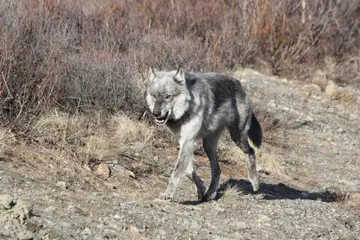
Gray wolf Not stated
NY DEC: gray wolves are much larger (females typically 50-100 lb, males 70-145 lb, 5-6 ft nose to tail, 27-33 in at the shoulder); eastern coyotes rarely exceed 50 lb and generally stand under 2 ft at the shoulder. Wolves have small rounded ears and a short blocky snout; coyotes have larger, more pointed ears (can look rounded in winter coat) and a long, narrow, pointed snout. Coyote tracks are typically 3 x 2 in, wolf tracks about 5 x 4 in. NY DEC says most wolf reports in New York were coyotes, dogs or wolf-dog hybrids.
Bobcat or Mountain lion (cougar)?
Bobcat Not stated
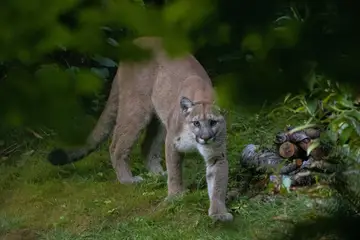
Mountain lion (cougar) Not stated
Cougars are one color (yellow-brown to light cinnamon) with a long tail. The bobcat's tail is short and its coat is spotted. TWRA says cougars are many times larger and longer, with a very long tail.
Bobcat or Canada lynx?
Bobcat Not stated
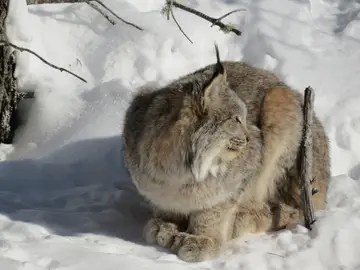
Canada lynx Not stated
A lynx has longer ear tufts and large, fur-covered feet (3.5 to 4.5 inches wide). A bobcat's feet are small and hairless (up to 2.5 inches). A lynx's tail has a black tip and no white underneath; a bobcat's tail is white underneath. Do not use the tail tip alone, because agencies describe the bobcat's tip differently (New Mexico white, Arizona black).
Nutria or American beaver?
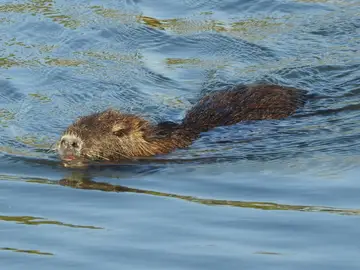
Nutria Not stated
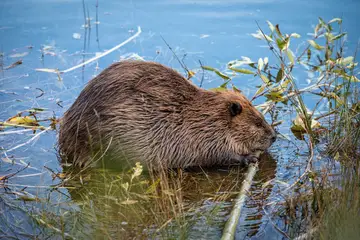

American beaver Not stated
Beavers have a wide, flat tail and dark whiskers and reach up to 60 pounds; nutria have a round, sparsely haired tail and white whiskers.
Nutria or Muskrat?
Nutria Not stated
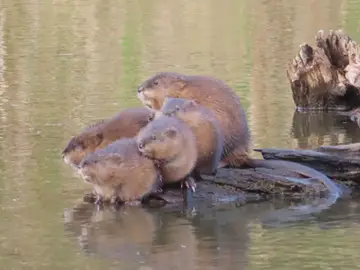
Muskrat Not stated
Muskrats have dark whiskers, a nearly triangular (side-flattened) tail and weigh at most 5 pounds. CDFW says most nutria reports it receives are actually muskrats.
American Black Bear or Grizzly (Brown) Bear?
American Black Bear Not stated
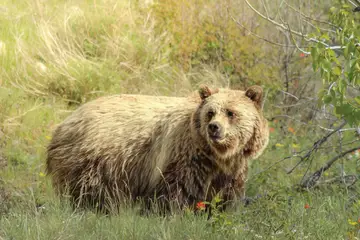
Grizzly (Brown) Bear Not stated
Grizzlies have longer front claws, humped shoulders and a more concave face. Color does not settle it: brown bears can be black to blonde.
Photos show typical adults; individuals vary. Never get close to compare.
When mammals are active in Arizona
Records of mammals in Arizona peak in March to August. They show when people record mammals, not how many there are (about month bars).
- Some bats hibernate October-April; others stay active all year. Arizona Game and Fish Department
- Black bears leave dens with cubs mid-April to early May. Arizona Game and Fish Department
If you are bitten or stung
Call 911 or Poison Help at 1-800-222-1222 right away. Poison Help connects you to your local poison center, any time of day.
Official advice from Arizona Game and Fish Department:
- Treat black bears as unpredictable and potentially dangerous. Arizona Game and Fish Department
- Report a coyote attack on a person to AZGFD or call 911. Arizona Game and Fish Department
- Never feed javelina; an animal showing rabies symptoms: call 911 or AZGFD. Arizona Game and Fish Department
Common questions
What official sources say
Are there mountain lions in Arizona?
Yes. Mountain lions occur throughout Arizona, most commonly in rocky or mountainous terrain. Arizona Game and Fish Department
“Mountain lions can be found throughout Arizona and are most common in rocky or mountainous terrain.”
About this list
The species list comes from HDMS Web Species List (taxon = Mammal) (Arizona Game and Fish Department - Heritage Data Management System, 2026-10-28).
Venom labels come only from official sources and link to them; "Not stated" never means harmless. How labels work.
Sources
- Ridge-nosed Rattlesnake (species page). Arizona Game and Fish Department. archived copy, captured January 16, 2026; checked November 3, 2026.
- HDMS Web Species List (all_species_list.csv). Arizona Game and Fish Department - Heritage Data Management System. October 28, 2026; checked November 3, 2026.
- Living with Coyotes. Arizona Game and Fish Department. archived copy, captured March 7, 2026; checked November 3, 2026.
Quoted passages (4)
“Large, pointed ears; long, narrow nose; and a bushy, black-tipped tail.”
“On rare occasions, human-fed coyotes have bitten people.”
“Typically measure 3.5 to 4 feet in length, including the tail, and stand roughly 2 feet tall at the shoulder.”
“If a coyote attacks a human, it is important to report it to the Arizona Game and Fish Department or call 911.”
- Living with Javelina. Arizona Game and Fish Department. archived copy, captured March 17, 2026; checked November 3, 2026.
Quoted passages (2)
“Javelina occasionally bite humans, but incidents of bites are almost always associated with people providing the javelina with food. Javelina can inflict a serious wound. … Rabies – Javelina can catch rabies, although they do not generally carry it without symptoms.”
“If you see any animal with rabies symptoms, call 911 or your local Arizona Game and Fish Department office right away.”
- Living with Bobcats. Arizona Game and Fish Department. archived copy, captured January 16, 2026; checked November 3, 2026.
Quoted passages (3)
“Short, ‘bobbed’ tail (4 to 8 inches long) with a black tip and white underneath.”
“Pointed ears with tufts of hair at the tips and often with cheek tufts.”
“Bobcats rarely attack people, and most human attacks have been related to rabies.”
- Living with Mountain Lions. Arizona Game and Fish Department. archived copy, captured December 5, 2025; checked November 3, 2026.
Quoted passages (2)
“Mountain lions are predators capable of seriously injuring or killing humans.”
“Mountain lions can be found throughout Arizona and are most common in rocky or mountainous terrain.”
- Living with Bears. Arizona Game and Fish Department. archived copy, captured February 18, 2026; checked November 3, 2026.
Quoted passages (3)
“Although uncommon, black bear attacks on humans occasionally occur, especially in areas where they come into frequent contact with people and human-related food sources.”
“Black bears should always be considered unpredictable and potentially dangerous.”
“Produces 2 to 3 cubs between Dec. and early Feb. and exits the den with them in mid-April to early May”
- Living with Bats. Arizona Game and Fish Department. archived copy, captured February 17, 2026; checked November 3, 2026.
Quoted passages (2)
“While some people appreciate bats and the ways they benefit us, others fear bats because a small percentage of them can expose humans and pets to rabies.”
“Some hibernate during winter (October through April), and some stay active year-round”
- GBIF.org occurrence records, human observations licensed CC0 1.0 or CC BY 4.0 only, accessed November 3, 2026. The datasets behind these counts are listed on our Sources page.