States Wildlife

Arizona Turtles: Identification Guide With Pictures

Last checked November 3, 2026 against official sources.

On this page
  1. Which turtles can hurt you
  2. All 10 turtles
  3. Lookalikes
  4. When they are active
  5. If you are bitten or stung
  6. About this list
  7. Sources

This page lists 10 turtles. 3 are nonnative.

Which turtles can hurt you

Official sources single out these turtles in Arizona, in their own words:

All 10 turtles

From A to Z. Do not handle them.

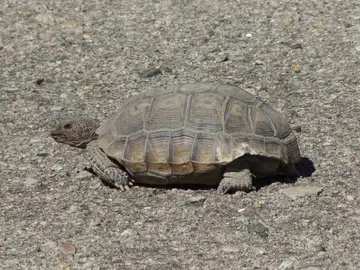
Agassiz’s Desert Tortoise
Photo: Wendy St. John · CC BY-SA 4.0 · iNaturalist · resized

Agassiz’s Desert Tortoise

Gopherus agassizii

Size
Shell 8 to 15 inches long and 4 to 6 inches high; adults weigh 8 to 15 pounds.
How to recognize it
  • Short tail, flattened front legs for digging, elephant-like hind legs and a high-domed shell
  • Males have throat shields on the underside that extend out beneath the throat
Where in Arizona
This tortoise occurs in far northwestern Arizona north of the Colorado River at elevations ranging from ~1,500′ to ~3,500′. Arizona Game and Fish Department
What the sources say

Habitat: Primarily an inhabitant of Mohave Desertscrub but also enters Woodland communities in some areas. (Arizona Game and Fish Department)

Full Agassiz’s Desert Tortoise guide

No confirmed photo of Arizona Mud Turtle

Arizona Mud Turtle

Kinosternon arizonense

Where in Arizona
This turtle is found in a small portion of extreme south-central Arizona at elevations ranging from 2,000′ to 3,500′. Arizona Game and Fish Department
Conservation
HDMS: AZ SGCN Tier 2, state rank S2
What the sources say

Habitat: In Arizona this turtle inhabits Lower Colorado River Sonoran Desertscrub, Arizona Upland Sonoran Desertscrub, and Semidesert Grassland communities. (Arizona Game and Fish Department)

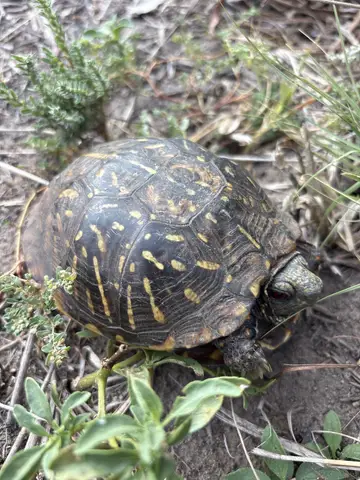
Ornate Box Turtle
Photo: Archer Silverman · CC BY 4.0 · iNaturalist

Ornate Box Turtle

Terrapene ornata

Where in Arizona
This turtle is found in the southeastern corner of Arizona where it has been found at elevations ranging from about 2,000′ near Winkelman to over 7,100′ in the Huachuca … Arizona Game and Fish Department
What the sources say

Range: This turtle is found in the southeastern corner of Arizona where it has been found at elevations ranging from about 2,000′ near Winkelman to over 7,100′ in the Huachuca Mountains.

Habitat: Primarily a turtle of low valleys, plains, and gentle bajadas within Semidesert Grassland and Chihuahuan Desertscrub communities. (Arizona Game and Fish Department)

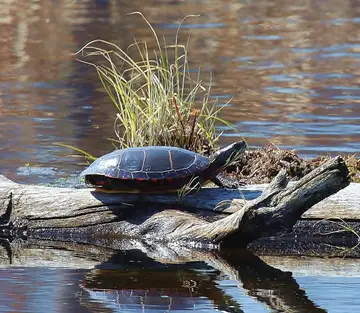
Painted Turtle
Photo: U. S. Fish and Wildlife Service - Northeast Region · Public domain · Wikimedia Commons

Painted Turtle

Chrysemys picta

Size
Small: adult shell usually 4 to 7 inches, up to about 10 inches; females are larger than males.
How to recognize it
  • Smooth, fairly flat shell with no keel and a smooth (not saw-toothed) rear edge
  • Red markings on the marginal shell plates
  • Yellow spot behind each eye and yellow stripes on the chin
Where in Arizona
This turtle’s natural range extends across southern Canada and the northern and eastern United States. Arizona Game and Fish Department
Conservation
HDMS: AZ SGCN Tier 2, state rank S1
What the sources say

Habitat: Generally an inhabitant of shallow, permanent, slow moving waters such as ponds, shallow coves within reservoirs, backwaters, and slow moving portions of rivers. (Arizona Game and Fish Department)

Full Painted Turtle guide

No confirmed photo of Pond Slider

Pond Slider

Trachemys scripta

Nonnative

Where in Arizona
This turtle’s natural range extends from the eastern and United States down into South America. Arizona Game and Fish Department
Conservation
HDMS: state rank SNA
355 records by month.
What the sources say

Habitat: Generally an inhabitant of shallow, permanent water with abundant vegetation and a soft bed. (Arizona Game and Fish Department)

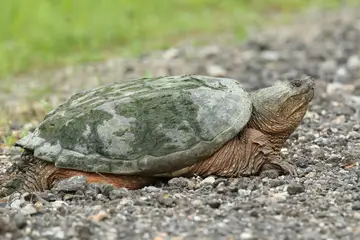
Snapping Turtle
Photo: Cephas · CC BY-SA 4.0 · Wikimedia Commons · resized

Snapping Turtle

Chelydra serpentina

Nonnative

Danger to people
“This turtle can strike with remarkable speed and does not hesitate to bite when captured.” Arizona Game and Fish Department
Size
Upper shell usually 8 to 14 inches, occasionally to nearly 20; usually 10 to 35 lb, occasionally to 75 lb in the wild.
How to recognize it
  • Large head, long tail
  • Saw-toothed scales on the long tail
  • Small, cross-shaped lower shell
Where in Arizona
This turtle is native to the Canada and the eastern United States (east of the Rockies). Arizona Game and Fish Department
Conservation
HDMS: state rank SNA
What the sources say

Habitat: Natural habitat includes the quiet, heavily vegetated waters of marshes, ponds, lakes, and slow moving rivers. (Arizona Game and Fish Department)

Full Snapping Turtle guide

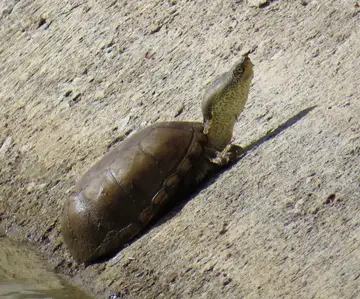
Sonora Mud Turtle
Photo: Jake Nitta · CC BY 4.0 · iNaturalist

Sonora Mud Turtle

Kinosternon sonoriense

Where in Arizona
It occurs across most of southeastern and sub-Mogollon Rim central Arizona. Arizona Game and Fish Department
Conservation
HDMS: ESA PS, AZ SGCN Tier 2, state rank S3
What the sources say

Habitat: In Arizona this turtle inhabits biotic communities ranging from Lower Colorado River Sonoran Desertscrub throu gh the woodlands. (Arizona Game and Fish Department)

No confirmed photo of Sonoran Desert Tortoise

Sonoran Desert Tortoise

Gopherus morafkai

Where in Arizona
This tortoise occurs along the western border south of the Colorado River and across most of southwestern and south-central Arizona at elevations ranging from near sea … Arizona Game and Fish Department
What the sources say

Range: This tortoise occurs along the western border south of the Colorado River and across most of southwestern and south-central Arizona at elevations ranging from near sea level along the Colorado River to just over 5,000′.

Habitat: Primarily an inhabitant of Arizona Upland Sonoran Desertscrub and Mohave Desertscrub but also enters Semidesert Grassland and Madrean Evergreen Woodland communities in some parts of the state. (Arizona Game and Fish Department)

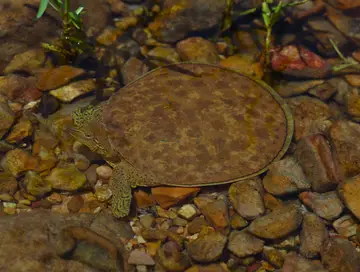
Spiny Softshell
Photo: Peter Paplanus · CC BY 2.0 · Wikimedia Commons

Spiny Softshell

Apalone spinifera

Nonnative

Danger to people
“It is capable of striking quickly and can deliver a painful bite.” Arizona Game and Fish Department
Where in Arizona
Native to the eastern United States, this turtle has been introduced to permanent waters in southern and western Arizona. Arizona Game and Fish Department
Conservation
HDMS: state rank SNA
What the sources say

Habitat: Occurs in rivers, canals, urban lakes, ponds, reservoirs, and irrigation ditches within Arizona’s desertscrubs and Semidesert Grassland communities. (Arizona Game and Fish Department)

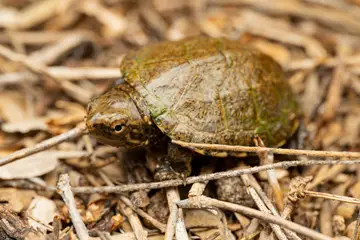
Yellow Mud Turtle
Photo: Nick Block · CC BY 4.0 · iNaturalist

Yellow Mud Turtle

Kinosternon flavescens

Where in Arizona
It is found in a small portion of southeastern Arizona at elevations ranging from about 3,000′ to 4,000′. Arizona Game and Fish Department
Conservation
HDMS: AZ SGCN Tier 2, state rank S1
What the sources say

Habitat: In Arizona it is an inhabitant of Chihuahuan Desertscrub and Semidesert Grassland communities. (Arizona Game and Fish Department)

Turtles people confuse

Desert Tortoise or Sonoran Desert Tortoise?

Desert Tortoise
Photo: Wendy St. John · CC BY-SA 4.0 · iNaturalist · resized

Desert Tortoise Not stated

No confirmed photo of Sonoran Desert Tortoise

Sonoran Desert Tortoise Not stated

Agassiz's Desert Tortoise has a wider shell and longer throat shields; location also separates them, with Agassiz's north and west of the Colorado River in Arizona. Arizona Game and Fish Department

Photos show typical adults; individuals vary. Never get close to compare.

When turtles are active in Arizona

Records of turtles in Arizona peak in March to April and July to September. They show when people record turtles, not how many there are (about month bars).

660 records of turtles in Arizona by month (GBIF, CC0 and CC BY records).

If you are bitten or stung

Call 911 or Poison Help at 1-800-222-1222 right away. Poison Help connects you to your local poison center, any time of day.
About this list

The species list comes from Online Field Guide to The Reptiles and Amphibians of Arizona - Turtles and Tortoises of Arizona (Arizona Game and Fish Department, 2023 (site copyright notice)). 10 more entries come from other official sources named on each card.

Venom labels come only from official sources and link to them; "Not stated" never means harmless. How labels work.

"Nonnative" and "Invasive" follow the wording of the source list. See invasive species in Arizona.

Sources

  1. Ridge-nosed Rattlesnake (species page). Arizona Game and Fish Department. archived copy, captured January 16, 2026; checked November 3, 2026.
  2. Online Field Guide to The Reptiles and Amphibians of Arizona - Turtles and Tortoises of Arizona. Arizona Game and Fish Department. 2023; checked November 3, 2026.
  3. Online Field Guide species account: Spiny Softshell (Apalone spinifera). Arizona Game and Fish Department. 2023; checked November 3, 2026.
    Quoted passages (1)
    “It is capable of striking quickly and can deliver a painful bite.”
  4. Online Field Guide species account: Snapping Turtle (Chelydra serpentina). Arizona Game and Fish Department. 2023; checked November 3, 2026.
    Quoted passages (1)
    “This turtle can strike with remarkable speed and does not hesitate to bite when captured.”
  5. Online Field Guide species account: Painted Turtle (Chrysemys picta). Arizona Game and Fish Department. 2023; checked November 3, 2026.
    Quoted passages (1)
    “The rear edge of the carapace is smooth.”
  6. Online Field Guide species account: Agassiz’S Desert Tortoise (Gopherus agassizii). Arizona Game and Fish Department. 2023; checked November 3, 2026.
    Quoted passages (2)
    “In males the gular shields of the plastron extend out underneath the throat”
    “This species has a wider shell and longer gular shields than the similar looking Sonoran Desert Tortoise”
  7. Online Field Guide species account: Sonoran Desert Tortoise (Gopherus morafkai). Arizona Game and Fish Department. 2023; checked November 3, 2026.
  8. Online Field Guide species account: Arizona Mud Turtle (Kinosternon arizonense). Arizona Game and Fish Department. 2023; checked November 3, 2026.
  9. Online Field Guide species account: Yellow Mud Turtle (Kinosternon flavescens). Arizona Game and Fish Department. 2023; checked November 3, 2026.
  10. Online Field Guide species account: Sonora Mud Turtle (Kinosternon sonoriense). Arizona Game and Fish Department. 2023; checked November 3, 2026.
  11. Online Field Guide species account: Ornate Box Turtle (Terrapene ornata). Arizona Game and Fish Department. 2023; checked November 3, 2026.
  12. Online Field Guide species account: Pond Slider (Trachemys scripta). Arizona Game and Fish Department. 2023; checked November 3, 2026.
  13. GBIF.org occurrence records, human observations licensed CC0 1.0 or CC BY 4.0 only, accessed November 3, 2026. The datasets behind these counts are listed on our Sources page.