Invasive and nonnative animals in Arizona
Last checked November 3, 2026 against official sources.
3 nonnative animals are named on 2 official lists for Arizona: “Bees, Spiders & Other Bugs” (Arizona Poison and Drug Information Center) and “Invasive Species” (Arizona Game and Fish Department).
The USGS Nonindigenous Aquatic Species database records an established population in Arizona for 1 nonnative animal in the groups this guide covers.
To report a sighting, see how to report.
Being on a list of nonnative species does not always mean an animal is harmful or established: each list below is described in its source's terms. A sighting of a listed animal is still worth reporting to the agency.
Bees, Spiders & Other Bugs
Arizona Poison and Drug Information Center (University of Arizona College of Pharmacy), 2026 (footer copyright. 1 animal.
-
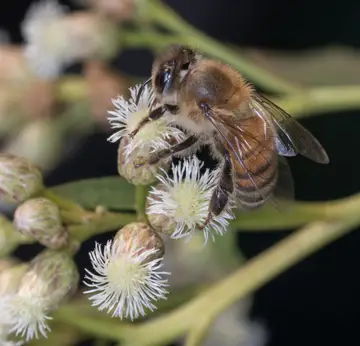
Photo: Jesse Rorabaugh · CC0 1.0 · iNaturalist Africanized honey bee
Many parts of the United States, including Arizona Arizona Poison and Drug Information Center
Invasive Species
Arizona Game and Fish Department, archived copy, captured June 9, 2016. 2 animals.
-
Golden alga (not an animal) Prymnesium parvum
-
Quagga mussel Dreissena bugensis
Established in Arizona, per USGS records
The U.S. Geological Survey's Nonindigenous Aquatic Species (NAS) database tracks nonnative aquatic animals. These have at least one record with the status "established" in Arizona, which USGS defines as a population showing evidence of reproduction and overwinter survival.
| Animal | Group | First record | Latest record | Counties |
|---|---|---|---|---|
| African Clawed Frog Xenopus laevis | Frogs and Toads | 1988 | 2024 | 1 |
Source: U.S. Geological Survey. [2026]. Nonindigenous Aquatic Species Database. Gainesville, Florida. Accessed [11/3/2026]. "Native Transplant" animals are native elsewhere in the US but not in Arizona.
How to report a sighting in Arizona
Call the local AZGFD office 8 a.m.-5 p.m. Monday-Friday (excluding holidays); after hours and weekends call the AZGFD dispatcher at 623-236-7201. Arizona Game and Fish Department
Do not try to catch or handle the animal. A photo taken from a safe distance, the place and the date help the agency.
Sources
- Bees, Spiders & Other Bugs. Arizona Poison and Drug Information Center (University of Arizona College of Pharmacy). 2026 (footer copyright; checked November 3, 2026.
Quoted passages (1)
“Africanized bees or "killer bees" have now invaded many parts of the United States, including Arizona.”
- Invasive Species. Arizona Game and Fish Department. archived copy, captured June 9, 2016; checked November 3, 2026.
Quoted passages (1)
“Quagga mussels, golden algae and the parasite that causes whirling disease in trout are all examples of invasive species.”
- Living with Bobcats. Arizona Game and Fish Department. archived copy, captured January 16, 2026; checked November 3, 2026.
Quoted passages (1)
“Call your local Arizona Game and Fish Department office from 8 a.m. to 5 p.m., Monday through Friday, excluding holidays. After hours and on weekends, a dispatcher is available at 623-236-7201.”
- U.S. Geological Survey. [2026]. Nonindigenous Aquatic Species Database. Gainesville, Florida. Accessed [11/3/2026].