States Wildlife

Are there bears in Arizona?

Last checked November 3, 2026 against official sources.

On this page
  1. The answer
  2. More official answers
  3. Which ones
  4. Where in the US
  5. Lookalikes
  6. Official advice
  7. Sources

Yes.

Black bears live mainly in higher-elevation woodlands and forests.

Arizona Game and Fish Department: “In Arizona, black bears are primarily found in higher-elevation (4,000-10,000 ft) woodland and forested regions containing a variety of habitats, including subalpine and montane conifer forests, riparian forests, evergreen and oak woodlands, chaparral, and desert scrub.” Source

How we answer questions

  • Are there mountain lions in Arizona?

    Yes. Mountain lions occur throughout Arizona, most commonly in rocky or mountainous terrain. Arizona Game and Fish Department

The 2 on Arizona's list

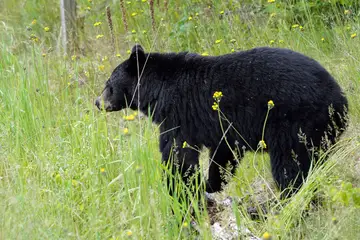
American Black Bear
Photo: U.S. Fish and Wildlife Service - Midwest Region · Public domain · Wikimedia Commons

American Black Bear

Ursus americanus

Danger to people
“Although uncommon, black bear attacks on humans occasionally occur, especially in areas where they come into frequent contact with people and human-related food sources.” Arizona Game and Fish Department
Size
Smokies: males average about 6 ft long, 3 ft at the shoulder and 250 lb in summer; females usually just over 100 lb. Missouri: 46 to 78 inches long, 86 to 600 lb.
How to recognize it
  • Straight facial profile, rounded erect ears, very short tail
  • Short curved claws for climbing
Where in Arizona
HDMS counties: Apache, Cochise, Coconino, Gila, Graham, Greenlee, Mohave, Pima, Pinal, Santa Cruz, Yavapai Arizona Game and Fish Department - Heritage Data Management System
Conservation
HDMS: state rank S3
86 records by month.

Full American Black Bear guide

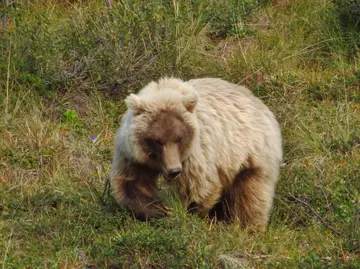
Grizzly or Brown Bear
Photo: Annika Lindqvist · CC BY 4.0 · iNaturalist

Grizzly or Brown Bear

Ursus arctos

Size
USFWS: in the lower 48, adult males average 400-600 lb and adult females 250-350 lb. NPS: about 3-5 feet at the shoulder; brown bears overall range from 200 to 1,000 lb.
How to recognize it
  • Distinct shoulder hump, dish-shaped face and long claws
  • Claws about 4 inches long and slightly curved
Conservation
HDMS: state rank SX

Full Grizzly or Brown Bear guide

All mammals in the state: Arizona mammals.

Where the American black bear lives in the US

Texas: on the state's official listCalifornia: on the state's official listKentucky: on the state's official listGeorgia: on the state's official listWisconsin: on the state's official listOregon: on an official sourceMissouri: on the state's official listVirginia: on the state's official listTennessee: on the state's official listLouisiana: on an official sourceNew York: on the state's official listIdaho: on the state's official listFlorida: on an official sourceMontana: on the state's official listMinnesota: on the state's official listMaryland: on the state's official listIowa: on the state's official listOhio: on the state's official listNebraska: on the state's official listWashington: on the state's official listSouth Dakota: on the state's official listArkansas: on the state's official listMississippi: on the state's official listColorado: on the state's official listNorth Carolina: on the state's official listUtah: on the state's official listOklahoma: on the state's official listWyoming: on the state's official listWest Virginia: on the state's official listIndiana: on the state's official listMassachusetts: on the state's official listNevada: on the state's official listNorth Dakota: on the state's official listPennsylvania: on the state's official listSouth Carolina: on the state's official listMaine: on the state's official listRhode Island: on the state's official listConnecticut: on the state's official listAlaska: on the state's official listNew Mexico: on an official sourceAlabama: on the state's official listKansas: on the state's official listVermont: on the state's official listNew Jersey: on the state's official listNew Hampshire: on the state's official listArizona: on the state's official list
Official presence. 46 states where a state list or official source names it. Gray means no official record in our data, not that it is absent.
  • Native or listed
  • Nonnative or not established
  • No official record in our data
Texas: 42 recordsCalifornia: 855 recordsKentucky: 6 recordsGeorgia: 22 recordsWisconsin: 50 recordsOregon: 91 recordsMissouri: 1 recordVirginia: 161 recordsTennessee: 241 recordsLouisiana: 5 recordsNew York: 854 recordsIdaho: 26 recordsFlorida: 93 recordsMontana: 136 recordsMinnesota: 65 recordsMaryland: 25 recordsOhio: 5 recordsNebraska: 1 recordWashington: 177 recordsSouth Dakota: 1 recordArkansas: 6 recordsMississippi: 1 recordColorado: 178 recordsNorth Carolina: 268 recordsUtah: 21 recordsOklahoma: 1 recordWyoming: 242 recordsWest Virginia: 22 recordsMassachusetts: 54 recordsNevada: 16 recordsPennsylvania: 105 recordsSouth Carolina: 6 recordsMaine: 14 recordsRhode Island: 2 recordsConnecticut: 78 recordsMichigan: 26 recordsAlaska: 223 recordsNew Mexico: 78 recordsAlabama: 3 recordsVermont: 529 recordsNew Jersey: 24 recordsNew Hampshire: 160 recordsArizona: 86 records
Observation records. Open-licence records on GBIF in 43 states. Records are sightings people shared, not confirmation that a population lives there.
  • 1–9
  • 10–99
  • 100–999
  • 1,000+

American Black Bear: identification, range and danger

What else it could be

  • Grizzly (Brown) Bear
    Photo: Annika Lindqvist · CC BY 4.0 · iNaturalist

    Grizzly (Brown) Bear

    Grizzlies have longer front claws, humped shoulders and a more concave face. Color does not settle it: brown bears can be black to blonde.

When mammals are seen in Arizona

8,498 records (GBIF, CC0 and CC BY).

What official sources advise

Other questions about Arizona

Sources

  1. Living with Bears. Arizona Game and Fish Department. archived copy, captured February 18, 2026; checked November 3, 2026.
    Quoted passages (4)
    “In Arizona, black bears are primarily found in higher-elevation (4,000-10,000 ft) woodland and forested regions containing a variety of habitats, including subalpine and montane conifer forests, riparian forests, evergreen and oak woodlands, chaparral, and desert scrub.”
    “Although uncommon, black bear attacks on humans occasionally occur, especially in areas where they come into frequent contact with people and human-related food sources.”
    “Black bears should always be considered unpredictable and potentially dangerous.”
    “Produces 2 to 3 cubs between Dec. and early Feb. and exits the den with them in mid-April to early May”
  2. HDMS Web Species List (all_species_list.csv). Arizona Game and Fish Department - Heritage Data Management System. October 28, 2026; checked November 3, 2026.
  3. Living with Mountain Lions. Arizona Game and Fish Department. archived copy, captured December 5, 2025; checked November 3, 2026.
    Quoted passages (1)
    “Mountain lions can be found throughout Arizona and are most common in rocky or mountainous terrain.”
  4. GBIF.org occurrence records, human observations licensed CC0 1.0 or CC BY 4.0 only, accessed November 3, 2026. The datasets behind these counts are listed on our Sources page.