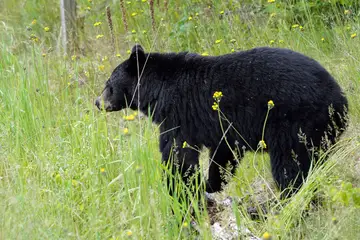
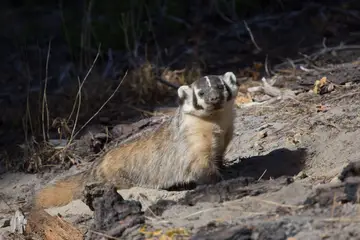
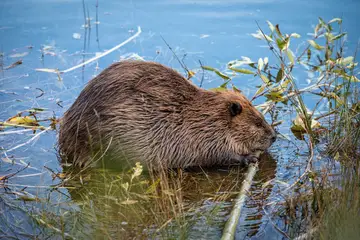
Smokies: males average about 6 ft long, 3 ft at the shoulder and 250 lb in summer; females usually just over 100 lb. Missouri: 46 to 78 inches long, 86 to 600 lb.
How to recognize it
Straight facial profile, rounded erect ears, very short tail
Total length 18 to 50 inches, tail 3 to 8 inches, weight 8 to 49 pounds (Missouri). About twice the size of a house cat.
How to recognize it
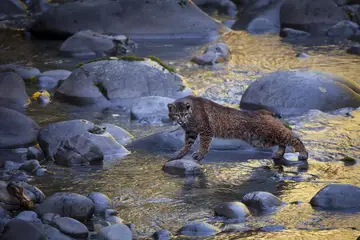
Short 'bobbed' tail, 4 to 8 inches, with a black tip and white underneath (Arizona). New Mexico instead describes black bars on top, white underneath and a white tip.
Pointed ears with tufts at the tips, often with cheek tufts
Backs of the ears are black with a light central spot
About 3.5 to 4 feet long including the tail and roughly 2 feet tall at the shoulder; weight varies by region: Arizona 20 to 30 lb, Florida average about 28 lb, Georgia 25 to 45 lb
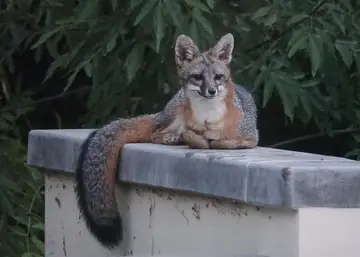
How to recognize it
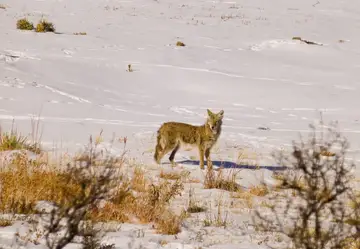
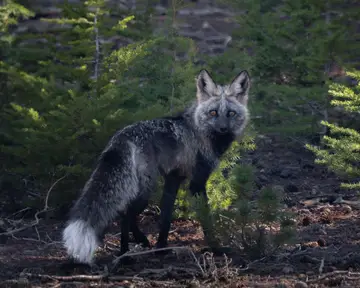
Large pointed ears, long narrow nose, bushy black-tipped tail
Like a slender medium-sized dog, much smaller than a wolf
Invasive species: report online via EDDMapS or the GLEDN app; terrestrial invasives 1-866-NO-EXOTIC (1-866-663-9684), [email protected]; aquatic invasives [email protected]. Nuisance wildlife: DNR does not remove wildlife; hire a licensed wildlife control operator; DNR Customer Service 317-232-4200 or [email protected]. Mammal sightings (armadillo, mountain lion, etc.): DNR Report a Mammal form. Gecko / wall lizard sightings: [email protected]. Indiana Department of Natural Resources
Reptiles of Indiana List. Indiana Department of Natural Resources, Division of Fish & Wildlife. page states "Revised September 2021"; checked November 3, 2026.
Mammals List. Indiana Department of Natural Resources, Division of Fish & Wildlife. page states "Revised September 2021"; checked November 3, 2026.
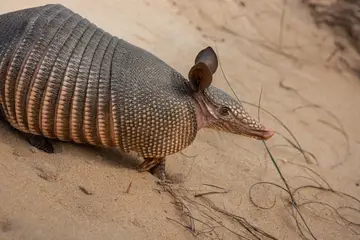
Nine-banded Armadillo. Indiana Department of Natural Resources, Division of Fish & Wildlife. dateModified 2026-03-09; checked November 3, 2026.
Bobcats. Indiana Department of Natural Resources, Division of Fish & Wildlife. dateModified 2026-09-25; checked November 3, 2026.
Mammals FAQs. Indiana Department of Natural Resources, Division of Fish & Wildlife. dateModified 2026-03-23; checked November 3, 2026.Quoted passages (2)
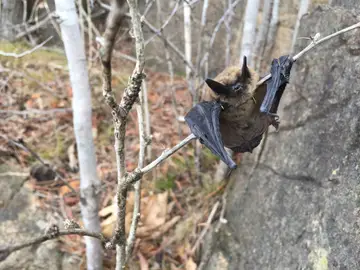
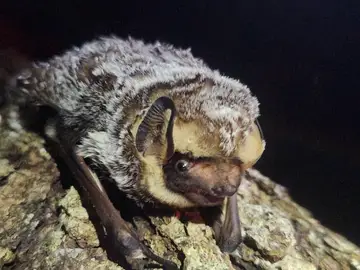
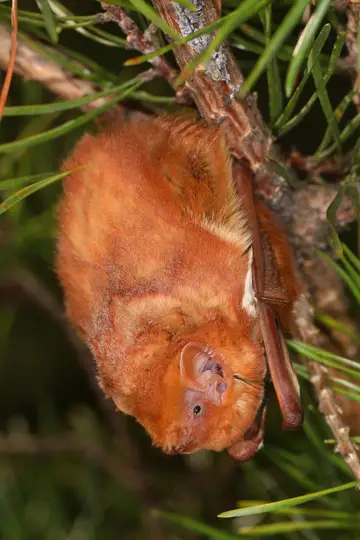
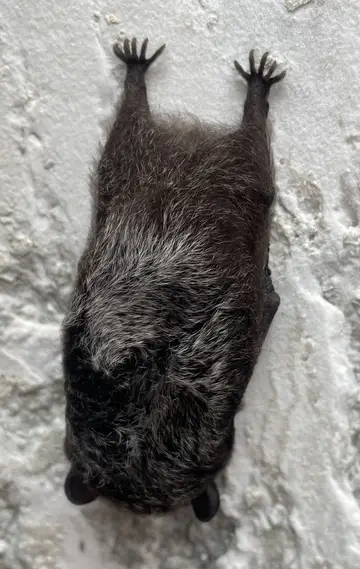
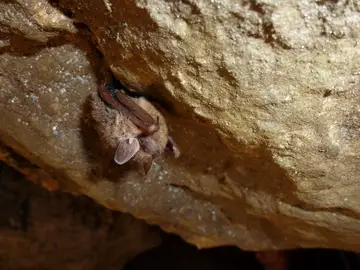
“Never handle a bat. Although it is not very common, bats are a vector species that can carry rabies.”
“Maternity season is usually between mid-June and early-August, and the pups will depend on their mothers for anywhere between 25-37 days.”
Living with Wildlife. Indiana Department of Natural Resources, Division of Fish & Wildlife. dateModified 2026-03-26; checked November 3, 2026.Quoted passages (1)
“Do not pick up a bat with bare hands. If a person has been bitten or scratched by a bat, contact a medical professional as soon as possible and have the bat tested for rabies.”
Black Bear. Indiana Department of Natural Resources, Division of Fish & Wildlife. dateModified 2026-04-01; checked November 3, 2026.Quoted passages (1)
“Enjoy it from a distance. … Never attempt to feed or attract bears. Report bear sightings to the Indiana Division of Fish & Wildlife”
Invasive Species. Indiana Department of Natural Resources. dateModified 2026-09-08; checked November 3, 2026.Quoted passages (1)
Mountain Lion. Indiana Department of Natural Resources, Division of Fish & Wildlife. dateModified 2026-03-09; checked November 3, 2026.Quoted passages (1)
“Indiana has no breeding population of mountain lions.”