Indiana wildlife: what lives here and what is dangerous
Last checked November 3, 2026 against official sources.
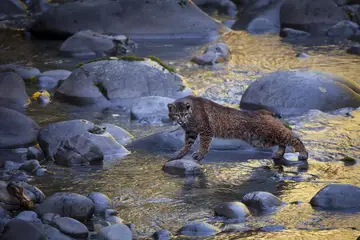
Photo: National Marine Sanctuaries · Public domain · Wikimedia Commons
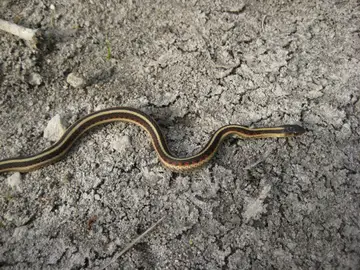
Indiana has 4 venomous snakes named by official sources: Copperhead, Cottonmouth, Eastern Massasauga and Timber Rattlesnake, as labelled by Indiana Department of Natural Resources, Division of Fish & Wildlife. This guide covers 8 animal groups from Indiana Department of Natural Resources (DNR), Division of Fish & Wildlife lists and other official sources, with photos, venomous status and when each group is active.
Identification help has limits: a photo cannot confirm that an animal is safe. Watch from a distance and never handle a wild animal.
These are the animals official sources describe as venomous or as a risk to people in Indiana, across 5 groups. The reason is given in the source's own terms.
Venomous: “Yes. Among Indiana's 32 species of snakes, four are venomous: the timber rattlesnake, eastern massasauga, copperhead, and cottonmouth (also known as the "water moccasin").”
Venomous: “Yes. Among Indiana's 32 species of snakes, four are venomous: the timber rattlesnake, eastern massasauga, copperhead, and cottonmouth (also known as the "water moccasin").”
Venomous: “Yes. Among Indiana's 32 species of snakes, four are venomous: the timber rattlesnake, eastern massasauga, copperhead, and cottonmouth (also known as the "water moccasin").”
Venomous: “Yes. Among Indiana's 32 species of snakes, four are venomous: the timber rattlesnake, eastern massasauga, copperhead, and cottonmouth (also known as the "water moccasin").”
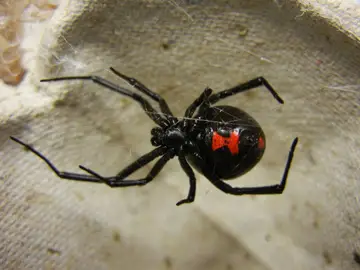
Venomous: “The bite of this venomous spider can cause serious effects. It is especially dangerous to children, the elderly, and to those in poor physical condition …”
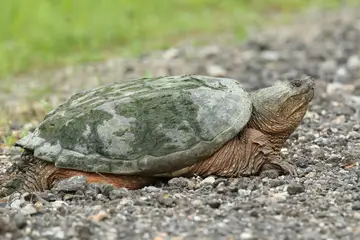
Powerful bite can be painful and damaging to humans: “While these turtles are thought to be less aggressive than the common snapping turtle, the powerful bite of an alligator snapping turtle can be both painful and damaging to humans.”
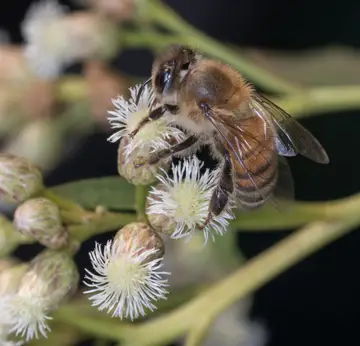
Venomous: “Honey bees are a medical risk because they can be very common even in urban areas, people commonly come in contact with them, colonies can consist of many thousands of workers, workers sting if their …”
Venomous: “Relatively very little has been reported on the chemistry of bumble bee venoms, but they share at least some allergens with honey bee venom and have been associated with allergic reactions.”
Purdue: “The social wasps are of greatest medical risk (equal to honey bees and for many of the same reasons) throughout the U.S. are the yellowjackets, and to a lesser extent the hornets.”
Darker cells are the months with more open-licence observation records of each group in Indiana (GBIF). They show when people see and record these animals, not how many there are. The current month, this month, is highlighted.
Blacklegged tick nymphs are most active in spring and summer, adults in fall and early spring, and adults any winter day above freezing. Indiana Department of Health
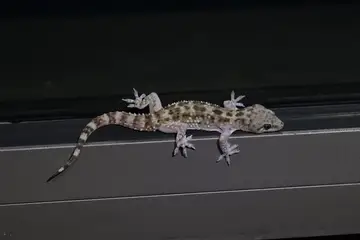
Report: Invasive species: report online via EDDMapS or the GLEDN app; terrestrial invasives 1-866-NO-EXOTIC (1-866-663-9684), [email protected]; aquatic invasives [email protected]. Nuisance wildlife: DNR does not remove wildlife; hire a licensed wildlife control operator; DNR Customer Service 317-232-4200 or [email protected]. Mammal sightings (armadillo, mountain lion, etc.): DNR Report a Mammal form. Gecko / wall lizard sightings: [email protected]. Indiana Department of Natural Resources
Ticks: prevent bites, use EPA-registered repellent, and check your body for ticks soon after being outdoors. Indiana Department of Health
Questions people ask about Indiana wildlife
Are there venomous snakes in Indiana?
Yes. Indiana DNR: four of Indiana's 32 snake species are venomous: timber rattlesnake, eastern massasauga, copperhead and cottonmouth. Only the copperhead is somewhat common; the other three are rare and state endangered. Indiana Department of Natural Resources, Division of Fish & Wildlife
Yes. DNR Snakes page: the copperhead is found only in the southern half of the state; the DNR FAQ says copperheads are the only somewhat common venomous snake, in the forested hills of southern and west-central Indiana. DNR State Parks calls it Indiana's most common venomous snake. Indiana Department of Natural Resources, Division of Fish & Wildlife · More
Are there water moccasins (cottonmouths) in Indiana?
Rarely. DNR: the cottonmouth is state endangered and found only in one small area of southwestern Indiana. The common watersnake is often called "water moccasin" in Indiana and is non-venomous. (A 2017 DNR State Parks brochure said the cottonmouth was most likely extirpated.) Indiana Department of Natural Resources, Division of Fish & Wildlife
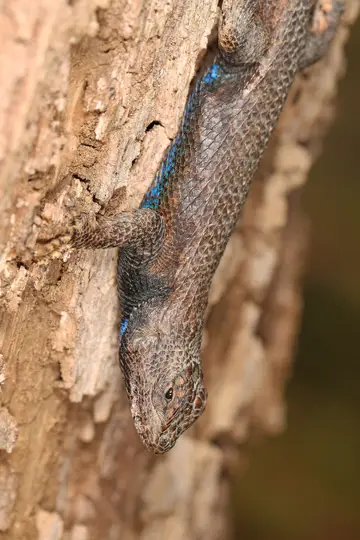
Yes. Six native lizards are on the DNR list (fence lizard, slender glass lizard, six-lined racerunner, three skinks); introduced common wall lizards live along the Ohio River in Dearborn and Ohio counties. Indiana Department of Natural Resources, Division of Fish & Wildlife
Are there lone star ticks in Indiana?
Yes. IDOH: most common in the southern two-thirds and the northwest corner of the state; associated with ehrlichiosis and alpha-gal syndrome. Indiana Department of Health
Reptiles of Indiana List. Indiana Department of Natural Resources, Division of Fish & Wildlife. page states "Revised September 2021"; checked November 3, 2026.
Amphibians and Reptiles FAQs. Indiana Department of Natural Resources, Division of Fish & Wildlife. dateModified 2026-03-09; checked November 3, 2026.Quoted passages (2)
“Yes. Among Indiana's 32 species of snakes, four are venomous: the timber rattlesnake, eastern massasauga, copperhead, and cottonmouth (also known as the "water moccasin").”
“Yes. Among Indiana's 32 species of snakes, four are venomous: the timber rattlesnake, eastern massasauga, copperhead, and cottonmouth (also known as the "water moccasin"). Only copperheads can be considered somewhat common and can be found in the forested hills of southern and west-central Indiana. The remaining three are rare and listed as state endangered species.”
Spiders in Indiana. Indiana Department of Natural Resources, Division of Entomology & Plant Pathology. dateModified 2026-03-09; checked November 3, 2026.Quoted passages (5)
“There are around 400 species of spiders known to occur in Indiana.”
“While both the brown recluse and black widow spiders are known as venomous, neither is aggressive.”
“Only two species found in Indiana are capable of inflicting serious injury to humans. While both the brown recluse and black widow spiders are known as venomous, neither is aggressive. Bites from them are quite rare.”
“Brown recluse are often found in barns, sheds or other dry places.”
“Subjects who have been bitten who experience severe pain, trouble breathing, dizziness or nausea should seek medical attention.”
Mammals List. Indiana Department of Natural Resources, Division of Fish & Wildlife. page states "Revised September 2021"; checked November 3, 2026.
Spiders (E-72-W). Purdue University Cooperative Extension Service, Department of Entomology. November 2017; checked November 3, 2026.Quoted passages (1)
“The bite of this venomous spider can cause serious effects. It is especially dangerous to children, the elderly, and to those in poor physical condition. Contrary to some reports, fatalities from bites of the brown recluse are very rare.”
Alligator Snapping Turtle. Indiana Department of Natural Resources, Division of Fish & Wildlife. dateModified 2026-03-09; checked November 3, 2026.Quoted passages (2)
“While these turtles are thought to be less aggressive than the common snapping turtle, the powerful bite of an alligator snapping turtle can be both painful and damaging to humans.”
“The status of the alligator snapping turtle in Indiana is uncertain.”
“Honey bees are a medical risk because they can be very common even in urban areas, people commonly come in contact with them, colonies can consist of many thousands of workers, workers sting if their colony is disturbed, and their venom contains several chemicals involved in allergic reactions.”
“Stings are painful because they inject venom that contains specific chemicals that cause an immediate burning sensation.”
“Relatively very little has been reported on the chemistry of bumble bee venoms, but they share at least some allergens with honey bee venom and have been associated with allergic reactions.”
“The social wasps are of greatest medical risk (equal to honey bees and for many of the same reasons) throughout the U.S. are the yellowjackets, and to a lesser extent the hornets.”
“Approximately 0.5-4.0% of the U.S. population is prone to developing allergy to social Hymenoptera venoms. These individuals are at risk of experiencing allergic reactions known as "immediate hypersensitivity reactions," including life-threatening systemic anaphylaxis.”
“The Africanized honey bee or the so-called "killer bee" is found in parts of the southern, southwestern, and western U.S., but does not occur in Indiana.”
Mammals FAQs. Indiana Department of Natural Resources, Division of Fish & Wildlife. dateModified 2026-03-23; checked November 3, 2026.Quoted passages (2)
“Never handle a bat. Although it is not very common, bats are a vector species that can carry rabies.”
“Maternity season is usually between mid-June and early-August, and the pups will depend on their mothers for anywhere between 25-37 days.”
Wall Lizards. Indiana Department of Natural Resources, Division of Fish & Wildlife. dateModified 2026-03-09; checked November 3, 2026.Quoted passages (2)
“Common wall lizards are not native to North America”
“The current known range of wall lizards includes the southeast corner of Dearborn County and eastern Ohio County.”
Mediterranean Gecko. Indiana Department of Natural Resources, Division of Fish & Wildlife. dateModified 2026-03-09; checked November 3, 2026.Quoted passages (1)
“Little is known about how this introduced non-native species affects local ecosystems.”
Feral / Wild Hog. Indiana Department of Natural Resources, Division of Fish & Wildlife. dateModified 2026-03-09; checked November 3, 2026.Quoted passages (2)
“Wild hogs—also called wild pigs, wild boar, or feral swine—are an invasive species in Indiana.”
“There is no established population of wild hogs in Indiana.”
“Asian longhorned ticks (ALHTs) are not native to the United States but have been present as an invasive species since at least 2017. The first detection of ALHTs in Indiana occurred in April 2023.”
“The first detection of ALHTs in Indiana occurred in April 2023.”
Spotted Lanternfly. Indiana Department of Natural Resources, Division of Entomology & Plant Pathology. dateModified 2026-03-09; checked November 3, 2026.Quoted passages (2)
“In July 2021, a population of spotted lanternfly (Lycorma delicatula) was identified in Indiana in Switzerland County, near the Ohio River.”
“In July 2021, a population of spotted lanternfly (Lycorma delicatula) was identified in Indiana in Switzerland County, near the Ohio River. Since then, populations have been found in Huntington, Elkhart, St. Joseph, and Porter counties.”
Snakes. Indiana Department of Natural Resources, Division of Fish & Wildlife. dateModified 2026-03-09; checked November 3, 2026.Quoted passages (6)
“Eastern Massasauga Rattlesnake - Federally Threatened - Northern third of Indiana. Timber Rattlesnake - State Endangered - South central Indiana.”
“Copperhead - Only found in southern half of the state.”
“Cottonmouth - State Endangered - Only found in one small area in southwestern Indiana.”
“Indiana is home to 32 native snake species of which only four are venomous.”
“If you leave a snake alone, it will leave you alone. When a snake bites a person, it does so in self-defense.”
“They tend to be more active during the day in spring and fall, and more active early morning and evening during the heat of summer. … Snakes hibernate from late fall through early spring.”
Black Bear. Indiana Department of Natural Resources, Division of Fish & Wildlife. dateModified 2026-04-01; checked November 3, 2026.Quoted passages (1)
“In recent years, four black bears have been confirmed (2015, 2016, 2018, 2021) in Indiana.”
Mountain Lion. Indiana Department of Natural Resources, Division of Fish & Wildlife. dateModified 2026-03-09; checked November 3, 2026.Quoted passages (1)
“Indiana has no breeding population of mountain lions.”
Gray Wolf. Indiana Department of Natural Resources, Division of Fish & Wildlife. dateModified 2026-03-09; checked November 3, 2026.Quoted passages (1)
“There is currently no breeding population of wolves in Indiana”
Nine-banded Armadillo. Indiana Department of Natural Resources, Division of Fish & Wildlife. dateModified 2026-03-09; checked November 3, 2026.Quoted passages (1)
“Recent observations of live and roadkill armadillos indicate this species can be found year-round across the southern half of the State. Reports of armadillo have been received as far north as Porter County.”
Alpha-gal Syndrome. Indiana Department of Health. dateModified 2026-10-13; checked November 3, 2026.Quoted passages (1)
“In Indiana, the Lonestar tick is most common in the southern two-thirds and northwest corner of the state.”
Common Snakes of Indiana State Parks (brochure). Indiana Department of Natural Resources, Division of State Parks (Interpretive Services). brochure dated 9/2017; checked November 3, 2026.Quoted passages (2)
“If you think the snake was venomous, or if you are unsure, call or have a friend call 911 and contact property staff.”
“Avoid bites by watching snakes in their natural habitat instead of picking them up. Look closely before stepping when hiking trails or fishing along lake edges.”
Living with Wildlife. Indiana Department of Natural Resources, Division of Fish & Wildlife. dateModified 2026-03-26; checked November 3, 2026.Quoted passages (1)
“Do not pick up a bat with bare hands. If a person has been bitten or scratched by a bat, contact a medical professional as soon as possible and have the bat tested for rabies.”
Tick Bite Prevention. Indiana Department of Health. dateModified 2026-09-09; checked November 3, 2026.Quoted passages (1)
“The best way to prevent tick-borne illnesses is to prevent the bites of infected ticks. … Check your body for ticks soon after being outdoors.”
Eastern Massasauga Rattlesnake. Indiana Department of Natural Resources, Division of Fish & Wildlife. dateModified 2026-03-09; checked November 3, 2026.Quoted passages (1)
“The season of activity for the eastern massasauga in Indiana is relatively long. Individuals have been reported as early as April and as late as November.”
Amphibians and Reptiles. Indiana Department of Natural Resources, Division of Fish & Wildlife. dateModified 2026-03-09; checked November 3, 2026.Quoted passages (1)
“Others may be observed basking on logs, climbing trees, or—as with our state's frogs—heard calling during their spring and summer breeding seasons.”
Ixodes scapularis (Blacklegged tick). Indiana Department of Health. Page Last Reviewed/Updated: March 2025; checked November 3, 2026.Quoted passages (1)
“In Indiana, nymphs are most active during spring and summer and adults are most active during the fall and early spring. However, adult ticks may be active any time winter temperatures are above freezing.”
“Most Lone Star tick activity occurs in spring and summer.”
Social Bees and Wasps (E-44-W). Purdue University Cooperative Extension Service, Department of Entomology. September 2017; checked November 3, 2026.Quoted passages (1)
“Often yellowjackets and honey bees scavenge for sugar or meat during late summer and fall.”