Indiana Department of Natural Resources, Division of Entomology & Plant Pathology: There are around 400 species of spiders known to occur in Indiana.
This page lists 2 spiders.
2 are venomous by official accounts. Indiana Department of Natural Resources, Division of Entomology & Plant Pathology gives a total of 400; the 2 here are the spiders official sources name one by one.
Not every species: no complete official list of Indiana spiders exists, so this page covers the ones state and Extension sources name. How lists are built.
Which spiders can hurt you
Official sources single out these spiders in Indiana, in their own words:
Venomous. “The only spiders found in Indiana capable of inflicting serious injury to humans are the black widow and the brown recluse or "fiddleback" spider. … The poison of the black widow affects the nervous system of humans.” Purdue University Cooperative Extension Service, Department of Entomology
Venomous. “The bite of this venomous spider can cause serious effects. It is especially dangerous to children, the elderly, and to those in poor physical condition. Contrary to some reports, fatalities from bites of the brown recluse are very rare.” Purdue University Cooperative Extension Service, Department of Entomology
All 2 spiders
Venomous species first, then A to Z. Do not handle them.
Venom: “While both the brown recluse and black widow spiders are known as venomous, neither is aggressive.” (Indiana Department of Natural Resources, Division of Entomology & Plant Pathology)
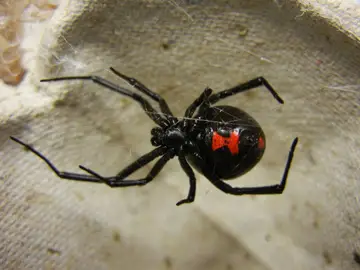
Habitat: Black widow spiders live in undisturbed locations and are rarely found in homes. (Indiana Department of Natural Resources, Division of Entomology & Plant Pathology)
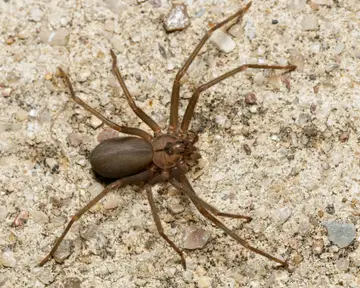
Body about 7 to 12 mm (about 3/8 inch); females average about 9 mm and males about 8 mm. UC IPM says a recluse body is not more than 3/8 inch long.
How to recognize it
Six equal-sized eyes in three pairs. UC IPM calls this the most definitive feature, since most spiders have eight eyes.
The violin mark alone is not a reliable way to identify it
UC IPM's five-point check: six eyes in pairs, evenly colored finely haired abdomen, no spines on the legs, evenly colored legs, body no more than 3/8 inch
What the sources say
Venom: “While both the brown recluse and black widow spiders are known as venomous, neither is aggressive.” (Indiana Department of Natural Resources, Division of Entomology & Plant Pathology)
Habitat: Brown recluse are often found in barns, sheds or other dry places. (Indiana Department of Natural Resources, Division of Entomology & Plant Pathology)
Invasive species: report online via EDDMapS or the GLEDN app; terrestrial invasives 1-866-NO-EXOTIC (1-866-663-9684), [email protected]; aquatic invasives [email protected]. Nuisance wildlife: DNR does not remove wildlife; hire a licensed wildlife control operator; DNR Customer Service 317-232-4200 or [email protected]. Mammal sightings (armadillo, mountain lion, etc.): DNR Report a Mammal form. Gecko / wall lizard sightings: [email protected]. Indiana Department of Natural Resources
Venom labels come only from official sources and link to them; "Not stated" never means harmless. How labels work.
Sources
Reptiles of Indiana List. Indiana Department of Natural Resources, Division of Fish & Wildlife. page states "Revised September 2021"; checked November 3, 2026.
Spiders in Indiana. Indiana Department of Natural Resources, Division of Entomology & Plant Pathology. dateModified 2026-03-09; checked November 3, 2026.Quoted passages (4)
“There are around 400 species of spiders known to occur in Indiana.”
“While both the brown recluse and black widow spiders are known as venomous, neither is aggressive.”
“Subjects who have been bitten who experience severe pain, trouble breathing, dizziness or nausea should seek medical attention.”
“Brown recluse are often found in barns, sheds or other dry places.”
Spiders (E-72-W). Purdue University Cooperative Extension Service, Department of Entomology. November 2017; checked November 3, 2026.Quoted passages (2)
“The only spiders found in Indiana capable of inflicting serious injury to humans are the black widow and the brown recluse or "fiddleback" spider. … The poison of the black widow affects the nervous system of humans.”
“The bite of this venomous spider can cause serious effects. It is especially dangerous to children, the elderly, and to those in poor physical condition. Contrary to some reports, fatalities from bites of the brown recluse are very rare.”
Invasive Species. Indiana Department of Natural Resources. dateModified 2026-09-08; checked November 3, 2026.Quoted passages (1)